William f. buckley jr

Can we get RealClear?

RealClearPolitics, the polling data aggregator, is undergoing a round of cuts. In a letter to staff last Wednesday, seen by Cockburn, publisher David DesRosiers writes: “Good people, our people, and the families that they serve will be impacted. We are sorry.” While cuts to media are nothing new given the challenging business environment, the reasoning behind RealClear’s reductions is somewhat unusual. “We find ourselves under attack from a shadowy new threat – this time from the Right,” writes DesRosiers. “A cabal of so-called conservatives is now attempting to stamp out independent voices. They have persuaded some of our previous benefactors who supported RealClearFoundation while it benefited them to withdraw philanthropic support.

realclear

Who was William F. Buckley Jr., really?

What more can be said of the American conservative commentator, novelist, musician, sailor, talk-show host and tireless public intellectual William F. Buckley Jr. (1925-2008), that he or his previous biographers haven’t already said or written? After all, this is an individual who in 1983 wrote a 90,000-word book, called Overdrive, covering the events of a single week of his life. Plenty more, it turns out, as Sam Tanenhaus proves in his thousand-page biography Buckley: The Life and the Revolution That Changed America. Buckley was blessed with a voice that sounded like he let it marinate in a cask of port between appearances Buckley was 58 when he wrote Overdrive, and kept to a schedule that would have taxed the energy of a man half his age.

Buckley

The classroom panopticon

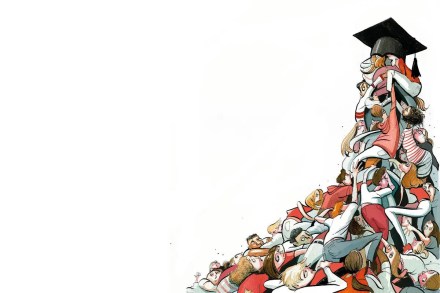
Is it ironic to give a prize for encouraging “open discussion and debate in the classroom” and “creating an environment where all perspectives can be heard” in the name of William F. Buckley Jr.? Although best known today as the founder of National Review and longtime host of Firing Line, Buckley first came to prominence in 1951 with the publication of his book God and Man at Yale, subtitled: The Superstitions of “Academic Freedom.ˮ Buckley’s secular and secularized Protestant critics might well have considered the firmly Catholic young man, twenty-five years old at the time the book appeared, an apologist for something they regarded as superstition. But Buckley did not mean the term as a compliment when he applied it to academic freedom.

classroom

The rise of the popcons

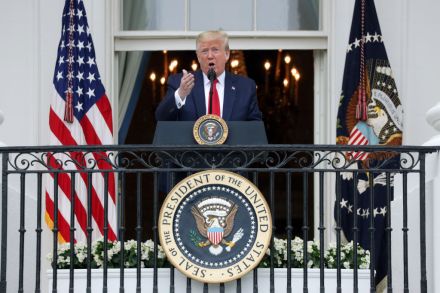
The Republican Party has to come to grips with populism. Donald Trump’s commanding lead in the race for the 2024 presidential nomination makes that clear, as does the fact that the next-most popular candidate, Ron DeSantis, also has a populist streak. In fact, the GOP’s base has subscribed to one flavor of populism or another since at least as far back as the start of the Cold War. In the 1950s, Senator Joseph McCarthy’s red-hunting had a pronounced class dimension — elite officials in “striped pants” were a frequent target. By the end of the 1960s, Richard Nixon was appealing to the “silent majority” against a radical campus counterculture. The Moral Majority and other religious right groups of the 1980s and 1990s exhibited a form of Christian populism.

populism

Baldwin and Buckley clash on the New York stage

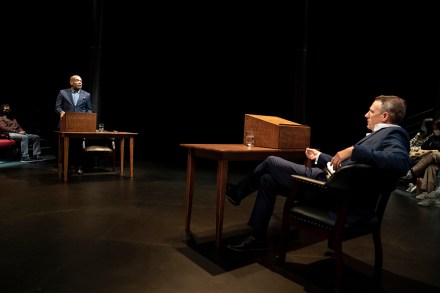
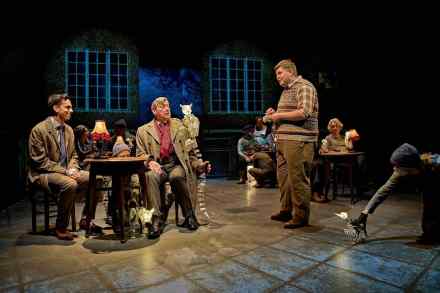
It’s fair to ask what James Baldwin would have made of Baldwin and Buckley at Cambridge, the Public Theater’s recent presentation of his famous 1965 debate against William F. Buckley Jr. It’s not that the show doesn’t strain mightily to champion Baldwin in the contest — it does — but the novelist viewed what he called “problem” or “protest” art with particular scorn. This was a writer who torched fellow travelers Harriet Beecher Stowe and Richard Wright in the same breath for perpetuating, in his view, the same “monstrous legend” of racial inferiority. To call Baldwin an activist or a champion of civil rights doesn’t quite cover it: the man operated on a theological plane, aiming at spiritual transformation. His standards for art were notoriously exacting.

baldwin buckley

Conservatives should embrace urbanism

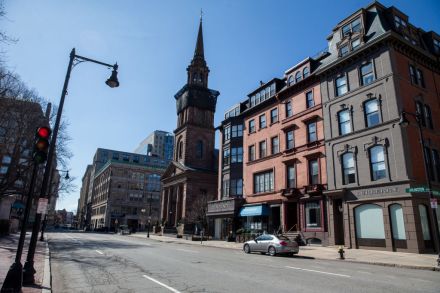
I consider myself an urbanist — despite the fact I lean to the right. Or perhaps, in my case, because of it. But what exactly is “urbanism”? It’s a new term that carries a lot of different meanings. It might indicate acclaim for the big, blue, coastal cities, the sort that conservatives dislike. It might denote a wonky focus on things like zoning, setbacks, street widths and other aspects of urban design or engineering. It might also bring to mind moralizing, busybody progressivism. My take on it is more informal and less partisan: an awareness of the built environment as an independent variable in human behavior, and a desire that our built environments be conducive to commerce and community at a human scale. I think that’s conservative.

urbanism

Talking turkey with William F. Buckley Jr. on Quemoy

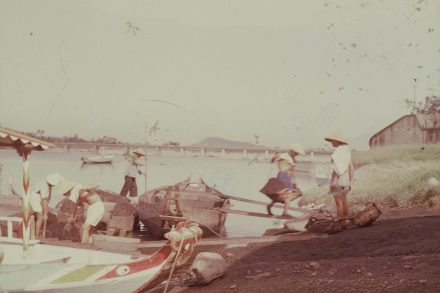
Sixty years ago, as a college student, I spent Thanksgiving on the island  of Quemoy off Formosa (as Taiwan was still called) eating Taiwanese turkey with Taiwanese generals, William F.  Buckley, Jr.  and chopsticks. Present-day college students — or even their parents — may not have heard of Quemoy — or its twin island, Matsu — until now. Or even Buckley, the highly articulate founder of modern conservatism, for that matter. Xi Jinping has been taking a hard and measured look at President Biden and our Department of State since last March when the Chinese Communist Party had Andrew Blinken and Jake Sullivan all but kowtowing to the CCP’s foreign affairs chief, Yang Jiechi, at a summit in Anchorage, Alaska.

quemoy

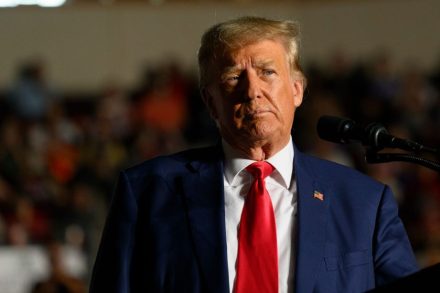
Trump’s America needs the conservative tradition

The modern American conservative tradition – roughly dating from the dawn of the 20th century — emerged in reaction to modernity itself. Modernity meant machines, speed, and radical change — taboos lifted, bonds loosened and, according to Max Weber, ‘the disenchantment of the world.’ It induced, and perhaps required, centralization. States accrued power. Bureaucracies thickened. Banks, corporations, rail systems and industrial enterprises grew to mammoth proportions. War became more destructive.Modernity promised liberation and for many did improve the quality of everyday life. Yet it also subjected individuals to immense and only dimly comprehended forces.  In exchange for choice, it demanded conformity.

donald trump conservative

L. Brent Bozell Jr, conservative insurrectionist

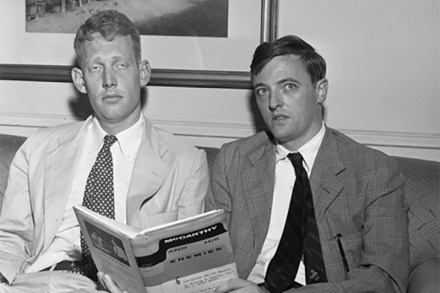
I suspect at least 10 times more Americans will have heard of William F. Buckley Jr than L. Brent Bozell Jr but things could have been very different. For years, Bozell was Buckley's closest collaborator and perhaps the second most influential ideologue in the nascent conservative movement. He helped with the founding of National Review, co-wrote McCarthy and His Enemies with his college friend Buckley and ghostwrote The Conscience of a Conservative for Barry Goldwater.Bozell was a fierce Cold Warrior. Even the hawkish Buckley might have blanched when his tall, red-headed, impetuous friend announced that the United States should be ‘disposed to use [nuclear weapons] in good conscience’ against the Soviet Union.

bozell