Westminster

Our dangerous impulse to make sense of murder

From our UK edition

‘On Friday noon, July the 20th, 1714,’ begins the small, perfect 20th-century novel The Bridge of San Luis Rey, ‘the finest bridge in all Peru broke and precipitated five travellers into the gulf below.’ In the coincidence of crossing the bridge at the same time, explains the writer, Thornton Wilder, these five seemed to have been assembled by pure chance. Or had they? He entitles this first chapter ‘Perhaps An Accident’. He spends the rest of his book tracing the lives of each until the moment when, in a twang of rope, fate hurled all together into the abyss. Thus is the reader’s interest engaged for the human histories that unfold. But Wilder, an American Christian humanist, falters in his rationalism.
The response to the Westminster attack has been predictably farcical

From our UK edition

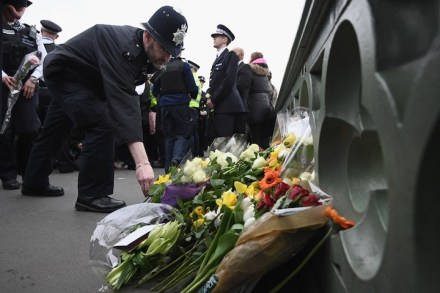
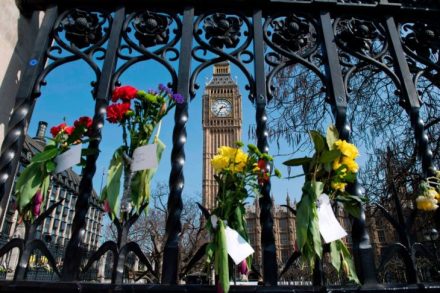
Since last week’s attack in Westminster, various readers have asked whether my list of ‘standard responses to terrorism’ has held true in the aftermath of this attack as in the aftermath of so many attacks before. And since it appears that good news must now immediately be seized from any tragedy – even within minutes of that tragedy occurring – in keeping with the times, I am happy to report that my list does indeed hold true. I had already noted last week that we were swiftly into the realm of hashtaggery with ‘Pray for London’ trending. I must say that I’m never sure how many of the people urging people to do this actually pray themselves, or think prayer works, or what it might achieve.

Watch: John Bercow slaps down SNP MP for ‘unseemly’ behaviour

From our UK edition

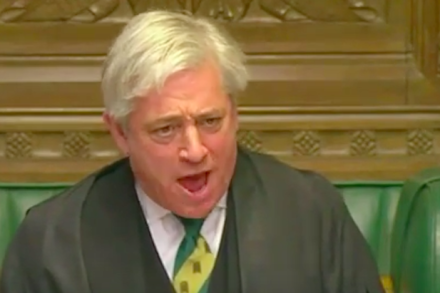
Ever since the (fast depleting) SNP 56 descended on Parliament in 2015, they have been frequently criticised for failing to grasp Westminster etiquette. There have been a number of incidents — from Angus MacNeil chewing gum in the Chamber to the SNP clapping en masse. Today was no exception. During PMQs, the Speaker had to intervene after Joanna Cherry, the MP for Edinburgh South West, heckled the Prime Minister a bit too vigorously: 'Miss Cherry. This is very unseemly heckling. You are a distinguished QC, you wouldn't behave like that in the Scottish courts -- you'd be chucked out!' With Phil Boswell going on to receive a ticking off for heckling, it seems the SNP have no time for Westminster convention now their minds are on 'IndyRef2'.

Theocracy should scare us more than terror

From our UK edition

In yesterday's Guardian, David Shariatmadari confronts the claim that Islam is an especially violent religion. The claim, he says, is undermined by the fact that jihadi terrorism is a very recent phenomenon. Yes, there is also the violence of empire-building in its history, but you could say this of Christianity too. ‘Aspects of Islamic teaching do indeed justify some kinds of violence. Islam isn’t a pacifist religion. But again, it has this in common with Christianity, Judaism and other world faiths.’ As I have said quite a few times before, it is simply wrong to say that Islam and Christianity have much the same view of war and peace. Judging from its founding texts, Christianity is a pacifist religion, for its founder rejected violence.

Forget ‘virtue signalling’ – ‘empathy patrolling’ is the new moral phenomenon

From our UK edition

I’ve had just about enough of being told how to feel about what happened last Wednesday.  I feel angry. I still feel shock. I feel a keen ache for the families of those murdered, especially the loved-ones of PC Keith Palmer.  I feel that cold spite that works its way into your heart at times like these, vengeful cruelty passing itself off as hard-headedness. When I remember this, I feel ashamed to have given in to it.  I feel scared of an ideology that crashed into the 21st century in an outrageous spectacle but has now made its choreography more low-key.  I feel contempt for the demagogues who seek to exploit the raw emotions of After Wednesday. I feel disdain towards those rolling their eyes at the locution ‘After Wednesday’.

Of course we’re not cowed by terrorism – what other choice do we have?

From our UK edition

Stay safe, London. Stay safe, everyone. It’s nice, isn’t it, as a sentiment, which is just as well because it is the motto du jour of every celebrity who has added his or her mite to what passes as debate on the terrorist attack last Wednesday. And, my goodness, they all piled in: JK Rowling, Katy Perry, James Corden, Neil Gaiman; every man and woman of them, you’ll be pleased to hear, against this sort of thing, and urging us all – especially those not actually resident in London – to 'stay safe'. The other trope is that 'nothing will divide us', that this is what terrorists want – Stella McCartney et al. This is presumably for the benefit of those people whose reaction to the man from Tunbridge Wells is to go out and punch a Muslim.

What the papers say: Are tech companies doing enough to tackle terror?

From our UK edition

Amber Rudd has vowed to ‘call time’ on tech companies who are giving terrorists ‘a place to hide’. The Home Secretary's comments come after it emerged that Westminster attacker Khalid Masood was sending encrypted message on WhatsApp in the lead-up to the attack; Rudd is ‘right to read them the Riot Act’, says the Sun, which ups the criticism of WhatsApp in its editorial this morning. The paper says that if tech companies don’t start behaving then ‘there will be no alternative’ but for the Government to bring in new legislation to force them to co-operate with the security services.

3 things we should do to help tackle the Islamist terror threat

From our UK edition

Those charged with keeping Britain safe from Islamist-inspired terrorism have always been clear that it was a question of when, not if, there would be another attack as I say in The Sun this morning. The one thing that has surprised the security services about this attack is the age of the terrorist. Up to now, their focus had been on angry young people. No one was planning for a 50 something terrorist. Our way of life should not change in response to this terrorist attack. But there are things we can do to combat this threat more intelligently. The security services don’t have the manpower to follow everyone who appears on their radar as the Westminster attacker Khalid Masood did; it takes 12 people to keep one person under close surveillance.

What the papers say: How can we prevent a repeat of the Westminster attack?

From our UK edition

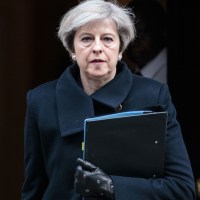
Theresa May told MPs yesterday that Britain will not waver in the face of terrorism. She is widely praised for her emotional address in the Commons, in which she said simply: 'We are not afraid'. But still the question lingers: what can we do to prevent a repeat of Wednesday’s attack? Theresa May hit precisely the right note in her address to MPs, says the Daily Telegraph, which compares the Prime Minister’s response to that of Margaret Thatcher’s after the Brighton bombing in 1984. Yet while her message is an important one, there are ‘inevitable questions’.

Pray for London, for Antwerp, for Nice: this is Europe’s new normal

From our UK edition

The hashtag ‘PrayForLondon’ is trending on social media. But so is ‘Antwerp’. Because no sooner were we invited to pray for London than a man of ‘North African descent’ was narrowly prevented from doing something similar in the Belgian city. This is life as usual in Europe now, of course. But among the endless replays to date - and the endless replays yet to come - there are several things worth noting about Wednesday’s attack in London. The first is that the perpetrator – now identified as one Khalid Masood – was in one sense unusual. A recent comprehensive analysis published by my colleague Hannah Stuart found that among Islamist-related offences in the UK the most common age of the offender was 22.

Isis claim responsibility for Westminster terror attack

From our UK edition

Islamic State has claimed responsibility for yesterday's deadly terror attack in Westminster. Isis described the man involved - a British-born jihadist who has been named by police as Khalid Masood - as a 'soldier of Islamic State'. The terror group released a short statement, saying: 'The attacker yesterday in front of the British Parliament in London was a solider of the Islamic State, executing the operation in response to calls to target citizens of coalition nations'. The statement from Isis was published by the Amaq News Agency, a propaganda outlet with links to the organisation. Despite claiming responsibility for the attack, however, Isis released no further details about the man involved.

The scale of Islamist extremism is a problem for MI5

From our UK edition

In her statement to the House of Commons, Theresa May said that the man responsible for yesterday’s attack was British-born and had previously been investigated by MI5 ‘in relation to concerns about violent extremism’. However, May stressed that, ‘The case is historic—he was not part of the current intelligence picture.'  Now, the fact that the attacker was known to the security services will lead to questions about why a closer watch wasn’t being kept on him. But there is, frankly, a volume problem here. The number of radicalised individuals is now so large -- there are several thousand Islamist extremists being monitored by MI5 -- that the security services have to be selective about who they keep the closest tabs on.

Westminster terror attack: Theresa May’s statement to the Commons

From our UK edition

Mr Speaker, yesterday an act of terrorism tried to silence our democracy. But today we meet as normal – as generations have done before us, and as future generations will continue to do – to deliver a simple message: we are not afraid. And our resolve will never waiver in the face of terrorism. And we meet here, in the oldest of all Parliaments, because we know that democracy, and the values it entails, will always prevail. Those values – free speech, liberty, human rights and the rule of law – are embodied here in this place, but they are shared by free people around the world. A terrorist came to the place where people of all nationalities and cultures gather to celebrate what it means to be free.

Westminster terror attack: Today’s newspaper front pages

From our UK edition

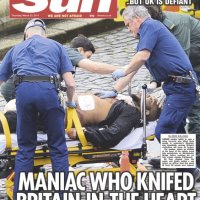
Five people are now confirmed to have died in yesterday’s terror attack in Westminster and police have arrested seven people in connection with the incident. Here’s how the newspaper editorials and front pages have covered the atrocity: The Sun says the terrorists are wrong if they think that yesterday’s attack means ‘we will be cowed’. The nation will mourn those killed but ‘normal life goes on’. But the Sun says that we must now rethink how to tackle the terror threat. Yesterday’s attacker ‘could barely have picked a more ­fortified place’, the paper points out. But ‘imagine how much greater the carnage might have been elsewhere’.

Westminster attack: Terrorist named by police

From our UK edition

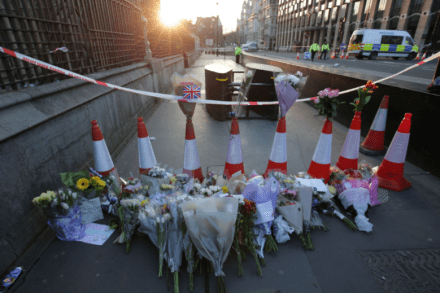
A terrorist who killed four people and injured forty others in yesterday's 'depraved' attack in Westminster has been named by police. Khalid Masood, 52, who was born in Kent and is believed to have been living in the West Midlands, was a career criminal with a series of previous convictions. Scotland Yard named the Westminster attacker hours after Theresa May told MPs that the man responsible had previously been investigated by MI5. In her statement to the Commons, the PM also paid tribute to the dead police officer, PC Keith Palmer, who she said was 'every inch a hero'. Aysha Frade, 43, who worked at a college in Westminster, Kurt Cochran, an American tourist, and 75-year-old Leslie Rhodes, from Streatham in south London, were also named among the dead.

Theresa May tells the country to go about its business normally tomorrow

From our UK edition

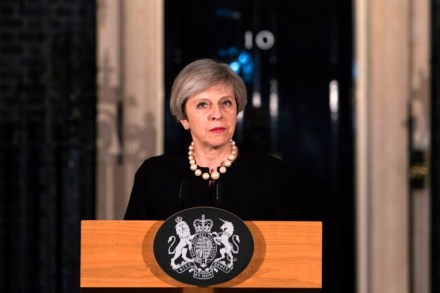
Speaking in Downing Street this evening, Theresa May has urged people to go about their business normally tomorrow. In a statement that struck an appropriately defiant tone, May said that the targeting of Westminster and the Houses of Parliament ‘was no accident’. But that that any attempt to defeat the values of ‘democracy, freedom, human rights, the rule of law’ through ‘violence and terror is doomed to fail’. Talking of the police officer who died in the attack, and the others who have been injured, she praised the ‘exceptional bravery of our police and security services who risk their lives to keep us safe’. This is the first terrorist attack that Theresa May has had to deal with as Prime Minister.

Westminster terror attack: Theresa May’s speech

From our UK edition

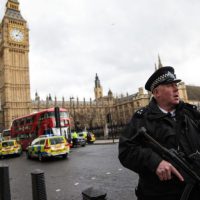
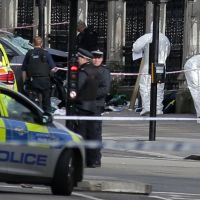
I have just chaired a meeting of the Government’s emergency committee, COBRA, following the sick and depraved terrorist attack on the streets of our Capital this afternoon. The full details of exactly what happened are still emerging. But, having been updated by police and security officials, I can confirm that this appalling incident began when a single attacker drove his vehicle into pedestrians walking across Westminster Bridge, killing two people and injuring many more, including three police officers. This attacker, who was armed with a knife, then ran towards Parliament where he was confronted by the police officers who keep us – and our democratic institutions – safe. Tragically, one officer was killed. The terrorist was also shot dead.

MPs can no longer employ family members – and SpAds are delighted

From our UK edition

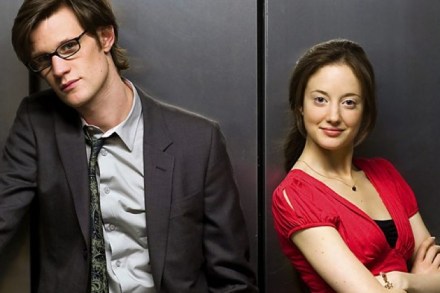
It wasn’t quite our answer to the West Wing — too young, too cynical — but it filled a Bartlet-shaped hole in the TV schedule. Party Animals followed a clique of sexually bipartisan political advisers at Westminster in the dying days of New Labour. Matt Smith and Andrea Riseborough played researchers to a Caroline Flintish Home Office minister, pragmatic and idealistic in the right measure, while Shelley Conn and Pip Carter worked for her shadow number, a sort of dishy Ed Vaizey eager to modernise the Tories one decriminalised spliff at a time. There was little in the way of Sam Seaborn idealism and the implausibly attractive leads seemed to switch romantic allegiances in the time it took to power-walk down a corridor in Portcullis House.

The return of the What’s That Thing? Award for bad public art

From our UK edition

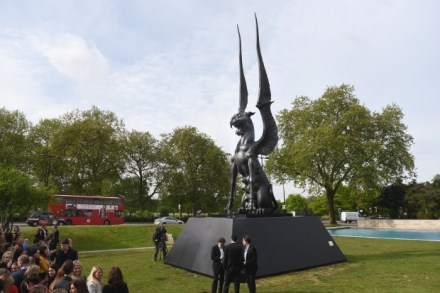
Wouldn't it be nice, in these divided times, for humanity to have a common enemy – preferably an inanimate one. Welcome to the What’s That Thing? Award. We’re in our second year, hunting down the most execrable new pieces of public art that have appeared in the past year in this country and this time we've teamed up with the Architecture Foundation. The prize grew out of a report I wrote six years ago when we were at peak public-art-as-urban-panacea and every council was desperately clambering over itself to add a bit of swanky tat to their portfolio of local amenities.