Weather

Barometer | 9 March 2017

From our UK edition

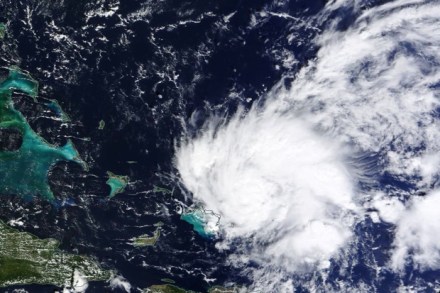
Naming the weather Former BBC weatherman Bill Giles has said he’s fed up with storms being named. — The practice of naming storms in the UK began with storm Abigail in October 2015, although some earlier storms, like Bertha in 2014, were the remnants of hurricanes already named in the US. The St Jude’s Day storm of 2013 took its name from the saint’s day on which it fell. — The US National Hurricane Centre first named storms in 1950, when it started calling them by a phonetic alphabet: Able, Baker, Charlie etc. Three years later it switched to women’s names, starting with Alice, a damp squib with winds not exceeding 60mph. Its first male storm was Bob in 1979, a 65mph weakling.

Storm Doris is here. It’s time to panic

From our UK edition

Today is Storm Doris's day.  A woman called Helen Chivers, not Shivers as she should be, from the Met Office was on Radio 4 this morning telling us that giving human names to gusts of wind is a really good thing because it makes everyone aware of the dangers of bad weather. We must keep our ears glued to the radio, the way you see in old war films and remain very alert because Storm Doris is going to be windy and there will also be snow in Scotland. I’m not taking any chances and will retire to the cellar under my house. Yesterday I was alerted to other new dangers in my once humdrum life. I thought my new cooker had broken because I was unable to light it. But when an engineer came to take a look, he explained that there was nothing wrong with it.

Diary – 9 February 2017

From our UK edition

February Fill-Dyke. But north Norfolk is dry, at least in terms of rain. Instead we have coastal flooding. Three years ago, a tidal surge caused major damage and destruction to sea defences, wildlife habitats, paths and buildings. Another surge last month was less dramatic but still reached the gate of a friend’s house, set well back, behind marshes and road. It is terrifying to experience this unstoppable force and hear its mighty roar. Whole shingle banks were flicked aside. As a small child, I stood on the cliff top above raging seas in Scarborough, and the storm seemed biblical. You never underestimate the force of nature, and possibly the wrath of God, once you have witnessed a tidal surge. Brexit has been as bad as any surge in washing away hitherto strong foundations.

The turf | 19 January 2017

From our UK edition

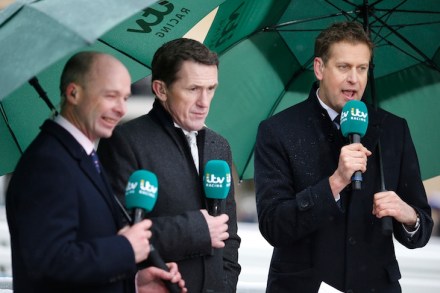
You had to feel for ITV’s new racing team on their opening day at Cheltenham. It was cold, wet and utterly miserable but they opted not to take refuge in a warm studio but to stay close to the action under their brollies, putting a brave face on things. During what I nowadays look back on as my misspent youth as BBC political editor, I once did the same. As I began a live interview for the Nine O’Clock News from an outside balcony at a Labour party conference, bursting to reveal some exclusive information, the heavens opened. I was drenched within 30 seconds but continued, only for the newscaster to cut me off after just one question with a brisk ‘Thank you, Robin Oakley in Brighton.’ Furious, I called the programme editor: ‘What the hell were you doing?

Barometer | 11 August 2016

From our UK edition

The end of an emperor — 82-year-old Emperor Akihito of Japan has announced that he wants to abdicate, partly, he said, because he doesn’t want Japan to come to a standstill in the event of him falling ill, as with previous emperors. — When Emperor Hirohito was diagnosed with duodenal cancer in 1987, the news was not reported; nor, it is said, was the emperor told. But within a year it became clear that he was seriously ill, because he had to cancel appearances. TV reporters camped outside the palace; weddings and autumn festivals were cancelled. When Hirohito died on 7 January 1989, aged 87, there were 48 days of mourning, though people seem to have grown weary by the funeral in February: only 200,000 turned up for the procession, when police expected 800,000.

The Spectator Podcast: Summer of terror | 30 July 2016

From our UK edition

After a week where both Germany and France suffered terror attacks, the question of the relationship between Islamic terrorism and Europe’s refugee crisis is once again rearing its head. In his Spectator cover piece, Douglas Murray argues that whilst the public knows that 'Islamism comes from Islam', Europe’s political classes are still refusing to tackle the problem at its core. So how can we bridge this gap between what politicians are saying and what the public are thinking? And does Europe have to come to terms with a new reality of domestic terrorism? On this week's podcast, Douglas Murray speaks to Lara Prendergast. Joining them both to discuss Europe's summer of terror is Haras Rafiq, Managing Director of the Quilliam Foundation, a counter-extremism think tank.

The Spectator Podcast: Summer of terror

From our UK edition

In a week in which both Germany and France have suffered terror attacks, the question of the relationship between Islamic terrorism and Europe’s refugee crisis is once again rearing its head. In his Spectator cover piece, Douglas Murray argues that whilst the public knows that 'Islamism comes from Islam', Europe’s political classes are still refusing to tackle the problem at its core. So how can we bridge this gap between what politicians are saying and what the public are thinking? And does Europe have to come to terms with a new reality of domestic terrorism? On this week's podcast, Douglas Murray speaks to Lara Prendergast. Joining them both to discuss Europe's summer of terror is Haras Rafiq, Managing Director of the Quilliam Foundation, a counter-extremism think tank.

What a shower

From our UK edition

The fact that we get sun when we expect hail and hail when we expect sun provides those of us who live in Britain with a handy subject to cover the most awkward of conversational lulls. The weather forms the backbone of our national discourse — perhaps because our own personal observations and doom-laden predictions are about as likely to be as accurate as the official forecasts. Ariane Sherine and Lara Prendergast discuss why our weather forecasters just can't get it right: To look on the sunny side for a moment, perhaps this should cheer us. If we can’t predict what the weather is today, then perhaps — since we can do precious little about it — we should not be quite so alarmed about climate-change predictions.

High life | 7 July 2016

From our UK edition

I am trying to decide with some friends which is worse, English weather or English football. The former is improving as I write, but the latter’s problems are terminal. There are too many ‘directors of development’ and other jargon-packed non-jobs that interfere with the very simple process of developing football. Send them all to Iceland, bring on a dentist, and cut footballers’ salaries by 90 per cent, and you just might one day learn to win. But on to far more important things than ghastly football, like the wonderful garden party given by my friend Richard Northcott that brought back some very pleasant memories. There’s something rejuvenating about running into old girlfriends, despite the wrinkles and the sags. Memory speaks.

Barometer | 31 March 2016

From our UK edition

Area of doubt Hillary Clinton has said that if she is elected she will open files on the US military facility in Nevada known as Area 51. Some rumours which will almost certainly not be confirmed: — According to a physicist who claims to have worked there, nine captured alien spacecraft have been examined there. Another says that a small band of aliens works there. They are 5ft high, wear dungarees and came from a planet called Quintumnia, 45 years’ travel time away. — Scientists there are working on a 6,000mph plane called Aurora, a prototype of which has already been flown. — Workers are suing the USAF after their skin turned red and peeled off.

There’s a transgender storm coming…

From our UK edition

The weather chart does not usually echo social trends, but Monday might be an exception. We could be about to be blown about by the world’s first transgender storm. This week, the Met Office began the practice of naming storms to strike the UK, in the manner that tropical hurricanes have been named by the World Meteorological Organisation since the 1950s. If a storm looks as if it is developing winds powerful enough to uproot trees and cause structural damage to buildings it will be given a name from a list. The list of chosen names goes through the alphabet in progression, alternating between male and female names. The first named storm, Abigail, was due to brush the north-western fringes of Scotland on Friday morning, before moving into the North Sea and away to Norway to die.

Barometer | 17 September 2015

From our UK edition

It’s their party Jeremy Corbyn won the Labour leadership contest with 60% of the vote among four candidates in the first round. Which leader has the largest mandate from their party? — David Cameron was elected in 2005 with 28% of the vote out of four candidates in the first round (held among MPs only). He won 68% of the party vote in the run-off with David Davis. — Tim Farron won 57% of the Lib Dem vote this year. Only two candidates stood. — Nicola Sturgeon was appointed as SNP leader unopposed last November. — Nigel Farage was elected Ukip leader in 2006 with 45% of the vote (among four candidates) in a first-past-the-post system. — Natalie Bennett was elected Green leader in 2012 with 59% in the final round of voting.

Come rain or shine

From our UK edition

‘Pray don’t talk to me about the weather, Mr Worthing,’ pleads Gwendolen in The Importance of Being Earnest. ‘Whenever people talk to me about the weather, I always feel quite certain that they mean something else. And that makes me quite nervous.’ Weatherland would make Gwendolen very nervous indeed. Our observations of the sky, Alexandra Harris reveals in this extended outlook, have always meant something else. Weatherland is a literary biography of the climate. Beginning with the Fall (in the Biblical rather than the autumnal sense) and ending with Alice Oswald, Harris condenses 2,000 years of weather ‘as it is recreated in the human imagination’.

Barometer | 9 July 2015

From our UK edition

Naming terror David Cameron and the BBC argued over what to call the terror group most papers refer to as Isis — with the PM preferring Isil and the BBC continuing to call it Islamic State. Two more terror groups whose names caused problems in Britain: — The Red Army Faction was a German terror group which existed between 1970 and 1998, when it declared itself dissolved. Faced with the acronym RAF, British media preferred to call the group by its nickname the Baader-Meinhof Gang. — In the 1970s Italy was terrorised by a group known as the Red Brigades, most notorious for kidnapping and murdering the former prime minister Aldo Moro in 1978.

French Notebook

From our UK edition

An overnight stop on the Ile de Ré taken between the St Malo ferry and the Quercy, where we always spend June, reminds one how closely French history lives entangled with modern life. Sleek hotels, harbours full of private boats, overpriced gift and fashion boutiques are cheek by jowl with ancient monuments and fortifications, in streets of small stone houses so narrow that the ubiquitous bicycles barely get through. Amid the massed tourists here, they still cultivate vines, mine salt and grow potatoes to send over toute la France. The mussels and lobsters remind me of home in north Norfolk and the pretty cottages are freshly painted white with pale grey or soft green shutters.

Picnics

From our UK edition

Strange, isn’t it, that despite having such famously terrible weather, we Brits are so fond of a picnic. It’s something to do with making the most of what sunshine we get — but if you ever plan to eat outdoors, it will almost invariably end up raining. Never mind. There’s very little that we’re better at than embracing our terrible weather, and keeping buggering on. This year’s Ascot was, for me, a case in point. Every day of the meet was blessed with excellent weather — except, of course, the one day I went. A person more sensible than I might have looked at the forecast and planned accordingly. I checked, saw that it was going to rain — and just got on with my picnic preparations as usual. So come 11 a.m.

The hottest year on which record?

From our UK edition

Did you know that 2014 was the hottest year ever recorded in the entire history of the world? Probably you did because it’s been all over the papers. Not only that but President Obama slipped it into his State of the Union address and the president of the World Bank quoted it at Davos and the singer and rap producer Pharrell Williams is so concerned that he plans to stage a series of Live Earth concerts with Al Gore to emphasise the seriousness of the problem. And these luminaries must know what they’re talking about, right? After all, it’s not just one distinguished scientific institution which has endorsed the ‘2014: hottest year on record’ claim, but a whole clutch of them.

How long will it be before the climate forces us to change?

From our UK edition

This time last year, homeowners in Oxfordshire and Berkshire were recovering after storms had brought down power lines and blocked roads. Soon, power cuts were the least of their problems. The Thames flooded. In the south-west, the emergency services evacuated the Somerset Levels, and the sea wall at Dawlish in Devon collapsed — cutting the rail line to Cornwall. Political Britain burst its banks. Ed Miliband demanded action. David Cameron convened emergency committees. TV reporters brought us urgent reports as water lapped their boots, while newspaper correspondents named the guilty men. As in twenty20 cricket, you enjoy a quick intense hit with 24/7 news, then move on to the next game. The weather will not be an election issue.

Is there anything a gospel choir can’t cheer up?

From our UK edition

‘I’m starting to think that all of the world’s major problems can be solved with either oyster sauce or backing vocals.’ That was Brian Eno writing in his diary one evening, after a long day’s thinking and maybe a glass or two of something agreeable. I am not entirely convinced by the bivalve mollusc argument, but the second half of his apophthegm makes perfect sense. Last week I was listening to Tim Burgess’s 2012 album Oh No I Love You (OGenesis), a recent and possibly inspired purchase. Mr Burgess is perhaps better known as lead singer and increasingly large face of The Charlatans, the long-serving Midlands indie band who enjoyed a brief spell in the sun during the Britpop horror.

Winter is coming – the other terror stalking Iraqi Kurds

From our UK edition

The heroic Kurdish resistance in Kobane rightly commands headlines. A larger disaster, however, looms in Iraqi Kurdistan where - absent urgent action by the UN and Iraq - thousands of vulnerable people who fled from the Islamic State (Isis) could die in weeks from cold-related illnesses. It was comfortably warm in the Kurdish capital of Erbil last week, but in December temperatures will drop to below zero in the cities and much lower in the mountains. The warmth made the makeshift camp I visited in the Christian enclave of Ankawa look almost bearable. It occupies a public park and houses 50 families, mainly Christians from Mosul, in increasingly threadbare tents. Soon, torrential rain can be expected to turn the hard ground here into a muddy lake, soaking everything and reducing hygiene.