Weather

The Spectator at war: Making heavy weather for the enemy

From our UK edition

From The Spectator, 17 October 1914: In view of the possibilities, naval and aerial, we cannot help thinking that it would be a good thing if our newspapers suppressed the weather forecasts and all information as to barometrical pressure, which are very probably communicated by wireless to our enemies. These forecasts are now exceedingly accurate, and we can well understand how useful it might be to the enemy to know what kind of weather they might expect when they reached British air. If the authorities think there is anything in the point, they will no doubt take it up. We feel perfectly sure that there will be no annoyance expressed either on the part of the Press or of the general public if they are deprived of weather forecasts.

Don’t worry Brooks Newmark: paisley was sexy once…

From our UK edition

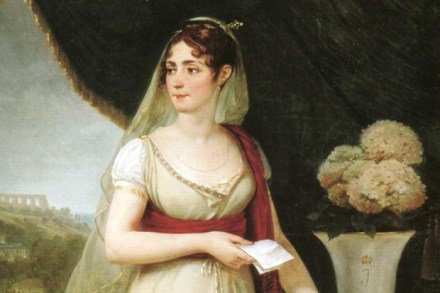
Paisley power Paisley pyjamas were in the news. While associated with the town in Renfrewshire, whose mills produced the patterns from 1805, what we know as paisley was first popularised in France thanks to its part in the courtship between the power couple of the day: Napoleon and Josephine. — While stationed in Egypt in 1798 he sent her a shipment of Kashmiri shawls which did not immediately grab her eye. She described the design as 'ugly and expensive but light and warm. I have serious doubts that this fashion will last.' — But she later changed her mind and was painted wearing one of the shawls, leading to mass popularisation. Who sexts?

Maria Eagle is talking nonsense about floods and climate change

From our UK edition

The Shadow Environment Secretary Maria Eagle headed off to Woking today, where she addressed an audience of environmentalists at WWF’s swanky new headquarters. Her speech, which was widely trailed, was full of silly season fare, and her superficial understanding of the climate debate shines through. Take this for example: ‘The Met Office, the Committee on Climate Change and the overwhelming majority of the scientific community all tell us that last winter’s floods are consistent with the projected consequences of climate change.’  ‘Consistent with’ is one of those gloriously weasel phrases that the more disreputable kind of climate scientist likes to use when speaking to politicians.

L.P. Hartley’s guide to coping with a heatwave

From our UK edition

Those of us who have been struggling to endure the recent heat should turn to L.P. Hartley’s classic coming-of-age novel The Go-Between for some advice. ‘There’s no such thing as bad weather, only unsuitable clothing,’ Alfred Wainwright wisely said, and L.P. Hartley’s young Leo couldn’t have agreed more. He arrives at his friend’s smart country house without summer clothes and, as the mercury soars, suffers in his Eton collar, Norfolk jacket, breeches, black stockings and boots. ‘You are looking hot,’ everyone tells him, until at last Marian — the daughter of the house — takes him shopping for a cooler suit.

Warning to all fasting Muslims!

From our UK edition

Are all of Britain’s fasting Muslims about to die because of the heatwave? This is what’s worrying me as I sit in my darkened room — curtains drawn and lights down low, according to the official government advice. Dr Paul Cosford of something called ‘Public Health England’ said: ‘Many members of the Muslim community may be fasting during the current period of Ramadan. During hot weather it’s important to balance food and fluid intake between fasts and especially to drink enough water.’ One can only hope and pray that as most of England’s Muslims come from Bangladesh, India and Pakistan, where the temperature exceeds on a daily basis what we’re experiencing for a few hours, they might be ok, Paul – huh?

Barometer: Storm waves? It could be three times worse

From our UK edition

The test of a wave Waves measuring 27ft from peak to trough were seen off Land’s End as the stormy weather continued. How do these compare with the highest waves ever measured? — Waves of 67ft were measured by a buoy off the coast of Donegal in December 2011, the highest found around the British Isles. — The highest wave yet recorded during a storm was one of 91ft during Hurricane Ivan in August 2005. — A landslip in Lituya Bay, Alaska, on 9 July 1958 created a local tsunami which tore down trees 200ft above sea level. Water directly opposite the landslip site splashed to a height of 1,720ft, tearing down trees even at that height. Comparison shopping Retailers have begun to publish their sales figures for the pre-Christmas period.

Global warming’s glorious ship of fools

From our UK edition

Yes, yes, just to get the obligatory ‘of courses’ out of the way up front: of course ‘weather’ is not the same as ‘climate’; and of course the thickest iciest ice on record could well be evidence of ‘global warming’, just as 40-and-sunny and a 35-below blizzard and 12 degrees and partly cloudy with occasional showers are all apparently manifestations of ‘climate change’; and of course the global warm-mongers are entirely sincere in their belief that the massive carbon footprint of their rescue operation can be offset by the planting of wall-to-wall trees the length and breadth of Australia, Britain, America and continental Europe.

Media storm stops a train near you

From our UK edition

It’s right, isn’t it, that the storm we’ve just had was far, far, worse than the Worst Storm In A Million Years © we had a month back and which was trailed in advance by the Met Office and all the news programmes? And as others have pointed out, while there was far more damage done to the country and more people were left without electricity this time around, public transport – and especially the trains – were nowhere near so badly affected. We are back, slightly, in Mandela territory; blanket coverage and predictions of an apocalypse on the news programmes seems to have affected the train companies more deeply than did the actual storms. When the country isn’t whipped up into a fury in advance, the companies seem to struggle by.

Letters: The EU diplomats hit back at Norman Lamont

From our UK edition

EU diplomacy Sir: Lord Lamont’s article ‘The EU’s scandalous new army of overpaid diplomats’ (Politics, 20 July) revisits his oft-repeated views on the European Union. It also shows scant regard for the facts and for the reality of the EU’s Common Foreign and Security Policy. The European External Action Service (EEAS) was created by unanimous agreement of all EU governments to project and implement EU policies in the areas covered in the EU Treaties, including trade, aid and the environment, which member states have decided are better done collectively. It has made EU external policy-making more streamlined and cohesive. It in no way duplicates the work of national diplomacies.

Met Office in crisis meeting as sun comes out

From our UK edition

The Met Office is apparently holding a ‘crisis meeting’ today to discuss why Britain’s weather refuses to behave itself these days. No sooner had the camp, pirouetting, forecasters told us that we were in for weeks and weeks of gale force winds and torrential rain, stretching into July, better wear your wellies etc, than the sun came out, the birds began to sing again and the wind became a vague, if pleasant, caressing of the senses. Their meeting is really to ask the rhetorical question, the only question they know – is it global warming or what? – rather than the more immediately relevant question: why are we always completely wrong about everything? I think it’s pique that makes them believe so unquestioningly in climate change.

What’s happening? Snow was ‘disappearing from our lives’ in 2000

From our UK edition

Enormous thanks to OGT for alerting us all to the brilliant article from the Independent – published on Monday March 20th, 2000. Here’s the first bit of it: 'Britain's winter ends tomorrow with further indications of a striking environmental change: snow is starting to disappear from our lives. Sledges, snowmen, snowballs and the excitement of waking to find that the stuff has settled outside are all a rapidly diminishing part of Britain's culture, as warmer winters - which scientists are attributing to global climate change - produce not only fewer white Christmases, but fewer white Januaries and Februaries. The first two months of 2000 were virtually free of significant snowfall in much of lowland Britain, and December brought only moderate snowfall in the South-east.

This extreme weather is a consequence of exhaustive reporting

From our UK edition

Just as a follow up to what I was talking about below. Here’s the government’s chief scientific advisor, Sir John Beddington: 'Professor Sir John Beddington said that time lags in the climate system meant that accumulations of greenhouse gases in the atmosphere now will determine the weather we experience for the next 25 years. 'Climate change is already manifesting itself in huge variations in the weather, clearly illustrated by the way Britain experienced both drought and extreme rainfall last year, he said.' That’s from today’s Torygraph. I’m sorry, I just don’t swallow it. I’m perfectly prepared to accept that man-made climate change is a reality. But to tie it to what was, last year, perfectly normal weather is facile and deceiving.

What’s strange about this weather? Nothing at all

From our UK edition

How can we stop weather hyperbole? I am so staggeringly bored of waking up each morning to headlines which insist we’re all going to be killed – on the roads, or through freezing to death, or in a flood. There have been four weather hyperboles already so far this year; warmest January, or warmest day in January ever, wettest February, coldest March. There are so many criteria for awarding a hyperbole sticker that almost every day of the year could qualify. So, snow in March? An unheard of experience? Nope, it happens every other year, more or less – and that’s in the south of the country. Last year at this time we were just entering a very mild and rather pleasant phase – warmest April on record! Global warming! We’re all going to die!

I need your help

From our UK edition

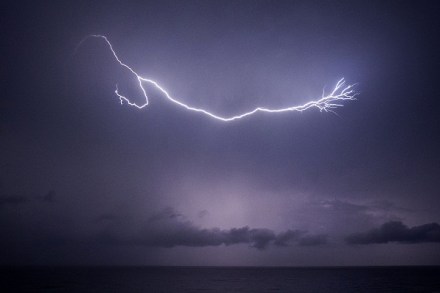
I am in southern Italy and there has been thunder and lightning pretty much continuously since Tuesday. I am quite scared of lightning. I need to buy some comestibles; especially wine and cigarettes. But the tiny apartment I have rented is connected to the outside world only by 72 metal steps affixed to the side of the mountain by metal scaffolding. The lightning is all about. Should I risk it? Would it help if I wore rubber-soled shoes for my dash to the shop? Or will I be forever fused to the rockface, like a sort of crap gargoyle? I turn to you for help, and succour.

Turkish time travel

From our UK edition

Harry Mount looks across the Dardanelles and sees yesterday’s weather today In Canakkale — the biggest town on the Dardanelles, where more than 130,000 British, Australians, New Zealanders and Turks were slaughtered in the 1915 campaign — Mark Wallinger, the 2007 Turner Prize winner, has dreamt up a clever little work about memory. On the Asian quayside, looking across to the Gallipoli killing fields on the European side of the straits, is an old shipping container, tricked out like a 1950s picture house; think Cinema Paradiso, and you get the idea. Using a 1950s-style sign, Wallinger has named it ‘Sinema Amnesia’ (Sinema is Turkish for cinema).

The gates of hell

From our UK edition

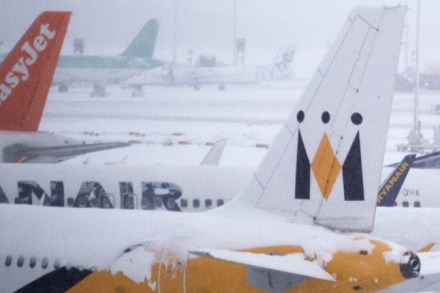
Some blogs get you the news from wizards of Wall Street, or the war-torn back alleys of Baghdad. But here at Coffee House we aim to capture a more, well, English experience: news and views from the gates of Gatwick Airport. I'm stuck here, watching the diligent but lonely tractors fight against a mass of snow. Several inches of snow blighted London yesterday, while icy winds made matters worse. Many flights have been cancelled and disappointed holiday-makers have had their Christmas plans put on ice - literally. Everywhere in the airport's soulless halls, amidst tacky tax-free offerings, you hear the same thing: why are the airport operators perennially unprepared for what more and more looks like an annual occurrence?

The Big Society vs A Culture of Hopelessness

From our UK edition

As we all know, Dave has had some problems defining his Big Society idea. It's more conducive to thumb-sucking pieces than snazzy tabloid headlines. Sometimes, however, it might be easier to sell in terms of what it's not. Consider this story, warning that there might be lots of snow this winter: Council chiefs have sparked outrage after proposing residents dig themselves out of the snow as Britain braces itself for another winter of Arctic conditions. As long-range forecasts suggest the country will be hit by blizzards and temperatures plummeting to -20c, bosses at Camden Council prepared to hand out spades.

The Politics of Snow

From our UK edition

With admirable opportunism Sunder Katwala argues that the current frosty conditions make the case for more, not less government. As he says, everyone plenty of people like to rail against government in the absract only to find themselves asking the state to do more as soon as something - such as a heavy snowfall - makes life just that little bit more inconvenient. And, to be fair, he has a point. Many people do think like this, which is one reason why there's not actually a very hefty constituency for libertarianism. This is unfortunate, but true. Nonetheless, even libertarians are permitted to argue that since the public highways are publicly-funded it is indeed the state's responsibility to see that they remain open and clear of snow and ice.

More trouble lies in wait for the government

From our UK edition

Labour lost the first week of the long election campaign. The Hoon and Hewitt plot and the late and tepid endorsements of Brown from key members of the Cabinet have highlighted the divisions within the Labour party. Hoon and Hewitt were right that stories about these decisions will not go away. They will run and run right up to polling day. The weekend papers will also not be good for Labour. To compound Labour’s woes, it looks like the big political story of early next week will be Alastair Campbell’s testimony to the Iraq inquiry, which threatens to dredge up memories of spin and Iraq. It should be remembered, though, that Campbell is a formidable performer and could come out of this appearance far better than expected.