War

Give peace a chance

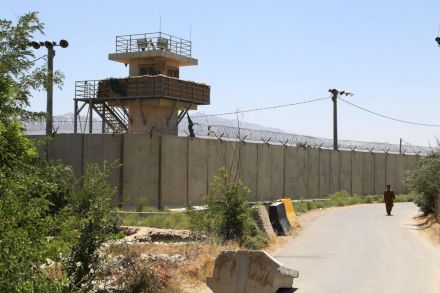
The American war in Afghanistan is over. In the predawn hours of July 2, US troops slunk away from Bagram Air Base, without even informing the local Afghan commander. It was a sorry end to a sad and futile war. For 20 years Bagram was the Gibraltar of American power in Afghanistan, the single largest Nato base in the country, housing 10,000 troops, thousands more support personnel and a Pizza Hut. Now Bagram, and the adjacent prison holding 5,000 Taliban fighters, are in the hands of the Afghan military, which soon showed its mettle by letting an army of looters plunder the base.

How many Lilibets are there in the world?

From our UK edition

Rare Lili Other than the new royal baby, is there anyone in the world formally called Lilibet? — There are 141 Lilibets in the US. None have been born since 1999 — when 8 were born, according to the US Social Security Administration. — Lilibet Foster, born in the US Virgin Islands in 1965, is a documentary-maker whose film Speaking in Strings, about the violinist Nadja Salerno-Sonnenberg, was nominated in the 72nd Academy Awards. — In answer to a freedom of information request in 2017, the Office for National Statistics refused to provide a full breakdown of the first names of people living in Britain. But it does publish a list of the top 100 girls’ names for recent years, which haven’t included Lilibet.

Making the most of Memorial Day

The American tradition to mark important events, or recognize important people, in our history is...well just that, an American tradition. We celebrate our independence with fireworks and concerts during the peak of summer. We celebrate our veterans on the 11th day of the 11th month of each year. We celebrate the laborers who built this country and continue its prosperity with calloused hands, tired eyes and full hearts every September. Just as Labor Day ends the summer season for most families; the long anticipated Memorial Day weekend brings with it the promise of sunshine and beaches. The cultural ‘beginning’ of summer.

Johnny ‘Joey’ Jones memorial day

The terrifying development of AI warfare

From our UK edition

The Chauvet-Pont-d’Arc Cave in France contains some of the earliest known Palaeolithic cave paintings, including those of lions, bears, and hyenas. Thought to be the earliest expressions of human fear, it is hard for us to compute today how frightened man once was to live alongside creatures who viewed us as prey. This primal fear is buried deep within us. It explains our fascination with rare stories of humans being eaten by sharks, crocodiles and big cats. The fear isn’t just about our mortality, but the very thought of us as prey to an unfeeling predator, who doesn’t recognise us as individual thinking humans. In science fiction, this deep-rooted fear has been widely expressed through the portrayal of artificial intelligence (AI).

The funniest current affairs show since Brass Eye: Into the Grey Zone reviewed

From our UK edition

It was something a friend said to me about The Revenant, Leonardo diCaprio’s bloody-minded and brutal Oscar vehicle: ‘The problem with the film is once you start laughing, you can’t stop. And for me, that moment was the second time he fell off a cliff.’ I thought about this a lot listening to Into the Grey Zone, a new podcast hoping to educate its audience about the new forms of constant pseudo-warfare that modern states engage in. This is the world of nerve poisoning in Salisbury, airspace incursions over Taiwan, cyberattacks, mass disinformation and remote interference. None of these things can be considered open warfare but taken together, the podcast implies, they do not suggest we are in a state of perfect peace.

Why is the smoky, febrile art of Marcelle Hanselaar so little known?

From our UK edition

I first became aware of the work of Marcelle Hanselaar in a mixed exhibition at the Millinery Works in Islington. All I remember now about the show, and my review, is that I said she could teach Paula Rego to suck eggs. From the mischievous energy packed into her small figurative paintings I assumed she was young enough to be Rego’s granddaughter. That was in 2003; she was pushing 60. Born in Rotterdam in 1945, Hanselaar is essentially self-taught. She dropped out of art school in The Hague — it was the 1960s — and ran away to Amsterdam; what she learned about painting she picked up from the artists she lived with.

It’s been a tough year for socialites

From our UK edition

New York Here we go again, the annual holiest of holies is upon us, although to this oldie last Christmas feels as though it was only yesterday. Funny how time never seemed to pass quickly during those lazy days of long ago, but now rolls off like a movie calendar showing the days, months, years flashing by. I wrote my first Christmas column for this magazine 43 years ago, sitting in my dad’s office on Albemarle Street. I remember it well because I used every cliché known to man and then some (patter of little feet… children’s noses pressed against snowy windows). The then editor, Alexander Chancellor, said nothing to me but later told a friend that however bad it was, it was better than the Greek political stuff I had been filing.

Boldly going where hundreds have gone before: Brave New Planet podcast reviewed

From our UK edition

Since technology is developing at such light-speed pace, why does it feel so strangely slow? There is a sense that driverless cars, green energy and of course certain vaccines are, for all their breakneck pace, still taking for ever to arrive. Watching the future emerge is like watching slow-motion footage of a high-speed train. We know it’s going quickly — but can we not just fast-forward? Perhaps it’s merely our heightened expectations, our diminished boredom thresholds. Some of our most distinguished thinkers and entrepreneurs have warned that an all-powerful artificial intelligence, badly calibrated, might represent the greatest threat to the long-term survival of humanity.

If this is a war, let’s fight it like one

From our UK edition

Under the cloud of conformity that has settled over the land as a replacement for air pollution, heretics who doubt the wisdom of annihilating a nation in the name of saving it are obliged to navigate around numerous disputational booby traps. You hate old people and want them to die (though some oddballs questioning the proportionality of wholesale lockdowns are old people). You’re only concerned for individual ‘liberty’ and refuse to make personal sacrifices for the greater good, so you’re unpatriotic. All you care about is money. You’re evidently a Trump supporter, and therefore you’re stuck with endorsing his advice to cure Covid-19 by drinking bleach.

What if a virus were ever used as a WMD?

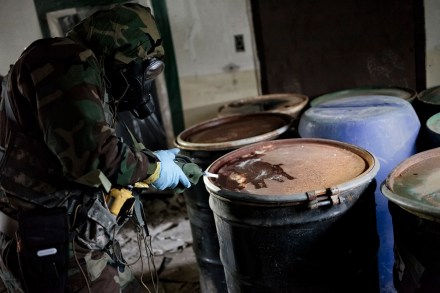
Faced with the coronavirus pandemic, Donald Trump declares ‘I’m a wartime president’, echoing George W. Bush after 9/11. For both men, the jaw-jutting self-flattery was absurd as both had been draft dodgers during the Vietnam war. W. used the family name and connections to secure a place in the Texas Air National Guard, Trump getting a draft deferment because of bad feet (a condition that was never so debilitating as to slow down his golf game). 9/11 did produce two real wars, in Afghanistan and Iraq, so W. had some claim to the title. But should we really be talking about a war against a virus? It’s a strange kind of war that drafts you to stay at home playing Xbox and watching the shopping channel from your couch.

wmd virus

How government should respond

Misdiagnosis can be fatal in a pandemic. Treating the economic effects of the global COVID-19 epidemic as a conventional recession means prescribing the wrong medicine and harming the patient. This is a supply-side recession, not a demand-side recession. The shortfall includes intensive care beds, ventilators, protective gear for healthcare workers, and other medical supplies. Thanks to these shortages, as well as insufficient trained medical personnel, hospitals may soon be overwhelmed everywhere by the demands for treatment of coronavirus victims. To slow the spread of the virus while augmenting existing medical supplies and personnel, governments are promoting social distancing and sheltering in place, both euphemisms for quarantine.

health finance

The coronavirus is springing the Thucydides trap

The first casualty of informational war is truth. The first American casualty of COVID-19 was the myth that the United States can ‘manage’ the rise of China as a world power through mutual interest. That mutual interest was only ever economic. Naturally, most of our politicians, business leaders and commentators explained it as strategic too: as technocracy calls GDP the index of human happiness, so it identifies strategic interests with economic ones. The coronavirus crisis has, however, exposed an essential strategic antagonism between the United States and China.'‘What made war inevitable was the growth of Athenian power and the fear which this caused in Sparta,’ Thucydides wrote in History of the Peloponnesian War.

thucydides

Amazon Prime should be protected by the War Powers Act

I suit up most days (thank you, casual Fridays) and with the stress of New York’s walking speeds and tremendous cleanliness of its streets, the closet life of suits falls somewhere between the lifespan of a monarch butterfly and a succulent fathered by a man in his twenties, another way of saying: cherish life.So, we will call it a Tuesday of last week. I found myself either a) running from hired guns of a Memphis law firm after I had uncovered their Cayman Islands-based money laundering scheme or b) catching my pocket on the armrest of a conference room chair, when I split my dress pants down the leg.

amazon

The best war films to watch on Netflix

From our UK edition

1917, the World War One epic that has picked up 10 Oscar nominations (including for Best Picture and Best Director for Sam Mendes), is currently going great guns in cinema. If it has put you in the mood for more war on screen, then fire up Netflix, where there are plenty of military flicks to pick from. Jarhead https://www.youtube.com/watch?v=-aBP-c28_1M 1917 is not Sam Mendes’s first foray onto the battlefield. Jarhead, released in 2005, was an adaptation of a memoir written by US marine Anthony Swofford about his experience of serving in the first Iraq war – the resulting film is a different kind of war movie in which the longueurs of conflict are brought to the fore.

Donald Trump, president of peace

This article is in The Spectator’s February 2020 US edition. Subscribe here. Groupthink is the last thing a country needs when debating questions of war and peace. But groupthink is what America’s pundits have succumbed to once again. In 2003, voices of opposition to the Iraq War struggled to be heard, with even the progressive cable news channel MSNBC silencing its most outspoken critic (Phil Donahue) and telling a right-wing dissenter from President Bush’s war (Pat Buchanan) that he was expected to represent Republican opinion — which is to say, pro-war opinion. So much for press freedom. Today, groupthink is on the side of peace, or rather on the side of caricaturing President Trump as a warmonger.

peace

Automation and the future of modern warfare

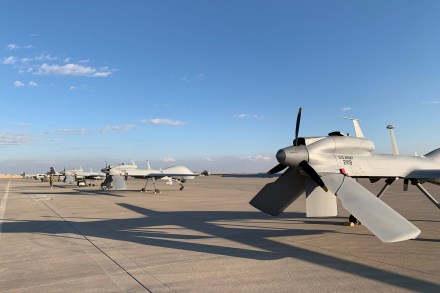
There is an epic moment in the latest Gerard Butler movie Angel Has Fallen where he gets to save the life of the US president (again). The bad guys launch a swarm of dozens of micro drones able to detect and kill dozens of Secret Service agents, destroying anything and anyone that might get in the way of their mission to kill the president.It’s a chilling moment in the movie that clearly demonstrates just how powerless mere mortals will be in the face of superior technology that can operate independently of any direct human control.As with so much in Hollywood these days, movie truth is remarkably close to a reality that has been prefaced since 1984 when the first Terminator movie appeared and suggested the idea of autonomous robots as terrifying killing machines.

drones automation

What will war with China look like?

Like so many wars, this one began with an accident: a US naval vessel patrolling the South China Seas and shadowing the Chinese navy made a small navigation error in rough weather. The ships collided, five Chinese sailors died and their vessel was severely damaged. Beijing saw this as an act of war, the latest in a series of perceived insults by the US administration, and the response was swift. Cyber attacks against Washington DC and the headquarters of the US Pacific Fleet at Pearl Harbor shut down power. Ironically, most of the 175 deaths in the first three hours came not from hospitals where emergency generators kicked in successfully, but from failed traffic lights and massive car pile-ups in both cities.

war china

Does Trump have a better idea than endless wars?

This article is in The Spectator’s November 2019 US edition. Subscribe here. ‘WE WILL FIGHT WHERE IT IS TO OUR BENEFIT, AND ONLY FIGHT TO WIN.’ Thus did America’s Commander-in-Chief at long last enunciate a Trump doctrine, his use of all caps suggesting that this time he really means it. Trump had run out of patience. ‘I held off this fight for almost 3 years,’ he tweeted on October 7, ‘but it is time for us to get out of these ridiculous Endless Wars… and bring our soldiers home.’ Withdrawing US troops from Syria, a decision he first announced last December but then allowed to lapse, marked a first substantive step toward fulfilling one of the central promises of his 2016 presidential campaign.

endless wars

The presidency unchained

When it comes to war, does the president have too much authority? The Framers of the US Constitution had a rather dark view of human nature and went to great lengths to restrain, divide, and decentralize power. In particular, they believed that it was in the nature of executive power to be unduly prone to war. For this reason, they very deliberately placed the power to take the country to war in the Congress. At the Constitutional Convention James Wilson argued, 'This system will not hurry us into war; it is calculated to guard against it.' Yet the presidency has over the years gathered more and more of the war powers unto itself, and at present intense political conflict is tearing at the fabric of the Constitution.

presidency

How would America really ‘end’ Iran?

Donald Trump says that America could ‘end’ Iran, and no doubt we could. The US could launch an air campaign that would destroy the Islamic Republic’s most important military assets. But it’s hard to see exactly how. With a diminishing number of useful allies, not to mention a military exhausted from 18 years of war on terror, America is not in the position it once was to exert great force in the Middle East. Ever since the push to invade Iraq, the US has been shedding allies. We have become increasingly dependent for help on an unimpressive handful of wannabes. Turkey sat out the Iraq War: so did France, Germany and Canada, three of our most potent military supporters.

iran bark bite