Vladimir putin

Putin’s Covid cocoon is a sign of his terror

From our UK edition

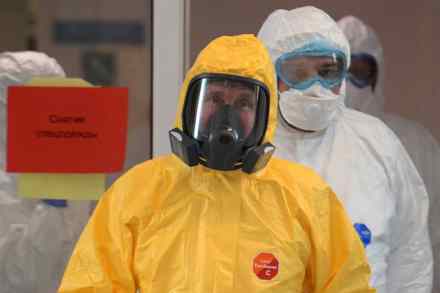
Although he has been vaccinated, Vladimir Putin is self-isolating for at least a week after ‘dozens’ in his entourage came down with Covid. He is apparently showing no signs of being infected. And perhaps no wonder, as even by the standards of his usual presidential protection, since the start of the pandemic Putin has been shielded within a formidable bio-security regime. Those due to meet him face-to-face are tested, required to isolate beforehand, and – if visiting him either in the Kremlin or his mansion outside Moscow – has to pass through a tunnel fogged with aerosolised disinfectant and bathed in germ-killing ultraviolet light.

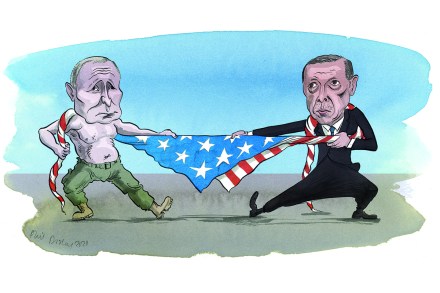
History returns for Putin and Erdogan

Washington’s allies are deploring the Biden administration’s mismanaged withdrawal from Afghanistan, and they’re worrying publicly about its implications for Nato. Russian leaders, resisting the urge to gloat, express well-founded concerns over the spread of jihadist terrorism northward into Central Asia. And China is moving in, cutting deals with the Taliban to mine lithium and other critical minerals. The reaction in Turkey has been more ambiguous, but also more interesting. Early in the evacuation, Turkey sent soldiers to Kabul to secure the airport. It is already clear that Turkey’s Islamist government is ready to recognize and work with the Taliban — while also loudly discouraging Afghan refugees from trying to enter Turkey.

turkey

Ella Pamfilova and the dismantling of Russia’s democracy

From our UK edition

Vladimir Putin’s Russia is hardly known for its free and fair elections. But a purge of the field ahead of this September’s parliamentary vote has led to protests even from politicians who benefit from his system. And it has brought the woman on whom the whole democratic façade relies close to a breakdown. Ella Pamfilova, the head of Russia’s Central Election Commission, had just wrapped up a meeting in which her officials disbarred the popular Communist party candidate Pavel Grudinin when she was approached by Nikolai Bondarenko, Grudinin’s ally and a popular YouTuber. ‘This is a disgrace to the whole country. You’re trampling democracy,’ he told Pamfilova in a video he posted to his channel.

Why Joe Biden’s Russia-bashing is a tactical mistake

From our UK edition

You might not think that Geoff Norcott, the self-proclaimed conservative comedian, has something to contribute to western relations with Russia, but you’d be wrong. And it’s a shame that President Biden doesn’t seem to have read Where Did I Go Right? (Norcott’s account of his estrangement from his leftist roots), because time and time again, he illuminates the way that progressives’ enthusiasm for demonising their opponents only entrenches them. Take Remainers characterising Brexiteers as racist xenophobes or gullible victims of obvious lies or Hillary Clinton’s claim that half of Donald Trump’s supporters were ‘deplorables… racist, sexist, homophobic, xenophobic, Islamophobic – you name it’?

Inside a dictator’s playground

From our UK edition

Armed soldiers guard the barbed-wire compound. Helicopters buzz around the parameter, drifting above families on tandem bicycles. Groups of giggling bridal parties flirt with camouflaged guards. They watch on, careful to spot the light-fingered. This is Mezhyhirya, the former playground of exiled Ukrainian president Viktor Yanukovych. The estate has been open to the public since the former communist fled to Russia in 2014 after a pro-western revolution. Adverts peddle the autocrat's theme park as a pleasant family day out: a museum, wedding venue, water park and zoo. It's as though a group of terrified architects asked Yanukovych, 'What style would you like? Classical? Alpine? Baroque?' and the reply had simply been, 'Yes' Top of the bill is the main house, a bizarre building.

The Soviet spectre haunting Afghanistan

From our UK edition

As US and British forces pull out of Afghanistan, further victims of the ‘grave of empires’, Russia is experiencing a mix of satisfaction, exasperation and trepidation. It has its own bitter memories of the country, after all. In 1979, as a friendly regime was falling back in the face of a mounting Islamic fundamentalist insurgency, Soviet forces rolled into Afghanistan. The idea was that by installing a new leader and mounting a brief show of force, the rebels would be intimidated back into line. Six months, the old men in the Kremlin told themselves, that is all it would take. And so began a vicious ten-year war that saw the deaths of 15,000 Soviets and hundreds of thousands of Afghans.

The Kremlin’s plan to destabilise the West

From our UK edition

On Sunday, Russia released its new National Security Strategy. In many ways, it picked up from where the 2015 version left off — on a crusade to politicise and polarise every aspect of Russian culture. This is not a strategy for the country’s security but for the government: the document sets out to mobilise the Russian nation, even Russian identity itself, against western bogeymen at home and abroad. Apart from some more sober references to ecology and partnership with China, most of the strategy reads as a paranoid diatribe against Russia’s oft-cited ‘internal and external enemies’. They loom large on nearly every page, lurking within discussions of national interest, societal cohesion, economics and strategic stability.

What does Vladimir Putin have on Joe Biden?

In May 2017, TIME magazine published a cover showing the White House being infected and taken over by Russian onion domes. The image meant to suggest that Donald Trump was a sleeper agent on behalf of Vladimir Putin. This sort of thinking was the driving force behind four years of media hysterics and seemingly endless cable news segments portraying Trump as a Russian puppet. ​With Joe Biden, naturally, the media has adopted a distinctly different tone — especially when it comes to the President’s relations with Russia: this despite six months of Team Biden’s complacency towards Russia, bad actors and even Putin himself. Gone are the accusations of ransom and pee tapes, or treachery — even as Russia makes aggressive moves on the world stage and towards the United States.

putin biden

Biden and Putin have left Britain out in the cold

From our UK edition

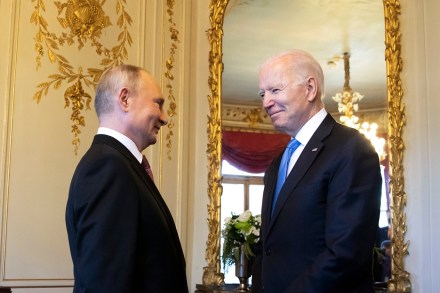
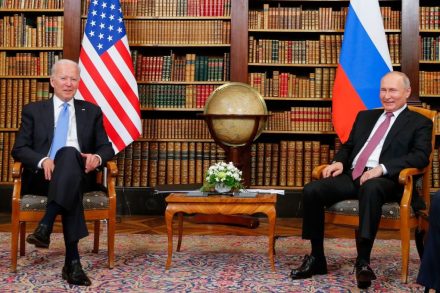
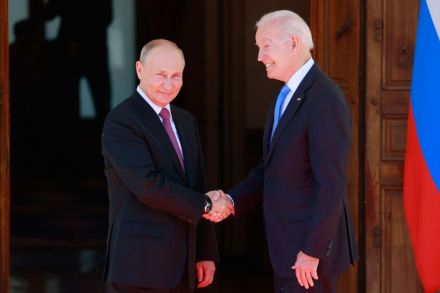
It would probably be wrong to say that Joe Biden and Vladimir Putin got on like a house on fire. But the results of the Geneva summit, which observed all the rules of Cold-War era summitry – from the venue to the formality of the arms-control and confidence-building agenda – far exceeded the deliberately doom-laden forecasts. In the space of around four hours at the Villa La Grange, the leaders of the United States and Russia effectively normalised relations that for the best part of four years had been bouncing around at rock-bottom, and dangerously so.

The Biden-Putin summit was a diplomatic nothingburger

There was a time when summit meetings between the presidents of Russia and the US were world-historical events on which the balance of world peace rested. Today — not so much. Joe Biden and Vladimir Putin didn’t even manage to fill the five hours allotted for their talks in Geneva today in large part because they simply didn’t have much to talk about. Russia today threatens no US vital interests, commands no alliances or strategic resources and remains a world power in only two areas, both inherited from the Cold War — its large nuclear arsenal and its UN Security Council veto.

biden putin
putin russia

Can Joe Biden get real about Russia?

President Biden’s description of President Putin as a 'worthy adversary’, in advance of their summit today, was a sensible move. On the one hand, it restores the basic civility necessary for any diplomatic exchange, after Biden’s unfortunate 'killer’ remark. After all, the conduct of international relations by a superpower is a serious matter — and part of Biden’s own international prestige lies in his restoration of dignity to the US presidency after the flamboyant excesses of Trump.

Joe Biden’s summer vacation

Tomorrow, The Committee will bundle up Joe Biden, titular president of the United States, and take him for a nice ride across the big, big ocean in a very shiny airplane. Weeee! No details have been released yet about what flavors of ice cream he will enjoy, but The Committee’s press arm has been full of stories with titles like 'Three things to watch on Biden's first foreign trip’. This is not a difficult assignment. The big boys and girls who arrange Joe’s play-dates have told all his favorite friends in the media exactly what to say. And just a couple of days ago they surprised Joe with an article in one of his favorite newspapers, the Washington Post. It was just so nice. A couple of the minders got together and wrote the article and then put Joe’s name on it.

joe biden vacation

Why sanctions against Putin and his allies don’t work

From our UK edition

An ‘act of aviation piracy’ was how Ryanair boss Michael O’Leary described the forcible grounding of one of his planes in Minsk by Belarusian authorities in order to arrest a dissident who was on board. ‘A shocking assault on civil aviation and an assault on international law,’ said the UK Foreign Secretary Dominic Raab. The Taoiseach Micheál Martin, en route to Brussels for an emergency meeting, called for EU heads of state to deliver a ‘very firm and strong response’ to Belarus’s President Alexander Lukashenko. But what response can the West actually make that will put an end to lawless behaviour by Lukashenko — and, more importantly, by his on-and-off ally Vladimir Putin? Where to hit where it really hurts?

Putin and Biden need one another

From our UK edition

Does Joe Biden think that Putin is a killer? asked ABC host George Stephanopoulos. ‘Mmm-hmm, I do,’ answered the President. Once, that would have been fighting talk. Today? Biden can insult Putin with impunity because he believes that Russia is, quite simply, no longer important or dangerous. Once a deadly serious enemy whose rivalry threatened to destroy life on the planet, Russia’s diminished status means that, these days, there’s little left to the grand old conflict except mere mudslinging. ‘We no longer think in Cold War terms, for several reasons. One, no one is our equal. No one is close,’ Biden told Ukrainian lawmakers in Kiev in 2014.

Biden and Putin sue for uneasy peace

From our UK edition

In 2001, US President George W. Bush stared into Vladimir Putin’s eyes and said he saw his soul. Joe Biden, on the other hand, famously claimed to have told the Russian leader, 'I’m looking into your eyes, and I don’t think you have a soul.' Now the new incumbent of the Oval Office might have a second chance to check again in the flesh. On Tuesday, Biden held a rare and, by all accounts cordial, telephone call with his counterpart in Moscow to discuss the increasingly tense situation on the border with Ukraine. For months, Kiev's forces in the Donbass region have clashed with troops loyal to two Russian-backed breakaway republics, with numerous reports of drone strikes and civilian casualties.

Biden is wrong on Putin

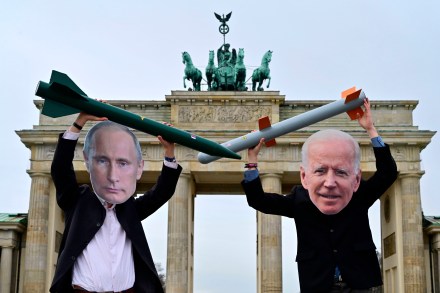
I am no fan of Trump, but what Joe Biden said in a recent interview with George Stephanopoulos made me almost nostalgic for some aspects of the last presidency. When Biden was asked if he believes Putin to be a killer, he replied, 'I do.’ He also confirmed reports that in 2011, while serving as vice president, he personally told Putin that Putin does not 'have a soul’. Putin’s reply was quick and masterful: he wished Biden best health and inviting him to a public debate about big existential and ethical issues on Zoom. Biden’s strong words stand in sharp contrast to Trump who, in 2017, when the Fox News host Bill O’Reilly called Putin a 'killer’, suggested that America’s conduct was just as bad as that of the Russian president.

biden putin

After Putin: an interview with Navalny’s exiled chief of staff

From our UK edition

Even with Alexei Navalny imprisoned, Russia’s opposition continues to struggle against Vladimir Putin and his quarter-century of Kremlin rule. This already daunting task has been made harder by the fact that key figures are now imprisoned or in exile: the opposition leader’s principal aides Vladimir Ashrukov and Leonid Volkov have fled to London and Vilnius respectively, while Navalny himself is serving a three-year prison sentence for supposed fraud. Still, his inner circle continues to plan Putin's downfall from beyond Russia’s border ­— and they now believe they have the support to succeed. The first stage, Volkov tells me, is mass protests. Already Navalny's movement has led to thousands of people rallying in public since January.

Merkel and Macron’s Sputnik U-turn

From our UK edition

The last three months have seen a litany of humiliations for Brussels as its leaders try to procure and roll out much needed vaccines across the continent. Whether it's been Ursula von der Leyen almost erecting a hard border in Ireland or Handelsblatt being briefed misinformation from a misread excel table, impounded meningitis jabs in Italy or doctors forced to destroy unwanted vaccines in Germany, every week seems to bring fresh ignominy and embarrassment. But now a new low appears to have been reached with today's news that France and Germany are in negotiations to buy Russia's Sputnik V vaccine from their implacable opponent Vladimir Putin.

The truth behind Putin’s hit lists

From our UK edition

If we are to believe the gossip, Vladimir Putin draws up death lists the way ordinary people jot down their shopping. And bang on schedule, as Joe Biden makes a point of labelling him a ‘killer,’ not one but two death lists materialise from parts unknown. This weekend the Daily Mirror — not, it has to be said, usually a Kremlinologist’s ‘must-read’ — claimed that Putin is ‘now beside himself with rage’ and is drawing up lists of would-be victims, saying ‘we have long arms. No scum can hide from us.’ The quotes come from an unnamed office of Russia’s much-feared Federal Security Service (FSB), which is apparently planning how to execute Putin’s laundry list of kidnappings and murders.

What does Belarus’s opposition leader want?

From our UK edition

There is an assumption that those fighting tyranny must instead want Western-style democracy, that the arc of history bends towards liberal representative government, allied inevitably to Washington and Brussels. Many former Soviet Union countries saw their politburos overthrown by young middle-class people espousing the desire for this kind of politics — from the Rose Revolution in Georgia to the Orange Revolution and Euromaiden protests in Ukraine (whether or not they eventually received that form of government is a different matter). But there is no logical imperative that connects dissatisfaction towards an autocrat with the kind of government and geopolitical order that will replace him, whether in Eastern Europe or elsewhere.