Vladimir putin

As with Iraq, so with Russia

Against the backdrop of the Ukraine crisis, we have been bombarded with many historical analogies. Leading the list are the 1961 Berlin standoff and the 1962 Cuban Missile crisis. And then there is that all-time favorite, the 1938 Munich Agreement. Those crises should certainly not be regarded as ancient history. But then why go back 60 or 80 years when you can walk down memory lane? Like, say, when an American president was trying to rally the public and mobilize international support in the name of using military force against an alleged bloodthirsty dictator who was supposedly threatening Western geostrategic interests and challenging its liberal democratic values?

ukraine

NATO won’t bleed for Ukraine

Ask three different people whether Russian President Vladimir Putin will approve an invasion of Ukraine, and you are likely to get three different answers. Yes, a Russian land, air, and sea blitz is inevitable and will come in fairly short order, likely without warning. Yes, a Russian invasion is possible, but could still be averted with some shrewd diplomacy. Or, no, surely Putin understands an invasion would be a disaster for his legacy and his country’s economy. In the midst of all of this comes wild speculation about what Putin is thinking at any given moment, how the weather may factor into his calculations, and what the Russian government’s end goal really is. What can be said for certain, however, is that diplomacy has picked up significantly over the past week.

Is this Biden’s Munich moment?

When it is 1938 in Washington, it is already past midnight in Moscow. The clock is ticking and the map of Europe is being redrawn, but this is not a Munich moment. We are now past that, and past the time when the leader of a Western democracy might have the honesty to admit to his public, as Neville Chamberlain did in 1938, that he doesn’t want to fight a war over “a quarrel in a faraway country between people of which we know little.” The shadow of Munich shames and intimidates the leaders of the Western democracies, and not without reason. But if there is a Munich moment in the latest Ukraine crisis, then it happened nearly seven years ago — in 2015, when the Obama administration backed the Minsk II accords and the dismemberment of Ukraine.

energy munich

Why does Germany look so weak on Russia?

A recent survey of Germans done by Forsa, amongst the most reputable polling institutions in that country, shows that at least in one way, the Cold War has not quite ended. A majority of West German respondents (52 percent) blame Russia for escalating the conflict with Ukraine, while a plurality of East German participants (43 percent) blame the United States. All respondents, meanwhile, plead for peace in the region and expressed fear of a looming war between Europe and Russia. The political repercussions here are very real. The generation born in the late 1960s, having been completely educated in the East German communist dictatorship, currently constitutes the most significant single voting block in the East.

The unthinkable horror of a Russia-Ukraine war

In the coming days, if intelligence assessments are accurate, the world will watch the unfolding of a bloody war between Russia and Ukraine. It will make history for all the wrong reasons, as the largest armed conflict since World War Two. And while Moscow would almost certainly defeat Kyiv on the battlefield, the real story will be the horror unleashed by the first modern war fought between nations of real consequence in decades. Such a war would showcase military modernizations that, while well-known, will still shock most Americans and change our perception that war in the twenty-first century is anything but cost-free. Worst of all, there's chance that a Russia-Ukraine war might not be contained to just those two countries, sucking in America in the process.

The new unpatriotic conservatives

The die against conservatives opposed to the Iraq war was cast by David Frum in a now-infamous essay for National Review back in 2003. Not only were the right's antiwar sorts unpatriotic, Frum charged, they were defeatist and conspiratorialist appeasers. “They have made common cause with the left-wing and Islamist antiwar movements in this country and in Europe,” he wrote. As one can imagine, this made it quite difficult for this small but active faction of the conservative movement (which included the American Conservative magazine and libertarians like Texas Congressman Ron Paul) to penetrate the mainstream, or build trust with their compatriots across the aisle.

Kudos to Macron for going to Moscow

Landing in Moscow on February 7, French President Emmanuel Macron had a twinkle in his eye and a spring in his step. There he was, taking it upon himself to be the first European head-of-state to meet Russian President Vladimir Putin since over 130,000 Russian troops massed on Ukraine’s border from three sides. Macron's mission was to explore whether a de-escalation with Russia was possible. “I believe that our continent is today in an eminently critical situation, which requires us all to be extremely responsible,” he told reporters before his five-hour session with Putin began. The other option, what could be the largest land war in Europe since World War II, would be far worse.

America’s control over the international system is slipping

The US-led expansion of NATO in the direction of the Russian border took place when America was at the peak of its power — the "unipolar moment" — and when Russia had hit geostrategic rock-bottom. The global balance of power has changed since then, and that helps explain what is happening now. Vladimir Putin is correct when he argues that, since the collapse of the Soviet Union, the United States and its Western allies have taken advantage of Russian weakness. It may sound simplistic, but back then in the immediate aftermath of the Cold War, American policymakers did a lot of things just because, well, they could do them. And then they created geostrategic narratives to justify what they wanted to do.

biden putin

Sanctions on Russia won’t work

Another battle in the West’s sanctions war against Russia is set to begin. The US and its NATO allies have put together what they’re calling a strong package of economic restrictions on Russia in response to its military buildup near Ukraine’s border. What’s in the package remains a secret but it appears to focus on Russia’s energy sector. A State Department spokesperson told NPR on Thursday that the Nord Stream 2 pipeline from Russia to Germany would remain inoperable if an invasion happened. The Financial Times suggested that other new Russian gas developments are also on the sanctions list. The UK wants Russia booted from SWIFT, the Belgian financial messenger services company, while the West also floated the idea of sanctioning Russian President Vladimir Putin.

Save Ukraine by admitting Georgia into NATO

As the Ukraine crisis continues to develop, it has become impossible to avoid mentioning Georgia and its relations with the West. This is not only due to the similarities in the two countries' geopolitical circumstances, but also because Georgia is explicitly mentioned with Ukraine in President Putin's demands to the West to forego any future NATO expansion. Like Ukraine, for years, Georgia has sat in the uncomfortable position of being pro-Western without enjoying the protections afforded by membership in both NATO and the European Union. Yet a country that was once a staunch Western ally has become mired in accusations of authoritarianism, behind-the-scenes governance, and covert pro-Russian sentiment. Georgia and Ukraine have occupied a unique position in the post-Soviet space.

vladimir putin alexei navalny

Trump was tougher on Russia than Biden

Vladimir Putin’s new year is off to quite a start. The Russian autocrat isn't just massing troops on the Ukraine border, kicking off a diplomatic panic in European capitals and in Washington. In recent days he's also backed a refugee stand-off with Poland, helped Kazakhstan's strongman squelch pro-democracy protests, maintained a presence in Assad’s Syria, established new footholds in Mali and Central African Republic, cozied up to communist China, and, in a nod to Khrushchev, hinted he might build military infrastructure in Cuba and Venezuela. What's remarkable about this geographically expansive, chaos-inducing, dangerous spectacle is that it was entirely avoidable. Mr. Putin is no cipher.

Russia may very well invade Ukraine

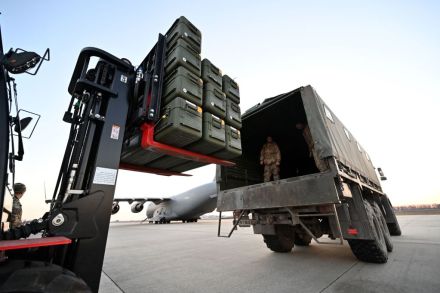
The United States is doing what it can to deter Russian President Vladimir Putin from ordering another invasion of Ukraine. Despite the cool and collected persona that Ukrainian President Volodymyr Zelensky is trying to present to his people, the White House still believes Russian military action is "imminent.” The Biden administration recently put 8,500 American troops on alert for deployment to Eastern Europe. Washington has spent the last several weeks trying to convince the Kremlin that any incursion into its neighbor would be costly. On Tuesday, the US sent a third shipment of lethal equipment to the Ukrainian military, including 300 additional Javelin anti-tank missiles. This comes on top of the 200,000 pounds of lethal aid that had already been provided by Washington.

Russia is the lost great power

Lost in the endless debate about whether Russia will invade Ukraine is the real reason that Moscow — armed with nuclear weapons and one of the most advanced militaries on the planet — feels so threatened by its neighbors, the NATO alliance, and ultimately the United States. While the expansion of NATO in the 1990s plays a big role, it is Russia’s everlasting internal debate about its place in the world that is the real source of tension. It's a historical black hole no one wants to get sucked into, but unless resolved it has the potential to be a source of armed conflict the likes of which Europe has not witnessed since World War II. Geography and history are both a blessing and a curse for Russia.

What does Russia hope to achieve in Ukraine?

President Biden said this week that a “minor incursion” of Russian troops into Ukrainian territory would not bring about the severe economic sanctions the White House threatened in response to a “significant invasion.” His counterpart in the Kremlin can probably hardly believe his luck. Effectively, Vladimir Putin has been given carte blanche by the West to launch military operations against Ukraine. Of course, the fact that there is no definition of what constitutes a “minor incursion” gifts the White House a preemptive get-out clause from having to truly confront Moscow.

ukraine

Can Putin ever be stopped?

Vladimir Putin has been the most effective practitioner of Realpolitik for the past two decades. With an economy about the size of Italy’s, and just as corrupt, he has accomplished his most ambitious goal: returning Russia to the status of a Great Power. Now he’s thrown his chips on the table once more, launching a massive troop build-up on the border with Ukraine and sending still more into Belarus (for “joint exercises”), positioning them just north of Ukraine’s capital of Kyiv. Although the numbers don’t appear large enough to conquer all his neighbor’s territory, they are large enough to push through the eastern region (the one bordering Russia) and form a land bridge to Crimea, which Russia conquered in February 2014.

putin

America still won’t risk a war with Russia over Ukraine

Anybody who thought this week’s intense diplomacy between American, European, and Russian officials would magically resolve the ongoing crisis in Ukraine should lie down until the feeling passes. Crisis diplomacy isn’t a walk in the park; if anything, it’s a slow-moving car ride through rush-hour traffic, with plenty of speed bumps along the way. On Monday, January 10, Washington and Moscow met for a round of discussions in Vienna to sound each other out and present their list of seemingly endless grievances. After eight hours of talks, both delegations left the room with, coincidently, similar assessments as to how it all went.

Biden must encourage Ukraine to negotiate

President Joe Biden spoke with Russian President Vladimir Putin today via video conference for just over two hours, the second time in six months that the two leaders have engaged in a face-to-face conversation. For Biden, the message he sought to deliver was strict and to the point: if you, Mr. Putin, go ahead and order a second invasion of Ukraine in nearly eight years, you can expect a raft of economic penalties that will negatively effect everything from Russia’s access to the SWIFT payment system to the ability of Russian banks to convert rubles into dollars. For the security-minded Putin, the meeting was an opportunity to press Biden on his principal demand: a written legal guarantee from Washington and the rest of NATO that Ukraine will not be invited into the alliance.

Why America needs a grand bargain with Russia

Russian is losing influence in a region it once dominated: Eastern Europe. Highlighting this newfound weakness are Ukraine and Belarus, two states that were once solidly in Russia’s sphere of influence and are now on the verge of completely falling away. In 2018, Ukraine enshrined in its constitution the goal of NATO membership and last year Belarus experienced massive pro-democracy protests; both of these events are in Russia’s eyes akin to westernization. The American foreign policy establishment acts as if Russia will ultimately accept being surrounded by Western-allied states. Instead, history shows that losing influence will cause Russia to lash out. If Ukraine moves toward NATO membership, it will incur a Russian invasion.

vladimir

Stop pretending Ukraine will ever be in NATO

Russian President Vladimir Putin is once again making the West nervous. And unlike his previous display of military might near the border with Ukraine last spring, Washington is concerned enough that it's sent CIA director (and former US ambassador to Russia) William Burns to Moscow for talks earlier this month. If Burns’s trip was meant to scare the Kremlin into halting additional military formations near the Russia-Ukraine border, then the confab didn’t work as planned. The Ukrainian government estimates that up to 100,000 Russian forces are now camped out in the area. American and European officials are sharing information with one another about various scenarios the Russians could be contemplating, the most dramatic being a second invasion of Ukraine in seven years.

ukraine

History returns for Putin and Erdogan

Washington’s allies are deploring the Biden administration’s mismanaged withdrawal from Afghanistan, and they’re worrying publicly about its implications for Nato. Russian leaders, resisting the urge to gloat, express well-founded concerns over the spread of jihadist terrorism northward into Central Asia. And China is moving in, cutting deals with the Taliban to mine lithium and other critical minerals. The reaction in Turkey has been more ambiguous, but also more interesting. Early in the evacuation, Turkey sent soldiers to Kabul to secure the airport. It is already clear that Turkey’s Islamist government is ready to recognize and work with the Taliban — while also loudly discouraging Afghan refugees from trying to enter Turkey.

turkey