Vaccines

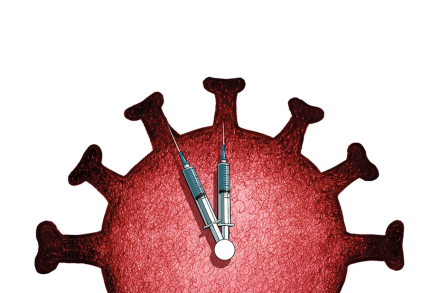
On vaccines, the EU is getting what it paid for

From our UK edition

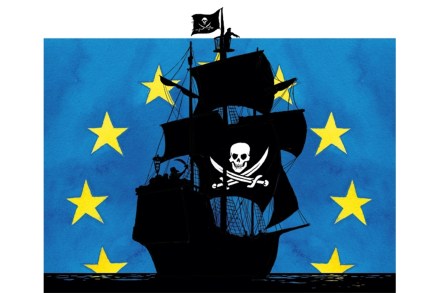
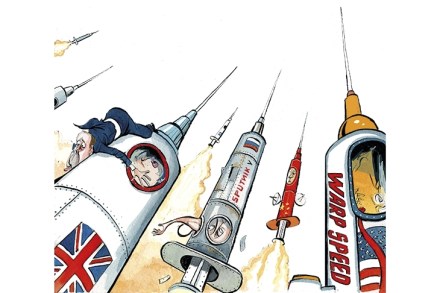
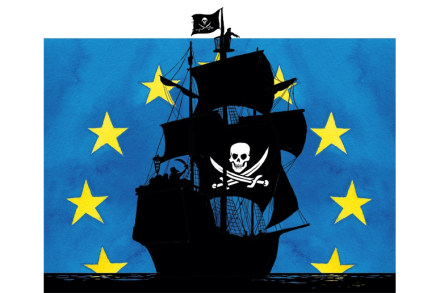
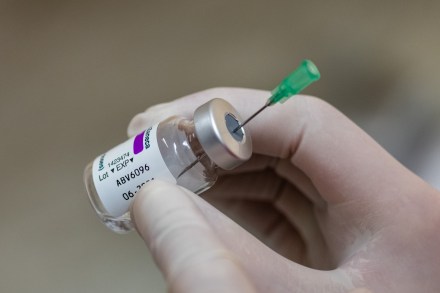
Remember when the EU was going to provide an antidote to the spectre of vaccine nationalism? While Italian authorities are raiding pharmaceutical plants for vaccines, the European Commission is pushing for measures to block vaccine exports to countries that do not 'reciprocate'. Unfortunately, European authorities have it exactly backward. Instead of seeking to expand the existing supply, their ham-fisted policies risk having the opposite effect. The ongoing war on AstraZeneca is bound to make every pharmaceutical firm think twice before signing a contract with the EU. And with vaccine production chains spanning across numerous jurisdictions, including non-members of the EU, export restrictions increase legal uncertainty and can disrupt supplies further.

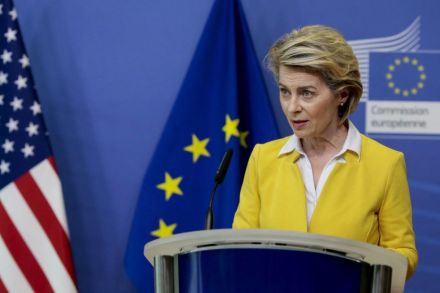
The EU’s vaccine grab breaches the rule of law

From our UK edition

The EU is discussing confiscating and requisitioning private property. It is surprisingly brazen about this. The bloc is proposing both a ‘bespoke’ vaccine export ban and has identified 29 million doses in Anagni in Italy which it wants. The EU wishes to rectify its own error in vaccine procurement. That is a breach of the rule of law. The rule of law is very simple. It means that no one is above the law and there is one law for all. The EU asserts, regularly, that it has a legal case against AstraZeneca. I, and many other legal commentators, rubbished that assertion in January. But as I stated publicly eight weeks ago, if the EU believes it has a case it must bring one – in the perfectly capable and serviceable court in Belgium.

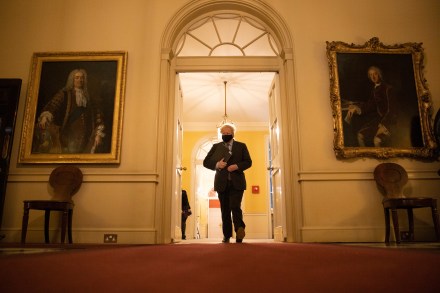
Boris tries to avoid a vaccine war

From our UK edition

After France's Europe Minister became the latest politician to threaten a vaccine export ban on the UK, Boris Johnson used today's press conference to try to diffuse the row ahead of Thursday's summit of EU leaders. When asked in the Q&A session whether such an export ban could derail the UK roadmap for ending lockdown and if the UK would retaliate, the Prime Minister stressed the need for cooperation from all sides. No. 10 fear retaliatory measures in the event of a vaccine export ban could make the situation go from bad to worse Johnson said the UK would continue to work with European partners to deliver the vaccine rollout – suggesting that the pandemic wouldn't be over for anyone until it was over for everyone.

Is the UK about to be forced into a vaccine war?

From our UK edition

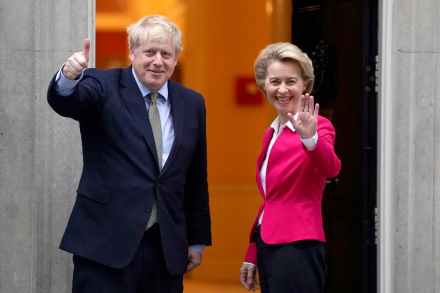
Is the UK about to be forced into a vaccine war? That's the concern in Westminster after Brussels upped the ante over a potential vaccine export ban. Ursula von der Leyen suggested last week that the European Commission could block vaccine exports to countries with a high volume of jabs already. Now an EU official has said that the EU will rebuff any British government calls to ship Oxford AstraZeneca vaccines from a factory in the Netherlands.  The primary complaint among EU leaders is that AstraZeneca is yet to make good on its contractual obligations to them and deliver them the number of doses first promised. The Dutch plant can make between five and six million doses a month so has the potential to boost supply for both the UK and EU.

No one wins a vaccine trade war

From our UK edition

Ursula von der Leyen’s threat to invoke emergency powers blocking EU vaccine exports and requisitioning factories was fairly extreme. Her justification was that 41 million doses have been exported from the EU to 33 countries in the last six weeks alone at a time when its own vaccination programmes are struggling. But, as I say in the Times today, this ignores two crucial points. First, it is not the EU making these vaccines but rather private companies. Second, the supply chains for vaccines are global and complex. 'They can’t really be autarkic on this,' says one cabinet minister. For example, the lipids used in the Pfizer vaccine tend to come from the UK.

Has Britain fallen victim to the Asian vaccine war?

From our UK edition

The success story of Britain's vaccine rollout has hit its first major obstacle: five million doses of the AstraZeneca vaccine will be held up for a month. But how many of us knew it was India, not manufacturing plants in the UK or Europe, that was supplying a considerable amount of our vaccine needs? And does the delay show that Britain is now caught in the middle of an emerging vaccine war in Asia? The delayed jabs are being manufactured in the Indian city of Pune (pronounced Poona).

Boris Johnson attempts to calm vaccine concerns

From our UK edition

The message from Boris Johnson's press conference this evening was one of reassurance. Following the decision by several EU member states to suspend use of the Oxford-AstraZeneca vaccine over concerns about a potential link with blood clots, the Prime Minister said that the vaccine is safe and that 'the benefits of the vaccine in preventing Covid far outweigh any risks'.Pointing to statements from both the UK and EU regulators on its safety, Johnson said the thing that 'isn't safe is catching Covid'. Johnson was also at pains to calm concerns over vaccine supply. The Prime Minister admitted that the UK was experiencing a supply issue — but said that despite this, there would still be more vaccinations in April than there were in February.

The EU’s jab snatching ruse is legally absurd

From our UK edition

For some months now, increasingly disturbing statements on the law or legal threats have emanated from the EU. Some of these focus on AstraZeneca and if you were a drug company who had committed so early on and so successfully to helping develop and distribute a vaccine for the current pandemic (at cost price), you might reasonably feel hard done by. But that is not for me. What is for me is the latest, oddest statement, that the EU may seize AstraZeneca's manufacturing plants and their produce and possibly their intellectual property rights (the recipe). Can they? The EU has form for making statements on the law which are wrong. A summary of the issue is this: the UK and other countries moved very quickly to order batches of vaccines from lots of manufacturers.

Is Matt Hancock trying to spin a vaccine supply crisis?

From our UK edition

Matt Hancock was tremendously smiley when he led Wednesday's coronavirus press briefing. In between beaming, he managed to tell us about the 'fantastic news' that the vaccination programme has now reached more than 25 million people having had their first dose. He was very keen to sing the praises of this programme — and indeed of his involvement in it — saying: 'I've had the honour of playing my part, we've had the honour of playing our parts, it's been a huge team effort and I've got absolutely no doubt it's the best project I've ever been involved in.' He also rather pointedly talked about 'those of us who've been involved in it from the start'.

Brussels embraces vaccine nationalism

From our UK edition

Just what on earth is happening in Brussels? The latest saga in the European Commission's botched vaccine roll out is president Ursula von der Leyen's threat today to block vaccine shipments to the UK from Europe. Speaking at a press conference this afternoon, the under-fire Eurocrat singled out Britain and suggested she could block imports of Pfizer unless UK-manufactured AstraZeneca jabs are shipped to the Continent. https://twitter.com/SkyNews/status/1372169441690185728?ref_src=twsrc%5Etfw She said: 'All options are on the table.

Why isn’t Britain adopting the Danish roadmap?

From our UK edition

Denmark’s greatest philosopher, Søren Kirkegaard, experienced only one epidemic in his lifetime, the cholera outbreak of 1853, which occurred after Denmark foolishly lifted the coastal quarantine that had saved the country from Europe’s miserable 19th century cholera pandemics. Yet he aptly sensed our response to indeterminate lockdowns: ‘the most painful state of being is remembering the future, particularly the one you'll never have’. Danes and Britons are keenly ‘remembering’ summer 2021 and are desperate for lockdown to be over.

Support for Merkel’s party is crumbling

From our UK edition

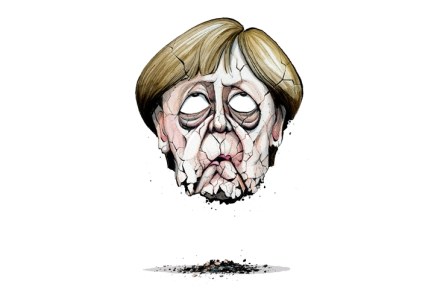
On Sunday, Angela Merkel’s Christian Democratic Union of Germany (CDU) suffered a historic election defeat in their former heartlands of Baden-Württemberg and Rhineland-Palatinate. ‘The state elections struck deep at the heart of the union of the CDU and CSU,’ said Markus Söder, leader of the CDU’s Bavarian sister party, the Christian Social Union. To an increasingly frustrated public, the ruling parties in the capital look tired and devoid of ideas. There is no incentive for Merkel and her cabinet to turn things around. After 16 years in government and on the brink of retirement, she has become a lame-duck chancellor. Some German journalists have even begun to call the whole sorry saga ‘the duck tales’.

Fact check: does the AstraZeneca jab cause more blood clots?

From our UK edition

Germany, Italy, and France have this afternoon become the latest European countries to temporarily suspend use of the vaccine developed by AstraZeneca and Oxford University. It comes after the Dutch government said on Sunday the jab would not be used until at least 29 March, while Ireland said earlier in the day that it had temporarily suspended the shot as a precautionary step. In total that makes 11 countries including Denmark, Norway and Iceland who have suspended use over fears the vaccine causes blood clots. So should we be worried about the Oxford jab? Given the level of expertise supporting this vaccination, the answer is: no.

The NYT’s royal blunder

From our UK edition

Trebles all round at the New York Times after another dose of anti-British bile. Mr S last week noted that the Gray Lady's news reporting of Covid in the UK mixed misrepresentation with outdated figures. This week the newspaper has followed this up with the inevitable crowing comment piece to follow Harry and Meghan's Oprah interview. Titled 'Down with the British Monarchy' it mocks the Queen as 'some utterly random rich wastrel' and claims her own 'claim to legitimacy' is being 'the child of the child of the child of someone who was, centuries ago, the nation’s biggest gangster.

UK summons EU officials over ‘false’ vaccine claims

From our UK edition

Foreign Secretary Dominic Raab has blasted claims by a senior Eurocrat that the UK is hampering the bloc's vaccine rollout, calling the questionable assertions 'completely false'. Charles Michel, president of the European Council, initially argued that Britain had imposed an 'outright ban on the export of vaccines or vaccine components' leaving the country in an EU blog on Tuesday. (Michel then subtly soften his claim after commentators pointed out there was no such 'outright ban', instead he said there were 'different ways of imposing bans or restrictions on vaccines'.) But London was having none of it.

How worried should we be about a third wave?

From our UK edition

At the beginning of the year, Boris Johnson and his advisers were at pains to tell us that by spring we would be in a vastly better situation with Covid. Well, spring is here, the number of new infections and deaths is falling by around 30 per cent week on week, deaths are back to where they were last October and new infections last September. The vaccine programme is running on time, and take-up has been high. Why, then, was the chief medical officer Chris Whitty so downbeat when he addressed the House of Commons science and technology committee this morning?

Are people tiring of lockdown?

From our UK edition

Is the decline in new Covid infections slowing down? That is the picture painted by the government’s figures for confirmed infections, arrived at via the NHS Test and Trace system. The most recent figures show that the 71,320 cases recorded in the seven days to Wednesday are 15 per cent down on the previous seven days — a substantial fall, yet over the previous few weeks numbers had been declining at around 25 per cent every week. The fall in deaths, on the other hand, appears to be accelerating. The figure for the past seven days — at 2,684 — is 30 per cent down on the previous seven days. Hospitalisations are declining at a rate that falls between the two — down 20 per cent over the past week.

Boris hints at a ‘no jab, no job’ policy

From our UK edition

The most striking moment of Monday night's press conference was Chris Whitty’s declaration that it was the ‘professional responsibility’ on health and social care staff to get the vaccine. Whitty stressed that the question of contracts — whether there should be a contractual obligation to take the jab — was a political decision and so not one for him. Boris Johnson then followed up by talking about ‘very high quality care home groups’ that were looking at making vaccination a condition of employment. The significance of these exchanges is that they suggest the government is moving towards the idea of allowing hospitals and care homes to insist employees are vaccinated. If this happens, it will be a highly significant moment.

What the EU still doesn’t understand about Britain’s vaccine strategy

From our UK edition

Since the outrage caused last Friday, when the European Union looked set to undermine the Northern Ireland protocol less than one month after the Brexit deal came into force, there has been little apology from those in charge. This is not terribly surprising: European Commission President Ursula von der Leyen has a reputation for passing the buck whenever possible. It’s also thought that last week’s mistakes are particularly hard for the EU to grapple with: desperate to prove Brexit was a mistake, it has been difficult for Brussels to watch Britain's reputation for handling the Covid crisis change so quickly for the better. Yesterday we got a hint of acknowledgement from von der Leyen that perhaps there are some benefits to being outside the EU.

Vaccination is pushing England’s population immunity to new heights

From our UK edition

England's population immunity to Coronavirus now stands at almost 39 per cent — a rise of 25 per cent since Christmas. The effects of the vaccination campaign are beginning to show. This is the latest finding of the PCCF model developed at Bristol University, and its results offer important insights into how much progress is being made. Immunity can take four forms, not all of which are officially recorded: Immunity after infection, with antibodies: This can be sampled via antibody tests and covers between 15 and 16 per cent of the population as of mid-January, according to the latest ONS report.