Vaccine

Europe’s human rights judges are right not to ban compulsory vaccines

From our UK edition

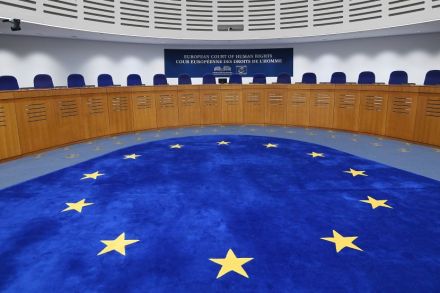
If you think public health authorities in England are overbearing, spare a thought for the Czechs. Parents who fail to have children vaccinated face being fined or having their offspring excluded from nurseries. Now, in a landmark ruling, the European Court of Human Rights, has backed that policy. But even critics aghast at the thought of compulsory vaccinations should welcome the court's verdict. Why? Because human rights judges should not be butting in here. The Czech law bends over backwards to accommodate welfare concerns: vaccinations are free; there are exceptions for good medical reasons; and any vaccine-generated injury is automatically compensated. Yet it was still an obvious target for human rights challenge on individualist grounds.

Vaccine hesitancy is more dangerous than rare side effects

From our UK edition

‘If you sail a massive liner across the Atlantic, you are going to have to make at least one course correction.’ This was the analogy used by professor Jonathan Van-Tam, the UK’s deputy chief medical officer, when explaining why the UK has opted to change its approach to vaccinating healthy 18 to 29-year-olds. For this group, officials argue, there is no point in taking any risk whatsoever, no matter how negligible, and that instead they should be offered the Pfizer-BioNTech or Moderna vaccines instead of Oxford-AstraZeneca. What we need now is urgent action to re-vitalise vaccine confidence On the one hand, from a clinical perspective, this seems very reasonable — why take any risks if there is a better choice available?

Letters: The inconsistencies of Mormonism

From our UK edition

A leap of faith Sir: I live not far from the ‘London Temple’ of the Church of Jesus Christ of Latter-day Saints. Most summers, the local streets are trodden by American Mormon missionaries, polite teenagers who occasionally approach to ask if we know Jesus Christ. Some years ago, I read the book on which the new Netflix series Murder Among the Mormons (‘Latter-day sinners’, 3 April) appears to be based. So when I was accosted by a couple of missionaries, I was able to ask them why the practice of polygamy, so avidly promulgated by the founder of their church, Joseph Smith, had been abandoned.

Vaccine passports are a ticket to freedom

From our UK edition

In principle I’m in favour of vaccination passports, and don’t understand how — again in principle — anyone could be against the theory. One can have severe doubts about whether our NHS, pubs, theatres, sports grounds and restaurants would actually be capable of operating such a scheme, yet at the same time think it would be an excellent thing if they were. To me it seems not just sensible and fair but obvious that access to jobs or spaces where there is an enhanced risk of viral transmission might be restricted to people who could demonstrate a high degree of immunity. I’d add that in order for the idea to command widespread public acceptance, it might be best to wait until anybody who wants to be vaccinated has had free access to vaccination.

The dilemma of vaccination

From our UK edition

We have a government which is basically libertarian in its instincts, despite its current affection for telling us what we can and can’t do on a daily basis. This seems like a paradox or a non-sequitur, but it isn’t really, because in a sense it is a coalition government between libertarian politicians and a big-statist regulatory medical clergy. It is an interesting political marriage, a marriage of expediency. And it will soon become very strained. The government is about to run into big problems over its rollout of the Oxford-AstraZeneca vaccine, which many scientists believe could have a causal link to the prevalence of blood clots in a very small minority of the people who take it. The European Medicines Agency is about to announce the official finding into all this.

Is the writing on the wall for the AstraZeneca vaccine?

From our UK edition

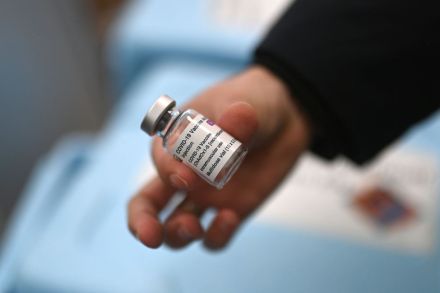
It was the great British scientific triumph: an example of how big pharma can work altruistically for the good of the world, by making a vaccine available at cost price. But is the writing now on the wall for the AstraZeneca vaccine? This afternoon the European Medicines Agency (EMA) ruled that blood clots can be a 'very rare side effect' of the Oxford-AstraZeneca vaccine. It has encouraged health professionals to communicate that 'people receiving the vaccine to remain aware of the possibility of very rare cases of blood clots combined with low levels of blood platelets occurring within two weeks of vaccination.' There may be an age factor as well: 'So far' it reports, 'most of the cases reported have occurred in women under 60 years of age within two weeks of vaccination.

What Britain can learn from Israel’s vaccine passports

From our UK edition

Boris Johnson’s announcement about vaccine passports was met with criticism from backbenchers on both sides of the political spectrum. The scheme was described as potentially ‘discriminatory’ with warnings that it may lead to a ‘two-tier’ Britain. Labour leader Keir Starmer even said the use of vaccine passports is ‘not British.’ Given the deep suspicion towards national identification cards, this did not come a surprise. But if the government eventually chooses to use vaccine passports, some lessons from Israel’s experience may be helpful.

Vaccine passports are a kick in the teeth for young people

From our UK edition

After a year in which young people have lost their jobs, been denied time in the classroom and at university and not been allowed to see their friends, could they now be penalised again? Boris Johnson said we 'have to be very careful how you handle this and don't start a system that is discriminatory' when vaccine passports, or 'Covid status certification', were raised at a briefing this week. Yet it's hard to imagine a more grossly unfair, discriminatory system than introducing vaccine passports before young people have the opportunity to be vaccinated. Young people have sacrificed so much for a disease that they are relatively invulnerable to.

Florida bans vaccine passports

From our UK edition

The ethical case against domestic use of ‘vaccine passports’ was made with some passion in Britain before Boris Johnson’s change of heart. Matt Hancock repeatedly assured people that Britain is 'not a papers-carrying country'. Vaccine Minister Nadhim Zahawi said vaccine passports would be 'discriminatory'. Michael Gove promised that there were 'no plans' to introduce them. In a Westminster Hall debate, MPs from all parties lined up to say that out of principle, the minority who chose not to take the vaccine should suffer no penalty. We have not been told the reason for the u-turn. In theory, the government is taking soundings.

Why I won’t invest in Deliveroo

From our UK edition

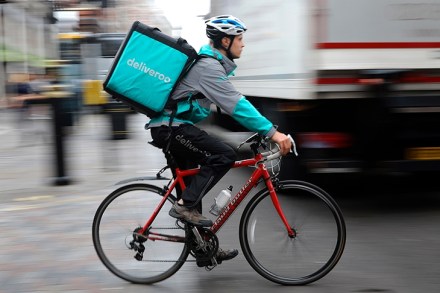
‘The reason we have the vaccine success is because of capitalism — because of greed, my friends.’ So Boris Johnson told his backbenchers last week, though he immediately muttered ‘Forget I said that’ while aides tried to explain it as a joke on the chief whip, who was munching a cheese and pickle sandwich at the time. Whatever, the PM’s gaffe makes a neat text for a short Easter sermon. The fact is that ‘capitalism’ — the mustering of vast private-sector resources to bring lab-tested potions to mass production in record time — has indeed delivered a triumph, in combination with university science, a smart Whitehall taskforce, military logistics and NHS networks.

Letters: Britain should hang on to its vaccines

From our UK edition

Ticket to freedom Sir: While I sympathise immensely with the spirit of last week’s lead article (‘Friends in need’, 27 March), we cannot justify asking Britons to wait any longer than necessary while their ticket out of lockdown is exported to the EU bloc, whose level of freedom is on average significantly higher than the UK’s. How can we justify exporting vaccines to Finland and Sweden, for example, where there has always been the freedom to meet family and friends in groups, while we are still enforcing draconian measures here?

Has the vaccine cured my long Covid?

From our UK edition

Everyone has their own Covid-19 story, and here’s mine. I caught it in Marks & Spencer in late March last year, when 200 clearly deranged panic-buyers set about stripping the store of its every last ready meal. Web designers grasping the last known packet of Our Best Ever Prawn Cocktail, estate agents fighting over the gooseberry and elderflower yoghurts: it felt like the end of times, and was actually one of the scariest experiences I have ever had. My friend Russell got it at around the same point at his daughter’s PTA meeting. He spent five weeks in hospital. Another parent died. There were four of us in this small flat. We knew if one of us got it, we all would. It was my daughter Martha, aged 20, who first started showing symptoms.

My password amnesia got me into hot water

From our UK edition

Chelsea/Gstaad Oh, to be in England! But let’s start at the beginning. I challenge any reader to claim they are more technologically disadvantaged than yours truly. Or anyone not suffering from Alzheimer’s, at least. I resisted getting a mobile telephone until my days on board a sailing boat became a nightmare. I missed get-togethers, lost friends, and finally gave in around ten years ago. More trouble followed. For example, I get pings all the time and can see on screen the names of Pugs members sending messages to each other. But I don’t know how to put in my five cents. Prince Pavlos of Greece set my phone up so that it rings, but in the meantime poor little Taki is voiceless. And it gets better — or worse rather.

Macron’s latest lockdown fiasco

From our UK edition

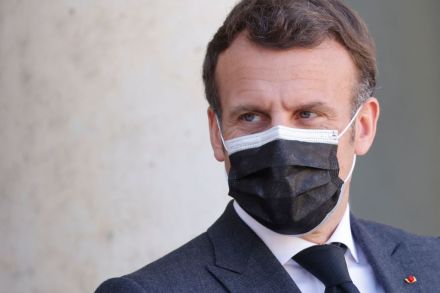
On New Year’s Eve, Emmanuel Macron promised France an economic revival by the Spring. Cancel that. Instead, as the intensive care units are saturated by a third wave of Covid, we have a new lockdown light and a new message from the president: ‘Don’t panic.’ More than a year after Macron the general took personal command of the war on the new coronavirus, the vaccination program has still to get into high gear, the doctors are threatening to triage patients, abandoning those with little hope, yet there was no hint of contrition from the president. Instead, he announced that we are to be subjected to yet another baffling set of rules which together comprise a sort of ‘confinement,’ although Macron never used the word.

Europe’s jab jibes at UK rollout

From our UK edition

The last ten weeks have been a depressing time for those few believers in the EU's lofty ideals. The saga of the vaccine procurement and roll out would be funny if it was not so tragic, beginning with Ursula von der Leyen trying to erect a hard border in Ireland in January and now culminating in Italy impounding meningitis jabs to America. You would have hoped such incompetence would have made some in Brussels reflect on their hubris. Not a bit of it, judging by the briefing of an anonymous EU official last weekend.

Boris Johnson’s vaccine problem

From our UK edition

On the day that people are finally allowed to gather in groups of six outside, tennis games get underway and wild swimmers take to Instagram en masse, Boris Johnson attempted to land a message of caution with the nation. Speaking at today's press conference, the Prime Minister spoke of the need to 'proceed with caution' as the country takes a 'small step to freedom today'.  The nerves in government point to a problem that will only grow as the vaccination programme continues at pace The PM pointed to Covid cases rising across the Channel as a cause for concern that shows the need to 'continue flat out to build the immunity of our population (and) build our defences against that wave when it comes'.

The EU’s decline is self-inflicted

From our UK edition

In 1991, at the height of the first Gulf War, the EU demonstrated to the world its divisions and helplessness, as Belgium infamously blocked the export of munitions to the UK, then at war in the Gulf. They quickly came to regret it. The Belgian Foreign Minister subsequently remarked tellingly: ‘Europe is an economic giant, a political dwarf and a military worm’. It seems these days that little has changed, save that even the EU’s claim to be an ‘economic giant’ is eroding with the loss of the world’s fifth largest economy, a dwindling share of world trade and a catatonic growth rate, even before the pandemic. Worse still, much of its relative economic decline is self-inflicted.

France accuses Britain of vaccine ‘blackmail’

From our UK edition

In some ways you have to admire the sheer shamelessness of the French government. To spend the start of the year slagging off the AstraZeneca vaccine before threatening the seize those very same jabs showed a degree of brazenness that excelled even the usual French standards. But to accuse the UK of blackmailing Paris and her European neighbours must be the peak of Gallic gall.  The French foreign minister Jean-Yves Le Drian spoke to a radio show this week in which he criticised the UK's vaccine programme. He told listeners: 'You can't be playing like this, a bit of blackmail, just because [the UK] hurried to get people vaccinated with a first shot.' He then denounced the British government's plan to ensure that it...

What will it take to tackle long Covid?

From our UK edition

With just under 500,000 patients admitted to hospitals in Britain since the start of the pandemic, we need to talk about 'long Covid'. Why? Because while the vaccine rollout is undoubtedly saving many lives, there is going to be a forbidding secondary impact from this virus on the nation’s health, the scale of which is only just becoming apparent.  What does 'long Covid' conjure in your mind? For many, it has become synonymous with fatigue and brain fog, symptoms which are fairly common. But what is less well known is that the impact of Covid-19 on patients can extend far beyond these symptoms alone.