Usa

Nigel Farage to start spreading the news in NYC

From our UK edition

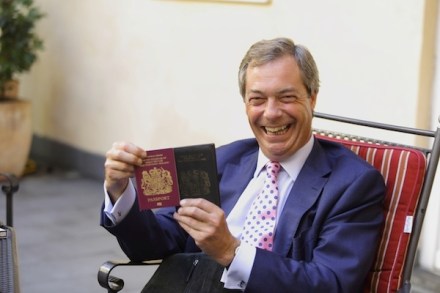
Dave is chasing Boris across the Pond and onto the set of the Letterman Show, but Mr Steerpike understands that the prime minister is not the only British party leader heading stateside today. On the back of UKIP’s most successful ever party conference, Nigel Farage is on his way for a lap of honour around Wall Street for a series of meetings with expat hedgies, traders and fund managers. Sources close to our man in pinstripes tell me that his popularity over there is phenomenal and that he’s got a packed twenty-nine hours. To prove the point, Farage has been granted a rare meeting with the brains behind the market-moving ZeroHedge website.

The death of Osama bin Laden

From our UK edition

Everyone knows something of what happened the night American Navy Seals killed Osama bin Laden in the Pakistani garrison town of Abbottabad. Frenzied reports followed the news of his death as information, much of it erroneous, flooded the public domain. Bin Laden was armed and engaged the Seals in a fire fight; he was cowering behind his wife when Seals stormed his room and pushed her towards them; there was a stand-off where he looked into the Seals’ eyes before they shot him. The New Yorker published a controversial account of events by Nicholas Schmidle where some of those untruths were advanced. Schmidle’s piece is so thick with atmospheric actualities that readers would reasonably assume that it is based on the testimonies of those involved, except it isn’t.

Interview: John R. MacArthur on the US election

From our UK edition

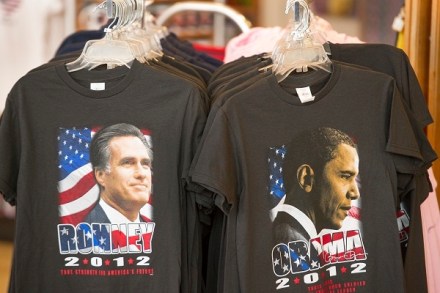
When Barack Obama entered the White House in January 2009, millions of citizens across the United States believed it was a new dawn for the American political system. Obama promised a presidency that would tear up the rulebook when it came to party loyalty; campaign fundraising, corruption; and the petty issues of partisan politics. But he would soon learn that attempting to transform the money machine and vested interest groups that run Washington would be near impossible. First released in September 2008, John R. MacArthur’s ‘You Can’t Be President: The Outrageous Barriers To Democracy in America’ is a book that openly criticizes Obama from the liberal left.

The Muslim Brotherhood’s rank hypocrisy

From our UK edition

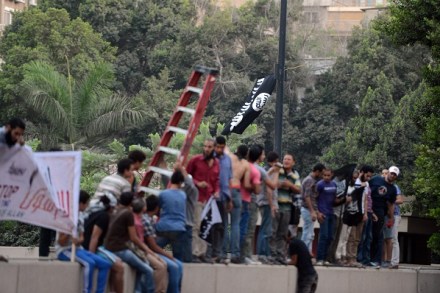
Western media and governments which are currently white-washing the Muslim Brotherhood should take note of the following, a classic example of the organisation’s traditionally forked-tongue way of working. Ahram Online carries the story which relates the recent rioting across North Africa and the Middle East. After the attack on the US Embassy in Cairo on Tuesday, the Muslim Brotherhood’s official English-language twitter yesterday tweeted: ‘We r relieved none of @USEmbassyCairo staff were harmed & hope US-Eg relations will sustain turbulence of Tuesday’s events.’ The US Embassy tweeted their thanks in the following way: ‘Thanks.  By the way, have you checked out your own Arabic feeds?  I hope you know we read those too.

The language of criminals

From our UK edition

The English language is, as English would have it, an odd duck.  Its nuances are capricious — to the non-native, maliciously so — but its lyricism widely praised. My preoccupation with language possibly stems from my first profession, that of a stage actress (throughout the course of this esteemed career, I made literally hundreds of dollars). Trained to mimic accents from public school Brit to Dixieland Southern belle, I was continually delighted by regionalisms. When I ceased auditioning and commenced scribbling, my fascination with ripe local slang never left me.

F. Scott Fitzgerald’s unfinished business

From our UK edition

It’s hard enough convincing people to read finished novels much less unfinished ones — though perhaps our cultural obsession with The Great Gatsby is reason enough to republish F. Scott Fitzgerald’s The Love of the Last Tycoon. The partial manuscript now appears alongside his personal essay The Crack Up in one slim volume. Read the former but discard the latter. I loved Tycoon the first time I read it, though I’m a Fitzgerald addict and was once mistaken for his grandson one summer while drinking champagne at the Trois Couronnes in Vevey. I claim no relation and attribute the mistake to my Puritanical upbringing: that is, my being overdressed and having combed my hair.

Hot War in the South China Sea?

From our UK edition

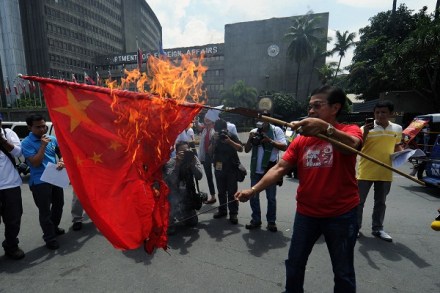
Like the deserts of the Middle East, the barren islands of the South China Sea now loom as a new theatre of war.  Asian countries, indeed America, too, are at odds over how to deal with this power-play by a rising China — if that’s what it is; or scramble for maritime minerals; or as recently witnessed in Chinese cities a resurgence of nationalism and loathing of Japan. The South China Sea brings in China, Japan, Vietnam, Indonesia, Malaysia, the Philippines, little Brunei and unrecognized Taiwan.

Midway: The overlooked battle

From our UK edition

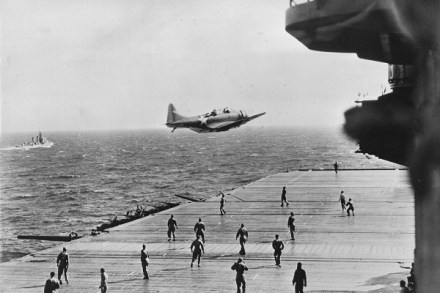
For many of us the Battle of Midway is just one more Hollywood spectacular in, to paraphrase Neville Chamberlain, a far-away sea of which we know little. But having recently taken a closer look at the battle I am struck both by what was at stake and what the consequences of the American victory were for the Allies at the time and geopolitics since then. When the Japanese attacked the American fleet at Pearl Harbour on 7 December 1941 they sank four battleships, destroyed 188 aircraft and damaged 159 other planes. Because, by sheer chance, there were no American carriers at Pearl Harbour on that day, the Japanese failed in their strategic aim: supremacy of the Pacific Ocean. They would have to fight again. The next major conflict between the two fleets was at Coral Sea in early May.

Food prices, and predicting riots

From our UK edition

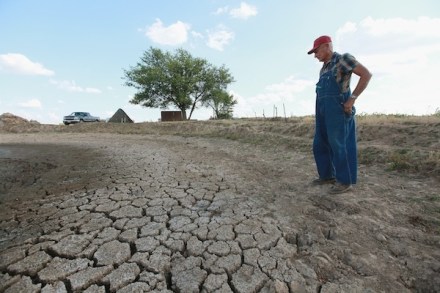
The cover story of last week’s Spectator was about the political impact of rising crop prices: John R. Bradley, who alone predicted the Egyptian revolution, explained how the same phenomenon is happening again. His piece speaks best for itself but today HSBC has released some research making the same point. I thought Coffee Housers may be interested. The picture above shows how much of the US is hit by drought now, and given that it’s the number one exporter this has hit world prices. The price of wheat, corn and soyabean has rocketed by 30 per cent, 25 per cent and 42 per cent, respectively since the start of the year. As Bradley argued, today’s crop prices will inflate tomorrow’s meat prices.

George Washington: Gentleman warrior

From our UK edition

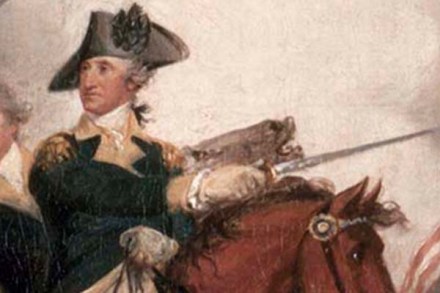
It is easy to forget that the dignified eighteenth-century gentleman whose image appears on the one-dollar bill, the first President and father of his nation, owed his position entirely to his prowess as a soldier. Stephen Brumwell’s book charts the two phases of his military career, firstly fighting for King George II, then fighting against King George III. George Washington was born into a landowning family in Virginia and was expected to become a gentleman planter like his forebears. But the appeal of adventure on the frontier drew him to enlist – with no formal military training ‒ as a militia officer. Five years of tough campaigning followed, defending the western fringes of Britain’s colonies against encroachment by the French and their Indian allies.

The marriage plot: The Newlyweds by Nell Freudenberger reviewed

From our UK edition

Few could accuse literary fiction of not doing its best to perk up the US export sector recently. It has been a truly remarkable year. A quick glance at my shelves reveals some wonderful new finds: The Art of Fielding by Chad Harbach, We the Animals by Justin Torres, Seating Arrangements by Maggie Shipstead and recently Leaving the Atocha Station by Ben Lerner. Joining them this summer – although a second novel rather than a debut like the above – is Nell Freudenberger’s The Newlyweds. Exactly like the others, however, The Newlyweds comes already wreathed with praise from across the pond. And well deserved too.

Sinophobia, the last acceptable racism

From our UK edition

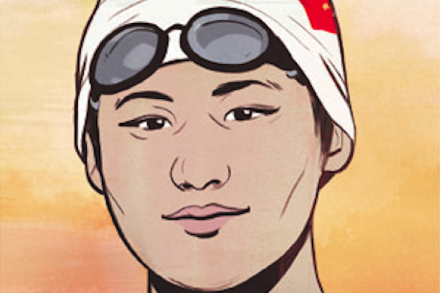
The Chinese have excelled at London 2012, much to the annoyance of their Western rivals. In this week’s issue of the Spectator, Ross Clark argues that the claims against swimmer Ye Shiwen reflect irrational suspicion of her country. Here is an edited version of Ross’s article (you can read the full version here): The story of London 2012 has been that of a country which was once an underachiever in the Olympics but which, through sheer hard work on the part of its athletes, has hauled itself to the top of the medals tables, producing in the process one of the most dramatic world records in Olympic history. I refer, of course, to the People’s Republic of China. But this is not a story you will have picked up from the BBC or the press.

Shelf Life: Nell Freudenberger

From our UK edition

Nell Freudenberger is one of the brightest young novelists in America, and she takes the Shelf Life hot seat this week. She suggests that Michael Gove should introduce English Literature GSCE students to international authors, and confides that she needs to read the self-help book she would like to write. Her latest novel, The Newlyweds, is published by Penguin (£12.99). 1). What are you reading at the moment? The Good Muslim by Tahmima Anam 2). As a child, what did you read under the covers? Mysteries by Zilpha Keatley Snyder, Paula Fox’s  YA novels, Noel Streatfeild’s ‘Shoes’ series. 3) Has a book ever made you cry, and if so which one?

RIP Robert Hughes: Enemy of the Woozy

From our UK edition

Few books have had a greater effect on me than Robert Hughes’ Culture of Complaint. The clarity of Hughes’ style in his dissection of the discontents of the 1980s was enough to make me love him. In his political writing, histories and art criticism he never descended into theory or jargon, but imitated his heroes, Tom Paine, George Orwell and EP Thompson, and talked to the reader without condescension or obscurantism Critics denounce and admirers celebrate the ‘muscular style’, but I find it more courteous than macho. Hughes tackled hard and often obscure subjects, the rise of modern art, the penal colonies in early Australia, and made a deal with the reader.

Henry Kissinger’s education

From our UK edition

Only America, a friend of mine once insisted, could produce the New Criterion. This friend happened to be American, but his point stands nonetheless. America alone is sufficiently large, wealthy and self-confident to sustain a conservative arts journal of such consistent quality. The New Criterion is 30 years old this year. The anniversary has given its editors cause for consideration as well as celebration. They have commissioned a series of essays on the questions prompted by the unnerving nature of the future.

Who will rule the 21st century?

From our UK edition

This is a nice big question to ponder on the holiday beach or in the rented villa. A vast amount has already been written on the rise of China and whether the US will be replaced as the global superpower. And where exactly does Europe fit into all this? It is easy to make a case for American weakness. The twin deficits of the balance of payments and the massive public sector gap between expenditure and income, the increasingly divided and embittered nature of policy discourse in the country, growing cultural fragmentation. The image of a divided nation appears to be supported by what has happened to the choice of baby names. This may seem rather trivial, but it is a very important aspect of the culture of a society.

Rereading Gore Vidal

From our UK edition

Gore Vidal was famously waspish or infamously nasty, depending on your point of view. Most outspoken (and successful) writers divide opinion, but Vidal does so more than most. His distinctive prose and the righteous fashion in which he expressed his liberal opinions are not for everyone; one man’s crusading iconoclast is a preachy monomaniac to those of different inclinations. In all the dense weight of recollections and memorials published since Vidal’s death on Tuesday, I have not seen a sharper criticism of his writing and its preoccupations than that made by Spectator reader Walter Taplin in a letter to the magazine in 1982. ‘Sir, On page 13 of the Spectator 23 October there was a cartoon of Mr Gore Vidal holding a cane.

All-American heroes

From our UK edition

Whatever Mitt might think, if there's one thing that makes us proud to be British, it's the fact we're not American. Alright, it's true we don't have a black president but we still think we're cooler: less brash, more sarcastic and ready to give Tim Berners-Lee a starring role in the Olympic show. The differences are particularly obvious when it comes to the holy trinity of American life: guns, god and portion sizes. And Ben Fountain's debut novel - at the age of 48, he's a honed late developer after the excellent short story collection Brief Encounters With Che Guevara (2006) - rips into all three over-indulgences.

Bookbenchers: Jamie Reed MP | 22 July 2012

From our UK edition

Over at the Books Blog, the Labour MP and shadow health minister Jamie Reed has answered our questions about his summer reading. He is taking Joe Bageant’s Rainbow Pie: A Redneck Memoir on his travels. It’s one of 4 non-fiction recommendations about US politics, supplemented by some Herman Melville, The Grapes of Wrath and a novel about Abraham Lincoln. It’s an American dominated list, but none the worse for that. You can read it here.

Bookbenchers: Jamie Reed MP

From our UK edition

This week, Jamie Reed, the Labour MP for Copeland and Cumbria and shadow health minister, is in the hot seat. He is big on books about American politics, and reads poetry occasionally. 1) Which books are at your bedside table at the moment? Most books now on my iPad... but Fear & Loathing on the Campaign Trail '72 is always present on the bedside table. Have just begun – finally – Team of Rivals. 2) Which book would you read to your children? They have different tastes. The Fantastic Mr Fox is always loved, along with The Hobbit. 3) Which literary character would you most like to be? Nick Clegg... or Nick Carraway. 4) Which book do you think best sums up 'now'?