Usa

Similar, but very different

From our UK edition

Richard Ford published his debut novel A Piece of My Heart in 1976.  But it was The Sportswriter — which introduced the world to Frank Bascombe, and other marginalised characters trapped on the edge of the American Dream — that distinguished Ford as a serious literary force. The two books that followed, Independence Day, which won him the Pulitzer prize in fiction, and Lay of The Land, completed the Frank Bascombe trilogy. Canada, his seventh novel, begins in Montana in 1960. It’s narrated by Dell Parsons, the son of a retired Air Force pilot, and a schoolteacher. The novel begins when Dell’s parents, Bev and Neeva, are sent to jail for robbing a bank, leaving him and his twin- sister, Berner, to fend for themselves.

DJ Delingpole

From our UK edition

My Spectator comrade James Delingpole has many talents. Among them is his skill as a podcast-presenter for an American conservative website called ‘Ricochet’.  Yesterday he asked me to join him for his latest, deeply irregular, instalment of 'Radio Free Delingpole'. It was without question the most anarchic 40 minutes I have ever spent on air and  I should never have done it were it not for my love of James and the vast fee he unwisely promised. We covered a fair amount of ground, including the US elections and House of Lords reform, but mention of the Rolling Stones brought the programme to a climax with a row — instigated by James — over whether Led Zeppelin was better than Schoenberg.

The Spectrum – the week in books | 6 July 2012

From our UK edition

UP: SHAKESPEARE IN LOVE Faber’s new Shakespeare’s Sonnets app is rated 12+ on account of its ‘Infrequent/Mild Sexual Content or Nudity’. After watching Andrew Motion’s  come-to-bed reading of Sonnet 142 we’re surprised it escaped an X-certificate. Who needs 50 Shades when you’ve got the third sexiest poet laureate (after Ben Jonson and Ted Hughes) wearing nothing but polka-dot pyjamas and braces? ‘Love is my sin’ indeed!     UP: 60s SUMMER READS Now's the time of year when literary pages replace serious stuff like reviews with drivel about what famous people are reading on their holidays.

American mythology

From our UK edition

Happy Fourth of July America! As you salute that Star-Spangled banner today, however, please remember that the war which spawned your anthem was a farrago wrapped in a fiasco inside a folly: 'If Canada was the winner in the War of 1812, there was no doubt who the losers were. The Federalist Party, sensibly skeptical about the war from the beginning, was nevertheless a victim of its prosecution. If their fate was irrelevance, though, much worse befell the Native American population. In the years after 1815, the United States turned its eyes westward. Even tribes such as the Cherokee who had fought with the Americans against the British discovered this service afforded them precisely no protection at all as the Indians endured their long, appalling trauma.

Obamacare and the Supreme Court: Partisan goose for the partisan gander

From our UK edition

Like the French Revolution it remains much too soon to say what the consequences of the United States Supreme Court's decision to uphold Obamacare will be. Except this: defeat would surely have been a catastrophe for Mr Obama. The more one considers John Roberts' pivotal argument, however, the more it seems as cunning as it is undoubtedly neat. There is something for everyone in his judgement and something for everyone to fear too. Roberts, who appears to have changed his mind, produced an elegant solution: the federal government lacks the power to force citizens to purchase health insurance but it may tax them if they don't. So Obamacare survives and American liberals (not to be confused with, you know, proper liberals) may postpose their jihad against the court.

Paul Simon and the shrill left

From our UK edition

The opinion on Paul Simon’s famous Graceland album seems finally to have swung 180 degrees from where it once was. Simon recorded the music — which has just bee re-released — with black African performers (mostly) in South Africa in 1986 and was of course castigated by the authoritarian left for ‘breaking’ the cultural boycott against the apartheid state. I mean, really castigated; placed in the same rrrraaaaaccccissssst category as those cricketers who played games against South Africa’s white-only cricket team. Now, however, it seems to be accepted that it was a wise and even liberating decision from the singer, and has done much to bring African music to a wider and richer audience.

Wanted: A British comic book industry

From our UK edition

Viz magazine. The Beano. Judge Dredd. 2000AD... But that's about it. Why doesn’t Britain have a comic book industry? Try an extended metaphor: Think of all English literature, laid out like a vast library. Ten thousand Romantic novels by Trollope. Cupboards crammed with textbooks on Shakespeare. Ubiquitous thumbed paperbacks of Harry Potter, Narnia, the Lord of the Rings. And enough soft porn to fill an Olympic swimming pool. But the shelf - if there was even a shelf - of British comic books would be nasty, brutish, and short. Why is this? Are we somehow less talented than our square-jawed American cousins? Certainly, there is no shortage of appetite here in Blighty. Our sales figures are positively stellar.

Racism and real estate

From our UK edition

If racism presupposes that different ethnic groups cannot live harmoniously together, then segregation puts that theory into practice. Carl H. Nightingale’s Segregation: A Global History of Divided Cities, teaches us that separating cities along racial colour-lines, has always concerned one commodity: real estate. Cities, Nightingale observers, are places where people of several races are meant to come together. But this has not been the case. Instead, residential segregation and city-splitting politics — across the globe — has ensured that by putting a coerced colour-line in place, white-power has remained the definitive norm.

Interview: Jorie Graham’s poetry

From our UK edition

Possessing a meticulously detailed and layered style, as well as having an exceptional ability to describe nature, Jorie Graham’s poetry is primarily concerned with how we can relate our internal consciousness to the exterior natural world we inhabit. In 1996, The Dream of the Unified Field: Selected Poems, 1974-1994, earned Graham the Pulitzer Prize in poetry. She is currently the Boylston professor of poetry at Harvard University. Her forthcoming book, Place will be her twelfth collection to date. She spoke to the Spectator about why poetry needs to be reclaimed to the oral tradition, how technology is corrupting our imagination, and why her work is laced with contradictions and paradoxes. What sort of ideas/ themes are you dealing with in your new collection, Place?

Who’ll partner Mitt?

From our UK edition

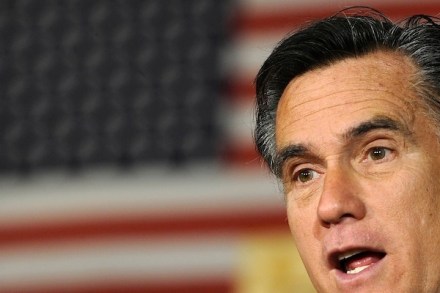
Will Mitt Romney choose an ‘incredibly boring white guy’ to be his vice presidential nominee? The main alternative has long been Hispanic Florida Senator Marco Rubio, but ABC’s Jonathan Karl reported yesterday that Rubio is not being vetted by Romney’s VP search team, suggesting that he is not on the shortlist. Karl wrote: ‘Knowledgeable Republican sources tell me that Rubio is not being vetted by Mitt Romney’s vice presidential search team. He has not been asked to complete any questionnaires or been asked to turn over any financial documents typically required of potential vice presidential candidates.

Will Romney win?

From our UK edition

In this week's issue, the great Robert Emmett Tyrrell, Jr. makes a bold prediction about the upcoming American presidential elections: ‘The Republican nominee will come out of the Republican convention in August with a full head of steam. Boosted by years of growing strength and aided by the independents' concern for Obama's huge deficits and slow growth, he will barrel through the autumn and on to victory in November. Obama will soon be back in Blue Island Illinois, creating his own presidential museum.’ Don't believe him? Look at the economy. Only a few months ago, America's financial health seemed to be improving. Team Obama was lecturing European conservatives about the limits of austerity. Not anymore. American unemployment is back up.

Interview: John Irving on writing sexuality

From our UK edition

John Irving’s latest novel, In One Person is narrated by a bisexual writer, Billy Abbot, who recalls his high school days from the 1950s, in the small New-England town of First Sister — where the majority of the cross-dressing residents are more likely to celebrate polymorphous perversity than puritanical punishment. Billy takes a fancy to various people, including: his stepfather; his friend’s mother; the captain of the school wrestling team; and the local librarian, Miss Frost — who reveals to Billy a secret regarding her own identity. The mood of the latter half of the book darkens when Billy moves to New York in the 1980s, witnessing the AIDS epidemic. Irving published his debut novel Setting Free the Bears in 1968.

F. Scott Fitzgerald’s other ‘great’ character

From our UK edition

It is perhaps fitting — given his lack of fame and success — that many of you will have never heard of Pat Hobby. Hobby was a character who featured in a number of F. Scott Fitzgerald short stories towards the end of the author’s life, when he was working in Hollywood. Hobby is a forty-nine year old scriptwriter whose best days are long behind him. Rather than reaching out for a green light at the end of a dock in Long Island, Pat is forever scrabbling around for his next ten dollars in order to buy another drink or pay off his bookie. Regardless of whether he employs honest means to attain his ends, Pat’s adventures invariably end in failure.

Clinton hurts Obama

From our UK edition

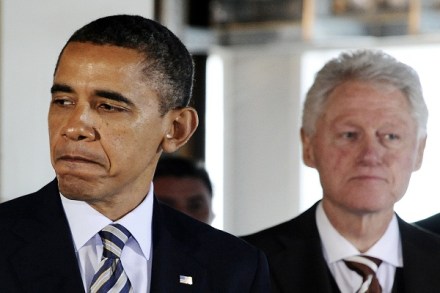
Bill Clinton — the man who was such a thorn in Barack Obama's side during the 2008 Democratic primaries — has become one of the current President's most important supporters this time around. All the more significant, then, that Clinton has added his name to the list of Democrats who have voiced concern at one of Team Obama's attacks on Mitt Romney. For a while now, the Obama campaign has been trying to make Romney's investment career at Bain Capital, which he founded, as a reason for voters not to back the presumptive Republican nominee. They've hit him with the stories of workers who lost their jobs at companies taken over by Bain — including this powerful video about steel workers in Kansas City.

Euphoria gives way to worry

From our UK edition

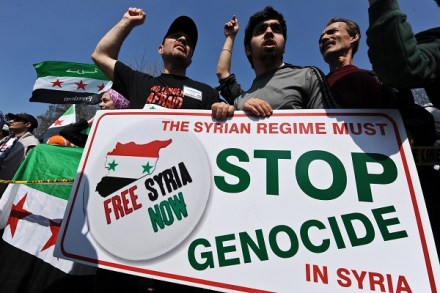
The slaughter of the innocents in Houla, Syria, has concentrated the West’s collective mind. The Times declares (£), not unreasonably, that there is a desire to stop what the UN, while making Robert Mugabe its tourism envoy, has tepidly described as ’18 months of violence’. The paper adds that 'all options are on the table'. Western voices are emitting decibels of disgust. Secretary of State Clinton has castigated the Russian regime for its intransigence in the Security Council, and has said that Russia’s policy will ‘contribute to a civil war’. Meanwhile, Senator John McCain has repeated his view that the Obama administration's inaction on Syria denies what it is to be American.

The US has taken a stance against Argentina’s brinkmanship — it’s time we joined them

From our UK edition

The 30th anniversary of the Falklands War – and the bellicose rhetoric (and videos) currently emerging from Buenos Aires — has once more shone a spotlight on the UK’s relationship with Argentina. Were it not for the Falklands, it’s unlikely that Argentina would occupy much discussion in this country. The truth, for those of us who have followed the country’s recent history, is that Argentina, most notably under the current Government, is truly remarkable. But for all the wrong reasons. In Britain, of course, our chief concern is the ongoing nationalist rhetoric that President Cristina Kirchner is whipping up around the sovereignty of the Falkland Islands.

May Day, May Day

From our UK edition

There was a sense of urgency, even emergency, in many countries on May 1 this year. The goings-on in the UK were muted in comparison: France Presidential incumbent Nicolas Sarkozy staged a rally in front of the Eiffel Tower called ‘The Feast of Real Work’, to counter the traditional show of heft by the left. ‘Put down the red flag and serve France!’ he shouted to the unions. His campaign claims a turnout of 200,000. The left was irritated by Sarkozy’s hijack of their celebration, and his insinuation that they don’t understand what work is. The far right, led by a scornful Marine Le Pen fresh from rejecting an overture from Sarkozy, made their usual walk to the statue of Joan of Arc.

Obama’s words meet with the Taliban’s bombs

From our UK edition

Political theatre, that’s what Barack Obama delivered in Afghanistan last night. A year on from the death of Osama Bin Laden, and with the US elections fast approaching, here was the President reheating his existing timetable for withdrawal — and offering it up as reassurance for weary Afghans and Americans alike. There were some new details, courtesy of an ‘Enduring Strategic Partnership Agreement’ signed with Hamid Karzai, but this was mostly about the symbolism and rhetoric. As Obama put it himself, ‘We can see the light of a new day on the horizon.’ Except this ‘new day’ quickly slipped back into night. A couple of hours after Obama had left the country, a suicide bomb attack left at least seven people dead in Kabul.

Comedian-in-Chief

From our UK edition

Every year, the White House Correspondents’ Dinner boasts an eclectic guest list, and last night’s was no exception. Stars of the political world — including Colin Powell and Chris Christie — were joined by Hollywood stars including George Clooney, Steven Spielberg, Kevin Spacey and Lindsay Lohan. Late night TV host Jimmy Kimmel provided after dinner entertainment, but — as last year — the best jokes came from Barack Obama. He poked fun at himself: ‘Some have said I blame too many problems on my predecessor. But let’s not forget, that’s a practice that was initiated by George W Bush.’ The Republican primaries: ‘[Mitt Romney] took a few hours off the other day to see The Hunger Games.

Britain’s longest downturn

From our UK edition

As of today, we now have four years’ worth of GDP figures since the UK first went into recession — and they don’t look pretty. By this point in the 1930s, we’d already fully recovered from the Great Depression.