US economy

MAGA-nomics is working

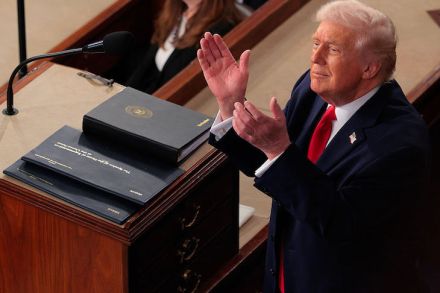
Donald Trump’s State of the Union address, the longest in history, served as a reminder of the relentless will and unstoppable energy he brings to the office of the presidency. In a coup de grâce he humiliated congressional Democrats, securing footage of them remaining seated en masse as they refused to accept that the role of the government is to prioritize American citizens. He gently chastised the Supreme Court judges, assembled in the front row, for declaring his tariff program unlawful last Friday.

MAGAnomics

Inside the real jobs crisis

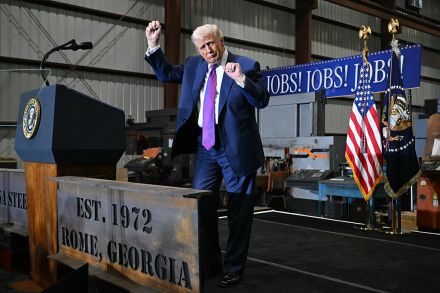
After much talk of an economic slowdown, February brought reassuring headlines. The official unemployment rate had fallen as another 130,000 jobs were added to the US economy, according to the Bureau of Labor Statistics. That is good news, but it is not the whole story. The official unemployment rate counts only people actively looking for work – it does not capture those who would like a job but have stopped searching. The official unemployment rate is so narrow that it hides long-term changes in the economy. In fact, things are far worse than the official figures suggest. This matters for more than just economists. We tend to treat employment statistics as dry indicators that exist in spreadsheets and quarterly results.

jobs labor

Are you long on America?

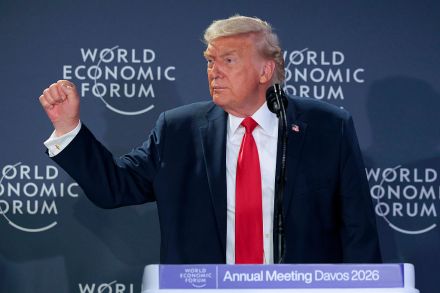
Donald Trump has completed the first year of his second presidency – and remains a truly divisive figure. He may have pulled back, after an absurd escalation, from his apparent threat to annex Greenland by force. But European leaders continue to berate him for his turbulent behavior in international affairs, and a growing number of Republicans are turning against his erratic foreign policy. Last week, the cry on global markets was “Sell America,” after the President ratcheted up trade hostilities with long-standing US allies by announcing yet another round of punitive tariffs on several European countries for refusing to agree that America should own Greenland outright.

Spending the last penny

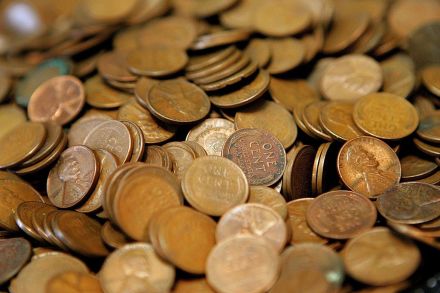
I once knew a man so cheap he would call my dad to report that he’d found a nickel on the pavement of the local racetrack’s parking lot. I don’t know if Jim would have stooped to conquer a penny as well – I wouldn’t put it past him – but I like to think he’d join me in lamenting the demise of the American cent, our humblest coin, burked by order of President Donald Trump at the urging of Elon Musk, neither of whom will ever be mistaken for a small-is-beautiful fan. The last Lincoln cent headed for general circulation was struck at the Philadelphia Mint in November last year, ending a 232-year run for my favorite coin.

Can Trump control inflation?

Notionally, Americans have never been better off. The ructions in tech stocks over the past few weeks cannot detract from the fact that the US economy has been outgunning other developed economies all century. The overall graph of real disposable income for Americans continues to trend upward, almost as if the sharp dip during the pandemic had not happened. That is certainly not true everywhere: in many countries, Covid has been followed by stagnation in GDP and wages. Yet, for all the wealth generated, many Americans simply do not feel that they are living in a thriving country. On the things that really matter, such as basic living costs, citizens at the lower end of the income scale feel their wages are increasingly inadequate. They are not imagining it.

cost

The truth about the Trump ‘trade deals’

They say three times makes a pattern. So what should we make of the President’s trade agreements, three of which he confirmed this week, as the August 1 deadline for "reciprocal tariffs” looms?  If there remained any confusion about his agenda, he helpfully laid it out in all caps. “I WILL ONLY LOWER TARIFFS IF A COUNTRY AGREES TO OPEN ITS MARKET. IF NOT, MUCH HIGHER TARIFFS!” he wrote on Truth Social. “USA BUSINESSES WILL BOOM!” Given the size of the lettering, and the similarities to the deals secured with Indonesia, the Philippines and Japan this week, we should take Donald Trump at his word on this one. Put simply: so long as other countries cut taxes for their businesses, he will hike taxes on American businesses ever so slightly less.

trump trade

Has Trump given up on tariff deadlines?

“TARIFFS WILL START BEING PAID ON AUGUST 1, 2025,” Donald Trump shared on Truth Social this morning. “There will be no change... No extensions will be granted. Thank you for your attention to this matter!” It’s a rather definitive statement from the President. But we’ve been here before. The original 90-day extension of “reciprocal tariffs” (better described as trade deficit figures with a percentage symbol attached) was also supposed to be a hard deadline. The President suggested only last week that there were no plans to push implementation back again. But here we are: a new date, a new deadline and a mixed market reaction.

tariff
rescinded linkedin

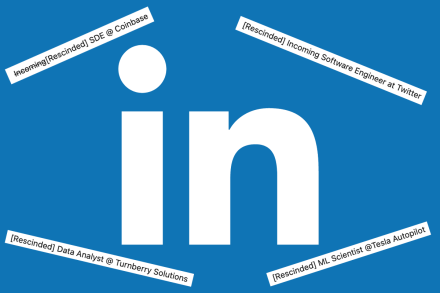
‘Rescinded’: LinkedIn users are listing their retracted job offers

Cockburn was on one of his regular jaunts through LinkedIn this week, on the lookout for more gainful employment than the Speccie currently offers him. During his perusal, one word kept catching his eye on the profiles of other users: “Rescinded.” Prospective employees are deciding to denote when a company had made them a job offer — and then changed their mind after a change in corporate hiring plans. The cryptocurrency wallet company Coinbase appears to be one of the biggest offenders. Ashutosh, a software engineer, posted the following: After considering several factors, I had chosen to join Coinbase over pursuing a PhD.

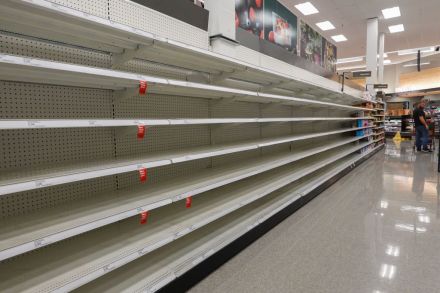
Is America in the grip of Empty Shelves panic?

The morning of President Trump’s 100th day in office brought fresh tariff melodrama with the coffee, eggs and toast, as a report emerged suggesting Amazon was considering listing the exact cost of a US tariff surcharge next to all goods purchased on the site. White House Press Secretary Karoline Leavitt immediately snarled from the podium that this was a “hostile and political act,” though it was really neither hostile nor political. Regardless, Amazon immediately rolled it back, claiming the story had been misreported by Punchbowl News.  “The team that runs our ultra low-cost Amazon Haul store has considered listing import charges on certain products,” a spokesman said.

empty shelves

Trump loves chaos. What happens when he loses control?

“Don’t be a PANICAN,” the President shared on his Truth Social account this morning, as the Dow was dropping 900 points. This is Donald Trump’s new word for his tariff critics, who he has grouped together as the “new party based on Weak and Stupid people!” There is another way, the President insists: “Be Strong, Courageous, and Patient, and GREATNESS will be the result!” It’s another post in a long line of all-caps messages shared by the President over the weekend. “ONLY THE WEAK WILL FAIL!” was Friday’s update. “WE WILL WIN. HANG TOUGH,” was Saturday’s inspirational message.

control chaos

The grandeur of Trump’s tariffs

The first thing revealed by the high and wide-ranging new tariffs President Trump announced on “Liberation Day” is just how limited other recent American presidents have been in their thinking. Their ambition was to get elected and re-elected, then retire comfortably into a tranquil post-presidency. They would finish their days lending their names to charities and writing their memoirs (or rather, commissioning ghostwriters to fulfill their publishing contracts).   The idea of destroying and remaking the global economic order never crossed their minds. But Trump is thinking bigger. He doesn’t want to go to his grave as just another has-been ex-president.

tariffs grandeur

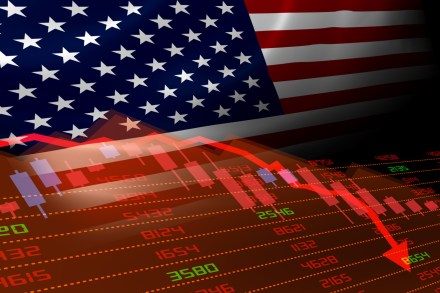
The US has entered a bear market

Could it be that Donald Trump actually wants a bear market now? At some point, one was bound to happen on his watch — after all, US equities weren’t going to keep up their stunning gains from the past two years for the rest of his term. A market correction was inevitable, and it seems we’ve already seen that, as the S&P 500 dipped into correction territory this week. And a bear market was almost certainly coming, given that there have been 27 of them in the S&P index since 1928. Hartford Funds provides a good summary here, showing that the average decline in a bear market is 35 percent, and they typically last 9.6 months. By contrast, the average bull market lasts 2.6 years, with prices rising 110 percent. Overall, bear markets occur about every 3.

bear market

Will better-than-expected inflation numbers calm the markets?

Has Donald Trump’s return to the White House triggered a second round of inflation? Not yet, according to the Bureau of Labor Statistics, which revealed this morning that the consumer price index rose to 2.8 percent in February — 0.1 percent less than markets had expected. The rise is being described as "stable," as annualized core inflation (which excludes more volatile prices like food and energy) rose to 3.1 percent — also a smaller rise than expected. While inflation on the year is ticking up slightly, it remains in the ballpark of what has been expected.

Axios bravely points out Covid hurt Trump’s economy

Axios reporter Emily Peck isn’t afraid to state the obvious out loud and pass it off as inspired. In a hit piece published Thursday, “Why Trump supporters give him a pass on record-high unemployment,” Peck made the case that the economy suffered during Trump's last months in office due to coronavirus. Huh, who knew a global pandemic and lockdown could cause record unemployment?  “Trump's economic record is only good if you leave off what happened from March 2020 to the end of his administration,” Peck wrote, as if that were not exactly what any reasonable person would do. Prior to the pandemic, the unemployment rate fell to 3.5 percent, the poverty rate hit a sixty-year low, and the country saw the largest real household median income increase since 1967.

axios

The dollar is here to stay

Reports of the death of the US dollar as the world’s reserve currency are greatly exaggerated. Fortunately for America, while the dollar is by no means unsinkable, it will not be toppled anytime soon. Threats exist, but rather than coming from abroad, to paraphrase Lincoln, they spring up among us. How the US manages its economy will largely be the determinant factor in the dollar’s continued supremacy. Currently, the dollar makes up about 58 percent of foreign currency reserves worldwide, well ahead of its competitors. The next closest currency is the euro at 20 percent, and then the yen and pound sterling, both at about 5 percent — China’s renminbi is at a paltry 3 percent (just ahead of a real powerhouse, the Canadian dollar).

dollar debt

How America’s ‘big sort’ will upend politics

The world may not be turning upside down, but it’s certainly tilting. In the long shadow of the pandemic, with war on the European continent and the West and China entering a new cold war, the “new economy” of bits and bytes that was supposed to connect and shape the world has hit a rough patch. Meanwhile, the much disdained “old” economy of manufacturing, agriculture and energy is thriving. Today, it’s not steel companies or gas plants that are experiencing mass layoffs, but firms such as Goldman Sachs, Meta, Amazon, Microsoft, Snap and Google. Last year, media companies  lost $500 billion in value and tech firms have shed $4 trillion off their valuations. Industrial spaces are in high demand while downtown offices sit half-empty.

big sort

Revealed: which industries have lost the most workers this year?

The Great Resignation continues, with a new study revealing that employees in many industries are quitting at higher rates than 2021. Accommodation and food services lost 5.8 percent of its workforce — 773,600 workers — in 2022, an increase of about 128,000 over the same period in 2021. Retail lost 3.82 percent, or about 600,000 workers, though this is 109,000 fewer than the same period in 2021. In third is the entertainment sector at 3.58 percent, accounting for 82,200 jobs, rising 7,000 compared to 2021. These industries happen to be where employees are in closest contact with customers — which would probably cause Cockburn to quit too, given how rude folks can be. Manufacturing and mining, by contrast, saw 2.42 and 2.3 percent respectively.

quitting

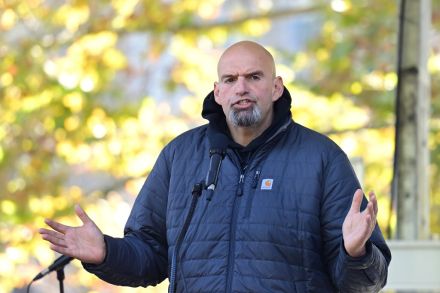
The town John Fetterman ran is in ruins

Braddock, Pennsylvania Americans concerned about the economy — once again voters’ top priority — are turning their backs on the left. “Democrats’ momentum stalls amid economy worries,” reports CBS. “Republicans Gain Edge as Voters Worry About Economy,” echoes the New York Times. The Democratic platforms on policies that affect people personally — crime and public safety are other major concerns — are not winning. And there’s no one worse at delivering, and delivering on, the left’s failing messaging than John Fetterman, Democratic candidate for Pennsylvania’s US Senate seat. I’m a Pennsylvanian and have never understood Fetterman’s appeal. At all.

john fetterman

More rail trouble could be on the horizon

Economic news over the last few months has been bleak. Whether it’s inflation, supply chain disruptions, or the threat of recession, worrying news abounds. But among the headlines, there was a topic that briefly bubbled to the surface before being all but forgotten: a potential strike by the country’s railroad workers. Amtrak, in anticipation, canceled all cross-country routes, but Labor Secretary Marty Walsh averted a strike at the eleventh hour by negotiating quite literally through the night to find an agreement with the workers. It’s easy to forget about rail. In a time when inflation and potential recession are dominating headlines, transportation issues just don’t seem as interesting.

Free markets deliver real American greatness

Since its postwar rise, the American conservative movement has staked its reputation on defending the free market as an abiding principle. Conservatives pointed to the liftoff in the American economy caused by the Reagan tax revolution and the deregulation of heavily controlled parts of the economy. Less government and less regulation were better for the American economy. The left disagreed with this fundamental axiom of conservative wisdom. Now, surprisingly, many on the right have joined them. Something obviously changed in the post-Cold War period. China’s entry to the World Trade Organization in 2001 resulted in the so-called China Shock, or the loss of 15 to 20 percent of manufacturing jobs in America.

free market