University

How to build a school

King’s College London Mathematics School is precisely one year old. And on 13 August it woke up to AS-level results that make it one of the ten best state schools in the country. 97 per cent of students got an A in mathematics. 90 per cent of grades in maths and further maths were As. Students’ grades were, on average, two grades higher, across all their subjects, than would be expected from their GCSE results. As a governor, I bask in reflected glory. Ours is a ‘free school’ sponsored by King’s, and it teaches talented, committed 16- to 18-year-olds. We select for potential, using our own test. But we also select by the education, and especially the quality of the A-level maths, that applicants could expect at their current school.

Diary – 23 July 2015

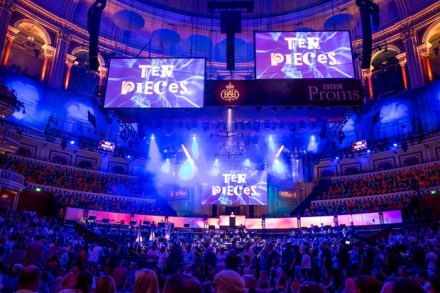
There’s nothing quite like a First Night — and last Friday we launched the Proms, the most celebrated classical music festival in the world, now in its 120th year. There’s the thrill of walking into the Royal Albert Hall for the first time; taking your seat with thousands of other music fans; the ‘heave ho’ chant from the Prommers; the quiet before the music begins. It’s a vast space, but it can also feel very intimate. So it was perfect for the opening concert with moments of quiet reflection in works by Mozart and Sibelius, as well as great walls of sound in Walton’s Belshazzar’s Feast.

Degrees of bureaucracy

It took Oxford 40 years to catch up with Cambridge in appointing a woman vice-chancellor, but Louise Richardson — ex-St Andrews, Irish, Catholic, terrorism expert — is to take over from the chemist Andrew Hamilton. He is leaving early to head New York University for an eye-watering £950,000 a year. His successor will inherit a more modest but still whopping £442,000 a year. That’s what happens when a university is run like a biggish corporation — the head is paid like a chief executive. (A professor gets around £65,000 a year: once, Louise Richardson would have been on something similar.