Universities

My advice for the next ‘free speech champion’

From our UK edition

I was delighted to hear the government plans to appoint a ‘free speech champion’ to the board of the Office for Students. His or her responsibility will be to make sure universities in England do everything that is reasonably practicable to uphold freedom of speech within the law, including preventing external speakers from being no-platformed by student activists. This legal duty has been on the statute books since 1986, but there is no enforcement mechanism. That’s why this announcement is so important. The new free speech tsar will have the power to fine universities that don’t uphold the law. Theresa May’s government took a dummy run at this when it appointed me to the board of the Office for Students in 2018.

Britain’s universities are confounded by China

From our UK edition

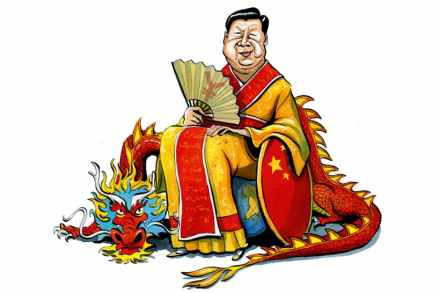
'Tencent Wykeham’ has a ring to it. It captures how easily British universities can be bought. It is the new name for what was until now the Wykeham Professorship of Physics at New College, Oxford, now acquired by the huge Chinese techno-conglomerate Tencent for £700,000.  William of Wykeham founded New College and Winchester in the 14th century. ‘Tencent Winchester’ next? The problem, which Oxford seems to ignore, is that Tencent acts for the national security interests of the Chinese Communist party. It propagandises too: for Xi Jinping’s address to the 19th Party Congress in 2017, it brought out a mobile game called ‘Clap for Xi Jinping: An Awesome Speech’.

Where would politics be without fighting talk?

From our UK edition

‘Tencent Wykeham’ has a ring to it. It captures how easily British universities can be bought. It is the new name for what was until now the Wykeham Professorship of Physics at New College, Oxford, now acquired by the huge Chinese techno-conglomerate Tencent for £700,000. William of Wykeham founded New College and Winchester in the 14th century. ‘Tencent Winchester’ next? The problem, which Oxford seems to ignore, is that Tencent acts for the national security interests of the Chinese Communist party. It propagandises too: for Xi Jinping’s address to the 19th Party Congress in 2017, it brought out a mobile game called ‘Clap for Xi Jinping: An Awesome Speech’.

How to be ‘liberal’, according to the ancients

From our UK edition

Certain parts of academia seem to wish to turn the study of classics away from a historical, language- and evidence-based discipline whose focus is understanding the ancient world on its own terms, in favour of preaching to students about the evils of ancient imperialism, slavery, racism, sexism, privilege, all keenly advocated by anyone who has ever taught it. There should be added to that list of shame the ancients’ hopelessly misguided views about what it meant to be ‘liberal’. Latin lîber meant ‘free’, and lîberalis meant ‘relating to the free, worthy of the free’; also ‘gentlemanly, ladylike’, by extension ‘magnanimous, obliging’ and so ‘munificent, generous’.

The sinister attempts to silence gender critical academics

From our UK edition

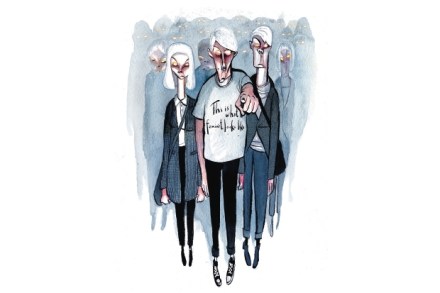
Academic freedom is vital in a functioning and healthy democracy. But when it comes to questioning and debating ideas around gender identity and sex, many of my colleagues in academia do not appear to agree. The latest glaring example of this came last week. An open letter, signed by over 600 of my colleagues, primarily in academic philosophy, suggested I was personally responsible for ‘transphobic fearmongering’, helping to ‘restrict trans people’s access to life-saving medical treatment’, and serving ‘to encourage the harassment of gender-non-conforming people’. Their pretext was my OBE for services to higher education and academic freedom, awarded in the New Year’s Honours List.

Why academics hold Thatcher and Trump in such contempt

From our UK edition

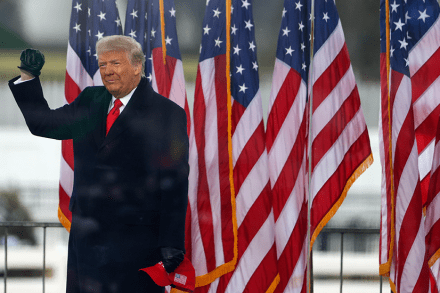
‘Has that orange baboon gone yet?’ asked a senior professor in the teacher’s room at my university yesterday. The remark went down well, despite the unfashionable remark about someone’s skin colour and the dubious zoomorphic comparison. As did an earlier comment from another colleague joking about how he’d like to replace Trump’s corona medication with something more potent (i.e. he wishes he were dead).

The trouble with a ‘decolonised’ curriculum

From our UK edition

I always felt sorry for my father, then president of a chronically strapped educational institution, for having ceaselessly to approach wealthy prospective donors with a begging bowl. How much more delicious, I imagined during his tenure, to instead be the widely welcomed party that doles out the dosh. But as the administrators of Australia’s Ramsay Centre for Western Civilisation have discovered since 2017, it isn’t always easy to give money away. Funded by a $3 billion bequest from the late healthcare magnate Paul Ramsay, the centre was established in order to revive the flagging humanities at Australian universities.

Universities are not going to be ‘care homes of the second wave’

From our UK edition

According to Jo Grady of the University and College Union, universities risk becoming the ‘care homes of the second wave’ unless students defy the government’s attempt to get them back in face-to-face education. She went on to claim that a return to campus ‘risks doing untold damage to people's health and exacerbating the worst public health crisis of our lifetimes’ and could lead to a ‘silent avalanche of infections’. Are these fears justified, or are they an attempt by the union to get its members out of having to do any work (while presumably collecting their salaries)? Any large number of people getting together and mixing from across the country risks some spreading of an infectious disease.

University challenge: the next education crisis

From our UK edition

On the insistence of university authorities, freshers’ week will be an online affair this year. But if this autumn is not much fun for students, it will be a lot less fun still for university staff whose admissions system has just been thrown into turmoil by the A-level results debacle. While some institutions now face overcrowding, others face financial ruin. When the Education Secretary Gavin Williamson announced on Monday that he was abandoning the algorithm devised by Ofqual to moderate A-level results and would allow candidates to keep the grades estimated by their teachers, students were relieved — many more will, after all, now be able to go to their favoured university. Admissions officers at the top universities were rather less happy.

The proof that free speech in universities is in peril

From our UK edition

About 18 months ago, I attended a debate at Policy Exchange, the think tank founded by Nick Boles, Francis Maude and Archie Norman, on whether there was a free speech crisis at British universities. One panellist, Professor Jon Wilson of King’s College London, vigorously denied that any such problem existed. Various people pointed to examples of right-of-centre academics being no-platformed — Charles Murray, Amy Wax, Linda Gottfredson — but that was scarcely conclusive. It was anecdotal evidence, not hard data. The same cannot be said any more. This week, Policy Exchange published a paper by three academics — Remi Adekoya, Eric Kaufmann and Tom Simpson — which proves beyond reasonable doubt that free speech is in trouble in the higher-education sector.

Why do we still struggle to see Xi’s China as a threat?

From our UK edition

For years Westminster has been obsessing over Russian interference in Britain. Yet while we fret over oligarchs and social-media bots, the most dangerous assault on our democracy and security goes not just unchallenged, but largely unnoticed. Beijing is richer and more sophisticated than Moscow on every level, and its influence more prevalent across British society. But even as we witness events in Hong Kong and Xinjiang, we still struggle to see China as a threat to our way of life. This blind spot means China has been able quietly to amass huge amounts of influence with little pushback. Just look at how Huawei settled itself in our communications infrastructure and then expanded into our establishment.

Open letters have become ransom notes

From our UK edition

In the States, the ‘open letter’ is enjoying quite the formal renaissance. Curiously, recent examples of this newly popular epistolary genre exhibit striking similarities to the ransom note. During June’s riots following George Floyd’s murder, a beloved independent bookstore in Denver called The Tattered Cover posted online that the shop would be politically impartial, the better to remain a neutral space for customers. Cue local outrage. Cue the store’s immediate volte-face: fulsome support for Black Lives Matter. The reversal proved unsatisfactory. Signed by miffed patrons and authors, an open letter to the owners listed ten demands.

What would it mean to ‘decolonise’ the Classics?

From our UK edition

We classicists peering into the past can sometimes be blindsided by the present. 2020 brings the charge that our discipline promotes racism. Last month, America’s Society for Classical Studies announced ‘the complicity of Classics as a field in constructing and participating in racist and anti-black educational structures and attitudes’. A pre-doctoral fellow at Princeton has enjoined ‘white classicists’ to ‘unlearn white supremacy in themselves’. And, closer to home, Oxford’s Faculty of Classics is being petitioned by many of its students to ‘acknowledge explicitly its own role in the proliferation of racist, colonialist, and white supremacist attitudes’. Have I really chosen the career of racism-pedlar?

The lost boys: the white working class is being left behind

From our UK edition

You can argue about the merits of pulling down statues, but it’s hard to make the case that mass protests serve no useful purpose. At the very least, they provoke debate and draw attention to uncomfortable topics that it might otherwise be easier to ignore. The recent protests have forced everyone to have difficult discussions about race, class, poverty and attainment. Any serious examination of the statistics shows that we’re pretty far from equal, but what the figures also show is that it’s wrong-headed and damaging to lump very different groups together. In these discussions politicians often lazily assume that all BAME (Black, Asian and Minority Ethnic) people are the same, and that all white groups are equally privileged.

What should you charge for a virtual conference?

From our UK edition

From time to time, every industry must adapt to some inconvenient technological advance. Suddenly, some part of what you offer can be reproduced or distributed in a new form. The temptation is to ignore the issue and hope it goes away. But if you don’t act, eventually some competitor, existing or new, surely will. Reinvention is a painful process. Hollywood’s reaction to the advent of television followed the five stages of grief: denial, anger, bargaining, depression, acceptance. The same emotions played out in the response of the music industry to the arrival of digital downloads and streaming. Churches will have noticed that online congregations are larger than physical ones In retrospect, some of this looks absurd.

The perils of owning an erotic Nazi toy

From our UK edition

My parents told me that their wartime childhoods were punctuated by the expression: ‘Don’t you know there’s a war on?’ It was used as an excuse for not attending to something urgent. The modern equivalent is the phrase ‘climate emergency’ (leading to ‘extreme weather events’). This emergency is supposedly so great that billions have to be spent on it annually, leaving little time and money for actual emergencies, e.g. floods. The stupidity of XR digging up the lawn outside the gate of Trinity College, Cambridge, needs no further comment. The event does bring home our cultural change. Shortly before I went up to Trinity in the mid-1970s, a few young bloods drove some ducks up from the Backs at dawn.

What have the Anglo-Saxons ever done for us?

From our UK edition

It has been a while since I’ve considered the vexed question of Byrhtnoth’s ‘ofermod’. More than 30 years, in fact. I remember, as if it were yesterday, my Anglo-Saxon tutorials with dear, lovely, gentle Richard Hamer. And now he is the author of the standard translation being used by my children on their own university English Literature courses. (I suppose the Latin equivalent would be having been taught by the author of Kennedy’s ‘Eating’ Primer.

Six weeks is too long for an election campaign

From our UK edition

The number of parties represented in national election debate multiplies. There are now seven crowding on to television podiums and local hustings. Yet this impression of diversity is, like the current public policy use of that word, misleading. Five of the parties — Labour, Liberal Democrats, Greens, SNP and Plaid Cymru — are essentially the same. They see achieving Remain, growing the state and destroying the Tories as the most important causes. The Brexit party is merely an epiphenomenon of Tory Brexit weakness and is therefore passing into history. So it is the Conservatives vs the rest, and ‘the rest’ includes all the broadcast media.

Campus free speech is a thing of the past

From our UK edition

Not that long ago, the sorts of views that were verboten on a university campus were genuinely out-there and nasty: fascism, racism, radical Islam, that sort of thing. It was generally accepted that university was the place to air and interrogate even the most eccentric ideas. Many people still had their limits, but those limits were sufficiently broad that they weren’t tested all that often. And when they were, real scumbags, with genuinely obnoxious opinions, were usually involved. The big campus controversy of 2002 was whether British National Party leader Nick Griffin and Islamic fundamentalist Abu Hamza should be allowed to appear in a debate at the Cambridge Union. That’s almost unimaginable today.

Universities don’t need to be lectured about racism

From our UK edition

I’ve been contacted by a professor at a leading Russell Group university who is worried about the spread of progressive dogma in the UK’s higher education sector. He highlighted last week’s report by the Equality and Human Rights Commission which claimed that around a quarter of students from ethnic minority backgrounds at Britain’s universities have experienced racial harassment. He fears that this will be used by left-wing activists on campus as ‘proof’ that the higher education sector is ‘systemically racist’ and lead to further calls to ‘decolonise the curriculum’.