Universities

How Harvard went woke

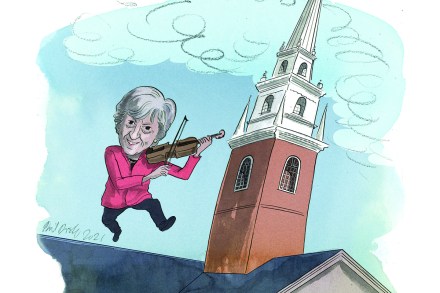
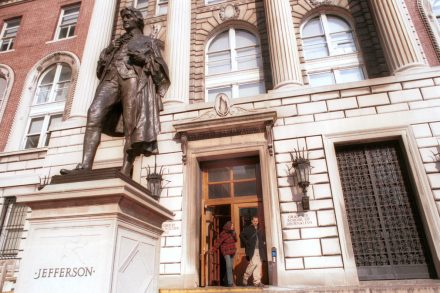
On January 1, 1993, I arrived at Harvard to take up a newly endowed professorship in Yiddish literature. It seemed preposterous: me at Harvard, Yiddish at Harvard. The university had never figured in my aspirations. My impressions of the university had been formed mostly from what I knew of its program in Jewish studies, which was jokingly referred to as ‘the Yeshiva on the Charles’ because of its emphasis on Talmudic and medieval sources. Its almost exclusively male Department of Near Eastern Languages and Civilizations felt obliged to appoint a female. My gender played an even more prominent part in the deliberations of the Department of Comparative Literature where I was to hold a joint appointment.

ruth wisse harvard

‘Wokeness’ and the collapse of intellectual freedom in the West

From our UK edition

When observing the state of our academic life and public culture, I have an uneasy feeling of déjà vu. When I started life as a historian, going to France to do a PhD in the 1970s, French universities were held in a tight ideological grip. The subject I was working on — the Paris Commune of 1871 — turned out, to my naïve surprise, to be a hot topic. Two older French academics who became my mentors were both convinced (I think with reason) that their careers had been blighted because they had written things that the then mighty French Communist party disapproved of. The Commune was the party’s pride and joy: the first proletarian revolution (it claimed) and hence the forerunner of the Bolshevik revolution of 1917.

The future of liberal education

What’s liberal about liberal arts education? That question is not easy to answer; for one thing, really to answer it you have to know what the word ‘liberal’ means. Has any word accumulated more conflicting meanings than ‘liberal’? Deciding what ‘education’ means is no simple task, either. In my experience, the more you think about those simple words, the more elusive their meanings. According to James Madison, ‘liberty’ and ‘learning’ belong together. They ‘support’ each other, he says, and their connection supports a free society. In various forms, the nexus between liberty and learning is a very traditional idea, with epistemological and existential as well as political dimensions.

liberal

The strange world of sororities

From our UK edition

Until very recently, the opaque world of American sororities was a mystery to me. I’m a British student at a British University, and these highly selective, members-only groups for American female students were about as foreign to me as guns sold at the supermarket. All of that changed when a hoard of long-haired, glossy-lipped girls at the University of Alabama started appearing on the homepage of my TikTok. I had gained a new obsession. I was addicted to watching Southern Belles vlog what’s known as 'rush week' - a uniquely American phenomenon where thousands of girls spend a week or more interviewing at sororities to get a 'bid' - an offer to join the house.

When will exams get back to normal?

From our UK edition

It wouldn’t be credible to say that this year’s A-Levels grades are comparable with 2019's: almost 45 per cent of entries got an A or A* compared to 25 per cent two years ago. But, as I say in the magazine this week, the problem is that you can’t simply snap back to normal next year. Many of those who got their grades this year won’t go to university until next year. This — and the fact that the education of those in the year below has been disrupted too — means it wouldn’t be fair for exams to return to normal next year. That would leave the class of 2022 competing for university places against those who have benefitted from 2021’s more generous system.

Let’s end the lottery of predicted grades

From our UK edition

Try explaining the British university admissions system to a foreigner. They look at you as if you’re mad. 'What you do is, you apply to university in January on the basis of what your teacher thinks you will get in a series of cliff-edge exams you sit in May/June called A-levels. Only once you get your results in mid-August – which is to say, about a month before you’re due to start – is your place at university confirmed. But that’s only if you’ve actually achieved your predicted grades. If you haven’t, you go into this thing called 'clearing' where you scrabble around trying to pick up places that might have fallen free…' Perhaps the kindest way to describe our universities admissions system is 'archaic'.

Journalism’s class problem has gotten worse

It’s very unlikely that I’d be a reasonably successful journalist today if I hadn’t come from an upper-middle-class family. Fresh out of college, I got a series of non- or low-paying internships. It wasn’t until spring of the following year that I found a staff position with benefits (and a salary of $33,000, which at the time seemed like plenty to live on). Because my parents provided financial support and because I had no debt, I was able to gain the experience and connections that helped launch my career. Somewhere, surely, there is a 37-year-old who is very similar to me and who wanted to be a journalist, but who is now doing something else because it just wasn’t feasible, financially.

class

Online learning is bad news for students

From our UK edition

Education Secretary Gavin Williamson's announcement that universities can resume face-to-face teaching this autumn has been welcomed by many students. But vice-chancellors are not so happy about the news. Most Russell Group universities have said they will continue to keep some elements of their teaching online – so-called 'blended learning' – revealing their opportunistic embrace of a digital 'new normal'. For cynical university leaders, it seems that lockdowns weren’t a disaster, but an opportunity to accelerate their pre-existing plans for digital education. Since the disastrous marketising reforms of 2011, most universities have been locked into a ferocious competition to attract students and maximise fee income.

A culture of fear has taken over at Edinburgh university

From our UK edition

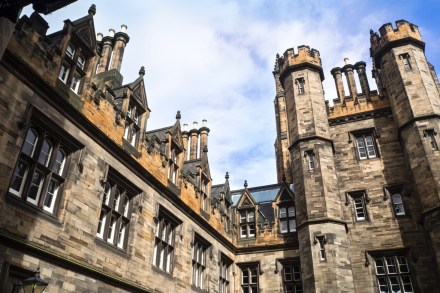
It is undeniable that the University of Edinburgh is the jewel in the crown of Scotland’s higher education system. Among its alumni are some of the most resounding names in world history. It remains today a galvanic intellectual force. In the QS World University Rankings 2022, Edinburgh was sixteenth; a single point behind Yale and ahead of Columbia, Princeton and Johns Hopkins. Edinburgh’s closest Scottish rival, Glasgow, lies 57 places behind it. These are truly magnificent achievements for a public university based in a country of just over five million people. Yet all is not well at Edinburgh. For a year it has attracted bad headlines both in the UK and overseas.

The problem with decolonising Shakespeare

From our UK edition

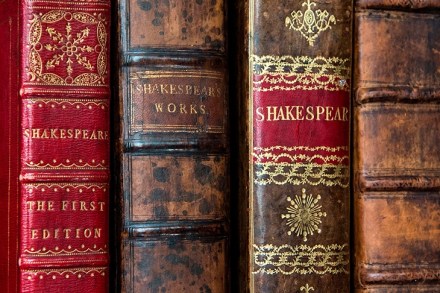
Scarcely a day passes without a major British institution announcing it is ‘decolonising’ itself. Most recently it was the turn of Shakespeare’s Globe, which announced a series of ‘anti-racist Shakespeare webinars’ as part of its ‘commitment to decolonising the plays of Shakespeare’. That brought me up short. At the time of Shakespeare’s birth, England didn’t have any colonies, although other European states did. True, The Tempest can be read as a metaphor for colonialism, with Prospero taking Sycorax’s island from her and enslaving Caliban, but Prospero is Milanese, not British. And it’s not exactly an argument in favour of colonial rule. Prospero wants nothing more than to return to Milan to reclaim his dukedom.

Why universities are bad for the arts

From our UK edition

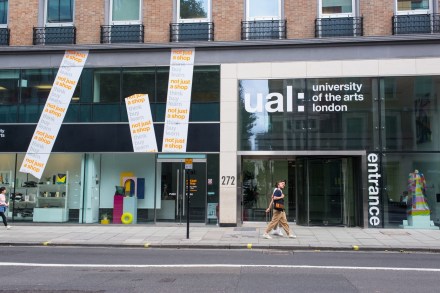
Members of the arts establishment have spent the past week outraged, following news that for the upcoming academic year funding for university courses in drama, dance, media studies and so on might have to be temporarily halved in order to better fund courses in medicine, nursing, pharmacology, the environment and the various sciences. Bearing in mind the state of the world, this shift in priorities might seem an unfortunate necessity. Nevertheless, toys are flying from prams. The arts education bubble is apparently livid that healthcare and the environment should be considered more deserving of funding than they are.

The new campus harassment

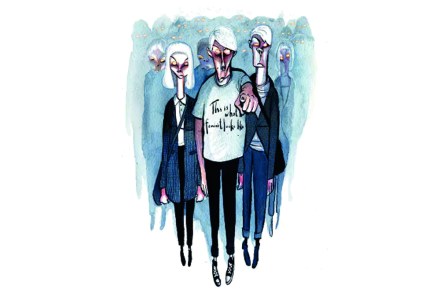
One of the great successes of modern feminism is the public awareness campaigns to recognize sexual harassment in the workplace. Universities have encouraged whistleblowing and anonymous complaints procedures so that women can safely report such targeting. But when women in academia are subject to vile slurs such as ‘TERF’, all bets are off; it is considered reasonable to publicly hound and humiliate those women. Interestingly, the vicious, censorious mob tend not to target the handful of male academics who speak out against the sort of extreme transgender ideology that results in the removal of women’s hard-won sex-based rights. Holly Lawford-Smith is associate professor in Political Philosophy at the University of Melbourne (UM), Australia.

woke campus harassment feminism terf

British universities aren’t institutionally racist

From our UK edition

There is a spectre haunting British universities: the spectre of institutional racism. 'There is a lot of evidence that points towards universities perpetuating systemic racism, being institutionally racist,' the University of East Anglia’s vice-chancellor, David Richardson, told an upcoming BBC Three documentary 'Is Uni Racist?'. Viewers are likely to be left in no doubt that the answer to that question is 'Yes'. Two people I know appeared in it, and it was moving to hear them share their experiences. Yet the reality is that for most black students there has never been a better time to study at a university in Britain. Of course, that doesn't mean there aren't still problems.

Do spelling and grammar still matter?

From our UK edition

Some universities have announced that spelling and grammar (i.e. morphology and syntax) are not all that important, but quality of thought is. Up to a point, Lord Copper. Ancient Greeks were fascinated by language and invented much of the terminology in which we still talk about it. Protagoras (5th century bc) first classified nouns as masculine, feminine and ‘things’ (neuter). Aristotle (4th c. bc) defined articles, nouns, conjunctions and verbs, and talked of vowels, consonants, syllables and inflections as well as groups of words producing a collective meaning (‘utterance’), noting that ‘there can be utterance without verbs’. Dionysius from Thrace (2nd c. bc) divided nouns into cases (nominative, vocative, etc.), and singular and plural.

Locked-down students are paying a heavy price

From our UK edition

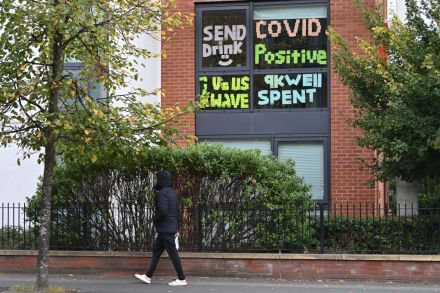
Students are the forgotten victims of lockdown. Having worked hard to achieve their grades, undergraduates have been consigned to their bedrooms to learn online. There's been no socialising, freshers fun or the chance to make new friends. The only thing that has been the same for the Covid class of 2021 are sky high fees. Finally, the government has announced that all university students will be able to return from the 17 May. While some undergraduates may be relieved to get some much-needed clarity, most will be deeply, deeply frustrated. Many students are asking why universities did not open again when schools did.

In defence of Flannery O’Connor

From our UK edition

I have a thought for the students of Loyola University in Baltimore, Maryland: this Easter, why not resurrect Flannery O’Connor? Why not show that you appreciate America’s greatest Catholic writer even if the poor, frightened duds in charge of you do not? Last summer, the university’s president, the Revd Brian F. Linnane SJ, removed O’Connor’s name from its halls of residence. The New Yorker had published a pompous piece about racism in O’Connor’s private correspondence, the George Floyd protests had begun and so… best not make the students uncomfortable, said Father Linnane. The cosmic joke of this has stayed with me ever since.

University challenge: conservatives are now the radicals on campus

From our UK edition

On the letters page of the Sunday Times last month, the presidents of the Royal Historical Society and the Historical Association were among the signatories to a letter boldly headlined ‘History must not be politicised’. They were incensed by a rumour that government funding might be cut for the Colonial Countryside project, which looks at possible connections between the British Empire, the slave trade and National Trust properties. Unable to recognise their own political bias, the letter-writers accused the government of ‘politicising’ history by trying to depoliticise it. This extraordinary self-belief, this insistence that academics occupy the high moral ground, reflects what is happening in British universities, not least among my fellow historians.

A tiger mum’s recipe for academic success

From our UK edition

You might have seen ‘Asian dad’ memes on the internet, poking fun at the famously high expectations of fathers from my part of the world. ‘You Asian, not B-sian,’ he says in one version. Or: ‘After homework, you can play… the piano.’ My personal favourite is a picture of a crying Chinese girl saying: ‘I only got 99 per cent in test. What do I tell my parents?’ Her father’s reply: ‘What parents?’ Much of Asian parenting is laser-targeted at getting into a top-tier university: Peking or Tsinghua would do in China; Ivy League or Oxbridge abroad.

The secret code of the ruling class

From our UK edition

I naively hoped that last year’s statement by the Equalities Minister explaining why unconscious bias training was being phased out across the civil service might slow its spread. After all, the minister’s scepticism wasn’t based on political disagreement but on research commissioned from the Behavioural Insights Team that concluded: ‘There is currently no evidence that this training changes behaviour in the long term or improves… equality in terms of representation of women, ethnic minorities or other minority groups.’ Reading between the lines, the BIT evidently thinks that UBT is little more than snake oil — and there’s a vast amount of literature in the social sciences to back that up.

Of course there’s a free speech crisis on campus

From our UK edition

A free speech crisis on campus? Apparently, it’s a myth, concocted by right-wing commentators and latched on to by a Tory government desperate to talk about something other than Covid. That, at least, is the unconvincing take being echoed across social media at the moment, as the campus wars erupt once again. When the government announced this week that it wants to toughen the law around free speech on campus, the National Union of Students dismissed the very premise. ‘There is no evidence of a freedom of expression crisis on campus’, it said. ‘Students’ unions are constantly taking positive steps to help facilitate the thousands of events that take place each year.