.united states

The liberal arts are worth defending against ‘multiculturalists’

It’s the end of August — which means the kids are heading back to school. Time, then, to think about the quality and content of the education most young Americans are receiving. What to ponder? Well, we award more bachelor’s degrees in “parks, recreation, leisure, and fitness studies” than in English. And what students learn in their liberal arts courses is less the intellectual and civilizational inheritance of the West than a cruel mimicry that preferences “multiculturalism” and “critical thinking.

parental rights

Americans should be proud of their Poet Laureates

It isn’t often I’ll say this — and, in fact, I hope this is the only time — but as a Brit, I’m jealous of you Americans. It isn’t the fact that you have a notionally more functional government than us, or even that you have unrestrained access to things like Pop Tarts and peanut butter cups. No, the answer lies, as it always does, in poetry. Over on this side of the Atlantic, we’ve had a Poet Laureate since 1668 — when John Dryden was given a position in the royal household by Charles II. We could claim to have had one even earlier, given that the versifier, playwright, and scribbler Ben Jonson was given a pension by James I in England way back in 1616.

An American inquisition

The nation is entering a Galilean moment. Public and private authorities stubbornly pursue make-believe about race, ethnic loyalties, families, men and women, and civic adhesion. They deny the limits of nature. It’s not the first time that human vanity has taken a run at truth and punished those who don’t fall into line. To avoid prison in 1633, the astronomer and polymath Galileo recanted his defense of Copernicus’s discovery that the earth was not the center of the universe. He spent the rest of his life under house arrest. “And yet it moves,” Galileo is reputed to have said later, and bitterly, silenced by haughty thought examiners.

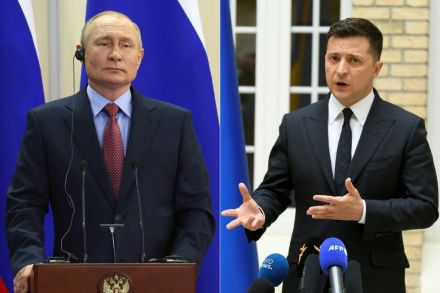
Defending Ukraine should be a European project

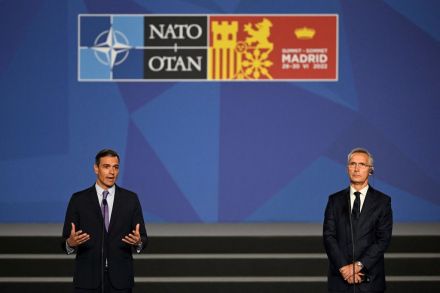
NATO gatherings at the head-of-state level are ordinarily placid, even boring affairs. But this week’s three-day NATO summit in Madrid will be quite different. For the first time in twenty-three years, the alliance is meeting as a war churns on European soil. Russian President Vladimir Putin’s invasion of Ukraine has been an electric shock to the continent’s defense establishment, at least if their rhetoric is any indication. European officials have finally come around to noticing that Europe isn’t an exceptional zone of peace and tranquility, but a region no more immune to armed conflict than any other. NATO, which was straying out of theater in a desperate attempt to stay relevant, is now back to performing the defensive mission it was meant to do.

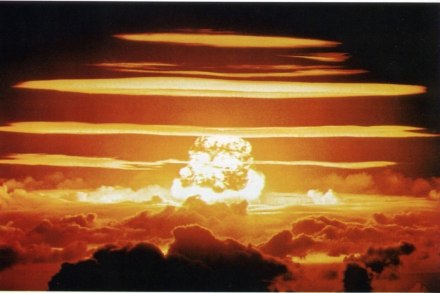
Yes, Russia could use nuclear weapons

“Nuclear war is part of our strategic culture. Yes, we would start one if our homeland, our way of life, was threatened, absolutely. Why wouldn't we?” That’s what a retired Russian diplomat told me on the sidelines of a track-two dialogue between US, Russian and Chinese experts back in 2012. And to be honest, for several years, I didn’t believe him. I took his comments as bragging, atomic machismo, if you will. The context of the conversation was a response to a question to my Russian colleague on the subject of Moscow’s nuclear weapons doctrine and thinking. Russia for several years has believed in the concept of escalating nuclear tensions to deescalate tensions, or what defense scholars call “escalate to deescalate.

Home is where the racism is

My sophomore year of college, I studied abroad in Ireland. I had pretty high expectations: my mother’s side of the family is almost entirely of Irish descent, and I suppose in some inchoate way I yearned to “go home,” as it were, even though the last of my Irish ancestors had arrived on American soil more than 150 years ago. Still, the Emerald Isle seemed to call to me (admittedly I was listening to a lot of The Chieftains). Boy, was I disappointed. It wasn’t that the Irish aren’t welcoming (they are), or that the adult beverages weren't delicious (they are). It was that Ireland was definitely not my home — not culturally, culinarily, or familialy.

racism

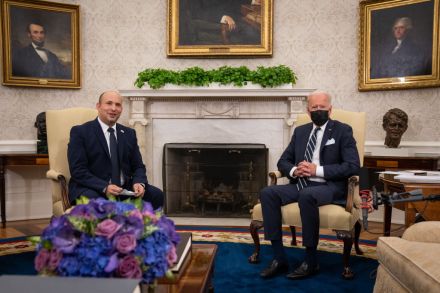
Israel and America are drifting apart

Israeli Prime Minister Naftali Bennett has revealed what members of his country’s national security elite have been chatting about behind closed doors for quite a while. “The United States has been, and will always be our best friend,” the Israeli PM said in a speech delivered before the Institute for National Security Studies (INSS) at Tel Aviv University. Then came the big “but”: “Washington has its own set of interests, which we must honestly admit do not always overlap with ours.” “We are speaking honestly and understand one another,” Bennett elaborated. America’s “interest in the region is dwindling. The United States is currently focused on the Russian-Ukrainian border and it is in a strategic conflict with China.

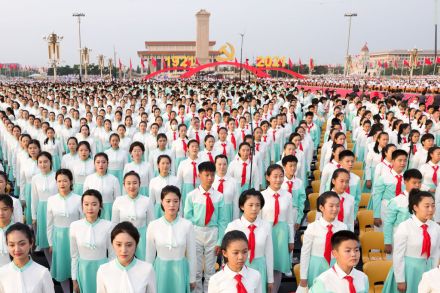
China is the new evil empire

History does not repeat itself, but it does rhyme. In the 1980s, the gravest threat to America’s freedoms came from the Soviet Union, which President Ronald Reagan called the Evil Empire. That rhymes with today’s equally serious threat from Communist China, the New Evil Empire. Xi Jinping rules China with absolute power, like an emperor. He has complete control over China’s sole political party, the CCP, the government, the economy, the military, the police, the judiciary, and the media. Even over religion: Christian churches must display Xi quotes instead of the Ten Commandments.

America still won’t risk a war with Russia over Ukraine

Anybody who thought this week’s intense diplomacy between American, European, and Russian officials would magically resolve the ongoing crisis in Ukraine should lie down until the feeling passes. Crisis diplomacy isn’t a walk in the park; if anything, it’s a slow-moving car ride through rush-hour traffic, with plenty of speed bumps along the way. On Monday, January 10, Washington and Moscow met for a round of discussions in Vienna to sound each other out and present their list of seemingly endless grievances. After eight hours of talks, both delegations left the room with, coincidently, similar assessments as to how it all went.

The coming war with…um…Canada?

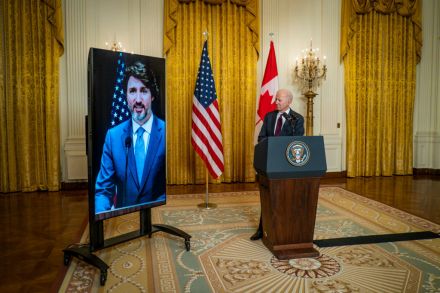
We begin today by heading north, past Vermont, over Winterfell, above the Arctic Circle, beyond the part of the map labeled “monsters be here,” and into Canada. There do we find a writer named John Ibbitson, who recently published a piece for the Toronto Globe and Mail warning that American democracy may not be long for this world. “If the next presidential election reveals the U.S. hurtling toward possible violence and autocracy,” Ibbitson asks, “should Canada try to intervene?” Before an entire nation of 330 million bursts out laughing, consider that Ibbitson isn’t suggesting Canada militarily intervene on American soil. Still...for us Yanks, that is the image that springs to mind, isn't it?

If Hamilton is cringe, then America is done for

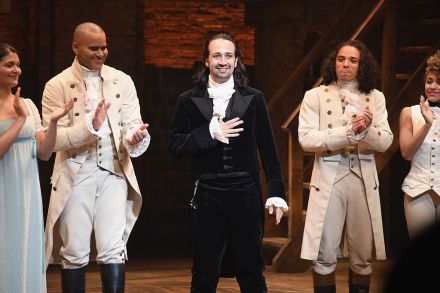
I’ve been reliably informed that Hamilton is now cringe. Constance Grady of Vox explains, drawing on a scene from the recent reboot of Gossip Girl: “You know, I saw Hamilton… before it went on Broadway,” brags one of the teens, hoping to impress his cool new girlfriend Zoya. “You into that play?” Zoya, the wokest of the group and the one with the most sophisticated literary taste, sighs deeply and rolls her eyes. “No doubt it’s a work of art,” she allows. “But …” Zoya doesn’t finish her sentence.

Maybe Hawaii should be independent

When you’re a writer, there’s no such thing as a vacation — there’s just visiting a new place with the potential to gather more material. Lucky for me, my most recent destination happened to be Hawaii. It’s a fascinating place, and if you didn’t already know it was a US state, it would be easy to mistake it for a distinct English-speaking country, albeit one with obvious and deep American influences. Oahu, the most urbanized island and home of the capital city of Honolulu, is shaped by an idiosyncratic mix of native Hawaiian, East Asian and midcentury American culture. Hawaii resembles a Pacific Island nation at least as much as it does the American mainland.

American breakup: secession is much closer than we think

The United States is ripe for secession. Across the world, established states have divided in two or are staring down secession movements. Great Britain became a wee bit less great with Irish independence, and now the Scots seem to be rethinking the Act of Union (1707). Czechoslovakia is no more and the former Soviet Union is just that: former. Go down the list and there are secession groups in nearly every country. And are we to think that, almost alone in the world, we’re immune from this? Countries threaten to split apart when their people seem hopelessly divided. I’ve seen it already. Before moving to the United States, I lived in a country just as divided, without the kind of fellow feeling required to hold people together.

Secession is much closer than we think