.united states

How I won over a Scrooge-like New Yorker

Like all men, my dear friend Chris Black is an absolutely terrible person to shop with. He behaves only marginally better than a boy toddler. As we stood on the street outside Fortnum’s, this New Yorker’s greeting to me was, “I’m not really a Christmassy kind of person.” How anyone could say this when they are about to enter the Father Christmas of department stores is beyond me. Fortnum & Mason, with its crimson carpets and twirling mahogany doors, counters groaning with marzipan and chocolate and its gracious staircases and red-coated butlers transport even the most jaded shopper to a gentler time when Christmas shopping was an “outing,” one that you dressed up for, before people had even imagined scroll-and-click retail.

michelle obama

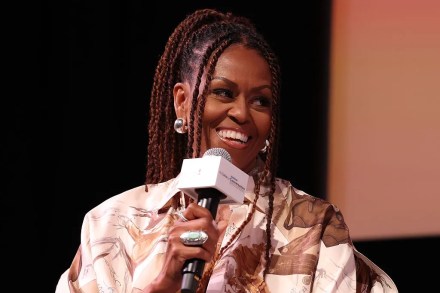
Michelle Obama’s new book about style lacks substance

First lady is a strange role. Even when your husband is the first black president, and you’re a Princeton and Harvard-educated former corporate lawyer, America still projects its most regressive ideas about gender onto you. So I understand that Michelle Obama, like Hillary Clinton before her (skipping Laura Bush, a more classical first lady, along with, more recently, Jill Biden and Melania Trump), might have felt constrained, faced with expectations she could never satisfy. I don’t doubt that being black added enormously to that burden. Yet there is nothing more irritating than the person of Michelle Obama complaining. And she is always complaining.

Immigration policy should discriminate

Many years ago, a friend described one of my serious literary novels as “clever.” I was offended – but I shouldn’t have been. The friend was from across the pond, where I now understand “clever” means smart. For Americans, cleverness implies a shallow, facile intelligence. Applied to people, it hints at sly, calculating deviousness or cunning. It has no positive moral qualities, as westerners understand them. Tax evasion can be “clever.” Let’s move on to “culture” – a big, fuzzy word we throw about with careless abandon, that often summons images of traditional clothing and cuisine. But parsed in its most profound sense, culture might best be defined as “what a people admire and what they deplore.

The science of marriage

“Those whom God hath joined together, let no man put asunder.” With this stern admonition, the Church has long been a fervent defender of marriage. But as religion has faded as a social force, so too has marriage.  Does it much matter if people choose to shack up together instead of tying the knot? What is lost if some men want to be incels or some women decide a husband is a bothersome surplus to their needs? The problem is that all lifestyles alternative to marriage serve to undermine it. And like other major social institutions, marriage is not some arbitrary cultural construct like a federal holiday. Rather, it rests on genetically shaped behaviors that evolution has written into the human genome because of their survival value.

Marriage
Michael McFaul

It feels as if Michael McFaul’s audience has long since left

Since the end of the Cold War, politicians and commentators have been searching for a new paradigm through which to understand international relations. Notwithstanding Francis Fukuyama’s oft-misunderstood The End of History, we have tried various patterns to classify the world order, of which George W. Bush’s “Axis of Evil,” first used in 2002, was among the more enduring. In Autocrats vs. Democrats: China, Russia, America, and the New Global Disorder, Michael McFaul acknowledges the widespread if nebulous consensus that the challenge presented by Russia and China is a kind of second Cold War – historian Niall Ferguson has labeled America’s relations with China “Cold War II.

Mexico

The stubborn resilience of Mexico

When they looked back, indigenous historians remembered how the fall of the Aztec empire to Hernán Cortés had been prefigured by terrifying omens and portents. The central valley had been plagued by comets, eclipses and supernatural storms. The previous emperor, Ahuitzótl, died after hitting his head on a lintel. A strange woman stalked the streets of Tenochtitlán, the capital, at night, crying “O my sons! We are about to perish.” But there were other signs that might have been heeded, too. The empire itself was only a few decades old when Cortés arrived in 1519. It was a patchwork of rebellious territories and city states, surrounded by yet more hostile peoples. Tenochtitlán fell after a three-month siege in 1521.

Inside the gruesome world of the ‘human safari’

“People don’t actually do that, right?” my publisher asked nervously. “No one actually goes on a human safari, do they?” Eight years ago, I didn’t know for sure. There had certainly been rumors for years that wealthy foreigners were traveling to conflict zones to kill civilians at random. Gradually I had concluded that some people were indeed heading off to complete their bucket list of horrors. In my novel To The Lions, I placed the “human safari” in a fictional refugee camp in southern Libya. Concrete proof, however, was almost impossible to find. Several times during my years as an investigative journalist, I heard stories about nightmarish things going on in places where law and order had collapsed.

Fact check: are the NYT’s experts right about UK immigration?

Yesterday’s release of immigration figures by Britain's Office of National Statistics didn’t make for particularly pleasant reading. While net migration had fallen to around 200,000 in the 12 months to June, much of this was down to an unusually high exodus of people, with 693,000 leaving the country over the same period. Many of those leaving were under the age of 30. That news, however, seemed to prompt something approaching gloating over at the New York Times, which published a piece yesterday headlined: "The British Public Thinks Immigration Is Up. It’s Actually Down, Sharply." To labor the point, the piece was accompanied by a picture of anti-migration protestors in Scotland. The not-so-subtle subtext being: what a bunch of gammon thickos the anti-migration lot are in the UK.

immigration

Activist silence over Sudan speaks volumes

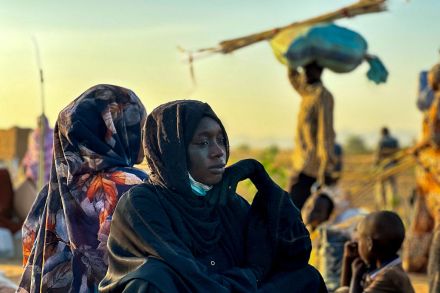
The city of El Fasher, long a symbolic and strategic stronghold in Darfur, has in recent days become the site of atrocities so grave that the United Nations has openly warned of the risk of genocide. Videos reviewed by the Office of the High Commissioner for Human Rights show scores of unarmed men executed in cold blood, some lying dead at the feet of Rapid Support Forces fighters, others dragged off and detained. Journalists and aid workers have disappeared. The last remaining functional hospital was shelled, killing patients and staff. The Saudi Maternity Hospital, once a rare lifeline, is now a mass grave.

Sudan

This July 4, Trump wants you to celebrate winning – big time

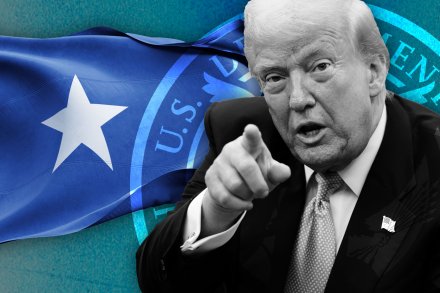
As President Donald J. Trump waits for One Big Beautiful Bill to sign on the 4th of July, it’s worth taking some Independence Day time to muse on what he means for The United States, other than making it some really big deals. The best deals, really. It’s what he does. Trump’s detractors call him Cheeto Hitler, the modern face of fascist authoritarianism. He is not that. His most fervent supporters see him as the savior returned to Earth in a golf shirt. He’s definitely not that. Besides, Führer or God isn’t a very American dichotomy. There’s another way, an American way, a very Trumpian way. America, at its core, is a con, a hustle, a 250-year real-estate boodle.

Trump

WATCH: Trump hints Russia should rejoin G7

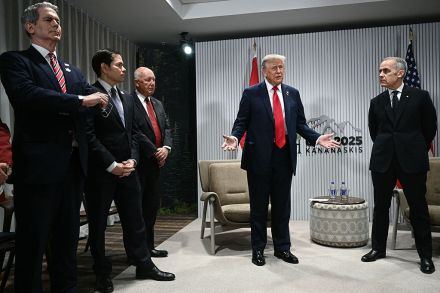
As the annual G7 Summit kicks off in Canada, President Trump told reporters that removing President Vladimir Putin from the group was a mistake, and had they not done so, the Kremlin's over two-year war against Ukraine would not have happened. "They threw Russia out, which I claimed was a very big mistake, even though I wasn’t in politics then. I was very loud about it," Trump said. He reasoned, "You spend so much time talking about Russia, and he’s no longer at the table. So it makes it more complicated – but you wouldn’t have had the war." Canadian Prime Minister Mark Carney appeared somewhat disengaged next to Trump and gazed off into the distance when Trump said the war would have never happened.

Trump and Carney G7 (Getty)

Inside the parents versus social media conflict at the FTC

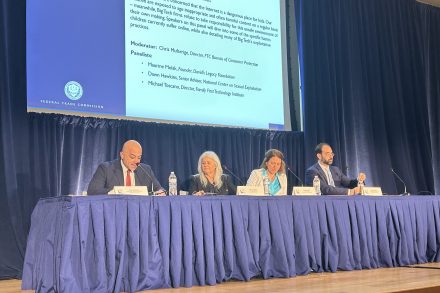
Washington, DC The battle between social-media companies and parents found itself center stage at the Federal Trade Commission, Wednesday. A panel of four speakers discussed the state of play in America's fight to protect children online – and where it should go. On the stage at the FTC were Senator Marsha Blackburn of Tennessee; Dawn Hawkins, the National Center on Sexual Exploitation's senior advisor; Michael Toscano, director of the Family First Technology Institute for the Institute of Family Studies, and Maurine Molak, the founder of David's Legacy Foundation. Every day in 2021, 100,000 minors received sexually abusive content from adults on Facebook and Instagram, Blackburn said on the stand, referencing internal documents released by the Department of Justice.

FTC Are Kids in Danger Online? panel parents

How Trump’s Mexico and Canada tariffs could change trade history

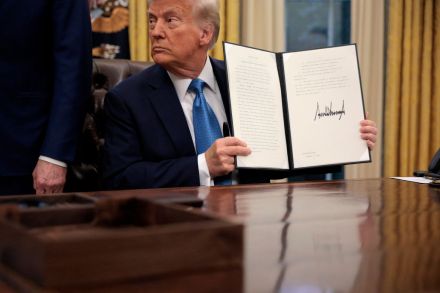
President Donald Trump has set Saturday as the deadline to impose 25 percent tariffs on Canadian and Mexican imports. From the Oval Office earlier this week, Trump explained that the move aims to push the US’s neighbors to take swift action to curtail illegal immigration and fentanyl, as well as to address growing trade deficits. The tariffs may or may not include oil, with Trump saying Thursday that determinations were still being made. Following Trump’s tariff feud with Colombian president Gustavo Petro Sunday, with the Trump forcing his Colombian counterpart to welcome deportees, his latest move signifies an expansion of his revamped “FAFO” foreign policy.

Will Venezuela invade Guyana?

Eight years ago in Guyana, an Idaho-sized country on the northern coast of South America, ExxonMobil discovered massive oil reserves. So massive, that it’s speculated that the tiny nation, which is one of the least densely populated countries on the planet, could become the richest country per capita. Estimates indicate that Guyana has around 11 billion barrels of oil equivalent, boosting the nation to the third position in terms of proven oil reserves in the region. To contextualize the enormity of these discoveries, consider that the tiny nation has almost five times more proven oil reserves than Argentina, a country thirteen times larger by land mass. Only Brazil, the fifth largest country, and Venezuela, the country with the largest proven oil reserves, surpass Guyana.

Guyana

Why Taiwan’s defense is in the American national interest

Just 38 percent of Americans “support deploying US troops to defend Taiwan from a military attack by China” according to a Reuters/Ipsos released this week, with 42 percent opposing and 20 percent unsure. Vivek Ramaswamy, among the top contenders for the 2024 GOP nomination, also recently said that the US should only defend Taiwan until “we have semiconductor independence.” Add to this the Biden administration’s unwillingness to spend what is needed to build up the Taiwanese military and its failure to adequately support Ukraine — and anyone who values a safe, free, prosperous and stable world should be concerned. Because defending Taiwan from a revanchist, imperialist and brutal Chinese Communist Party is at the heart of America’s national interest.

taiwan

Why bombing Mexican cartels is a bad idea

Responding to a voter during a campaign stop this week, Florida governor and 2024 presidential candidate Ron DeSantis endorsed a once fringe idea that is becoming increasingly mainstream in Republican policy circles: that the United States has the right, indeed obligation, to use military force in Mexico to protect the American people from drug cartels. And yes, that includes the use of US drones, a revolutionary military technology the US military and CIA have deployed repeatedly to target terrorists in countries such as Afghanistan, Iraq, Libya and Somalia (among others).  "We will absolutely reserve the right if they’re invading our country and killing our people,” DeSantis told the voter.

mexican cartels mexico

What we learned from the Korean War

July 27 marks the seventieth anniversary of the armistice that ended major hostilities on the Korean Peninsula. Sometimes referred to as the Forgotten War, the last thing the Korean War should be is forgotten. First and foremost because tens of thousands of US and allied soldiers and millions of Koreans died, but also because of the lessons the war offers for policymakers today as the world enters an era not unlike the budding Cold War in 1950.  The first lesson is on the importance of messaging. The world pays attention to what the US says, and Washington’s adversaries pay particularly close attention. In January 1950, secretary of state Dean Acheson spoke to the National Press Club about a perimeter that the US would defend against communist aggression.

korean war

Megan Rapinoe wants to be the last female sports star

Megan Rapinoe, the sometimes blue, sometimes pink-haired star forward on the US Women’s National Soccer Team, announced earlier this month that she will retire after the 2023 Women’s World Cup. Rapinoe is a talented soccer player and an American success story. She grew up relatively modestly and her older brother, her inspiration to start playing soccer, suffered from a heroin addiction and spent time in prison. Rapinoe managed to avoid the all too common injury-to-opioid addiction pipeline that crippled her equally athletic fraternal twin sister’s soccer career.

Megan Rapinoe #15 of Team United States speaks to members of the media (Photo by Sean M. Haffey/Getty Images)

Why has a US soldier entered North Korea?

A US soldier, Private Second Class Travis King, entered North Korea through the Joint Security Area (JSA) today for currently unknown reasons. “It's clear that he willfully, of his own volition, crossed the border,” State Department spokesman Matthew Miller said in a briefing Tuesday afternoon. According to the Wall Street Journal, King apparently had “served time in detention” in the South and was heading back to the US when he decided to participate in a tour of the JSA. Another individual on the tour says that King laughed as he crossed into the North. The reasons for King’s actions are still not clear. US soldiers have deserted and defected to North Korea before, often to get out of service, but it is an exceedingly rare occurrence.

north korea