Unemployment

Benefits treats: how Britain became a freeloader’s paradise

From our UK edition

Plastered around Westminster this Easter were adverts for the Tower of London. ‘The perfect place for troublemakers – pre-book now,’ the poster read. ‘Members go free.’ So too – near enough – do those on Universal Credit (UC). Easter-holiday treats can be expensive for hard-working families. For those on benefits they’re a breeze. A trip to the Tower of London for a family of four costs £111. But if one of the parents is on UC (or a long list of other benefits), a £107 saving is applied and the whole family can get in for just £4. Visit the Tower’s café for fish and chips and UC bags you a half-price meal (£16.95 for the rest of us).

Who has been removed from the line of succession?

From our UK edition

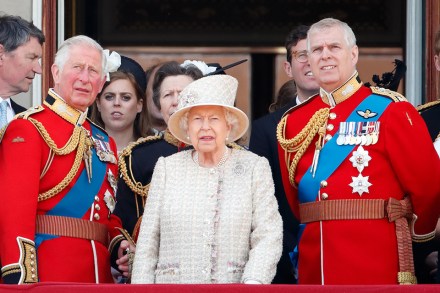
Out of line Andrew Mountbatten-Windsor may be removed from the line of succession. When was the last time this happened? — The Abdication Act of 1936 not only removed Edward VIII from the throne; it also removed his heirs from the line of succession. In the event, however, he didn’t have any. The last alteration to the line of succession came as a result of the Perth Agreement of 2011, when the prime ministers of the 16 Commonwealth realms agreed that in future females would be treated the same as males, and that the latter would not leap over the former as the then Prince Andrew had done when, on his birth in 1960, he pushed Princess Anne down the line of succession.  — The birth of Prince George in 2013 made the change academic, for now.

The greatest threat to the economy? The Employment Rights Bill

From our UK edition

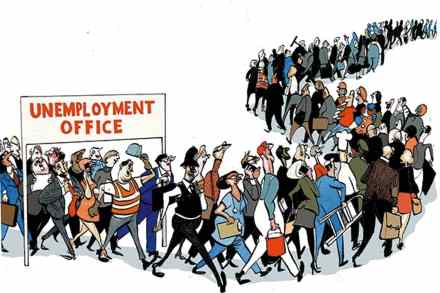
On Monday night, former England manager Gareth Southgate joined MPs and philanthropists for an event in Westminster described as ‘the Oscars of the charity world’. Cabinet ministers Lisa Nandy and Bridget Phillipson joined the Centre for Social Justice (CSJ) in handing out prizes to five charities that help those who fall through the cracks. Across the winners, a single theme stood out: the transformative power of a good job. But Britain is running out of those jobs. Vacancies are falling, unemployment has risen to 5 per cent, while a deeper crisis sits beneath both: nine million working age people are economically inactive, including more than four million on out-of-work benefits with ‘no work requirement’.

An ill wind: Poppyland, by D.J. Taylor, reviewed

From our UK edition

As the term refers to the stretch of the north Norfolk coastline between Sheringham and Mundesley, only one of the stories in D.J. Taylor’s engrossing new collection strictly takes place in ‘Poppyland’. However, the others seldom stray far. In ‘At Mr McAllister’s’, one of two stories set in and around Norwich market, the feckless employee of a down-at-heel toyshop decides to change his life, starting with talking to the pretty girl on the fruit and vegetable stall. In ‘Those Big Houses up Newmarket Road’, set nearby, social embarrassment inspires a class-conscious schoolboy to dream big. Such ambitions are unusual in these carefully worked stories of broken homes and precarious employment.

Confessions of a middle-class jobseeker

From our UK edition

Having been made redundant from a job in the City, I could have afforded not to sign on at all. But since my P45 showed I had paid well over £40,000 in income tax last year, I didn’t feel desperately guilty about clawing back £90 a week in New Style Jobseeker’s Allowance. I didn’t know how long I would remain unemployed. Plus I wanted to protect my national insurance to keep my entitlement to the state pension. The chaos started almost immediately. I registered online in early February and was told to await a date for my ‘assessment interview’. Instead, a month later, a letter arrived to say I had missed my appointment and to ring the helpline to rearrange. The number at the top of the letter? Tel: 0000 000 0000.

The unfashionable truth about the riots

From our UK edition

As the days slip by, the likelihood that anything will be learned from the recent rioting looks ever more remote. And with that suspicion comes the inevitable sense of déjà-vu. Because we have indeed been here before. In 2011 England was engulfed by riots, originating in London but leading to copycat violence across the north of England. The ostensible cause that time was the shooting by police of Mark Duggan, a charming young drug dealer who was in possession of a gun. The initial unrest in Tottenham may well have started as a result of claims that police had shot an innocent man – and an innocent black man at that. But by the time Birmingham, Manchester and Liverpool were going at it, the proximate cause for the violence seemed to have been forgotten.

Young and jobless: Is the government letting down China’s Generation Z?

From our UK edition

32 min listen

Hidden in March’s GDP figures was a shocking statistic – a fifth of Chinese 16 to 24 year olds are out of work. This is a near record high, and the economic background to a fresh wave of disillusionment among China’s young. It has led to the creation of a new meme – you’ve heard of lying flat, but young people are now comparing themselves to a Republican-era literary character, Kong Yiji. On this episode, I'm joined by the journalist Karoline Kan, author of Under Red Skies: The Life and Times of a Chinese Millennial. We talk about the Kong Yiji trend, why prospects are so thin for the most educated Chinese generation, and what this all means for the government's claims to economic competence.

Spotify logs losses and cuts jobs after splurging on Meghan

Being friends with Meghan Markle may cost you socially, but now it’s looking like it’ll ruin you financially as well. The streaming service Spotify has logged $230 million in losses, after the CEO has admitted to getting "carried away" with major investments in the past year. This includes Spotify’s lightbulb moment of throwing $18 million at Meghan and Harry for, checks notes, twelve hours of content, where Duchess Difficult invents more things to complain about. Prince Harry mustered up as much brain power as he could for the podcast, which saw him telling tennis star Serena Williams, “I like what you've done with your hair. It's a great vibe.” Enlightening, Haz.

meghan spotify

A nation of quitters

America’s post-pandemic employment picture is an unsettling paradox. On the one hand, job totals are finally back above pre-pandemic highs — and unemployment rates skirt fifty-year lows. But at the same time, overall work rates are lower than they have been since the 1980s — and millions of workers who dropped out of the labor force during the Covid-19 lockdowns have yet to return. A peacetime labor shortage has erupted, yet vast numbers of men and women are still sitting on the sidelines of the economy. America is renowned for its work ethic — and rightly so. The average worker in the United States clocks more hours each year than those in Canada, Australia, Western Europe and now even Japan. But those are the work patterns of US men and women holding down a job.

work

Britain needs more honesty about unemployment

From our UK edition

Is low unemployment causing us more problems than we realise? The suggestion might seem absurd, offensive even. It’s reminiscent of the days of Mrs Thatcher’s supposedly ‘cruel’ monetarism, when we had three million unemployed. Some on the fringes liked to argue that unemployment was good for the economy because it made people work harder, being fearful for their jobs. Mass redundancies would not, of course, help the economy now or at any other time. If a million people were to lose their jobs, as happened in the early 1980s, that would be a million households suffering a collapse in the spending power. As well as a human tragedy, it would be an economic one, too. Many graduates are not doing graduate-level jobs But then who mentioned anyone losing their jobs?

The visionary genius of Harold Wilson

From our UK edition

‘Our generation owes an apology to the shades of Harold Wilson,’ the polling guru Peter Kellner once told me. Had Wilson not firmly resisted pressure from President Lyndon Johnson to send troops to Vietnam, Kellner and I were both old enough to have fought there. But in 1968 we loftily despised Wilson for twisting and turning to stay out of Vietnam and keep his party together. ‘What are the two worst things about Harold Wilson?’, we asked. ‘His face,’ we replied smugly. Britain has never quite forgiven Wilson for his cleverness. His reputation suffered a catastrophic decline in the immediate aftermath of his premiership.

Stop trying to make the four-day workweek happen

Growing up in my little Pennsylvania hometown, most businesses would close early on Wednesdays around lunchtime. The idea was that they would re-open in the evening or on Saturday mornings to give people who couldn’t get away from their nine-to-five jobs the chance to shop, go to the bank, etc. To this day, a few places (the ones that are left) adhere to this tradition. They shut their doors at noon or so mid-week, everyone knows they do, and we plan our lives accordingly. It works in Philipsburg, a rural place with a few thousand loyal customers who have known for decades that Larry’s Saw Shop won’t be open Wednesday afternoon. So we get our chainsaws dropped off for service on Tuesday or first thing Thursday morning. That’s just the way it is. Life goes on.

Enough with the 1970s comparisons

The media are abuzz these days about a purported “return to the 1970s.” Generally speaking, such chatter is not intended kindly, for many today would likely agree with the sardonic assessment of the Seventies made by the editors of New West magazine as that decade wound down: “It was the worst of times, it was the worst of times.” And not just because of the popularity of bell-bottom pants, platform shoes, and disco music. In the Seventies, we had problems far more troubling — more troubling even than the pop group ABBA. For starters, we saw a quadrupling of real oil prices between 1973 and 1979. We suffered high rates of both inflation and unemployment, which hitherto varied inversely, leading to the creation of the portmanteau “stagflation.

1970s

Why wasn’t the furlough scheme wound up sooner?

From our UK edition

October’s employment figures, according to the Chancellor Rishi Sunak are ‘testament to the success of the furlough scheme’. The other way of looking at the figures, released this morning, is that they show why the furlough scheme should have been wound up months ago, rather than at the end of September. The number of people on payroll in October rose by 160,000 to 29.3 million in spite of furlough ending. The unemployment rate fell by 0.5 per cent. The employment rate, at 75.4 per cent, is now just 1.1 percentage points lower than it was in the three months leading up to the pandemic. It is astonishing because at the moment the furlough scheme ended, it was still paying the wages of 1.14 million people.

supply chain

Supply chain for dummies: a fairy tale

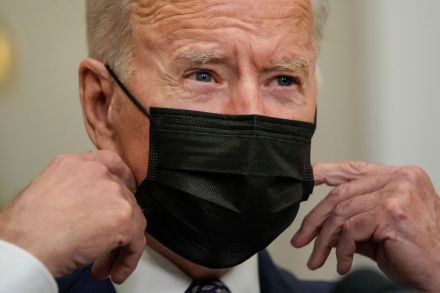
Joe Biden cheerfully told Americans that most of them are too thick to understand what a “supply chain” is. Naturally, he understands it thoroughly. You can see with your very own eyes how well he has handled it. Since, as Joe said, you must be wondering why so many shelves are empty, I’m here to explain. Following the president’s wise advice, I will use small words and a simple story. Let’s begin in the good ol’ days, not too long ago, when the shelves were magically full. The story begins in a land ever so far away, where happy people worked and worked to make Christmas toys for children in Kansas. When they finished making the toys, they placed each one in a little box and then placed lots of them in a great big box.

Biden’s vaccine order is about power, not health

Sometimes a thing can be two things at once, one good and one bad. That requires a choice. And in a free society, that choice is usually best made by the individual directly affected. If not, then by an open, democratic process. Yet that is not what's happening with Joe Biden's vaccine mandate and it's why the cure is worse than the disease. I am, by my choice, thrice vaccinated. I understand the COVID vaccine prevents me from getting sick, and it is only a day-by-day smaller population of unvaccinated people who are actually still at risk of dying. We each make a choice. Now the government wants to make that choice for us. Vax mandates are an unhealthy thing for our democracy and represent a willful effort by government to exert additional control over an already cowed population.

vaccine

Biden’s dismal jobs report

The Bureau of Labor Statistics issued its August jobs report this morning and the numbers are pretty dismal. While the unemployment rate dropped 0.2 percent to 5.2 percent, the number of new jobs created was only 235,000, far below expectations of about 700,000. In June the number was 962,000 and in July a whopping 1.1 million. And the unemployment was not spread evenly across the population. Unemployment went down for adult men and whites, but black unemployment went up significantly, from 8.2 percent in July to 8.8 percent in August. The surge in the Delta variant of the coronavirus is widely thought responsible.

Incentives matter

Sometimes, just below the surface lie some very powerful connections among seemingly unrelated problems. That’s true for the seemingly unrelated problems of rising crime, the year-long closure of public schools, acute employee shortages, and parents’ outrage at kids being taught critical race theory. Substantively, these issues are vastly different. Conceptually, they are united by the crucial importance of incentives.  Bad incentives produce bad outcomes, and that’s exactly what is creating many of these problems.

incentives

Is furlough holding back the jobs market?

From our UK edition

The latest employment figures, published this morning, confirm a remarkable aspect of the Covid pandemic: that it appears to have caused no more than a little bump in the jobs miracle of the past decade. That is in spite of the economy shrinking by nearly 10 per cent in 2020 — a performance that in the past would have led to millions out of work. In May the unemployment rate fell by 0.3 per cent to 4.7 per cent. By contrast, it reached over 8 per cent during and after the 2008 financial crash. But of course, the unemployment figures don’t tell the whole story — not when we have a furlough scheme in operation, something that was absent from previous economic crises. To put the situation into perspective, in May there were 1.

New day, same message: Biden again downplays jobs report

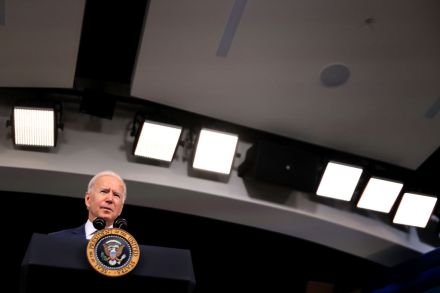
It wasn’t the exact same speech, but the words were familiar and the message was identical. President Biden addressed the disappointing April jobs report on Monday, just as he did on Friday. Economists had expected the economy to create as many as one million jobs in that month, but employers added just 266,000. Biden insists that everything will be all right. It takes time to recover from a once-in-a-century pandemic, he said, urging patience both days and no doubt sensing the political danger a slowing economy puts on his ambitious infrastructure package and other spending proposals. On Friday, the president asserted that his $1.9 trillion stimulus package was a long-term play: 'We never thought that after the first 50 or 60 days everything would be fine.

jobs