Ulysses

How Ulysses horrified the stuffed shirts of New York’s literary establishment

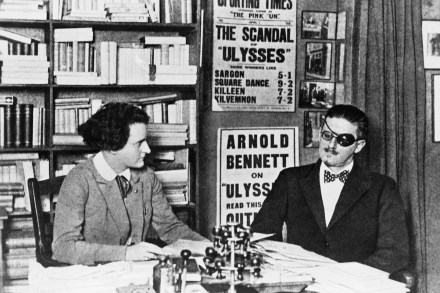
The word ‘obscene’, according to the dictionary, refers to anything ‘offensively or grossly indecent, lewd’. By the standards of the day, the Little Review was a borderline obscene, certainly at times salacious, literary journal. For the crime of serialising Ulysses – James Joyce’s then unpublished steamy masterwork – it was made to face obscenity charges. Operating out of Chicago and New York from 1914 to 1929, the journal introduced American readers to such modernist heavyweights as Ezra Pound, Wyndham Lewis and Gertrude Stein. It was not just a platform for bookish shock effects; it altered the course of American literary culture. James Joyce, who relished litigation, dreamed of a trial

Reading the classics should be a joy, not a duty

Writing the history of the novel, even covering a limited period, is a challenge. No one could possibly read every novel that has been published. Even if you read 100 a year you would scarcely scratch the surface. It isn’t like writing a history of most other subjects, where the important matters select themselves. You wouldn’t guess from this book how hilarious Lolita is, or some of the best passages of Ulysses No one could say with certainty that the most noteworthy novels are those which once made, or now make, the most impact. Indeed, a history that included many of the bestsellers of the day would be unusual –

At last, a book about James Joyce that makes you laugh

I do not think I am alone in confessing that I had read critical works on James Joyce before I got around to reading him. As a schoolboy I drew up my own private curriculum, and one influential book was Malcolm Bradbury’s The Modern World, where I first encountered Joyce; and then moved on to Anthony Burgess’s Here Comes Everybody: An Introduction to James Joyce for the Ordinary Reader. Eventually I did read the actual work. All my teachers told me Ulysses was ‘mucky’. When they said that Finnegans Wake was even muckier, it slightly fritzed my brain when I finally got a copy. This year being the centenary of

Don’t read Ulysses; listen to it

Dublin. 16 June 1904. A little after 8 a.m. Two men – both annoying, one stung with grief and ambition – are having an argument. One is pierced by thoughts of his late mother. ‘Pain, that was not yet the pain of love, fretted his heart.’ She has come to him in a dream smelling of wax and rosewood. ‘Dedalus,’ the other calls up to him. ‘Come down, like a good mosey. Breakfast is ready.’ Ireland. 16 June 1982. 6:30 a.m. Radios all over the country emit the words ‘Stately, plump Buck Mulligan’, and don’t stop broadcasting until they have read out every word of Ulysses, down to its last,

Disappointingly conventional and linear: BBC radio’s modernism season reviewed

This week marks the beginning of modernism season on BBC Radio 3 and 4, which means it’s time for some pundit or other to own up to abandoning Ulysses at page seven, or to finding T.S. Eliot a bore, or to infinitely preferring the landscapes of J.M.W. Turner to the repetitive squares of Kazimir Malevich. That pundit, however, won’t be me. Modernism is rather like the birth of the Roman Empire. It could be seen as a brilliant sloughing off of everything that had decayed in favour of sensible revolution, or as the predictably reactive consequence of years of wrangling over a loss of identity. Most of the contributors to