Uk

Emergency terror laws set to end early prisoner release

From our UK edition

The government has this afternoon unveiled its response to the Streatham terrorist incident on Sunday – which saw a man recently released for terror offences stab civilians in south London. Speaking in the Chamber, Justice Secretary Robert Buckland said that the government will table emergency legislation to end automatic early release for convicted terrorists. Under the plans, terror offenders will only be considered for release if they have served two-thirds of their sentence rather than half and then it will be subject to the approval of the parole board. Crucially, this will retrospectively end automatic early release for 220 convicted terrorists who are currently behind bars.

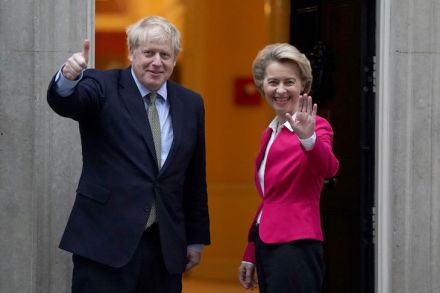
Full text: New EU president says full trade deal not possible by end of 2020

From our UK edition

The new president of the European Commission Ursula von der Leyen made a speech to the London School of Economics earlier today. During the speech, von der Leyen said: 'Without an extension of the transition period beyond 2020, you cannot expect to agree on every single aspect of our new partnership. We will have to prioritise.' You can listen to the speech and read the full transcript below: Ladies and Gentlemen, It is a great pleasure to be back here at the London School of Economics – a place which brings back so many happy memories for me. The year I spent here taught me so much – both in and out of LSE. As anyone who knew me at the time will tell you, I spent more time in Soho bars and Camden record stores than I did reading books in Senate House Library.

The Irish problem | 18 October 2018

From our UK edition

The story of Britain and Ireland’s relationship has, all too often, been one of mutual incomprehension: 1066 and All That summed up the view on this side of St George’s Channel with the line that ‘Every time the English tried to solve the Irish question, the Irish changed the question.’ But Theresa May’s problem right now is that the Irish — and the European Union — won’t change the question and the only answers they’ll accept are unacceptable to Mrs May and her cabinet. To the astonishment of many, the Irish border has become the defining issue of Brexit.

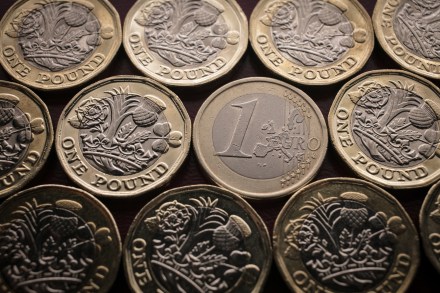
The UK economy is now growing faster than the Eurozone. Isn’t this good news?

From our UK edition

Maybe I should really give it a few more hours, but I can’t help noticing the lack of headlines this morning along the lines “UK economy growing faster than Eurozone”. Goodness knows we had enough headlines drawing attention to the opposite, when that was the case. There was the Guardian’s “Eurozone Grows Twice as Fast as UK after GDP Rises by 0.6 percent” from 1 August last year, the Independent’s “UK economic growth dwarfed again by Eurozone in third quarter” from 31 October last year, and the BBC’s “Eurozone Growing Faster than UK” from 2 May this year. But now that the economic boot is suddenly on the other foot – and none of these news outlets seem to want to draw attention to that fact.

Israel’s 70th anniversary celebrations ignore an inescapable fact

From our UK edition

Was it, do you reckon, a felicitous birthday present from the Eurovision judges for Israel, with Netta standing in, a bit incongruously, for a 70-year old state? If so, it’s a tribute to the way that a Middle Eastern country actually counts as European to at least the same extent as Turkey just across the Bosphorus – actually probably more so. Israel seems like an intelligible outpost of our kind of culture and values in what now is the Muslim world. If Netta is Israel, she’s a terrifically attractive embodiment of its most appealing aspect; way more than the country’s embarrassing president. She’s its avant garde side: an Orthodox Jew who raps in Hebrew, to huge acclaim at home.

The truth about London knife crime – and the prejudice with which the world listens to Trump

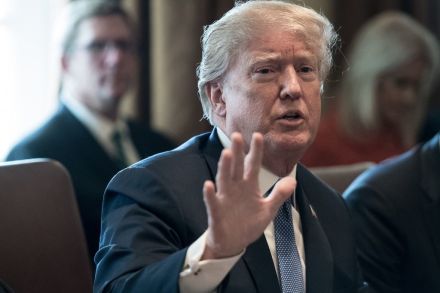
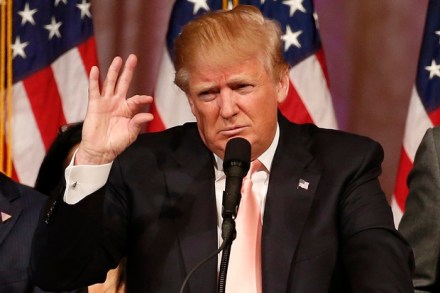
I would love to undertake a behavioural experiment in which a cohort of the public were asked to watch Donald Trump reading out the Gettysburg Address and asked to make comments. I can guess what would happen. There would be an overwhelming negative response. Those who listened would use words like ‘outrageous’, ‘disgraceful’. They would accuse him of ‘slurs’, describe him as ‘demented, as well as throwing in the charge of ‘racist’ for good measure. How can I be so sure? Because of the British reaction to Trump’s speech to the National Rifle Association last week in which he described a London hospital being like in a ‘war zone’, so high are the number of stabbing victims being treated there.

This EU ‘divorce bill’ is more like a ransom

From our UK edition

A  ‘bill’ is not commonly subject to negotiation. It arrives after a customer has contracted for the purchase of goods or services, whose price — with the unique exception of American health care bills, which are more like muggings by gangs on mopeds — has been established in advance. For the average upstanding Briton, a bill is not a starting point, subject to haggling. It is something you pay. The Lisbon Treaty’s Article 50 makes no mention of paying financial liabilities in order to leave the EU. Once the post--referendum conversation turned immediately to the ‘divorce bill’, the May government’s big mistake from the off was bickering about its size. A better opening strategy would run not ‘How much?

Letters | 26 October 2017

From our UK edition

Meeting halfway Sir: If our Brexit negotiator David Davis has not read Robert Tombs’s wonderful article ‘Lost in translation’ (21 October) on how different the French and the British can be when it comes to the negotiating table, he really should, as it splendidly exemplifies how useful history can be. The trouble is, of course, that politicians are often too busy to read history, or that historians get round to writing something useful too late to exert practical influence. In this instance, however, there is still time: manufactured deadlines can be adjusted, and (given adequate cross-cultural empathy) accommodations can be reached. Brian Harrison Oxford The law in France Sir: Robert Tombs highlights the differences between the UK and France brilliantly.

Free speech and the right not to bake a cake

From our UK edition

Let us consider the case of the Ashers family bakery in Belfast which, in 2014, refused to make a cake. Or as some would have it, a ‘gay cake’, although that’s obviously ridiculous because all cakes are quite gay. This one, though, was requested by Gareth Lee, a local gay rights activist, who wanted it to have a picture of Bert and Ernie from Sesame Street on it, under the slogan ‘SUPPORT GAY MARRIAGE’, as the centrepiece of an event organised to do just that. On the basis that they were devout Christians, however, the family running this family bakery refused. And so, sore affronted, Lee sued.

Jolly good show

From our UK edition

It’s tempting for a Brit to look over the Atlantic and smugly conclude that, after 240 years, the American experiment of self government has failed — that this ingenious country could not even find two decent people to run for the White House, and has instead laid on a political freak show that’s best watched from behind the sofa. British politics has its faults, we say, but we’re nowhere near as bad as that. But who would be bold enough to say that had Andrea Leadsom not dropped out of the race, Tory members would not have voted her in? And looking at the House of Commons, can we really say that it’s functional? We have no opposition to speak of, thanks to the crisis in the Labour party.

Better together

From our UK edition

This time two years ago, the United Kingdom stood on the brink of dissolution. The referendum on Scottish independence hung in the balance and momentum was with the nationalists. The optimism and energy of Alex Salmond’s campaign stood in admirable contrast to the shrill hysteria of Project Fear, the name given to a unionist campaign that churned out ever-less-credible warnings about what would happen after separation. The union was saved, but 45 per cent of Scots had voted to leave it. So the referendum had not closed the question, but left it wide open. At the time, the North Sea oil sector was still in fairly good health. In the SNP’s economic manifesto for independence, it gave estimates of up to £7.9 billion a year for oil revenues.

The West has totally misjudged the situation in Libya

From our UK edition

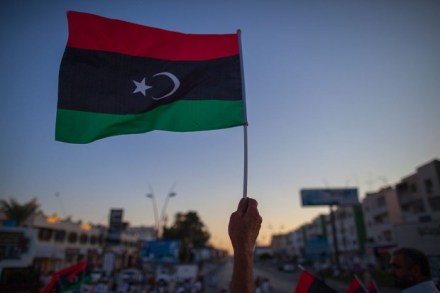
Libya’s former Prime Minister Dr. Mahmoud Jibril has become the first senior leader of its Arab Spring revolution to call time on the country’s new western-backed government, saying 'the chances of success are very slim'. This apparent failure hasn't been caused by a lack of support, which has poured in from London and Washington in a bid to get the Government of National Accord (GNA) to stand up and walk on its own two feet. It was also hoped that by doing this, a fix could be found for the twin problems of Islamic State and mass migration. But Dr Jibril, who helped steer the country through its brutal uprising against Muammar Gaddafi, says foreign powers made a mistake by installing an unelected regime without popular support.

Letters | 31 March 2016

From our UK edition

Amber warning Sir: James Forsyth’s interview with Amber Rudd (‘The Amber Express’, 19 March) was very revealing, but also slightly disappointing. She is right about the succession of ‘zealots’ who preceded her in setting British energy policy, but after the billions wasted on wind and solar, paid for by stealth taxes added to our electricity bills, and now providing around 2 per cent of capacity, does she still support the drive towards ‘renewable energy’? Britain now has the most expensive electricity in Europe, hardly an encouragement for business investment.

Why Trump prevailed

From our UK edition

If the Republican party were a company, it would now file for bankruptcy. Donald Trump, arguably the most grotesque candidate ever to have run for the Oval Office, seems certain to be the party’s presidential nominee. The former favourite, Marco Rubio, lost in his home state of Florida on Tuesday and has now bowed out of the race. After seven years of deeply unimpressive government from a divisive and ineffectual Democratic president, American conservatism has been unable to offer voters a convincing alternative. A candidate as flawed as Hillary Clinton should be easy to beat.

The Spectator Dashboard: interactive UK data

From our UK edition

Great progress has been made in open data over the last few years, with most important facts and figures now available online. The quality of the UK economic debate has been enhanced by the creation of the Office for Budget Responsibility, which publishes forecasts in a non-tricksy way. The journalist is spoiled for choice. But, still, you don't tend to see such forecasts republished: the BBC doesn't share them and even the FT's 'economy at a glance' restricts itself to historic data – and static graphs, which you can't interrogate. At The Spectator, we've been using dynamic graphs for a while. Now, we're moving up to the next level using HighCharts, a more versatile Norwegian graph-making engine. The below graphs are part of it.

Cooler heads

From our UK edition

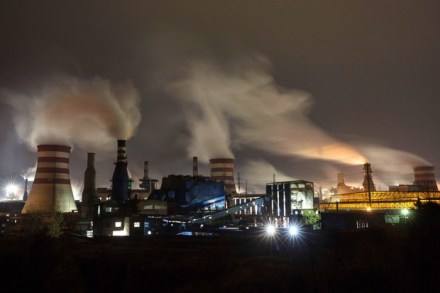
When world leaders met in Paris to launch the latest UN climate conference, much of the talk behind closed doors did not focus on global warming. Instead, the Paris conference has been overshadowed by more pressing and less contentious security concerns: the war in Syria, Europe’s refugee crisis and the growing threat of Islamist terrorism in the wake of the Paris massacre. The Copenhagen summit six years ago was a massive event; this year’s climate conference barely merits a mention of the front pages. The Paris meeting is not even attempting to achieve what the 2009 Copenhagen summit failed to do: reach a legally binding treaty on cutting CO2 emissions.

Get fracking

From our UK edition

Over the past week, the government has finally made a decisive move to kickstart a fracking industry in Britain. Licences have been issued for shale gas exploration and the planning process streamlined so that in future, if local councils fail to make decisions within 16 weeks, the communities secretary will step in and adjudicate. It’s excellent news that the years of prevarication over shale seem finally to have come to a close, and greatly to the credit of our Climate Change Secretary, Amber Rudd, and Communities Secretary, Greg Clark. But the dismally slow speed at which our much-vaunted ‘shale revolution’ has taken place will end up costing this country.

Bilderberg security is stepped up to protect masters of the universe from journalists

From our UK edition

This weekend the masters of the universe will gather at the annual Bilderberg conference. The secretive summit, which is being held in Austria, sees heads of banks and company CEOs mix with political heavyweights including the former Secretary of State Henry Kissinger, US pollster Jim Messina, George Osborne and... Ed Balls. No notes are taken, no media are invited to cover the event, and the outcome is never revealed which has led conspiracy theorists to go into overdrive. Theories range from plans for a New World Order to world domination by lizards.

Gordon Brown laments the ‘constitutional revolution’ of his own making

From our UK edition

Given that Gordon Brown has hardly been seen in the Commons since losing power five years ago, it was a bit rich of him to say goodbye now. But the SNP uprising has started — it looks set to claim his own seat of Kirkcaldy — and so he's off. In his final speech to the House of Commons today, he lamented the gradual breaking apart of the UK which was, of course, started by his own party. After indulging in niceties towards Parliament as an institution, the Speaker and his constituents, Brown promised to devote his efforts away from Westminster to ‘the idea of Britain’ and attacked the Conservatives' plans to devolve powers to England: ‘I leave this house feeling a huge sense of gratitude, but also with some concern.

Will the Smith Commission proposals help or destroy the UK?

From our UK edition

The phrase ‘Britain will never be the same again’ is overused. But today its use is justified. The Smith Commission proposals on further devolution for Scotland are a huge step towards a federal United Kingdom. All income tax, with the exception of the personal allowance, will be devolved to Scotland—so north of the border there could be different bands and rates. With more devolution to Scotland, the West Lothian question becomes more acute. So, David Cameron has been quick to stress this morning that he will bring forward his proposals on English votes for English laws before Christmas. The fundamental question is whether this move to federalism will save or destroy the Union. On balance, I’m hopeful it will save it.