Uk

What the EU still doesn’t understand about Britain’s vaccine strategy

From our UK edition

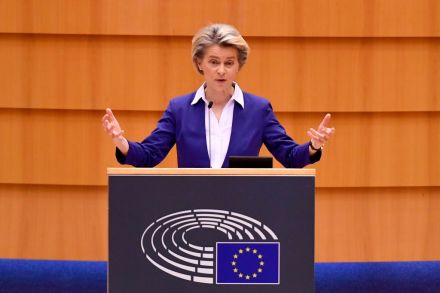
Since the outrage caused last Friday, when the European Union looked set to undermine the Northern Ireland protocol less than one month after the Brexit deal came into force, there has been little apology from those in charge. This is not terribly surprising: European Commission President Ursula von der Leyen has a reputation for passing the buck whenever possible. It’s also thought that last week’s mistakes are particularly hard for the EU to grapple with: desperate to prove Brexit was a mistake, it has been difficult for Brussels to watch Britain's reputation for handling the Covid crisis change so quickly for the better. Yesterday we got a hint of acknowledgement from von der Leyen that perhaps there are some benefits to being outside the EU.

One year after Brexit, Britain is reaping the benefits

From our UK edition

A year ago today Britain awoke to a rather muted celebration – which seemed to consist largely of a bubble car driving around Parliament Square with a Union Jack in tow – ready to face up to a brave new future outside the EU. Who would have imagined then that the Observer would mark the first anniversary by running a leading article condemning the EU as 'shambolic' and instead praising Boris Johnson’s government for something Britain did all by itself? Of course, the Observer’s judgement is only in respect to one thing: the EU’s joint vaccination procurement programme. Nevertheless, it is something rather important, on which a great number of people’s lives are dependent.

The EU’s vaccine opportunism will not be forgotten

From our UK edition

At first, it sounded like empty rage. The European Union had spent all week making wild statements about controlling vaccine exports — even challenging the notion of contract law. On Friday, it has started to act on its words and announced it will introduce controls on vaccines made in the EU — potentially giving itself the power to stop Pfizer sending Britain the vaccines it has paid for. Worse, when it made the announcement, it included Northern Ireland. The EU was set to use the ‘last resort’ mechanism in the recently-agreed Northern Ireland Protocol, Article 16, that can unilaterally impose a land border: something both the UK and EU spent years trying to avoid.

Britain is right to play tit-for-tat with Brussels over the EU ambassador

From our UK edition

It is petty, small-minded, mean-spirited, and childish. It is certainly not difficult to think of a few adjectives to describe the UK’s decision to refuse diplomatic status to the European Union’s mission in London. Diplomats, and European ones in particular, take matters of status, protocol and etiquette very seriously, and the snub looks, on the surface at least, designed to diminish our closest neighbour. The ambassador for, say, Mozambique, or Honduras, has full diplomatic recognition, but not the person representing the 440 million strong trading bloc on the other side of the English channel. Wars have been started over lesser slights.  But hold on. Sure, you can argue that the UK is being silly. But so is the EU.

Why the UK is sending a tough message on China

From our UK edition

One of the arguments made against leaving the EU was that Brexit Britain would have to subordinate everything in its foreign policy to economics and the need for trade deals. But the UK’s approach to China in recent months shows that this hasn’t turned out to be the case, as I say in the magazine this week. On Tuesday, the government – in conjunction with Canada – announced measures to try and ensure that no products made using the forced labour of Uyghur Muslims end up in UK supply chains. Whitehall fully expects some kind of retaliatory response from China to this – just look at how Australia has been treated for saying there needs to be an independent inquiry into the origins of coronavirus – but went ahead anyway.

The case Brexiteers should make for Brexit

From our UK edition

Why are Brexiteers rubbish at making the economic case for Brexit? On a whole range of things from three pin plugs to driving on the left, the UK is so often the odd man out in Europe. So why shouldn’t Britain be better off making its own laws and regulations, instead of making do, as we have done for the last 50 years, with trying to fit our sprawling messy economic life into a one-size-fits-all framework cooked up in Brussels kitchens over too much midnight oil? We have heard a lot of talk recently about the Single Market being a British invention, a way of exporting the Thatcher revolution to our nearest neighbours. That much is true.

The vaccine goalposts have shifted

From our UK edition

Matt Hancock provided a vaccine update on Monday, explaining that the chances of a drug being ready by early next year are ‘looking up’. With trials pending in the UK, USA and Brazil, the Oxford-AstraZeneca vaccine could be approved this year, although the Health Secretary he conceded it would more likely come in spring 2021. He added that doses are already being manufactured so that it will be ready to roll-out the moment it does receive approval.  We’ve heard this all before.

Is Britain heading for the worst economic hit in Europe?

From our UK edition

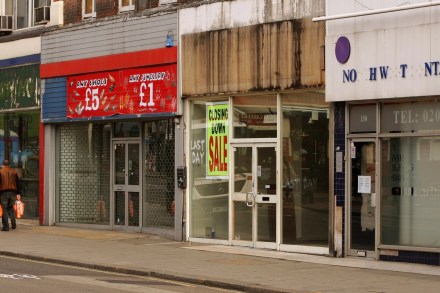
It’s odd to read headlines today saying that the UK has officially entered recession. We’ve known this for months: shops were closed, restaurants shuttered. You couldn’t get a cup of coffee or a haircut, offices were closed and millions furloughed. These were not normal times – but we knew that then, as we know it now. What we didn’t know was how far the economy had contracted, and how much this could be remedied by ending lockdown. The big news today, revealed by official figures released by the Office for National Statistics this morning, starts to answer this. It turns out that our economic hit was one of the hardest in Europe. UK GDP fell 20.

Why unemployment figures haven’t budged

From our UK edition

Look past the headline statistics and you’ll see economic reality starting to infiltrate the labour market. Today’s employment figures from the Office for National Statistics mark very little movement from the previous quarter, with employment at 76.4 per cent (down 0.2 per cent on the previous quarter) and unemployment at 3.9 per cent (unchanged from the previous quarter, still hovering at a record-low level). Yet today also marks the biggest decrease in UK employment for a decade, since May 2009 in the wake of the financial crash. For many workers, being temporarily away from paid work is likely to become permanent How can this be?

Has France been naive in its handling of Huawei?

From our UK edition

The controversy over the UK’s use of Huawei equipment in its 5G network has not abated, despite the government’s announcement that the Chinese manufacturer’s equipment will be stripped from the network by 2027. Conservative MPs continue to be unsatisfied by this half-way house, claiming that Britain will remain vulnerable to ‘back-door’ espionage by the Chinese state. They carry on threatening the government with an embarrassing, albeit symbolic, rebellion. But it is no secret that the real pressure to abandon Huawei equipment comes principally, and forcefully, from the UK’s ‘Five Eyes’ partners. The ‘Five Eyes’ network dates back to the Second World War and comprises the UK, the USA, Canada, Australia and New Zealand.

Coronavirus has exposed the EU’s greatest flaw

From our UK edition

Politics begins and ends with sovereignty: the duty and right to make the legitimate final decision. We have seen this clearly during the pandemic. In every country, people have come to depend on their governments, whose authority rests on acknowledged sovereignty. This is as true, or even truer, in democracies: while monarchs and aristocrats could dispute sovereignty – and, where it suited them, divide up the cake amongst themselves – in a democracy there can only be one ultimate sovereign: the people. No sovereignty, no democracy. For years we have been told the illusion, if not a fraud, that sovereignty can be ‘pooled’. Who takes the final decision when sovereignty is ‘pooled’? If we cannot answer that question, then it shows the fallacy.

What are the long-term effects of keeping schools closed?

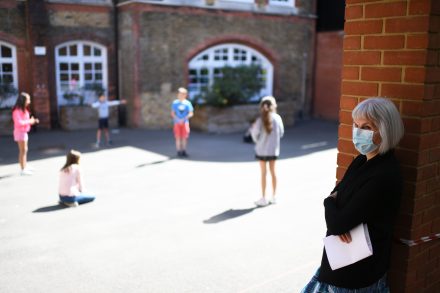
From the beginning of the lockdown in March, it became clear that children were going to have a very different experience depending on where they are educated. Many private schools and some of the best public schools immediately made arrangements for teaching to continue online, uninterrupted. For many other children, it has been a case of only being set the odd homework assignment.The quality in educational experience during the lockdown is going to have a very large impact on attainment. A rapid evidence assessment by the Education Endowment Foundation, a British think tank, has attempted to put a figure of just how the attainment gap could grow if children are kept out of the classroom until September.

schools learning

Does lockdown really decrease Covid deaths?

From our UK edition

It has become clear that a hard lockdown does not protect old and frail people living in care homes – a population the lockdown was designed to protect. Neither does it decrease mortality from Covid-19, which is evident when comparing the UK's experience with that of other European countries. PCR testing and some straightforward assumptions indicate that, as of April 29, 2020, more than half a million people in Stockholm county, Sweden (which is about 20–25 per cent of the region’s population) have been infected. 98 to 99 per cent of these people are probably unaware or uncertain of having had the infection; they either had symptoms that were severe, but not severe enough for them to go to a hospital and get tested, or no symptoms at all.

Did Australia’s China-scepticism prepare it for Covid-19?

From our UK edition

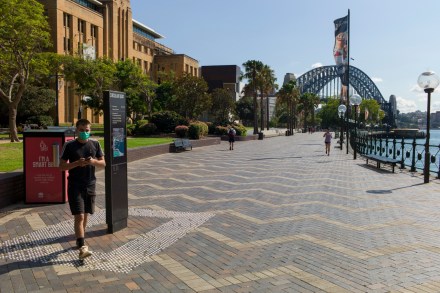
As Britain struggles through the eye of the coronavirus storm, it is difficult not to cast our eyes across the world and compare our fate with that of our friends and allies. One nation in particular stands out – Australia – seemingly on course yet again to assume its role as ‘The Lucky Country’. It's tasteless to say, but Australia has had ‘a good crisis’ – it’s one of the few nations to emerge relatively unscathed from the pandemic’s deadly grip and has recorded just 75 deaths so far. Now Sydney’s famous beaches are re-opening this week, and visitor restrictions on care homes are being relaxed. Australia’s performance is especially intriguing given its geographic proximity to Asia.

Coronavirus has already caused a huge spike in unemployment

From our UK edition

In Britain and America, the employment news is grim. Nearly a million Brits – 850,000 more than usual – have applied for Universal Credit in the last fortnight. While in the United States, unemployment has reached an historic high. As of the end of last week, 6.6 million people claimed for out-of-work benefits. This is the highest increase in adjusted seasonal claims on record and is made even more astonishing when you consider that just four weeks ago fewer than 200,000 people applied for jobless benefits.  With every day that goes by, the health implications of Covid-19 are becoming clearer, as are the economic effects.

What the UK wants from a trade deal with the USA

From our UK edition

On Monday, the Department for International Trade released its negotiating objectives for a UK-USA free trade agreement. The 184-page document explains in detail what the UK wants to get out of a trade deal with America. The British government will try to angle the talks, which begin this month, towards securing a comprehensive arrangement - that is, a deal that covers a broad range of areas including digital, finance, tech, manufacturing and agriculture. If secured, it estimates this could translate into a £3.4 billion boost to the UK economy. The government has put its 'leveling up' agenda at front and centre of these trade talks, laying out how each region potentially stands to gain from securing a deal with the USA.

Emergency terror laws set to end early prisoner release

From our UK edition

The government has this afternoon unveiled its response to the Streatham terrorist incident on Sunday – which saw a man recently released for terror offences stab civilians in south London. Speaking in the Chamber, Justice Secretary Robert Buckland said that the government will table emergency legislation to end automatic early release for convicted terrorists. Under the plans, terror offenders will only be considered for release if they have served two-thirds of their sentence rather than half and then it will be subject to the approval of the parole board. Crucially, this will retrospectively end automatic early release for 220 convicted terrorists who are currently behind bars.

Full text: New EU president says full trade deal not possible by end of 2020

From our UK edition

The new president of the European Commission Ursula von der Leyen made a speech to the London School of Economics earlier today. During the speech, von der Leyen said: 'Without an extension of the transition period beyond 2020, you cannot expect to agree on every single aspect of our new partnership. We will have to prioritise.' You can listen to the speech and read the full transcript below: Ladies and Gentlemen, It is a great pleasure to be back here at the London School of Economics – a place which brings back so many happy memories for me. The year I spent here taught me so much – both in and out of LSE. As anyone who knew me at the time will tell you, I spent more time in Soho bars and Camden record stores than I did reading books in Senate House Library.

The Irish problem | 18 October 2018

From our UK edition

The story of Britain and Ireland’s relationship has, all too often, been one of mutual incomprehension: 1066 and All That summed up the view on this side of St George’s Channel with the line that ‘Every time the English tried to solve the Irish question, the Irish changed the question.’ But Theresa May’s problem right now is that the Irish — and the European Union — won’t change the question and the only answers they’ll accept are unacceptable to Mrs May and her cabinet. To the astonishment of many, the Irish border has become the defining issue of Brexit.

The UK economy is now growing faster than the Eurozone. Isn’t this good news?

From our UK edition

Maybe I should really give it a few more hours, but I can’t help noticing the lack of headlines this morning along the lines “UK economy growing faster than Eurozone”. Goodness knows we had enough headlines drawing attention to the opposite, when that was the case. There was the Guardian’s “Eurozone Grows Twice as Fast as UK after GDP Rises by 0.6 percent” from 1 August last year, the Independent’s “UK economic growth dwarfed again by Eurozone in third quarter” from 31 October last year, and the BBC’s “Eurozone Growing Faster than UK” from 2 May this year. But now that the economic boot is suddenly on the other foot – and none of these news outlets seem to want to draw attention to that fact.