Uk politics

Why politicians should fear Project Fear

From our UK edition

‘Project Fear’ didn’t work out in the 2016 Brexit referendum, with voters turning against the ‘experts’ maligned by Michael Gove and other Leave campaigners. So it’s strange to see the Conservatives reigniting it again in the run-up to Tuesday’s vote on Theresa May’s Brexit deal, warning of six months of disruption at Dover and other ports in the event of no deal. There’s no evidence that this squeeze message is really going to work on Tory MPs and whittle down the scale of the expected defeat next week. The return of Project Fear is also a reminder of the danger of a second referendum for those who hope that it might lead to Britain voting to Remain after all.

Why the Norway model wouldn’t work for Britain

From our UK edition

In the corridors of Westminster and the salons of some remainers, there is a lot of excited chatter about the “Norway option”. This would involve being a member of the EEA and single market, but not of the EU. Depending on who is pushing, Norway is presented as either a temporary or permanent alternative to Theresa May's troubled deal. But there are problems with this quick fix. The well discussed issue that being in the EEA doesn’t end freedom of movement is one; another is the fact that the Norway option doesn't end EU budget contributions. But more fundamentally, few appreciate just how a regime that (sort of) suits Norway is completely unsuitable for the UK.

Stephen Lloyd’s baffling decision to resign the Lib Dem whip

From our UK edition

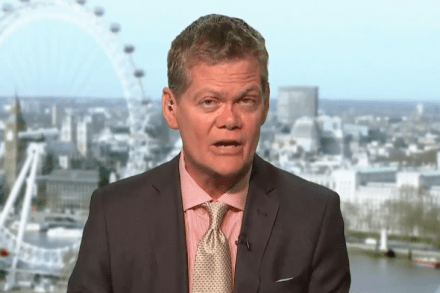
Brexit has left the three main parties that stand in England in an existential mess, split not just over the fundamental question of Leave vs Remain, but also over how to approach the deal that Theresa May has brought back from Europe. One of the odder splits tore open today, with Eastbourne MP Stephen Lloyd announcing he was resigning the Liberal Democrat whip so that he could back the government next week.

Blair makes his pitch for a second referendum: Remain – or hard Brexit

From our UK edition

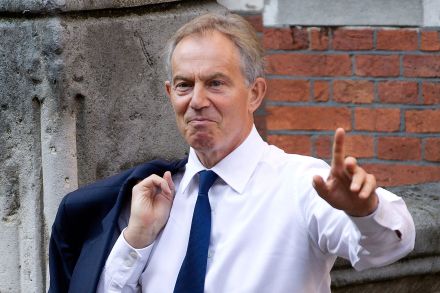
Tony Blair has spent his lunch attempting to charm the Parliamentary Press Gallery. The former prime minister used his appearance before hacks to lay out his pitch for a second referendum. The ardent Remainer claimed that MPs were likely to come round to the idea of a second Brexit vote in the coming weeks as they would work out that there is no Parliamentary majority for any form of Brexit at present. He said that Theresa May's deal was the worst of both worlds as it wasn't properly leaving. As a result, Blair argued that the options on the ballot paper in a second vote should simply be 'Remain' and a 'hard Brexit' – though given that the EU has said that May's deal is the only deal, that implies Blair is suggesting no deal.

If Brexit is abandoned, will it ever be worth voting again?

From our UK edition

Earlier this year I was approached at a party by a prominent and slightly oiled ‘Remainer’. Amid other pleasantries she asked me, interrogatively: ‘You voted “Leave”, Douglas. Can you give me one good reason why we should still leave the EU?’. Having watched the last two-and-a-half years from the sidelines, depressed by almost the entire political debate in the UK, I could think of no argument that would be new to her. We’ve all been round this too many times before, and almost no one has conceded anything new on the subject for years. So I decided to relay the feeling that was (and still is) foremost in my mind. The feeling which has disturbed me the most.

What does a leaked recording reveal about Boris’s Brexit stance?

From our UK edition

I’ve been sent a recording of a presentation made on Tuesday by the great champion of Brexit, Boris Johnson, over breakfast in Amsterdam. He was talking to “chief risk officers” of financial firms at an event called RiskMinds International, that was sponsored by, among others, the huge accounting firm PWC and the management consultancy McKinsey. Days before that big vote on Theresa May’s version of Brexit, which Johnson passionately opposes, he talks about the importance of politicians, like his hero Churchill, taking a stand against the establishment and “gambling” – making a “giant bet” – to do the right thing.

The lessons politicians don’t want to learn from Glasgow’s knife crime strategy

From our UK edition

London’s knife-crime epidemic is back in the news. Tomorrow the Damilola Taylor Trust is holding a lecture at which the founders of Glasgow’s Violence Reduction Unit will explain what lessons London might learn from their experience. Their distinctive ‘public health’ approach is widely held to have been successful and it is frequently contrasted with a strategy of law enforcement. Champions of the public-health approach can be identified by their predilection for referring to the problem of knife crime as ‘issues around’ knife crime and their enthusiasm for finding ‘reachable and teachable moments’ when dealing with offenders caught with a knife.

The question May’s Brexit deal critics must ask themselves

From our UK edition

Brexit is an accident born of misunderstanding. One of the biggest miscalculations is about the EU and how it works. Troublingly, that misjudgement, embraced by both unwise Leavers and imprudent Remainers, could just lead Britain off a cliff, for the second time in three years. I attended my first EU summit in 2001 and stopped counting the number of Council meetings, ECOFINs and other EU gatherings when the figure passed 50 some time early in the financial crisis. I’ve seen a lot of British politicians go to Brussels (and elsewhere, in those innocent days before the Belgians captured all council meetings for their capital) and pursue the British national interest, with varying degrees of success.

Is Parliament taking back control of Brexit?

From our UK edition

One of the promises of Brexit campaigners, famously, was that parliament will ‘take back control’ of laws that affect Britain. Since the referendum result, it has seemed rather more that the government is taking back control, rather than MPs, with the executive (quite naturally) resisting any opportunity for Parliament to have a say in, well, any part of the Brexit deal. This evening, though, MPs handed the government its third defeat of the day on an amendment from former attorney general Dominic Grieve which would give the Commons a say on what happens if (or more probably when) Theresa May’s deal is defeated next week. The plan, which passed 321 to 299 votes, would allow MPs to amend the government’s plan B.

Women are abused in the name of ‘trans rights’. But do MPs care?

From our UK edition

There are some things that pretty much everyone in politics and public life agrees on. Ask any politician about any contentious, heated debate and they’ll immediately talk about the need for respectful debate, for all views to be heard calmly and in a civilised manner. They’ll say that there is no place for harassment and abuse and bullying and threats, because this is Britain, a mature democracy where everyone gets to express their views about things like politics and the law without fear. Except that’s not entirely true. There are some people who aren’t allowed to speak freely, who cannot express their views about things like politics and the law without being abused and threatened and, from time to time, assaulted.

May’s bid to satisfy everyone on Brexit has pleased no one

From our UK edition

In Parliament yesterday, Theresa May repeated Philip Hammond's fallacious argument that because the Brexit referendum result was 52:48, the form of Brexit should be a compromise between leaving the EU and remaining in it. This argument completely distorts the notion of democracy. Firstly, no such argument was ever deployed when it was a question of accepting the Maastricht, Amsterdam, Nice and Lisbon treaties. Secondly, the referendum was not subject to any threshold level of support for one position or the other. And David Cameron and George Osborne stated very explicitly that a victory for "Leave" – even by a single vote – would mean leaving the Single Market and the Customs Union.

PMQs: A lesson in calling the Prime Minister a liar

From our UK edition

Huge ructions at PMQs. Ian Blackford, of the SNP, said Mrs May had been ‘misleading the house inadvertently or otherwise’ over her EU agreement. Instant panic. Roars of outrage at the suggestion that the prime minister had lied. Mr Speaker snapped to his feet. The house paused while he delivered his ruling which centred on two adverbs. He revealed that when accusing the PM of fibbing it’s advisable to say that it was done ‘inadvertently’. But to add the phrase ‘or otherwise’ suggests that Mrs May tells lies as a matter of policy. Surely not! ‘There must be no imputation of dishonour,’ said Mr Bercow, clearly enjoying the semantic kerfuffle and his position at its centre. Mr Blackford tried again.

Top ten horrors from the Brexit ‘legal advice’

From our UK edition

Despite numerous attempts by the government to keep it hidden, the Attorney General's legal advice has finally been published. The move came after opposition MPs – to whom Mr S is very grateful – found ministers in contempt of Parliament for with-holding the information. Remember our 40 horrors of the deal? Well, Geoffrey Cox's hotly-anticipated legal advice has some nasty surprises of its own. As ever, Steerpike has compiled the top horrors from the latest document: 1. This is not the full legal advice on the May’s deal. It is a very selective piece of advice solely on the Protocol, art. 184 and 5. So no other issues are considered. Parliament asked for the full legal advice on the deal, not just part of the deal. Where is it? 2.

Are we heading for a recession? If so, don’t just blame Brexit

From our UK edition

So will those Remainers seemingly hoping for a Brexit-related recession get what they want after all? This morning Purchasing Managers’ Index (PMI) for the service sector certainly points in that direction. The index, which is really just a questionnaire to businesses but which can give advance warning of swings in economic growth, fell to 50.4 in November, down from 52.2 in October and 54 in September. Anything above 50 denotes growth – so it doesn’t indicate we are yet in recession – but it suggests a steep plunge in activity and confidence which could well take us there. It would be foolish to deny any link with the Brexit crisis.

Full text: The Government’s Brexit legal advice

From our UK edition

The Government has published its Brexit legal advice, a day after it was found in contempt of Parliament for refusing to do so. Here's the full text: Legal Effect of the Protocol on Ireland/Northern Ireland Introduction This note sets out my advice on the question I have been asked as follows: What is the legal effect of the UK agreeing to the Protocol to the Withdrawal Agreement on Ireland and Northern Ireland in particular its effect in conjunction with Articles 5 and 184 of the main Withdrawal Agreement? I note that the Withdrawal Agreement, of which the Protocol on Ireland/Northern Ireland (Protocol) forms part, is yet to be finalised. My advice is based, therefore, on an evolving text, which I have had to consider rapidly in light of the fluid situation.

Nigel Farage finally reaches his ‘breaking point’ with Ukip

From our UK edition

‘Obsessed with Islam and Tommy Robinson.’ This is how Nigel Farage describes a cohort of Ukip activists he encountered at the party’s Birmingham conference earlier this year. Gerard Batten, the tenth leader of Ukip, has openly courted such elements in his calculated lurch to the farther-right. He has recruited as an adviser Stephen Yaxley-Lennon, better known as Tommy Robinson or St Tommy of the Uncollapsed Trials, the free speech martyr vilified by the establishment purely because he keeps imperilling court proceedings against Pakistani grooming gangs. Batten has called Islam a ‘death cult’ in which ‘they believe in propagating their religion by killing other people and martyring themselves and going and getting their 72 virgins’.

Is Parliament taking back control of Brexit? | 4 December 2018

From our UK edition

One of the promises of Brexit campaigners, famously, was that parliament will ‘take back control’ of laws that affect Britain. Since the referendum result, it has seemed rather more that the government is taking back control, rather than MPs, with the executive (quite naturally) resisting any opportunity for Parliament to have a say in, well, any part of the Brexit deal. This evening, though, MPs handed the government its third defeat of the day on an amendment from former attorney general Dominic Grieve which would give the Commons a say on what happens if (or more probably when) Theresa May’s deal is defeated next week. The plan, which passed 321 to 299 votes, would allow MPs to amend the government’s plan B.

Revealed: the full list of Tory rebels who voted against the Government

From our UK edition

The Government has been defeated three times in key votes in Parliament this afternoon. Its an ominous sign for Theresa May ahead of the vote on her Brexit plan a week today. Here is the full list of Tory MPs who went against the Government: Grieve amendment: This hands more power to MPs in the event that May's Brexit plan gets voted down, by effectively allowing them to have a say on what the PM's Plan B should be.