Uk politics

New York Times goes easy on ‘Failing Grayling’

From our UK edition

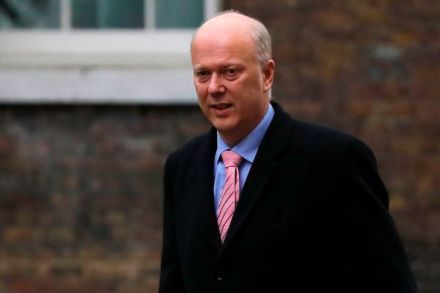
Chris Grayling has managed to take the government's 'Global Britain' agenda up a gear this week with an appearance in the New York Times. The under fire Transport Secretary is the subject of a blistering editorial in the American paper (which has developed a penchant for negative UK stories these days) titled 'How Does He Survive? The Curious Case of ‘Failing Grayling’. The paper claims Grayling has 'bumbled his way from one government post to another' starring 'in a black comedy sideshow of his own'. Yet it's fair to say that in one respect the paper has gone easy on him. In the print article, it cites that the Labour party has calculated that Chris Grayling's misadventures have cost British taxpayers £2.7 million. However, it's actually £2.

Theresa May’s bung shows she still doesn’t understand Brexit

From our UK edition

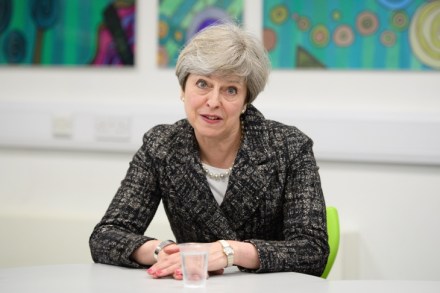
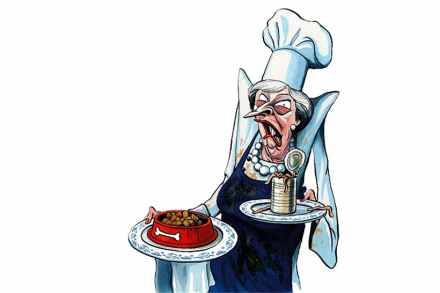
When will politicians learn they can’t just buy off voters? You think they would have twigged this during the EU referendum campaign when the Remain camp’s Project Fear utterly failed to sway the electorate’s feelings about the EU. Every household will be £4,300 worse off, the Treasury claimed, which a) wasn’t true and b) looked to many voters like a cynical bung designed to wean them off their Euroscepticism. Such chattering-class cluelessness was on full display in the aftermath of the referendum too. How could people in regions that have received oodles of EU cash — parts of Wales, the old industrial north of England — turn against the EU, Remainers in London wondered?  And now here comes Theresa May with what looks like another bung.

Are Brexiteer MPs really softening their opposition to May’s deal?

From our UK edition

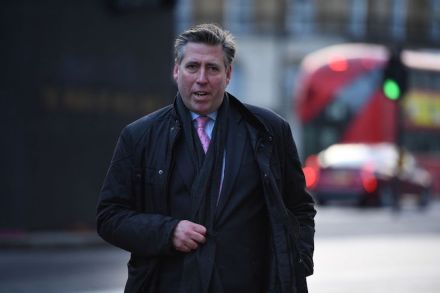
Are Brexiteer MPs about to row in behind May’s deal? This is the question that has dominated the weekend's papers with speculation rising that the threat of a delay to Brexit – or no Brexit – means the European Research Group (ERG) are ready to soften their red lines. Sir Graham Brady – chair of the 1922 committee of Conservative backbenchers – has used an op-ed in the Mail on Sunday to say that he is now ready to back the Prime Minister's deal – so long as the 'right compromise is offered'. The Sunday Times splashes 'Brexiteers offer peace terms to May' with news of three tests the ERG will use to test out what ever concession the government returns from Brussels with.

10 days to save Brexit

From our UK edition

MPs have 10 days to pass Theresa May’s Brexit deal or calamity strikes, I say in The Sun this morning. May’s deal is far from perfect. But what will happen if it doesn’t pass is truly appalling. If May’s deal hasn’t won a Commons vote by March 12th, the Commons will vote on whether to proceed with no deal. The parliamentary arithmetic is such that no deal will almost certainly be defeated. The next day, parliament will then vote on whether to request an extension from the EU. This vote will almost certainly pass. At this point, the United Kingdom would be in the weakest position it has ever been in this negotiation. Whether to grant an extension or not would be up to the EU and would require all 27 member states to agree.

‘Brexit shows democracy doesn’t work’: An interview with Titania McGrath

From our UK edition

Titania McGrath, 24, is a radical intersectionalist vegan activist, feminist slam poet and the author of Woke: a Guide to Social Justice. She won’t meet me in person for security reasons – she fears doxxing – or send me a photograph of her face. Rather, she consents to an interview by email from her gîte in the Buis-les-Baronnies district of France, where she is “working on a new anthology of slam poetry which will end the patriarchy” in the nude. This is from her poem Cultural Appropriation: Plunderbeast of history. My ancestors scream in your hollow wigwam, Ghostrolling in the ectoplasm of your hate. I staunch the flow of simpering tribal sauce, A digital sombrero clings deafblind To a face falsely smeared in a coalish hue.

The myth of the ‘millennial’ Corbyn project

From our UK edition

The myth at the heart of the ‘Corbyn project’ is that it is a grassroots movement of enthusiastic young people. This group, so the theory goes, is disgusted by free markets and longs for industries to be nationalised and collectives of workers to seize control of the means of production. Books have even been written about how the ‘young’ have ‘created a new socialism.’ But if this is true, why does a poll today reveal that support for the newly-formed centrist Independent Group predominantly come from young people? Forty-seven per cent of 18-24 year olds approve of the creation of TIG, with just 14 per cent disapproving of it.

What does Putin really make of Britain’s Brexit mess?

From our UK edition

When it comes to Brexit, Britain's friends, neighbours, trade partners and even antagonists are generally united in one thing: wondering what on earth is going on. In Russia, there is a particular cocktail of satisfaction and bewilderment. The satisfaction is predictable. From the Kremlin's point of view, the whole Brexit extravaganza is a gift, regardless of the eventual outcome. Putin's strategy is essentially to divide, distract and demoralise the West, so that either we are sufficiently worn down to strike a deal that grants Russia the status he craves – essentially as hegemon of Eurasia and a fixture in any global negotiations – or else we are so fragmented, feuding and fatigued that he has a free rein.

George Eustice resigns – will more Leave-voting ministers follow?

From our UK edition

When the week began, there was speculation that a group of ministers would resign over Theresa May's Brexit stance. The Prime Minister had been warned that up to 22 members of government could quit unless she promised the chance for MPs to extend Article 50 if no deal looks likely. In the end, May blinked and paved the way for such a vote if her deal is rejected in two weeks' time. However, that decision has led to a government resignation that few were expecting. This afternoon George Eustice resigned as Defra minister over May's promise to allow MPs a vote on delaying Brexit if her deal is rejected.

Theresa May can dare to dream that her Brexit deal might pass

From our UK edition

Can the Prime Minister dare to dream that her Brexit deal will pass – perhaps as soon as next week? It is striking how Brexiters from the ERG group are lining up to tell me how reasonable they are trying to be. After well over a hundred Tory MPs failed to vote for Yvette Cooper's amendment last night, which simply captured the PM's u-turn pledge to allow MPs to delay Brexit, one senior Tory texted me to insist this was "more cock up than conspiracy". He said: "Bit of a mess. Nobody expected Cooper to move the amendment. Letwin had said they wouldn’t. People had left the chamber. Others thought the position was to abstain as the government didn’t shout yes and didn’t shout no. Whips didn’t chase people until nearly five minutes in to the vote.

A pincer movement is closing around Jeremy Corbyn

From our UK edition

Chaos theory’s assertion that tiny changes can have dramatic effects is being vindicated with a vengeance in Westminster. If not quite as paltry as a butterfly flapping its wing in the Amazonian rain forest, the creation of the Independent Group seemed a small event. Eight Labour and three Tory MPs joined. Eleven in total. Just 11: despite all the provocations of Brexit and Corbyn. Is that it? I thought when the breakaway began, and filed the groupuscule away under “lost causes”. As it has turned out, the small difference has made all the difference. Last night the Labour party removed the whip from Chris Williamson, a supporter of the Maduro tyranny in Venezuela and the Cuban dictatorship.

The Independent Group is already changing politics for the better

From our UK edition

Most people at Westminster are betting against the Tiggers. Most people, if forced to guess, would predict that the Independent Group won’t become a new political party that wins scores of seats in the Commons. We can all recite the reasons: no membership, no machine, no leader, no policy platform, the electoral system… But maybe that doesn’t matter. Because there are more ways to change things than winning seats. Just ask Ukip – if you can find it these days. Ukip only ever won one seat in the Commons, and in truth it was Douglas Carswell not the party who delivered it. But Ukip still changed history: without it, David Cameron would very likely have got out of calling the EU referendum.

Has the Independent Group ‘revolution’ fallen flat already?

From our UK edition

Ten days since the start of the Great February Revolution (as historians are unlikely to call it) and the breakaway MPs must be feeling a bit miffed. The rebels, tagged as ‘TIGs’ in the press, are blessed with every advantage a political movement could hope for – apart from a logo, a creed, a headquarters, a constitution and a following. The 11-strong group have become the silent stars of PMQs. Seen but not heard. The Speaker failed again this Wednesday to ask a TIG to speak. Does their reticence signify anything? Perhaps trouble is brewing and the TIG bigwigs are trying to stop the membership from cracking up into dissident units.

Watch: Kate Hoey’s damning verdict on the Independent Group

From our UK edition

Labour's shift towards a second referendum has not gone down well with the party's MP for Vauxhall. So will Kate Hoey be joining the gang of defectors and throwing her lot in with the Independent Group? Don't bet on it. Hoey said she had no plans to sign up with what she called 'that little rump'. Hoey also told the BBC's Politics Live that the TIGers were 'obsessed about staying in the European Union'. Here is her damning verdict on the new party: I made it very clear that I was going to be supporting the referendum, even though I was in a Remain seat. Some of the people who have left the party made very clear statements that they would honour the referendum, I've seen them on television. And yet, they've gone against that.

Watch: Sajid Javid gets into a muddle over Brexit

From our UK edition

Brexit is confusing for the best of us, but Mr S. would hope that the Home Secretary would at least manage to stay abreast of the latest developments of Britain's withdrawal from the EU. Unfortunately not. Popping up in front of MPs at the Home Affairs Committee, 'The Saj' got in a muddle when asked whether the Government would be backing the Costa amendment on guaranteeing EU citizens rights under no-deal. Here's what happened: Sajid Javid: You asked me what was wrong with that (the Costa) amendment? Stuart McDonald: Yes SJ: Nothing SM: So the Government is supporting it then? SJ: Yes. When was the Government not supporting that? SM: Yesterday SJ: From who (did you hear that)? SM: The Prime Minister SJ: Did you? Well, OK.

A Brexit delay would be bad news for Britain’s economy

From our UK edition

It would stop us crashing out. It would give us enough time to negotiate a free-trade deal. It would allow business time to prepare, and for the government to put in place all the extra infrastructure we might need once we are outside the European Union. As the deadline draws closer and closer, the pressure is mounting for a delay to our departure from the EU. At first that was just likely to be a few week or months. But now Brussels is talking about two years. But hold on. That is crazy. Sure, plenty of big businesses will be supporting that, and lots of people will be arguing it is the only way to avert a potential economic catastrophe. They are understandably nervous about leaving without a deal. But in fact, it would be the worst possible outcome for the economy. Why?

Seven things we learnt from an evening with Jacob Rees-Mogg

From our UK edition

This evening Jacob Rees-Mogg joined Rod Liddle in being able to say he has sold out the London Palladium for a Spectator event. The arch-Brexiteer appeared before a packed crowd – of over 2,000 – for an in conversation with editor Fraser Nelson. Despite a busy day in the Commons on Brexit and a spot on the stage, the Moggster still found time in the interval to help out on the ice cream stall. Here are seven Rees-Mogg takeaways from the event: 1. Most people who want to delay Brexit want to stop Brexit In reference to the news today that Theresa May will give MPs a chance to vote to delay Brexit, Rees-Mogg said he questioned the motives of the politicians pushing to extend Article 50: 'Most people who want a delay want to stop Brexit.

My suggestions for Justin Welby’s Brexit prayers

From our UK edition

Would anyone like to join me in the “Five Days of Prayer” that Archbishop Welby has announced to mark the days that we leave the European Union? (Yes, sure, IF we do. Otherwise I assume there will be five days of rejoicing.) I will be praying on Day One for Welby to be replaced by a less gullible, less virtue signalling, less privileged person. Day Two will be a prayer that the Church of England start dealing with personal morality rather than grandstanding political gestures. Day Three will be the prayers to stop Muslims preaching in CofE churches, until such time as Islamic states allow Christians to proselytise without getting their heads chopped off. Day Four will be a prayer that Welby finally grasps that austerity might be a salient response to a serious economic problem.

The EU must budge on the backstop if it wants to avoid no deal

From our UK edition

The European Union does not want ‘no-deal’. Neither do the majority of people or politicians in the UK. Most of us recognise that to leave without a deal would be potentially damaging to both the UK and the EU, a risk to be avoided. But unless Brexit is stopped altogether the only way to prevent ‘no deal’ is to agree a deal. The date of the UK’s departure may now be delayed, but even a short delay would be controversial enough. And delay will only postpone the choice which, sooner or later, must be made. In one sense a deal is tantalisingly close to being agreed.

May offers MPs a vote to prevent no-deal Brexit

From our UK edition

Faced with the prospect of defeat on an amendment to stop no deal, Theresa May has attempted to stave off that rebellion by promising MPs a vote to stop a no-deal Brexit. After a long and fiery Cabinet (James has the details here), the Prime Minister addressed the House to update MPs on her government's progress in the negotiations. She said that Geoffrey Cox was working with Brussels to win changes to the backstop and reconfirmed her promise to hold a meaningful vote on her deal by 12 March. However, should her deal be rejected by the House for a second time, May promised to hold a vote by 13 March on whether this House supports the UK leaving without a deal.