Uk politics

A pledge which Cameron looks set to break

From our UK edition

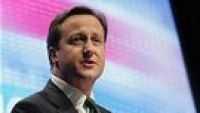
In its preview of Cameron's speech, the Sun highlights the Tory leader saying that "...in a Conservative Britain, if you put in the effort to bring in a wage, you will be better off."  The implicit reference, here, is to Labour's combined tax and benefit system, which frequently acts to disincentivise extra work.  All too often, effort isn't met by reward - so what's the point? As the Centre for Social Justice's recent Dynamic Britain report showed, this effect impinges, above all, on the least well-off in society - and with tragic consequences.  It's all to do with effective marginal tax rates, which measure what proportion of a small rise in earnings would be lost to both tax and the withdrawal of benefits.

The radical plans the Tories are keeping under wraps

From our UK edition

So what is George Osborne really up to? If Coffee Housers are feeling depressed at the paucity of ambition in his speech (his ‘cuts’ package  would shave just 1% off government spending) then take heart. In the magazine today, James Forsyth lists the far-more-radical changes that are being discussed by the Cameroons – but kept under wraps. The full piece is here, and the main points are…   1)   Corporation tax cuts. No mention was made of a growth agenda in the speech, but there are plans to cut Britain’s company tax rates quite aggressively with Ireland’s 12.5% as a lodestar.

Who has the time to watch a weekday conference speech?

From our UK edition

The activists here are already queuing up for David Cameron’s speech. But very few people outside of this conference centre are going to watch the whole speech: how many people have an hour free at 2.15pm on a weekday?   If we want conferences speeches to be watched by more than conference delegates, then they need to be on in the evenings or on the weekend. Just imagine how many more people would watch Cameron, or would have watched Brown last week, if the speech started at 8pm. US conventions take place mostly in prime time, with the networks being strong-armed into covering them for at least an hour a night. In 2008, more than 40 million people — about 20 percent of the US electorate — watched Obama and McCain’s acceptance speeches.

Here lies the General Well-being agenda

From our UK edition

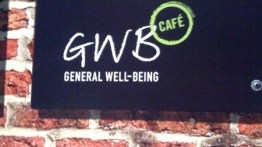
Remember David Cameron's General Well-being agenda? You may not. It was pretty nebulous stuff, which he deployed during the decontamination overdrive early in his leadership. We haven't heard much about it since - probably as Cameron & Co. realised it could fuel the worst Notting Hill caricatures of them, at a time when the economy was going south and thousands of people are losing their jobs. Which is why it was striking to see "General Well-being" exumed for this Manchester conference. Yes, the press centre cafe is called the GWB cafe (picture below). Kinda tells you all you need to know about that particular Cameroonian non-starter. P.S.

Contrasting Cameron and Osborne

From our UK edition

Judging by the Independent's preview, as well as the quotes that ConHome have managed to get their hands on, Cameron is going to do Hope 'n' Change in his speech today.  Yes, he talks about a "steep climb ahead," but he adds that "the view from the summit will be worth it." This sounds like the growth and recovery element which many thought was lacking from the Osborne speech.  As it happens, there was actually a growth section in a near-to-final draft of the Shadow Chancellor's address, but it was taken out over concerns about timing. I suspect the double act - Osborne selling pain, with Cameron selling hope - will work out quite nicely for the Tories, and will become their template in the run-up to the election.

Osborne is the key to Cameron’s success

From our UK edition

Initially, I thought George Osborne’s conference speech was unremarkable. Osborne, the second coming of Stafford Cripps, painted the grimmest picture since The Scream. He was relentless, remorseless. in fact, the argument that the Tories ‘relish cuts’ and are out of touch almost seemed plausible, as Osborne, the heir to an Anglo-Irish baronetcy with a flair for interior design, told the nation that “we’re all in this together”.  But in the wider tactical context of securing a Conservative victory, it was a brilliant speech. Writing in the Independent, Matthew Norman concludes: ‘Adorable he will never be, and as an orator he makes the Speaking Clock sound like Cicero, but undeniably he is extremely clever.

Defensive moves

From our UK edition

So, General Dannatt is to be a Tory Peer. This worries me greatly. On balance, General Dannatt did a good job as Army chief. Not a great job, but a good one. His interventions boosted the morale of frontline troops and his concern for the care of soldiers, especially the wounded, was important. Conversely, many defense analysts thought he was too cautious on military reform, blocking the Army’s transformation into an effective counter-insurgency force and opposing stop gap procurement in case it compromised future acquisition projects. But the real concerns over General Dannatt’s ennoblement are different. General Dannatt should have given his sucecssor a clear run at the job. He should have had the decency showed him by his predecessor, Mike Jackson.

Activists for Dave

From our UK edition

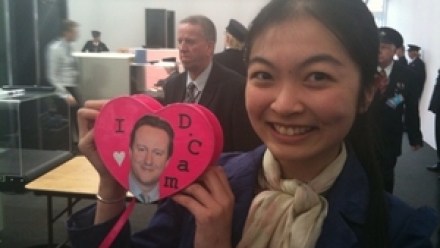
I don’t know this lady’s name, but she is a genuine example of an enthused Tory grassroots activist. She was queuing behind me in security and I noticed her bag. “It’s my own kinda Blue Peter job,” she said. What inspired her to make the design? “Because my party was going nowhere for eight years, then David came along and changed that. When your party recovers, and you know your country will, then that’s something to be pleased about.” So pleased she made this handbag. Surely Smythsons should buy the design?

The demise of the speed camera

From our UK edition

One of the more interesting influences on the Conservatives is behavioural economics. The book ‘Nudge’ informs quite a lot of their thinking and one of its author Richard Thaler is now an official advisor to the party; his co-author is heading up regulatory policy for Obama. One of the major British evangelists for behavioural economics and its insight is The Spectator’s own Wiki Man, Rory Sutherland. He drew this magazine’s attention to Thaler and Nudge long before people in the Westminster Village had cottoned onto it.

Pre-Freudian slip

From our UK edition

Theresa May is chairing a discussion with a set of Conservative PPCs on 'job clubs', as part of this afternoon's focus on welfare reform.  She kicks off asking one of the Tory PPCs on the panel, Maggie Throup, to talk about job clubs in her area: "So, Maggie, tell us about...". Problem is, May addresses her remarks at the wrong PPC, Suzy Davis. Mistake realised, she wheels round and puts the same question to the actual Maggie Throup.  Not a good start. It's picked up since. The welfare adviser David Freud, who jumped ship from Labour to the Tories, is now on stage. And he gets a cheer when he says "I've always been a Conservative.". This is a significant time for Freud.

Rolling in it

From our UK edition

Well, the Tories will be pleased.  According to Channel 4's Gary Gibbon, they've made a tidy £1.5 million profit from their party conference.  When you consider how much must have been spent in Manchester - it's a very slick operation with banners, screens and corporate hospitalities everywhere - this news is yet another sign (were one needed) of the Tories' momentum.

Expect more “fine print” on spending soon

From our UK edition

Sifting through this morning's papers, you'd say that it's mission accomplished for George Osborne's speech yesterday. The realigned Sun demonstrates how much it has got behind the Tories, by giving the Shadow Chancellor an absolutely glowing report ("the Shadow Chancellor came of age"). He also receives good-to-medium notices in the Times, the FT and the Independent, while the Guardian is more mixed, but hardly damning. In the Mail, Quentin Letts writes that "Yesterday the Boy became Boss George". And so on and so on. You can see where they're all coming from.  As I wrote yesterday, there's much that was impressive in Osborne's speech. But there were also some weaknesses on the policy side of things.

Cameron needs to tackle the expenses scandal head on

From our UK edition

The current consensus issue in British politics is not to discuss the expenses scandal. The so-called ‘New politics’ was a brief footnote in both Brown’s and Clegg’s conference speeches, but public anger remains palpable. Daniel Finkelstein points out that the Tories stand to lose the most from sidelining the issue: continuity undoes their claim that they stand for wholesale change. That is unquestionably true. Whilst the leadership prepare us for the age of austerity, visions of duck houses, moats and servants’ wings pervade the public consciousness, even though those responsible have been disciplined.

Aside from saving Gordon Brown, twice, what’s Peter Mandelson ever done for us?

From our UK edition

For such a Big Beast, Ken Clarke’s speech this afternoon was very pedestrian. Admittedly, the subject matter, cutting red tape for small businesses, was unlikely to inspire a carnival of Churchillian wit and verve. However, Clarke did provide activists with a whiff of red of meat: he trashed Mandelson’s come back. "Yes, I agree with him - responsibly and in the national interest - agree with him on the future of Royal Mail.  We agreed with him when he took his Bill through the House of Lords.  And what happened?  That weak and dithering Prime Minister – Gordon Brown - has stopped him bringing his Bill into the House of Commons.

Dannatt may be overstating his case, but the government is being disingenuous

From our UK edition

General Sir Richard Dannatt issues a vociferous condemnation of the government’s commitment to British efforts in Afghanistan in the print edition of today’s Sun. Dannatt asserts that Gordon Brown vetoed increasing the British deployment by 2,000 troops, against the advice of military chiefs. He told the paper: “The military advice has been for an uplift since the beginning of 2009. If the military says we need more troops and we can supply them, then frankly they should take that advice and deploy up to the level we recommend. “If it means finding more resources and putting more energy in, let’s do it. If you’re going to conduct an operation, you’re doing it for one reason – to succeed.

Gotcha!

From our UK edition

When David Cameron turned up to The Spectator’s party last night, I thought it only decent to ply him with a glass of fizz. After all, a magazine whose motto is “champagne for the brain” can hardly begrudge champagne for the guests. And what’s the harm, I thought – there were no photographers at the party. Right? Wrong. The picture is now on the front page of the Evening Standard – with yours truly beside Cameron having just plonked it in his hand a few seconds earlier. I promise, it wasn’t a set-up: we thought we’d cleared the place of photographers.

Nothing exceptional, but a job well done by Osborne

From our UK edition

They stopped letting people into the conference hall for George Osborne's speech long before the Shadow Chancellor took to the platform - it was packed, not even standing room.  There was certainly an anticipatory buzz among Tory supporters, particularly after some of the policy announcements trailed in the papers this morning.  One delegate assured me that "this is the speech when George will convince the nation that he's the man to deal with Brown's mess."  Everyone seemed pretty breathless. So did he pull it off?  Well, my immediate response is "yes and no".  Probably more "yes" than "no".  There was much that was impressive in the speech.  Osborne touched on all the right themes: debt, reform, compassionate conservatism, etc.