Uk politics

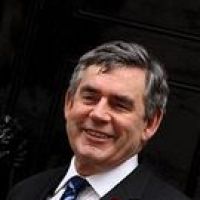
So where does this leave Brown?

Most people expected this morning's official GDP statistics to show that the economy has come out of recession.  But they didn't.  In fact, they had the economy shrinking by 0.4 percent in the third quarter of this year.  So the downturn continues – and it's the longest on record. We've always maintained on Coffee House that coming out of recession won't do much good for Brown.  But, obviously, staying stuck in one has far more dangerous implications for him (not to mention the country).  Obviously, the government won't be able to deploy the green shoots strategy now.  But with other major economies already out of recession, they'll struggle to deploy it in future.  You imagine the Tories will have a field day with this.

Euro Foreign Minister Miliband?

The Lisbon Treaty decrees that Europe must have a Foreign Minister. It is not clear exactly what the Secretary of State will do, but David Miliband is being widely tipped for the role. According to one diplomat quoted in the Times and the Guardian, Miliband has “good European credentials and a brilliant mind.” The minister made famous (rather unfairly) by banana-wielding and a penchant for Indian donkeys is undoubtedly pro-European: he is in favour of further integration and deeply opposed to Cameron’s euroscpetic Tories and their European allies: so he ticks all of Brussels’ boxes. But would he take the job? The Labour party’s Titantic predicament is now so advanced that the protagonists have given up reorganising the chairs on deck.

Tin pot Griffin fluffs his lines

Mobs of howling protestors outside the BBC. Police cordons being smashed by anti-fascists. News clips of upended students being dragged across the foyer of the TV Centre shouting, ‘Shame on you for defending fascism.’ It was chaotic, it was emotive, it was anarchic. But, ultimately, it was a marvellously British occasion. Thanks to the BNP, we were given proof tonight of the rag-bag unity of our society. No one is quite sure how Nazi bogeyman Nick Griffin was smuggled into the Shepherds Bush studios for the recording of Question Time. The best evidence is that he stowed away in a lorry driven by an unsuspecting dupe who failed to check the back of his rig. When Griffin entered everyone was amazed that his suit was unsmeared by bunged eggs.

The laughter will have hurt Griffin

There's only one question that counts now that Question Time has been shown: did it do Nick Griffin and the BNP any good? It's a tough one to answer. To my eyes, at least, Griffin embarrassed himself in front of the cameras - he was given scant opportunity to gloss over his more unsavoury views; he looked terribly uncomfortable whenever the debate ran away from him; and the other panellists scored most of the major points. But we largely expected that anyway. Griffin was always going to come under heavy questioning, and he was never going to have many friends in the audience. Like Fraser, I fear that much of Griffin's job had been done before he appeared in front of the cameras.

EXCLUSIVE: What was said in Question Time

First question on the Second World War. Is it fair BNP hijacked Churchill? Straw says in the war Britain defeated a party based on race like the BNP. The BNP defines itself by race - that distinguishes it from every other party. All other parties have a moral compass. Nazism didn't and neither does the BNP. We only won the First and Second World War because we were joined by millions of black and Asian people. Applause. Griffin then counters by saying Churchill would have been in BNP. He described Churchill as Islamaphobic by today's standards. "The government is giving up on British freedom," said Griffin. An audience member says the BNP are an absolute disgrace. For just one minute think of the benefits black people people have brought to the UK. "You are trying to poison politics.

Griffin has achieved exactly what he hoped to

As far as the BNP is concerned, Nick Griffin has already won this Question Time debate. It’s not about whether he does badly or well – he simply wins from the publicity. He’s been on Channel Four news, got an interview in today’s Times, all will be splashed all across the tabloids tomorrow – and that’s before we consider the Question Time slot itself. Then, he will win because, as we emphasise in the leader of this week’s magazine, millions watch Question Time. For every 50 people who think he disgraced himself, there may be only one person who thinks he might have a point. But, for Griffin, that will be enough. To compound the issue, the panel are pitching themselves at the different audiences.

Tightening immigration should constitute part of compassionate Conservatism

The mainstream parties’ collective silence on immigration has, undoubtedly, contributed to the BNP’s growing popularity. Nicholas Soames and Frank Field have penned such an argument in today’s Telegraph. David Cameron’s modernisation of the Conservative Party came at the expense of even mentioning immigration. Yesterday’s mind-boggling population projection should curtail the era of uncontrolled immigration: Britain cannot sustain such human and social pressure in the age of austerity. The Tory leadership might view this reality with trepidation. They should not. Limiting immigration would alleviate poverty; it equates exactly with the Tories’ broad one nation philosophy.

The trailer for Nick Griffin’s Question Time performance

Is Nick Griffin's interview with the Times a sneak preview of what we can expect from him on Question Time tonight?  I rather suspect so.  His aim in it is not only to project a reasonable front – by glossing over awkward facts (his conviction for inciting racial hatred is described as "Orwellian"), and by making dubious comparisons (he likens the BNP to opposition movements in Zimbabwe) – but also to provoke and rile his political opponents.  The BNP leader sarcastically thanks "the political class and their allies for being so stupid" as to allow his appearance on QT. But the problem for Griffin is whether he can maintain the charade for the show's entire running length.

The case for cutting middle class benefits

Great work by my former colleagues at the think tank Reform today. In their latest report, they've figured out that the cost of "middle class benefits" to the Exchequer is some £31 billion. In other words, £31 billion worth of maternity pay, child benefits, fuel allowance and other transfers are dished out to middle income earners each year - that's around a quarter of all spending on benefits. Writing in the Times, Andrew Haldenby says that these middle class benefits should be an obvious candidate for cuts. It's hard to disagree. If we're all in this together, then it seems slightly perverse that money is being given out to people who - in many cases - don't strictly need it.

Should MPs be able to employ their relatives?

The 1922 committee of Tory MPs is meeting now and the word is that there will be a concerted push to defend the right of MPs to employ their relatives; something that MPs on all sides fear the Kelly review will try to ban. In a Caesar’s wife must be above suspicion way, it is easy to say that MPs shouldn’t be able to employ family members. But there is no doubt that there are a lot of relatives, and spouses especially, who are working extremely hard for their salary. Given the hours MPs work and the fact that they have to be in two places, one can see why so many favour this arrangement. A possible compromise being kicked about here at Westminster is that MPs might be allowed to employ one relative each. This strikes me as a sensible move.

Postal strike to go ahead

The Communication Workers Union has just confirmed that there will be a national postal strike tomorrow and on Friday, effective as of midnight tonight.  From a purely political perspective, this largely vindicates David Cameron's decision to major on the strikes during PMQs earlier.  You imagine that the story will dominate news broadcasts later, and the Tory leader can expect to have some of his attacks on Brown inserted into the coverage.

They did it their way

One argument against Sir Thomas Legg's repayment requests is that many are founded on inaccurate information. Norman Baker was charged for gardening expenses despite not having claimed any. Today, Sir Thomas has had to apologise for overcharging Ken Clarke by more than £4,000, and he has had to state that John Mann MP will not have to repay any money. It’s all a bit of a muddle. First, there was the retrospective repayments fiasco. Then the Leader of the House made it quite clear that she had no idea what would happen to MPs who did not repay their expenses. And now there is this godsend for the anti-Leggites. MPs are under enormous pressure to repay, but the increasingly chaotic Legg Commission offers them a possible get of jail free card.

Nothing doing | 21 October 2009

A poor showing by Dave today. All he managed was a spot of outmoded Labour-bashing and a biscuit joke that didn’t exactly take the biscuit. He attacked the PM over the postal strike and quoted a minister of state admitting that union militants had been emboldened by the government’s indecision over part-privatisation. ‘This trade union,’ said Cameron, ‘can sense weakness and they see weakness in this prime minister and this government.’ Brown got huffy – but not very. He accused Cameron of cynically trying to drag the strike ‘into the political arena,’ It’s already there, said Cameron, ‘not least because the communications workers pay half his bills.

Brown’s Northern Ireland settlement is to be commended

Gordon Brown has just told the House of Commons that he is offering Stormont a financial settlement to increase funds for policing and judicial administration in Northern Ireland. Crucially, future emergency security costs in future will be met by the Treasury, and elements of the complicated settlement will stand until at least 2014.  Northern Ireland has been badly hit by the recession. Power sharing became increasingly fraught as arguments escalated over budget allocations and the timing of judicial devolution. It is not an exaggeration to suggest that the recent escalation of violence might be related to rising unemployment and open political tension.

Back pain, the unions and social-networking

So how do you explain the postal strike when it makes little-to-no business sense whatsoever?  That's the question which Danny Finkelstein sets about tackling in his superb column today.  I won't set out his full answer here - you should read the full article for that - but suffice to say that it involves back pain in East Germany and the latest research into social-networking.  Overall, it makes a very persuasive case, and one which has clear implications for policymakers.  As Danny concludes: "If the Royal Mail dispute were about individual postal workers and their economic interest, it would be easy enough to solve. It could be ended in a conciliatory way with most people better off. Unfortunately things aren’t that simple.

In Griffin’s world, squaddies will have to follow their Generals to Nuremberg

Well, as Britain’s senior Generals goosestep their way to Nuremberg, plucky squaddies and veterans have leapt to their defence. In the video below, provided by Nothing British, Andy McNab plays loyal Fritz to General Dannatt’s Keitel. And these veterans of the Second World War, the Malaya campaign, the Falklands war and current conflicts, will feel the hangman’s noose on their necks also. The BNP has its roots in ‘Eurofacist’ movements that aligned Aryanism with hardline, regressive socialism, and believed that change would be effected by regenerative violence, not mainstream politics. The BNP remain national socialists and racial supremacists - opposed to all non-white British nationalities and ethnicities, not merely Islamic extremism.