Uk politics

Tory MP: I was wrong to vote for May’s Brexit deal

From our UK edition

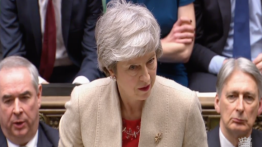
There was a glimmer of hope for Theresa May and her Brexit deal on Friday when some Tory eurosceptics decided to vote for the withdrawal agreement after all. Richard Drax was one of them. But now he says he regrets doing so. He told the Commons this afternoon: I do feel I have not been true to myself. Although doing what I believed to be in the country's best interests at that moment in time, I quickly realised that I should not have voted with the government on Friday afternoon. What I should have done – and did not – was to trust my instincts and those of the British people. I made the wrong call on Friday. If the Prime Minister's Brexit deal is ever going to pass, she needs to win over Tory MPs, not lose them. Could this finally be game over for the withdrawal agreement?

What Jon Snow meant when he talked about ‘white people’ | 1 April 2019

From our UK edition

Jon Snow has had a lot of flak for his ‘white people’ comment at the tail end of his report from the Leave Means Leave march on Friday. But in my view he hasn’t had enough. Because it seems pretty clear to me that he wasn’t simply disparaging whiteness and openly commenting on the racial make-up of a protest, which would have been bad enough — since when was it the job of newsreaders to point out people’s skin colour? No, he was also being classist, a bit of a snob.

A Customs Union isn’t the way out of the Brexit mess

From our UK edition

For some of those desperate for Britain to stay put in the EU, the Customs Union option functions as a handy obsession. Ministers, too, appear to be rallying behind this as a solution to the Brexit crisis, amid reports that dozens of senior Tories could vote for the UK to stay in a customs union in tonight's vote. They are making a big mistake. There is no substantive case for irrevocably and permanently subjecting Britain to the European Union’s Customs Union. Rather than attempt to demonstrate how being tied to the Customs Union furthers the national interest, the best its proponents can do is pitch it as a tactical compromise.

Will Labour MPs back a bid to revoke Article 50?

From our UK edition

Labour has not tabled a motion for today’s indicative votes on a way through the Brexit mess – which feels like an important moment, perhaps because it has recognised that its proprietary version of Brexit is dead and its role instead is to work with all MPs to identify a deliverable alternative (which could be no Brexit at all) to the Prime Minister’s thrice rejected plan. Presumably the thrust of Labour’s effort in the hours ahead will be to secure support for the Kyle/Wilson call for a “confirmatory” referendum (a referendum on any Brexit deal approved by parliament). But even so, the prospect of a majority of MPs backing a people’s vote today is slim.

Who would lead the Tories into a snap election?

From our UK edition

After Theresa May's deal was defeated in the House of Commons for a third time, there's heightened speculation that we could now be heading for a snap election. With the Withdrawal Agreement defeated by 58 votes, even if No. 10 tries to put it to another vote it's hard to see how May would manage the numbers. This is why talk has turned to an early election. In the immediate aftermath of that result, both Jeremy Corbyn and the SNP's Ian Blackford called for one. Meanwhile, Theresa May gave the biggest hint yet that she could go for one – 'I fear we are reaching the limits of this process in this House'. If MPs fail to get behind May's plan, they could use the indicative votes next week to push for a softer Brexit in the form of a Norway style model or a permanent customs union.

A no-deal Brexit or general election are now likelier than ever

From our UK edition

Maybe I am simply in the thrall of the powerful emotions manifested by MPs in their debate on Friday, but their rejection of the Withdrawal Agreement just now feels the most significant event to date on the long and tortuous road to Brexit or revocation. Because the EU just a week ago bent its rules to accommodate the Prime Minister's request for a modest Brexit delay, and also tried to make it easier for her to ratify the deal by saying only the divorce part – the Withdrawal Agreement – would need MPs' approval to secure a postponed Brexit date of May 22 for leaving the EU. Parliament has thrown the compromise offered by the EU's 27 leaders back in their faces.

Theresa May’s Brexit deal rejected again by Parliament

From our UK edition

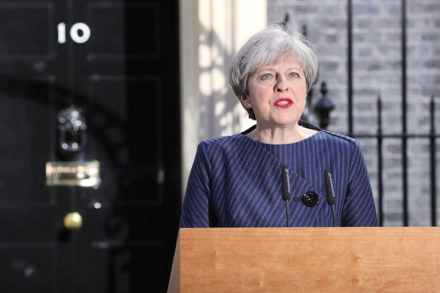
Theresa May's Brexit deal has been voted down for a third time by MPs. Parliament rejected the Prime Minister's withdrawal agreement by 344 to 286 votes, a margin of 58. May said it is a 'matter of profound regret that once again we have been unable to support leaving the EU in an orderly manner'. The PM also hinted at the possibility of an early general election: 'I fear we are reaching the limits of the process in this House,' she told MPs. The EU reacted to May's third defeat in Parliament by calling an emergency Brexit summit on April 10, just days before Britain could leave the EU under a no-deal scenario.

Full list: the Tory MPs who have switched to backing May’s deal

From our UK edition

Despite suffering two historic losses in the House of Commons, Theresa May will bring her Brexit deal back for a third time today, after separating the withdrawal agreement from the political declaration. At the last vote on her deal, the Prime Minister lost by a majority of 149, which included 75 Tory rebels and 10 DUP MPs. Ahead of MV3, Coffee House will be keeping track of the Tory rebels who voted against May's deal last time, but have now publicly announced that they are supporting it. To have any chance of winning, May will need the support of the DUP (who have said they oppose the deal) and roughly the same amount of Labour votes as there are Tory rebels.

The big problem with the ‘Revoke Article 50’ petition

From our UK edition

Writing a piece on why the ‘Revoke Article 50’ petition is a waste of time, for an audience consisting of the student body of the fourth most Remain city in the country (Oxford), is not the easiest task. So I’ll try to avoid making the arguments that the petition-signatories amongst you might be expecting me to make: I could frame my argument around the fact that some of the signatures appear to have come from all over the globe – including from North Korea – and that, therefore, this petition is broken and should have no bearing over our politics: this is why we register to vote and then do so at a local polling station. But I won’t.

Nick Boles is a rare hero in a Parliament full of cowards

From our UK edition

Failure. A failure of politics, a failure of courage. MPs have failed over Brexit, time and time again. Worse, many MPs fail to realise how badly they’re failing, the harm they are doing.  This isn’t true of everyone in the Commons. There are still some heroes. Nick Boles is one.  His cross-party Common Market 2.0 plan – a Norwegian model of Brexit – is not yet dead but has been grievously wounded. It was attacked from both sides. The hard Brexiteers said it wasn’t hard enough, even though it’s what many of them promised or wanted before the referendum.

David Lidington’s new nickname

From our UK edition

David Lidington found himself briefly trending on Twitter over the weekend after reports began to circulate that May's de facto deputy was being talked up as a caretaker prime minister. The idea was that Lidington – a former Europe minister who voted Remain – could step in for May and act as a unifying leader who could reach some form of Brexit consensus in the House of Commons – later standing aside for a full blown leadership contest to take place. However, owing to the fact that Brexiteers suspected this form of Brexit consensus would involve reaching across the House and pivoting to a soft Brexit, the idea quickly fell flat. Lidington even took the step of using an interview to rule himself out.

Theresa May’s departure won’t help the Brexiteers’ cause

From our UK edition

Faced with the prospect of a softer Brexit, or no Brexit at all, Jacob Rees-Mogg is considering holding his nose and voting for Theresa May's deal. Boris Johnson also appears to be considering doing the same. This shift among Tory backbenchers towards signing up to the deal seems to be contingent on May setting a date for her departure. The idea here is that with May gone, a new Prime Minister will make a big difference once the Withdrawal Agreement has passed the House of Commons. May's successor, the thinking goes, will take a much tougher stance in the next round of negotiations with the EU. In doing so, they will be able to steer Britain on course towards a ‘real Brexit’. But take it from me: this idea is an illusion.

MPs reject every Brexit option – what next?

From our UK edition

When a cross party group of MPs managed to seize control of the Commons and win backing for a plan to hold indicative votes on Brexit options, the hope was that this would show what type of Brexit – or no Brexit – there was a majority for in Parliament. In the end, things didn't work out exactly as planned. MPs voted on eight proposed options – from a permanent customs union to a second referendum – but not one commanded a majority. Instead, the exercise appeared to show that there is currently no majority for any form of Brexit. The option which won the most votes was a proposal for a permanent customs union with the EU – which was beaten by 272 to 264 votes.

105 MPs vote against changing Brexit date in bad omen for May

From our UK edition

If Theresa May wants an indication of how well things are going for a third meaningful vote, she could do worse than to look at the result of a vote on a statutory instrument in the Commons tonight. MPs have just approved the official piece of legislation that acknowledges Britain is no longer leaving the European Union on 29 March - but with a substantial rebellion. There were 105 MPs who voted against this change of date, with impassioned speeches from Tory Brexiteers in the Commons arguing against the move, even though it had already been approved in international law. Their line was that Britain should just leave now, and that the Remain majority in Parliament has shaped Brexit in a way the Leave campaign could never have envisaged.

The DUP delivers a big blow to Theresa May’s Brexit deal hopes

From our UK edition

The DUP have just delivered a big blow to Number 10’s strategy for winning meaningful vote 3. They have announced that they won’t vote for it because the changes they wanted to the backstop have not been delivered. Without the DUP, it is very hard – if not impossible – to see how Theresa May can win any meaningful vote. So, where do the government go from here? Well, I suspect there’ll be a mad dash in the next 24 hours to see what further reassurances can be provided to the DUP on the Union. I wonder if there might be legislation to ensure the Northern Ireland First Minister’s role on the joint committee, for instance. But there is a fundamental difference between the DUP and the Tory Brexit rebels.

European Research Group descends into hugging fiesta as members insist they won’t back May’s deal

From our UK edition

Despite a number of MPs announcing that they will back Theresa May's Brexit now that she has said she will leave within weeks of it passing, senior members of the European Research Group have come out fighting this evening to insist the deal still doesn't have the votes. Steve Baker received what one source described as an 'enormous standing ovation'. The source said: 'His voice was cracking with emotion, so much so that at the end he was hugged by Jacob [Rees-Mogg] and others at the top table. We are not a hugging group.' Baker's speech included the following lines: 'What is our liberty for if not to govern ourselves?' 'Like all of you I have wrestled with my conscience about what to do.' 'I could tear this place down and bulldoze it into the river.

Boris backs May’s deal – who is next?

From our UK edition

Theresa May’s pledge to go before the second stage of the Brexit negotiation if her deal passes, is already reaping some rewards. Boris Johnson has told a meeting of the ERG that he is now backing the deal. His argument is that what is going on in Parliament means there is a real chance of losing Brexit and that a change of personnel will lead to a change of policy in stage two. This addresses his concern that Theresa May would interpret the withdrawal agreement passing as a license to go and negotiate a Chequers-style agreement. Boris Johnson isn’t the only big beast shifting tonight. Iain Duncan Smith, who played a crucial role in persuading May to make this offer, has also said he will now back it. Charlie Elphicke, the secretary of the ERG, has also swung in.