Uk politics

What to do with all that knowledge on welfare

From our UK edition

Is Frank Field back? The Labour MP has spent much of his life talking about the poor. Judging by reports today, he might be offered a job chairing a commission on child poverty. This is good news but, as Mr Field has already said, there is not much point in him debating the finer points of poverty definitions. He would need to be given remit to suggest policy. What should those suggestions be? First, he should argue that we need to be a lot less self-indulgent about how we think about child poverty. It may be great to think of ourselves as tackling a major social ill, but the past government’s approach was not nearly as successful as it or its supporters liked to think.

David Miliband sets out the fraternal dividing lines

From our UK edition

David Miliband is one of those politicians who speeches improve when you read them on paper, his delivery still distracts more than it adds. If the Labour party is going to pick the Miliband who is the more natural platform speaker then David hasn’t got much of a chance. But if they want the Miliband who is more prepared to think about why Labour really lost then David might well be their man. On Saturday, Ed Miliband talked about how Iraq, a ‘casualness’ about civil liberties and a failure to regulate the banks properly had cost Labour the election. This might be Ed Miliband’s genuine analysis but it is also what Labour members want to hear: Labour lost because it wasn’t Labour enough.

Frank Field would complete the Tories’ welfare reform jigsaw

From our UK edition

So now the coalition stretches as far as Labour, with the news that Frank Field is being lined up as an anti-poverty advisor for the government.  In itself, this is an encouraging development: Field is one of decent men of Westminster – committed, informed and passionate.  But when you look at it beside the Tories' other appointments in this area, then it really becomes exciting.  Field, IDS, Grayling and Lord Freud – all are deeply knowledgable about the welfare reform agenda, to the point where it's difficult to think of many more impressive teams in recent political history.  So perhaps there is hope for this most difficult of policy areas, after all.

Osborne rolls his sleeves up

From our UK edition

Just in case you didn't see the front cover of the Guardian, let me tell you: it's a big day for George Osborne.  This, after all, is the day when he finally launches the Office for Budget Responsibility's audit of the public finances – zero hour for the age of austerity.  Accordingly, then, Osborne has given his first major newspaper interview since becoming Chancellor.  Here, from that, is a quartet of observations for you: Office for Budget Responsibility.  The more I hear about it, the more I like this Office for Budget Responsibility.  Sure, it's another quango of sorts.

Osborne’s Big Choice: how much of our debt to reveal

From our UK edition

The cover of today's Sunday Times spells out what we all suspected anyway: that the Labour government left behind acre upon acre of scorched earth for the Tories to contend with.  There's the £13 billion contract for tanker aircraft, the £1.2 billion "e-borders" IT project, a £420 million spend on schools, and so on – most of them put in place just before the election.  As James said earlier, Sir Alan Budd's audit of the public finances is likely to show that things are much worse than the last Budget dared admit. All this throws open the wider question of our debt position.  Even by Labour's measures, our national debt is likely to rise once all the hidden spending and exaggerated tax receipts are taken into account.

The life of a Tory MP

From our UK edition

A Norwegian MP once told me that every time he thought life on the opposition benches was terrible he would think about life on the government backbenches – and realise how much he enjoyed his job. Life as a government-supporting backbench MP is difficult; if you are not willing to cap your ambition, you have to support the government, keep criticism muted and hope for elevation to ministerial rank in any future reshuffle. It is doubly difficult for the hard-working Tory MPs who lost out on government jobs because of the need to find space for Lib Dems, rather than because of their personal abilities. I can think of at least half a dozen MPs who would have made excellent ministers. What should they do now?

Why Labour is still within striking distance

From our UK edition

Things are looking good for Cameron – his coalition has 60 percent approval rating, he has managed to persuade the Lib Dems to support what always was a liberal Tory agenda. There is plenty for Conservatives to celebrate, especially on welfare reform and education. But, still, things could be a lot worse for the Labour Party than they are now. I say in my News of the World column today that, rather than being “out for a generation” as Tory strategists were hoping only a month ago, Labour remains (amazingly) in striking distance of winning the next election. And there is no telling when that election will be. Clegg and Cameron say their pact will last until 2015 – but only a tenth of voters believe it.

Prime Minister Cameron’s first TV interview

From our UK edition

David Cameron’s first broadcast interview from Downing Street contained two significant pieces of news. First, George Osborne will commission an independent audit of the public finances and state spending on Monday. I suspect that this audit will reveal that things are even worse than the official figures suggest. The political purpose of this audit will be to provide cover for the necessary cuts, to show that they are necessary because of Labour’s economic mismanagement. I also expect that the new Office of Budgetary Responsibility will provide a new, more cautious set of economic forecasts. The other piece of news was Cameron confirming that the vote on the 55 percent clause will be whipped.

A lesson for all new MPs

From our UK edition

Ed Miliband has given a surprisingly good speech this morning: free from all the junk language that his older brother has a weakness for. But he raises an interesting question: Why did Gisela Stuart win in Birmingham Edgbaston? Why did Karen Buck win Westminster North? Why did Andy Slaughter win in Hammersmith? Might it have been because all three of these politicians were, at one point, thorns in the flesh of their government? That they all at times campaigned, on principle, against the Labour government? As I said in The Times yesterday, the German-born Ms Stuart was a committed foe of the EU Constitution - who denounced it, and the Lisbon Treaty, as loudly as she could.

The equality dilemma

From our UK edition

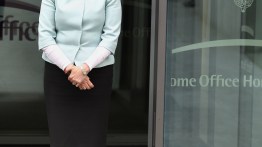
Spare a thought for poor Theresa May. Judging by the reaction so far, she now faces the unenviable task of shouldering almost everyone’s preconceptions about Tory women in government – with Caroline Spelman, Baroness Warsi and the lower-profile Cheryl Gillan for back-up. She will no doubt continue to disappoint feminists and irritate reactionaries, and she will do so while responsible for the notoriously unwieldy Home Office, which has rapidly taken over from the Department of Health as the ministry where political careers go to die. Representation in politics does matter. It is not unreasonable to claim, as Katharine Viner did in Thursday’s Guardian, that “democracies simply don't work unless they represent those they govern”.

Building on the coalition’s good start

From our UK edition

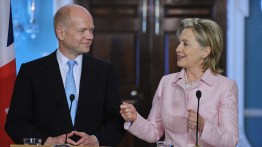
A week in, and I am loving the Conservative-led government. The new line-up of Secretaries of State is very impressive and, though a few solid Tory politicians missed out on Cabinet posts, the inclusion of the Liberal Democrat bench has swelled the government’s talent quota. David Cameron has infused No 10 with energy and purpose. You can just feel the umpf. As the former MP John Gummer said, there is now “smile on the face of Britain”. Foreign Secretary William Hague’s trip to the US set the right tone by calling the UK-US link “an unbreakable alliance”.

Ed Balls follows Ed Miliband’s lead

From our UK edition

So fraternal rivalry it is, then, as Ed Miliband prepares to announce his leadership bid at a Fabian Society conference today. And, reading his interview with the Guardian, it's clear that Ed Balls is soon going to follow suit. Two Eds, two leadership bids, and much shared rhetoric about "listening" to voters. But the similarities don't end there. The passage where Ed Balls argues in favour of "progressive universalism" – a welfare system which stretches to the middle classes – echoes an interview that Ed Miliband gave to the Guardian in March. Both claim that it's important to make sure tax credits and other benefits reach those higher up the income scale. And both claim that Tory plans to trim back the welfare state are damaging to this goal.

Stephen Timms MP stabbed

From our UK edition

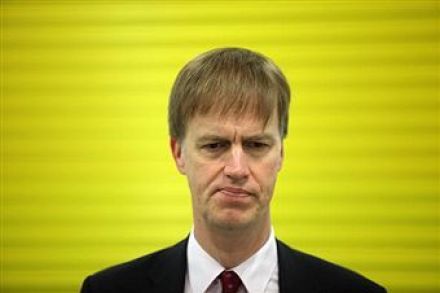
The Sun is reporting that former finance minister Stephen Timms has been stabbed during a surgery at his constituency office in East Ham. A 21 year-old woman is being detained. Timms has been taken to hospital. His condition is not thought to be life-threatening. More to follow.

Who will be Labour’s cuts candidate?

From our UK edition

As Guido and Jim Pickard have pointed out, Liam Byrne's article in the Guardian today reads like the launch of a leadership bid.  But if it is, then it's not a well-judged one.  Amid some sensible points about Labour's demise, there's too much "if we'd have done what I said" bravado which, I imagine, won't go down well with the party faithful right now.  A bit like pouring vinegar on an open wound. But it's worth considering another angle to a Byrne leadership bid.  A couple of weeks ago, I wondered whether Brown's departure would also take Labour away from the "investment vs cuts" dividing line of the past decade, towards a more responsible contribution to the fiscal debate.

When will the government be mugged by reality?

From our UK edition

One of the most interesting questions is whether the Tories and the Lib Dems will be able to move from the talking points to the action points. Besides Ken Clarke, Francis Maude and William Hague none of the ministers have any previous government experience. They know government from the outside, from the sidelines, from parliamentary questions but not from the inside. It will be really interesting to see how the Cameron-Clegg government copes not just with the issues where they can set the agenda - like police reform - but where the Goverment is mugged daily by reality - like Pakistan or Yemen. I suspect they will find Labour acted not so much out of incompetence but in desperation. They will also find that because a government wills something does not make it so.

Why fraternal rivalry will be good for Labour

From our UK edition

With the Sun reporting that Ed Miliband is going to stand for the Labour leadership, it's probably a good time to dig out Anne McElvoy's profile of the Miliband brothers for the Sunday Times last month. To my mind, its opening neatly encapsulates the choice between the wonkish one and the slighty-less-wonkish one that Labour may have to make: "When David and Ed Miliband were teenagers, their north London household rang to the chatter of some of the most prominent left-wing names of the era: Tony Benn, Tariq Ali, the ANC leader Joe Slovo and the late Michael Foot. David, one regular guest recalls, would sit 'absorbing it all' and asking interested questions of the grandees.

Government, Russian-style

From our UK edition

Правительство, в русском стиле Britain is being governed by a duumvirate. Britons may not understand how two-headed government works; but Russians should have no trouble at all. They have long been accustomed to a two-headed form of government. Perhaps at the next UK-Russian summit, the quartet of Cameron, Clegg, Putin and Medvedev can swap tips. Clegg’s importance to the Conservative-Liberal government will transform the previously honorific role of deputy Prime Minister. He will retain the right to fire Liberal Democrat ministers, if not directly then by threatening to remove their party whip.

In the foothills of Brown’s debt mountain

From our UK edition

After the sunshine of the Downing St rose garden, the gloom of the public finances. This morning's newspapers are full of stories about the tax hikes and spending cuts that our coalition government is looking to introduce. The Sun and the Times dwell on yesterday's forecast for a rise in VAT. The Guardian outlines possible cuts to middle-class benefits. And there's plenty more besides. Two articles, though, are particularly indicative of the tensions that the government will face.  Interviewed in the Sun, David Cameron has to go on the defensive about tax rises; insisting that "The Conservative party is still a low-tax party, a tax-cutting party – and that's in the agreement.