Uk politics

Mind the culture gap

From our UK edition

Danny Finkelstein’s column this morning is one of the most important things to have been written since the coalition was formed. Danny makes the point that the coalition has no ideas infrastructure in place. There’s nowhere for it to go to get new ideas. Think tanks will rush to fill this void. But as Danny notes, there will also have to be a cultural comfort with the other side. That there isn’t at the moment is demonstrated by the look on Tory MPs’ faces when you debate whether Nick Clegg should be invited to address Tory conference. One of the clever things that the coalition agreement has done is to make the main tax cut of this government a Lib Dem one. It is a reminder to the Tory party that the Lib Dems believe in freedom too.
Trouble averted or trouble ahead?

From our UK edition

"The biggest shake up of our democracy since 1832."  That's how Nick Clegg is describing the legislative package that he's announcing today.  And, even if that's pure bravado, there's certainly plenty of encouraging stuff in it.  Scrapping ID cards; restricting the storage of innocent people's DNA; and the government is even set to ask the public which laws they'd like to see repealed.  Sign me up. But it's one omission which is really ruffling Tory feathers today.  There will not, it seems, be an immediate move to supplant or even dilute the European Convention on Human Rights with a British Bill of Rights.  Speaking on Radio 4 this morning, Theresa May stressed that this is still a matter for negotiation within the coalition.

Is scorched earth politics now a thing of the past?

From our UK edition

Is the new government marching across scorched earth?  They certainly claim so, and now they seem to have the civil service backing them up.  Speaking to the Beeb this afternoon, Jonathan Baume, the leader of a civil service union, said that senior civil servants had written "letters of direction" to Labour ministers in concern at the spending decisions they took in the final months of their government.  As Baume put it: "It's not a decision that is taken very often to ask for such a letter of direction, which is why it is regarded something of a nuclear option. So when it happens it tends to be a big spending decision, where the civil service believes this is not the right thing to do." Good to know, even if only in retrospect.

Bercow remains Speaker, as Parliament reconvenes

From our UK edition

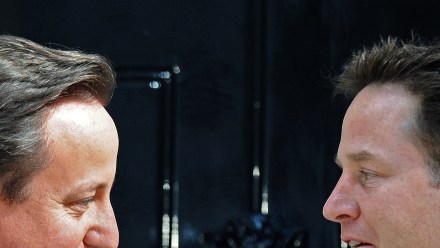
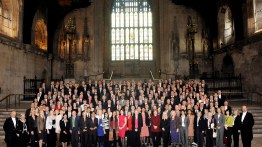
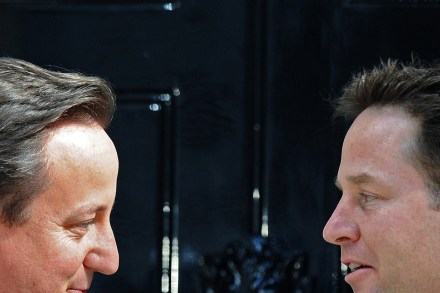
David Cameron sat alongside Nick Clegg on the government benches, with Harriet Harman two sword-lengths away as leader of the Opposition.  Even though the coalition has been around for a week now, it took the images from the Commons this afternoon to bring home just how extraordinary recent politics has been.  I mean, even the SNP's Angus Robertson got to make a speech now that the Lib Dems aren't a party of opposition.  This, plainly, is going to take some getting used to. They were all witness, today, to the re-election of John Bercow as Speaker.  In the end, it was easy for the Buckingham MP, as the "ayes" heavily outweighed a handful of "nos," and he was duly "dragged" to the Speaker's chair without a formal vote.

William Hague sets out the government’s Europe policy

From our UK edition

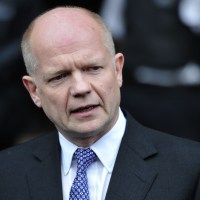
Those who hate the new Conservative-led government and those who love it seem to be united in one expectation: that Europe policy may be the coalition's downfall. David Lidington, the able new Europe minister, certainly has his work cut out for him. In the latest of the Brussels journal Europe's World, Foreign Secretary William Hague lays out the government's Europe policy, a policy best described as "pragmatic scepticism": "The EU is an institution of enormous importance to the United Kingdom and to British foreign policy.

Osborne’s inflationary problem

From our UK edition

Only a week into his new job, and George Osborne has already had to exchange letters with Mervyn King about inflation.  And here's why: the CPI index hit 3.7 percent in April, up from 3.4 percent in March.  Which is worrying enough when looked at in isolation – but when put alongside headline rates from other countries, it becomes damning.  In China, it's 2.8 percent.  In France, 1.9 percent.  In Germany, 1 percent.  In the Eurozone as a whole, 1.5 percent.  And in the US, 2.3 percent (for March, with the latest figures out tomorrow).  Indeed, thanks in part to quantitative easing and the removal of the VAT cut, inflation in the UK is now well ahead of almost any other major economy you could care to mention.

Nadine Dorries’ Kill Bercow email

From our UK edition

Via PoliticsHome. If anything sways hearts and minds, then I suspect it will be the name of Sir Menzies Campbell among the "able and willing" replacement candidates: Dear new Member, Many congratulations and welcome to the House. Please forgive me for this generic email being brief and to the point. The first job of the House today is to appoint the Speaker. The Father of the House, Sir Peter Tapsell, will present a motion to the House that John Bercow remains as Speaker. At this point, members will shout 'Aye', on this occasion there will also be members from all parties shouting 'No'.

We should judge Bercow at the end of this Parliament

From our UK edition

Well, the news that Sir Menzies Campbell is lobbying to be made Speaker – as revealed by Iain Dale last night – certainly adds a dash of spice to proceedings.  But I'd still expect John Bercow to comfortably survive any re-election vote today.  On paper, all the arithmetic works in his favour.  And there's a sense that many Tory backbenchers are holding their fire for bigger battles with the party leadership ahead. But does Bercow deserve to stay?  I must admit, I'm rather ambivalent about the issue: I didn't really want him as Speaker, but I didn't really not want him as Speaker either.  And after his solid enough first year in the Speaker's chair, my thinking remains more or less the same now.

The gathering storm over the 55 percent plan

From our UK edition

There is a massive difference between rebellious talk and actual rebellion. But some of the language surrounding the 55 percent rule has been striking. When I told one senior MP that David Cameron had said on Sunday that he would whip this vote, the MP shot back defiantly, ‘you whip if you want to.’ David Davis’s intervention on the issue on the World at One was particularly significant. Having called the 55 percent rule ‘just a terrible formula for government’ it is hard to see how he can support the measure. It is also hard to imagine that a man who picks his fights so carefully would have marched so far up the hill if he was not confident that he had a critical number of foot soldiers behind him.

What to do with all that knowledge on welfare

From our UK edition

Is Frank Field back? The Labour MP has spent much of his life talking about the poor. Judging by reports today, he might be offered a job chairing a commission on child poverty. This is good news but, as Mr Field has already said, there is not much point in him debating the finer points of poverty definitions. He would need to be given remit to suggest policy. What should those suggestions be? First, he should argue that we need to be a lot less self-indulgent about how we think about child poverty. It may be great to think of ourselves as tackling a major social ill, but the past government’s approach was not nearly as successful as it or its supporters liked to think.

Working side by side

From our UK edition

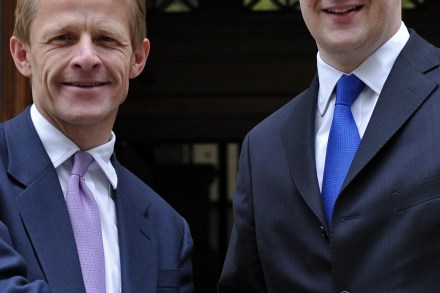
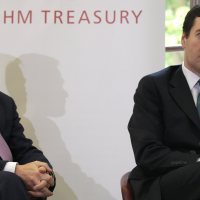
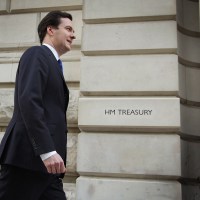
George Osborne and David Laws’ press conference this morning gave some hints about the chances of the coalition making it. The Treasury is where, I suspect, this coalition will succeed or fail. If the two parties can keep it together on how to reduce the deficit and how fast to do it, then I expect that they’ll be able to deal with the other issues that are thrown at them. Encouragingly from this perspective, Osborne and Laws seemed comfortable sharing a platform; there were no attempts to score points off each other. It appeared to be a harmonious double-act. But Osborne didn’t refer as many questions to Laws as he did to Phillip Hammond, his trusted and super-able deputy in opposition, back in the day.

David Miliband sets out the fraternal dividing lines

From our UK edition

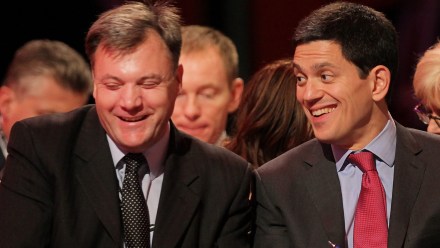
David Miliband is one of those politicians who speeches improve when you read them on paper, his delivery still distracts more than it adds. If the Labour party is going to pick the Miliband who is the more natural platform speaker then David hasn’t got much of a chance. But if they want the Miliband who is more prepared to think about why Labour really lost then David might well be their man. On Saturday, Ed Miliband talked about how Iraq, a ‘casualness’ about civil liberties and a failure to regulate the banks properly had cost Labour the election. This might be Ed Miliband’s genuine analysis but it is also what Labour members want to hear: Labour lost because it wasn’t Labour enough.

Frank Field would complete the Tories’ welfare reform jigsaw

From our UK edition

So now the coalition stretches as far as Labour, with the news that Frank Field is being lined up as an anti-poverty advisor for the government.  In itself, this is an encouraging development: Field is one of decent men of Westminster – committed, informed and passionate.  But when you look at it beside the Tories' other appointments in this area, then it really becomes exciting.  Field, IDS, Grayling and Lord Freud – all are deeply knowledgable about the welfare reform agenda, to the point where it's difficult to think of many more impressive teams in recent political history.  So perhaps there is hope for this most difficult of policy areas, after all.

Osborne rolls his sleeves up

From our UK edition

Just in case you didn't see the front cover of the Guardian, let me tell you: it's a big day for George Osborne.  This, after all, is the day when he finally launches the Office for Budget Responsibility's audit of the public finances – zero hour for the age of austerity.  Accordingly, then, Osborne has given his first major newspaper interview since becoming Chancellor.  Here, from that, is a quartet of observations for you: Office for Budget Responsibility.  The more I hear about it, the more I like this Office for Budget Responsibility.  Sure, it's another quango of sorts.

Osborne’s Big Choice: how much of our debt to reveal

From our UK edition

The cover of today's Sunday Times spells out what we all suspected anyway: that the Labour government left behind acre upon acre of scorched earth for the Tories to contend with.  There's the £13 billion contract for tanker aircraft, the £1.2 billion "e-borders" IT project, a £420 million spend on schools, and so on – most of them put in place just before the election.  As James said earlier, Sir Alan Budd's audit of the public finances is likely to show that things are much worse than the last Budget dared admit. All this throws open the wider question of our debt position.  Even by Labour's measures, our national debt is likely to rise once all the hidden spending and exaggerated tax receipts are taken into account.

The life of a Tory MP

From our UK edition

A Norwegian MP once told me that every time he thought life on the opposition benches was terrible he would think about life on the government backbenches – and realise how much he enjoyed his job. Life as a government-supporting backbench MP is difficult; if you are not willing to cap your ambition, you have to support the government, keep criticism muted and hope for elevation to ministerial rank in any future reshuffle. It is doubly difficult for the hard-working Tory MPs who lost out on government jobs because of the need to find space for Lib Dems, rather than because of their personal abilities. I can think of at least half a dozen MPs who would have made excellent ministers. What should they do now?

Why Labour is still within striking distance

From our UK edition

Things are looking good for Cameron – his coalition has 60 percent approval rating, he has managed to persuade the Lib Dems to support what always was a liberal Tory agenda. There is plenty for Conservatives to celebrate, especially on welfare reform and education. But, still, things could be a lot worse for the Labour Party than they are now. I say in my News of the World column today that, rather than being “out for a generation” as Tory strategists were hoping only a month ago, Labour remains (amazingly) in striking distance of winning the next election. And there is no telling when that election will be. Clegg and Cameron say their pact will last until 2015 – but only a tenth of voters believe it.

Prime Minister Cameron’s first TV interview

From our UK edition

David Cameron’s first broadcast interview from Downing Street contained two significant pieces of news. First, George Osborne will commission an independent audit of the public finances and state spending on Monday. I suspect that this audit will reveal that things are even worse than the official figures suggest. The political purpose of this audit will be to provide cover for the necessary cuts, to show that they are necessary because of Labour’s economic mismanagement. I also expect that the new Office of Budgetary Responsibility will provide a new, more cautious set of economic forecasts. The other piece of news was Cameron confirming that the vote on the 55 percent clause will be whipped.