Uk politics

A new Afghanistan strategy

In opposition, the Conservatives pursued an AfPak policy that can best be described as loyal criticism - while they supported the mission they criticised the means and methods employed to achieve it. It was an effective line of attack. But now that they have the internal documents and can call for further intelligence assessments, they should instead undertake a zero-based review of the current strategy focusing on: 1) the viability of the current US approach; 2) the likely timing and manner of a US shift; and 3) the best role for the UK in the next six months, in the next 2 years and in the next five years. In this discussion nothing – absolutely nothing – must be off the table.

Preventing a Balkan bailout

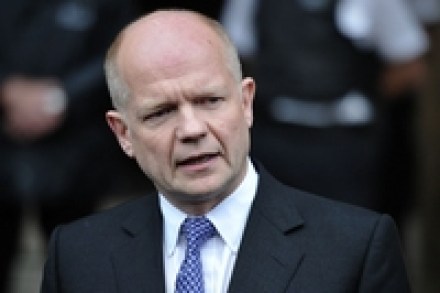
Point six of ten on the Conservative-Liberal agreement reads as follows: “We will work to promote stability in the Western Balkans.” William Hague will get a chance to show what this means when he joins fellow European foreign ministers at a summit in Sarajevo on 2 June. As I argue in a new brief about Balkan policy, the meeting could not come at a better time. The region is beginning to look dicey once again. Though Balkan countries were asked by the West to proceed along the reform-laden route towards EU accession, which entails reforming their economies, making friends with erstwhile enemies and adjusting their constitutions, there is now uncertainty whether the EU actually wants them to join the club.

To increase capital gains revenues cut rates, don’t increase them

To address the deficit, George Osborne will probably have to raise taxes. This is a grim truth to which most people are reconciled. But raising taxes and raising revenue are two different things. If the Chancellor is serious about closing that deficit, then he would doubtless be interested in the idea that a Capital Gains Tax raise from 18 per cent to 50 per cent might be a chimera tax. That is to say, one which raises no money at all. Worse, in fact, the odds are that tax revenues will fall and the deficit will be made worse by this tax rise. The international evidence is absolutely clear. As sure as night follows day, tax revenues go down when CGT rates go up.

Cameron’s public debate with his backbenchers

So, did Cameron say anything particularly noteworthy during his interview on the Today programme?  In truth, not really.  Most of the answers were of the "let's wait and see what in the Budget" variety.  The ratio of spending cuts to tax rises: wait and see.  Plans for hiking capital gains tax: wait and see, and so on.   The only answers that weren't determined by the Budget seemed to be his racing tips for the sports bulletin.  You can hear them here. But that isn't to say the interview wasn't revealing.  For much of it, Cameron was quizzed about the objections that David Davis and John Redwood have raised to the planned hike in capital gains tax.

Gove must guard against the vested interests

Polly Toynbee was on ‘mute’ on Sky News in my office, the remote wasn’t working, which is frustrating because I’d love to hear how someone mounts a passionate defence of why local government should have monopoly control of state schools. Very few things in politics are indefensible, but a system which doles out sink schools to sink estates is one of them. When Michael Gove was a journalist, he described comprehensive education as the greatest betrayal of the working class. And now, as Education Secretary, he is outlining a system that will give the poor the same choice of schools that the rich have. Who on earth could be against that?

Climate kamikaze

Several months ago, European leaders went to Copenhagen to save the planet. China, India and Brazil on the other hand went to the climate negotiations in Denmark to showcase the changed distribution of power in the world. Unsurprisingly, the Europeans came home empty-handed, shut out of the key negotiations and powerless despite what was meant to be a standard-setting promise of 20 percent cut in the EU's greenhouse gas emissions. The US and the rising powers struck a non-binding deal, the value of which is still being determined.

Ed Balls’ fighting talk is getting him nowhere, yet

The stock response of many Coffee Housers will be ‘Who Cares?’ but surely Ed Balls will be nominated for the Labour leadership? Labour may recognise that a Balls leadership would likely end in Footian catastrophe but he will, in all certainty, proceed to the next round. Surely? Like Pete and Ben Brogan, I reckon Balls and David Miliband allowed their supporters to declare in a steady trickle, hoping to build momentum as the June 8 deadline neared. In which case it is telling that Miliband Major has changed his tactics in response to Miliband Minor’s sudden surge. David Miliband now has the backing of 48 MPs, a very significant advance on yesterday’s figure. By contrast, Ed Balls languishes on 15 nominations.

Tactical considerations over the timing of the AV referendum

A referendum on AV was the concession that Nick Clegg felt he needed to get a coalition deal with the Tories past his party. But the referendum poses obvious dangers to the coalition, just imagine the sight of Nick Clegg and the leader of the Labour party sharing a platform to denounce the Tories' 'reactionary' opposition to electoral reform.   The Guardian this morning reports that the Lib Dems are pushing for this referendum to take place in May 2011 at the same time as the Scottish and Welsh elections. There is, as the article notes, a huge benefit to the Lib Dems in getting this referendum in early before the cuts kick in and the coalition becomes unpopular.

German lessons

Angela Merkel's fall from favour is something David Cameron ought to bear in mind as he looks for lessons to guide his term in office. The German chancellor could do no wrong when she was first elected. A new "Iron Lady", she was seen as a giant among pygmees. Tony Blair was leaving the scene, Nicolas Sarkozy had yet to be elected, the newspapers swooned, the voters applauded. Mrs Merkel was respected in the US and Europe. She made her unwieldy coalition with the Social Democrats work, almost singlehandedly picked the NATO secretary-general and ruled over EU meetings.

Gove’s school reforms get off the ground

The arduous process of reforming our country's education system begins today.  After two school reform bills were announced in yesterday's Queen's Speech, Michael Gove is writing to all English primary and secondary schools inviting them to cut loose from local authority control and become academies.  This is but stage one of the reform process: changing the system that's already in place.  The really radical part will come after the summer recess, with the government's plans for pupil premiums and the like.

Laughs, politics and sincerity

The opening of the Queen’s speech debate is, traditionally, a light-hearted affair. Peter Lilley opened up with a rather witty speech. He compared the Liberal Democrats to the bastards of the Major Cabinet, it is better to have them inside the Cabinet pissing out than outside the Cabinet pissing in. He went on to warn the new Prime Minister that the appropriate response to John Major and Gordon Brown’s microphone troubles is not to turn your microphone off but to keep ‘your receiver switched on to hear legitimate concerns.’ David Cameron would be well advised to heed this tactfully-expressed advice. Lilley ended with a heart-felt plea to bring the troops home from Afghanistan as soon as possible.

What Harriet Harman can do for us all

Today's the day, I suspect, when it will really hit home with Labour that they are now in Opposition.  Attacking a government's legislative agenda isn't something they've had to do for 13 years.  And while you could say that the Brown machine acted as an opposition in government – geared to destroy its rivals – this is different terrain, with different priorities.  It will fall to Harriet Harman to lead the charge from 1430 onwards. The FT's Jim Pickard has some sensible advice for Labour's stand-in leader.  But the crucial point is this: "It will be tempting to slam 'Cameron and Clegg' for 'taking £6bn out of the economy' and 'risking a double dip recession'.

A day of pomp and positivity

The sun is filtering through the garden at 22 Old Queen Street, and a brass band is marching around St James's Park: we're getting the light and the pomp in equal measures for today's Queen's Speech.  As for the actual policy, well, we largely know what it's all about.  There will be proposals for scrapping ID cards, strengthening civil liberties, reforming schools, making the police more accountable, and more.  The emphasis from the government is on handing power back to the people. The question is whether the coalition can make today's positives balance out the age of austerity.  The stock market today provides a gloomy reminder that their biggest challenge is, and will remain, the economy.

The media helps the coalition’s fiscal cause

This feels like a watershed moment: a national newspaper devoting its cover to an image of the country's "debt mountain," with a small shaded-off area showing how little of it is covered by yesterday's cuts.  The paper in question is today's Independent.  And while the cover may not perfectly depict what's going on with our public finances – yesterday's cuts will reduce the government's annual overspend, not the overall debt burden which will keep rising for years to come – it is still a powerful reminder of Brown's toxic legacy. In some respects, the coalition might not appreciate this kind of focus: after all, politicians don't much like mentioning the debt burden and their powerlessness in the face of it.

A show of Cameron’s adaptability

Great to hear that David Cameron has decided to keep the 1922 committee reinstated. This is a significant, unexpected development – and sign of strength, not weakness. Interestingly, I hear that George Osborne had not been properly consulted about last week's events: ie the way in which MPs were asked to vote into effectively abolishing the 1922 committee of backbenchers and being strongarmed, Blair-style, by the leadership. Cameron had not intended things to turn out as they did and Osborne, in particular, was dismayed.   I always suspected that last week's fracas was a simple misjudgment, easily explained under the chaotic events of coalition.

Ministers won’t be able to vote in 1922 elections

So it turns out that John Redwood's uncertainty was well-placed. According to Jonathan Isaby over at ConservativeHome, the Tory chief whip has decreed that ministers won't be able to vote in 1922 Committee elections after all. They will only be able to attend meetings, which, as Jonathan says, "no-one ever really had a complaint about." All this comes on the back of confusion about what last week's ballot even meant, making a curious situation even curiouser.  But, whatever the reasons behind it, the outcome will be seen as a climbdown by David Cameron – and perhaps the first real dent to his authority since coming to power. Meanwhile, the 118 "rebels" will revel in how things have turned out.