Uk politics

Who is Labour’s Mr Sun?

From our UK edition

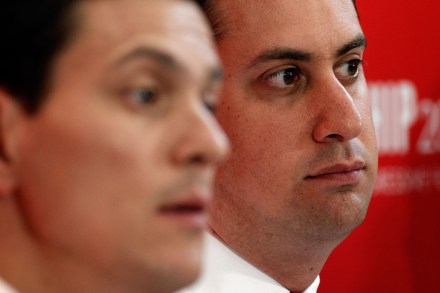
Writing for the Times, Tim Montgomerie neatly overlays Aesop onto the Labour leadership contest: "The next Labour leader is unlikely to be an Abbott, Balls or Burnham. Gordon Brown’s successor will be a Miliband. But I’m more interested in whether he will be Mr Sun or Mr Wind. Aesop captured the dilemma in a fable. If you want a man to take off his cloak, do you huff and puff and force him to give it up or do you cover him with warmth until he discards it freely? In Aesop, the sun scores a predictable victory. Politics isn’t so easy. Harriet Harman’s blasts at Nick Clegg’s alleged betrayal of left-wing voters has undoubtedly blown many Liberal Democrat voters towards Labour.
Brown, the third worst Prime Minister since WW2?

From our UK edition

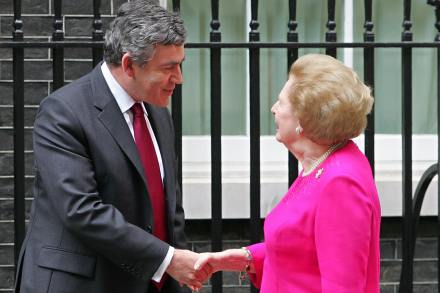
Now here's a poll that you can really get your teeth into. Reported in today's FT, a survey of 100 or so academics has rated Gordon Brown as the third worst Prime Minister since the second world war. It marks him with 3.9 out of 10, ahead of only Sir Anthony Eden and Sir Alec Douglas-Home. At the other end of the scale, Clement Attlee comes out on top with 8.1 our of 10, ahead of second-placed Margaret Thatcher on 6.9. Which, as Tim Montgomerie says at ConservativeHome, is understandable enough – Attlee probably made a more indelible contribution to British life than anyone else on the list. I was struck by the context in which one of the survey's compilers placed Tony Blair's third-placed finish.

Cameron’s circles of influence

From our UK edition

Andrew Rawnsley's potted hierarchy of the coalition government – and especially its final sentence – is worth pulling out for the scrapbook: "There is still, of course, an inner circle. When not abroad, the first key fixture of the day at Number 10 is the strategy meeting. Its usual attendees include George Osborne, the chancellor; Andy Coulson and Steve Hilton, his director of communications and his senior strategist; Jeremy Heywood, the permanent secretary at Number 10; the prime minister's chief and deputy chief of staff, Ed Llewellyn and Kate Fall. Note that Nick Clegg is not on that list. He belongs to the next circle of influence around David Cameron.

Getting credit flowing will be one of the coalition’s toughest challenges

From our UK edition

In interview with the Sunday Telegraph today, George Osborne stresses that the banks have got to start lending again – and he's right to do so. The easy availability of cheap credit may have done much to get us into this mess, but now we face a converse problem. As a recent Bank of England report shows, net lending from the banks to businesses remains negative – or, in other words, more is being paid back than given out – and the situation is getting worse. With small and medium businesses so reliant on credit to get themselves off the ground, this doesn't augur well for a powerful recovery. But what can the government do to rectify the situation?

Cameron must take this chance to end the giant evil of welfare dependency

From our UK edition

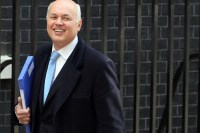
There’s been plenty political drama in these past few weeks, but the most crucial agenda – and by some margin – is Iain Duncan Smith’s proposed overhaul of welfare. It doesn’t deserve to be categorised as just another political tussle. As I say in the News of the World today, it is easily the most important issue in Britain, and it is overlooked because of an affliction which most of our political class suffers: that of moral long-sightedness. No one wears wristbands for the British poor, Prime Ministers pledge to “eradicate illiteracy” in Africa yet are strangely indifferent to the illiteracy on our own doorstep.

The coalition’s Lib Dem conundrum

From our UK edition

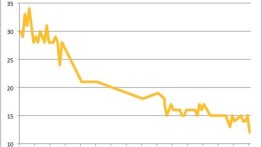
Yesterday, a "source close to the Prime Minister" told the Telegraph that we shouldn't bother much with the opinion polls as at the moment. As they put it, "we're only a few weeks into a new Parliament and we've got nearly five years to go before everyone really has to worry about the polls again." But, make no mistake, there will be Lib Dems who are deeply concerned by how their party is polling at the moment. The YouGov poll in today's Sunday Times, which has the yellow bird of liberty stuttering along at 12 percent, only underlines a remarkable decline since the election campaign (see chart above).

Will Cable be selling the coalition’s cuts?

From our UK edition

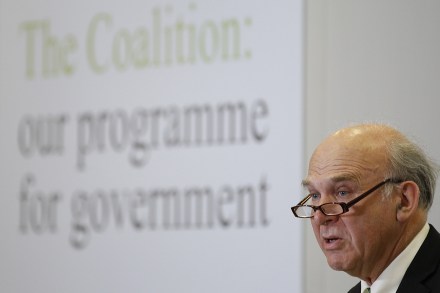
Compared to the major affairs of state, David Cameron's decision to spend part of this summer touring the nation to sell the coalition and its spending cuts may seem but a trifle. Yet it's a good move nonetheless. After the obfuscations from all sides before the election, Osborne's Budget swept in a more upfront approach to cuts. Cameron's roadshow, you hope, will keep that going. One thing to look out for is how Vince Cable gets on this summer. The Telegraph reports that he will also be involved in the coalition's big promotional drive, and will be holding his own public meetings during August. A recipe for trouble given Cable's singular approach to united government? Perhaps.

Francis Maude is right, but he must remain wary

From our UK edition

Big words from Francis Maude, as he tells today's Guardian that the current government is more radical than either Thatcher or Blair were in their first terms. But, to my mind, he's right. Even looking back on the past week – with the proposals to reform policing and benefits – there's a good deal of radical policy. And that's before we get onto the free schools revolution or GP commissioning – or, of course, to a Budget which took shears to the size of the state as few have done so before. But Maude shouldn't get too excited quite yet. It is all very well talking about good intentions and plans, but – as any fule kno – the real challenge will be in the implementation. The case of Michael Gove is instructive in this regard.

The past few weeks have made the struggle in Afghanistan even more difficult

From our UK edition

Domestically speaking, it has been an encouraging week from the coalition. Internationally speaking, less so. And today we see the first real rush of fallout from David Cameron’s appearance on the world stage, as the Pakistani intelligence agency cancels a visit to London, “in reaction to the comments made by the British Prime Minister against Pakistan.” It’s not the kind of development that we should exaggerate –after all, it still looks likely that President Zardari will visit Cameron next week, even if officials in Pakistan have been wavering on that front. But we shouldn’t underestimate it either. The main reason to worry is, largely, one of personality.

IDS’s welfare reforms aren’t perfect, but he’s right to be bold

From our UK edition

So, Iain Duncan Smith has set out proposals to comprehensively reform of the welfare system. The goal is to replace 51 benefits with a single and flexible allowance. It has been claimed that this reform would allow people with jobs to retain more of their benefits and ensure that people who work will always be better off than people on benefits.   There are problems with Iain Duncan Smith’s proposals. Fiscal cost is one, and the Work and Pensions Secretary has already clashed with George Osborne over the price of these proposals. Lowering taper rates to make work more rewarding could mean that more people receive more generous assistance – meaning costs go up.

A Boris success story?

From our UK edition

As strange as it sounds, the launch of Boris's cycle hire scheme is a significant moment for the Mayor of London. It's exactly the kind of ruse which, if it fails, will provide his opponents with an exaggeratedly high-profile target to aim at come election time.

The Balls dilemma

From our UK edition

How could I have forgotten to mention this in my last post? In that YouGov poll on the Labour leadership race, Ed Balls finished in a resounding last place. Yep, the former Schools Secretary is stuck on 11 percent of first preference votes – behind both Diane Abbott and Andy Burnham, who are tied on 12 percent, as well as both Miliband brothers of course. And the news has got Jim Pickard and Mehdi Hasan wondering: just what will Balls do next? Has he given up on winning? Will he drop out of the race and concentrate on becoming shadow chancellor? I know plenty of Tories who wouldn't know whether to laugh or cry if that turned out to be the case. But the leading article in this week's edition of the magazine sets out just why Tories should still be worried about Balls.

Jon Cruddas continues to swing behind David Miliband

From our UK edition

One thing's for sure: the Labour leadership contest is a lot more uncertain than a lot of people expected. Polls such as that by YouGov today, and analysis by Left Foot Forward last week, suggest that the Brothers Miliband are pushing each other all the way to the finishing line – particularly when second preference votes are stirred into the mix. Which is perhaps the main reason why even the smallest interventions could have an influence on the result, and are worth tracking if you're minded towards that kind of thing. In which case, I point you towards Jon Cruddas's article for the latest New Statesman in which he makes the case that Labour needs to do more to court English votes. And who else has made a similar argument recently?

At last, IDS gets his chance to reform benefits

From our UK edition

For some time now, we on Coffee House have been raving about Iain Duncan Smith's plans for reforming benefits. And, today, it finally looks as though they – or something like them – will soon be put into action. The DWP is releasing a consultation document which aims to simplify and straighten out a benefits system which now acts as a barrier to work. Over the next few months, various think-tanks and other organisations will submit their own ideas for doing just that. Someone who will no doubt take part in that process, Policy Exchange's Neil O'Brien, has a written a very useful summary of the main questions and arguments here.

Is the real love affair between Fat Pang and Dave?

From our UK edition

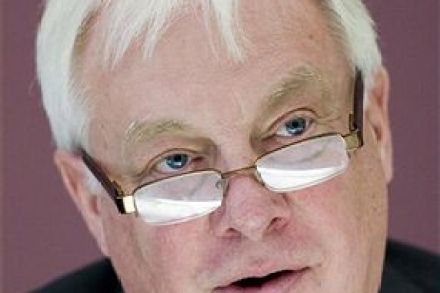
We know that Chris Patten is advising David Cameron over the Pope’s visit – the Spectator interviewed him in that capacity recently. But a number of events this week suggest that Patten is very close to Cameron. Patten is currently in India, selling Oxford University with Cameron, but he has found time to pen an article about Gaza for the FT. Like Cameron, Patten believes that Gazans are serving an ‘interminable prison sentence’. He writes: ‘Gaza is totally separated from the rest of Palestine. It is cut off by a brutal siege. The objective is collective punishment of the one and a half million people who live there simply because they have a Hamas administration.

The coalition needs to think harder about renewing Trident

From our UK edition

What do we have here, then? Another public disagreement between Downing Street and Liam Fox? Certainly looks that way, as George Osborne assures an interviewer in India that the entire cost of Trident should be borne by the Ministry of Defence's budget. As the Telegraph reminds us, Fox suggests that the running costs of Trident should be part of the MoD's responsibilities (as they are currently), but the approximate £20 billion capital cost of renewing the nuclear deterrent should be paid for by central government. In his words, on Marr a couple of weeks ago: "To take the capital cost would make it very difficult to maintain what we are currently doing in terms of capability.

A General meeting

From our UK edition

The machinery of British foreign policy has been transformed to accommodate a larger role for DfID; that is one reason why the aid Budget is increased. Andrew Mitchell is a canny operator, but he has a task on his hands to carry his department with him. DfID is ruled by three warring tribes. The bleeding heart tribe, who want to give oodles of cash to developing countries and leave them to it; the anoraks, who allocate pounds, pencils and penicillin per head of population; and the realists, who recognise DfID’s role in conflict zones. The government is keen that the latter group triumph; this is not the era of money for nothing, nor is it an era that favours processes rather than results.

5 days that changed the country

From our UK edition

Westminster has rewound the tape today, in anticipation of Nick Robinson's documentary on the coalition negotiations tonight. There's speculation about what Nick Clegg did or didn't say back in May; Anthony Seldon has a piece on Gordon Brown's side of things in the Independent; and Robinson himself has a summary article in the Telegraph. Much of what's revealed so far could already be pieced together from the Mandelson memoirs, as well as from Westminister chatter, but some of the new contexts are eyecatching. This, for instance, from Robinson, suggests just how important personality politics was during those days after the election: "Gordon Brown had not prepared a policy offer, nor got the backing of his Cabinet, nor developed a relationship with Nick Clegg.