Uk politics

Already, the anti-war lawyers leap on Clegg’s slip

From our UK edition

Never one to miss the bus, Phillipe Sands QC has informed the Guardian that an international court would be ‘interested’ in Nick Clegg’s view that the Iraq War was illegal. Sands continues with his favourite homily: ‘Lord Goldsmith never gave a written advice that the war was lawful. Nick Clegg is only repeating what Lord Goldsmith told Tony Blair on 30 January 2003: that without a further UN security resolution the war would be illegal and Jack Straw knows that.’ Well, that would be right but for Goldsmith’s draft advice of the 12 February 2003, and his final clarification on 7 March 2003.

In the service of others

From our UK edition

David Cameron’s Big Society re-launch continues after his American interlude. Today, he will introduce the national citizens’ service for 16 year olds, which was famously backed by Michael Caine during the election campaign. There is no military element to this national service; the aim is to unite different communities, ages and classes. As a leader in the Times puts it: ‘The bold aim is to turn a summer of potential drift and disaffection into one of purpose for youths from different backgrounds, working together to help people worse off than themselves, under the wing of various charities and social enterprises; and thereby, perhaps, to lay the ground for a less dislocated society in the future.

Meeting the cost of welfare reform

From our UK edition

As far back as last September, Iain Martin wrote that Iain Duncan Smith’s plans to reform the welfare system were going to run into trouble over cost: 'But there is no way these proposals, as drafted, will be implemented by a Conservative government, for one simple reason: they carry an estimated up-front increased cost of £3.6bn. A Treasury and Tory Chancellor desperate to find massive savings quickly will never nod that through even if advocates of these proposals promise vast “long-term” savings. Officials will simply say: how many times have we heard such talk before?' It would be a real tragedy if the political will built up to take serious action on this issue was wasted out of a failure to make the sums add up.

Abbott’s radio silence

From our UK edition

Anne McElvoy’s report for the Today Programme on the Labour leadership this morning is well worth listening to. It featured all the usual suspect and some classic moments—Tessa Jowell damming Ed Miliband with faint praise and Ed Balls’ henchmen Charlie Whelan going out of his way to praise Andy Burnham—but the really memorable bit came when McElvoy asked Abbott about her decision to send her son to private school. As with her infamous interview with Andrew Neil, Abbott simply refused to answer. There was just a period of dead air.

Another one in the eye for Vince

From our UK edition

I feel for Vince Cable, who has morphed from Sage to Crank in a matter of weeks. Imagining himself as the scourge of the tuition fee, Cable floated the idea of a graduate tax recently. This pre-empted the Browne report into university funding and disregarded the coalition agreement, which states that all questions would be deferred until the Browne report’s publication. It was, in other words, posturing. The BBC reports what has been rumoured in Whitehall: the government is not giving serious consideration to a graduate tax, which would have incurred enormous upfront costs. Politically, the Liberal Democrats must abolish tuition fees, or at least tame their impact on the poorest.

Clegg’s revolution

From our UK edition

At last, Nick Clegg got his chance to pretend to be PM today and he used it to give a dazzling impression of Gordon Brown.  Opposing him, Jack Straw was off-colour. Hoarse of throat and hunched of stance, he did his best to bring some clarity to Britain’s new mission in Afghan - Operation Leg It. He asked if the exit date of 2014 was ‘absolute or conditional’. Keen to offer value for money Clegg responded to a single question with two answers. He expected ‘no troops in a combat role’ by 2015 – not 2014 – although our departure was dependent on the Afghans’s ability to secure their own country. ‘Conditional then,’ said Straw repeating his question. Clegg repeated his double answer.

Clegg’s only blemish

From our UK edition

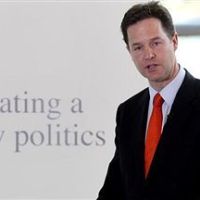
Nick Clegg comfortably got through his first appearance standing in for David Cameron at PMQs. He was helped by a poor performance by Jack Straw, who made Neil Kinnock look like a model of concision. As Clegg said mockingly at one point, ‘that wasn’t a question it was a sort of dissertation.’ In his final response to Straw, Clegg attacked him for his role in the ‘illegal invasion of Iraq.’ Now, Clegg has long called the invasion of Iraq illegal. But it is a different matter to do so when standing in for the Prime Minister and speaking from the Treasury bench in the House of Commons. That implies it is the official position of the government, with all that entails.

The RAF is in danger of being destroyed on the ground

From our UK edition

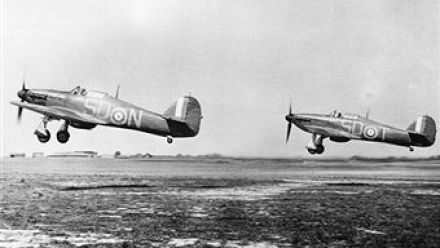
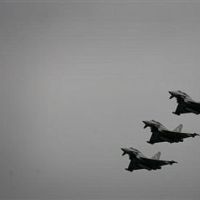
Liam Fox is anticipating the Strategic Defence Review, preparing the services for what will be extremely bad news. Britain will not engage in large scale operations in the immediate future. The Telegraph reports that officials intend to reduce the number of strike aircraft, warships and tanks. Future strategic emphasis will be on maximising firepower and range and minimising direct and associated costs. The service arms have mobilised their writers to prepare a defence. The Times have hosted a set-to between Air-Vice Marshall Tony Mason and Major General Julian Thompson. Mason’s argument is simple: warfare is determined by air superiority. He writes: ‘Since Dunkirk, British Armed Forces have usually fought beneath skies controlled by friendly aircraft.

All for show?

From our UK edition

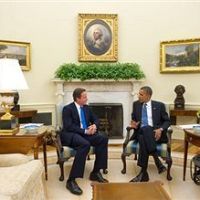
Gordon Brown will be seething, and with some justification: he never got photo-ops like these with Barack Obama. Shots of a cosy chat in the Oval Office are usually reserved for Benjamin Netanyahu, following the latest impasse between Israel and America. The Obama administration has gone to great lengths to repair the damage it did to Anglo-American relations at the start of its term. The President was all sparkle and bonhomie during the joint press conference, and he was careful to name-check ‘The Truly Special Relationship’ twice. Obama may be faking it but he looks comfortable with Cameron. He has always given the impression of being a cold fish, short on empathy, and I suspect he objects to leaders fawning at his throne.

The SNP was responsible, all the way

From our UK edition

A little odd, and certainly inconvenient, that al-Megrahi still lives and breathes. Then again, Scotland's a notoriously unhealthy place and a bit of desert air probably did him some good. Ensconced in Washington, David Cameron will have taken some flak for the Lockerbie bomber’s compassionate release, for which he has the perfect riposte: terrible business, but nothing to do with me. His second line of defence is constitutionally watertight: the decision was Holyrood’s alone. The Lockerbie Papers suggest that al-Megrahi’s inclusion in a Prisoner Transfer Agreement was a precondition of any deal between the UK and Libyan governments, as Saif al-Islam Gadaffi maintains.

Growing opposition to the alternative vote

From our UK edition

The indispensible Anthony Wells has news of the latest You Gov poll. Voting intentions are by the way at this stage of the parliament, but the Tory lead holds at 7 points on 42 percent. Of far more interest is the narrowing gap of those in favour of the alternative vote. As Anthony notes: ‘Up until now it has shown a pretty consistent lead for AV of around about 10 points, in last night’s figures referendum voting intention had narrowed to AV 39%, FPTP 38%.

Out by 2014

From our UK edition

It remains a hope, but Hamid Karzai wants his country to control its own security by 2014. Karzai echoes the MoD’s stance - revealed at the weekend courtesy of a leaked internal communiqué. Surely this is more than coincidence? 2014 would seem to be NATO’s preferred withdrawal date. At last, the politicians have dispelled some of the indecision which has marred operations recently. With politicians beginning to agree to stay until at least 2014 and having bolstered aid budgets, the military can now concentrate on ‘stabilising’ incendiary parts of the country. Whether it will receive the resources needed to protect reconstruction and secure lasting stability remains to be seen – and I’m not holding my breath.

Osborne keeps it simple

From our UK edition

George Osborne has talked of simplifying the tax system for years, and today he launched the OTS, The Office for Tax Simplification. The OTS will be chaired by Michael Jack, s Treasury minister in the Major government, and John Whiting of PWC and Chartered Institute of Taxation. The OTS looks suspiciously like a quango, but some public bodies are necessary and welcome. The tax system is unintelligible, and, needless to say, Gordon Brown complicated it further with morass of stealth taxes, tax credits and new loopholes opened more by chance than design. This has particularly affected small businesses and the OTS will identify salient businesses taxes and recommend their simplification. That can only assist hard-pressed small businesses.

A special relationship in the making?

From our UK edition

I’ve spent the morning contending with the WSJ’s Heath Robinson-esque subscription service so you don’t have to. Inside the paper, David Cameron explains what the Special Relationship means to him. 1). The Special Relationship is close and robust because British and American values are essentially the same, which explains why our national interests are often aligned: 'The U.S.-U.K. relationship is simple: It's strong because it delivers for both of us. The alliance is not sustained by our historical ties or blind loyalty. This is a partnership of choice that serves our national interests.

Green gold

From our UK edition

Most of Tim Yeo’s proselytising on climate change must be resisted. He calls for a dramatic reduction in carbon emissions in the short-term, which would paralyse Britain’s already geriatric economic competitiveness. He also endorses a policy that would push consumer energy prices to punitive levels in the hope that their behaviour is moderated. And he is adamant that David Cameron’s Husky photo-op was the last word in political positioning. But, his central point, one shared with John Redwood and Peter Lilley, is unanswerable: ‘Working towards a low carbon economy is not a “luxury”; it is essential to our future prosperity.

Gove kills two birds with one stone

From our UK edition

Michael Gove may be a pip-squeak but he has an imperious voice and that formidable quality of both sounding and being enormously clever. With a faint note of arrogance, he bossed a potentially difficult interview on the Today programme this morning. Tired of defending himself against Ed Balls’ dishonest maxim that what’s good for bureaucratic process is good for children, Gove changed tactics. He described his bill as a ‘permissive piece of legislation’ and linked it directly to the Blair-Adonis Academy reforms, which were frustrated by a regressive coalition wedded to the educational status quo.

The age of philanthropy

From our UK edition

Cameron’s Big Society Blitzkreig is underway, and he says that he hopes to ‘foster a new culture of voluntarism, of philanthropy and social action’. So far so good. As Fraser noted yesterday, there is a long and generous history of philanthropy in Britain; success will depend on the government transforming a culture of private charity into one of community charity. Collective action is hard to instil, not least when money is tight. Some projects and schemes will be favoured over others and many people will be disappointed. Cameron hoped to lessen financial shortfalls by raiding dormant bank accounts. It’s a brilliant idea in theory, but the FT sounds a note of caution.

The return of the Big Society

From our UK edition

It’s back. David Cameron is re-launching the Big Society, the least captivating idea in British politics. There is nothing wrong with the central idea: the grand plan to decentralise power to local communities. Terminology was a problem. The Big Society sounded infantile and patronising. The detail was lost in a morass of wonkery. The overall vision was contradictory: ‘people power’ was the end, community organisers were the means. The authors of the Big Society erroneously assumed that people care about community. But community is a turn-off for many, and the Big Society sounded like one enormous management meeting from which there is no escape. From Westmoreland to Richmond-upon-Thames, voters hated it.