Uk politics

Maintaining the private sector motor

From our UK edition

There's a lot of economic speculation swirling around the Westminster washbowl at the momment, but little of it is as eyecatching as today's report from the Chartered Institute of Personnel and Development. Its finding that a third of employers are expecting to cut jobs in the next quarter is bound to spark double-dip fears, even if that expectation is more keenly felt in the public sector than in the private. 36 percent of public sector employers foresee job losses, against 30 percent in the private sector. Perhaps more worryingly, both sectors are expecting more redundancies than they did in last quarter's report. Look below the headline figures, though, and there are signs that the private sector is driving on ahead regardless.


Opposing social housing reform looks like a marginal issue

From our UK edition

The Sunday Times YouGov poll (£) contains some statistics that will warm Cameron’s cockles. ‘The poll also backs the idea, floated by the prime minister last week, that new tenants in council and social housing should have a limited term of five or 10 years before they have to make way for others if their circumstances have changed. The proposal, criticised by Simon Hughes, the Liberal Democrat deputy leader, is supported by 62% and opposed by 32%. Even among Liberal Democrat supporters there is strong support for the idea, by 67% to 26%. Tory supporters overwhelmingly back it, by 78% to 18%. Labour voters are only narrowly in favour, by 48% to 47%.’ The figures for Liberal Democrat and Labour support are surprising.

Sour milk

From our UK edition

David Cameron can’t afford to be known as ‘The Milk Snatcher.’ It is for that reason that N0. 10 has airily dismissed Anne Milton’s suggestion that free school milk for the under fives be cut. Still, it is encouraging that Milton has the freedom to think the unthinkable in government – her immediate predecessors were subject to a maniacal control-freakery. Despite the restitution of cabinet government, Ben Brogan asks if Cameron remains ‘too tight’ with his ministers, denying them the latitude they require run byzantine bureaucracy. This is an important point: ministers will only find cuts if they are allowed to get their hands dirty.

Cameron makes the cuts more presentable

From our UK edition

David Cameron's neatly-constructed article in the Sunday Times (£) perfectly typifies the balancing act he is performing ahead of this autumn's Spending Review. The Prime Minister has to sound tough on the deficit because, thanks to the fiscal brinksmanship of one G. Brown, that's the job he has been appointed to do. But he doesn't want to come across as sadistic or gloomy, lest it alienate voters and coalition partners alike. The edges of the cuts need to be rounded off, made more presentable. To that end, Cameron suggests first that the cuts aren't ideological. There are, he says, items of spending that he'd like to keep – but wider budget constraints mean that he can't.

The Treasury’s cutting difficulty

From our UK edition

Among the most eyecatching, and potentially important, stories of the day is this one in the Telegraph. It suggests that various departments have "failed" to outline a "worst case scenario" of 40 percent cuts that was demanded by the Treasury. And it even names and shames Caroline Spelman's Department for Environment, Farming and Rural Affairs as one of the offenders. Mrs Spelman, we're told, has now "been forced to use the time before her holiday to work up the projections with her officials and permanent secretary." Nothing like a last minute job, then. To be fair to Whitehall civil servants, there is a general sense that they have set about identifying cuts with some flair – although, obviously, the process won't go entirely smoothly.

Alan Johnson, summarised

From our UK edition

What became of the likeable lads, that group of New Labour politicians who seemed more decent than the government in which they served? Alistair Darling was one, and he has effectively retired from the frontline of British politics. Alan Johnson was another, and today he gives a frank and wide-ranging interview to Rachel Sylvester. In it, Johnson spends much time cheerleading for David Miliband, and criticising Ed Miliband quite harshly, but there are some points which are worth recording. So here goes: 1) What a drag. As Sylvester puts it, "The [leadership] contest has, in [Johnson's] view, already gone on too long and should not have been extended until September." This is an opinion which many Labour types seem to share.

Will Hughes succeed in stirring up trouble over Right to Buy?

From our UK edition

Simon Hughes led the angry response to David Cameron's thoughts on social housing, and now he's stirring it up again. In an interview with the South London Press – picked up by Sunder Katwala over at Next Left – the Lib Dem deputy leader has attacked the Right to Buy, saying that local councils should decide whether to offer it or not. Given the Thatcherite roots of the policy, there's a firecracker quality to Hughes's comments: lobbed into the debate, and designed to provoke the Tories. I'm not sure the Tories will be too perturbed by Hughes's intervention, though. Of course many of them are proud and supportive of Thatcher's Right to Buy policy – and rightly so.

The politics of the Lib Dem conference

From our UK edition

It's only gesture politics, but sometimes gestures matter – which is why the Tories are thinking seriously about dispatching a party envoy to the Lib Dem conference in September. The idea, naturally, is to cement the bonds of friendship between the two sides, as well as to suggest that the Tories are happy to mix it with the wider Lib Dem party. But there's a problem: that wider party doesn't seem eager to play along. As soon as there were rumblings that Cameron might speak at their conference, they slapped the idea down with the unswerving efficiency of an executioner. And they've done similar today in response to reports that William Hague is being lined to up deliver a "witty" address in Cameron's stead.

The FCO’s dubious Prevent grants

From our UK edition

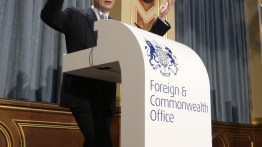
A few weeks ago I wrote for Coffee House welcoming the Government’s decision to scrap Prevent grants administered by local authorities. In that article, I cautioned that scrapping something should actually mean scrapping it, not just moving resources around. Today, the TaxPayers’ Alliance has released research showing that the Foreign and Commonwealth Office (FCO) also distribute funds through Prevent. Again, money has gone to projects of questionable value in the fight against extremism, violent or non-violent.   One of the more dubious projects was a “mobile cinema for justice”. What’s worse is that it was administered by an American charity called the International Research and Exchanges Board. Why is that bad?

Democracy in the BBC

From our UK edition

What is that quote at the end of King Lear?  I think it is something like “the wheel has come full circle”. I felt a sense of that wheel with the announcement by Mr Miliband yesterday that the BBC should be democratised and become some sort of mutual co-operative. I have been campaigning for democratisation of the BBC licence fee for a while now, first writing about it on ConservativeHome in 2008 and most recently tabling an Early Day Motion, only a couple of weeks ago. Inevitably a few brickbats were thrown.

The unions up the ante

From our UK edition

The front cover of the Times (£) provides a dreary snapshot of what the coalition can expect once the cuts start to bite. Unison have responded to job losses in the NHS by arguing that the government is "conning" the public over the impact on frontline services. And they're threatening to all get all litigious about it. As one of the union's spokeswomen tells the paper, "If we are not happy with the [government's reply], we are reserving the right to issue urgent judicial review proceedings." You wonder whether they'd have done the same against Labour's proposed 20 percent cuts. And this will be just the start of it.

Miliband’s Big Society

From our UK edition

Paul Waugh has already noted David Miliband and Tessa Jowell's proposal to turn the BBC into a co-op. But the language they use to outline the idea is striking in itself. Here's an excerpt: "In confronting the big challenges ahead of us, whether it's rebuilding our economy, tackling climate change or protecting frontline public services – the need for collective action is greater than ever. This is a moment for mutualism, which offers us the opportunity to take collective action in step with individual aspiration, drawing on the values and practices of the cooperative movement and today's Coop party.

Why Gove’s school reforms could go further

From our UK edition

The latest issue of the magazine is out today and, with it, all of the articles from last week’s edition have been made available online to non-subscribers. Among them is Toby Young’s column which raises some important points about, and criticisms of, Michael Gove’s school reforms. Toby, if you hadn’t heard, is working to set-up a free school himself – so he’s very much operating at the coalface on this, and his thoughts deserve attention. In which case, here’s the entire article for CoffeeHousers’ benefit: It has been described as the most radical overhaul of the school system since the introduction of comprehensives.

The battle over IPSA enters a new phase

From our UK edition

MPs have never really got along with the new expenses body, the Independent Parliamentary Standards Authority. But now their mood towards it seems to have become even frostier. I imagine that IPSA's three-month anniversary, and the rather complacent-sounding celebrations that accompanied it, are something to do with that. Tom Harris's wonderfully acerbic Birthday message, from a couple of days ago, captures how many MPs feel about the whole affair. In letters to the Telegraph today, Michael Fabricant and Denis MacShane ratchet up the attacks on IPSA. And while many will not see them as the ideal poster boys for a rebellion against an expenses watchdog, it's worth remembering that they are far from alone.

What you need know ahead of the Spending Review – Health

From our UK edition

With this autumn’s Spending Review set to be one of the most important moments in the life of the coalition government, Coffee House has linked up with the think-tank Reform to investigate what could – and should – be in the final document. This first post, by Reform’s director Andrew Haldenby, is the first in a series of “What you need to know” summaries, looking at each of the main policy areas – in this case, health. Other posts will cover specific policies, examples from abroad and Reform events. We’re delighted to get the ball rolling… What is the budget? The NHS is the biggest public service budget in England by far.

Andy Burnham, football mad

From our UK edition

Humble hat-tips to Iain Dale and Jim Pickard for spotting this fun exchange in Labour Uncut's interview with Andy Burnham: Q. (from Jackie): If you had the choice between playing for Everton in an FA cup final, or become the next Labour Prime Minister which would you chose? A. (after exactly two seconds) Everton, FA Cup final. press secretary: (howls) No! Q. That is a bold statement! press secretary: I’m going to kill him. Q. She is going to strangle you when I leave. press secretary: I am. Campaign manager Kevin: Can you re-answer that one please Andy. A. Well it’s a different choice isn’t it!

Bring on the debate about social housing

From our UK edition

David Cameron did say that his proposal to end council houses for life would trigger "quite a big argument" – and that is exactly what he has got today. The Lib Dems' Simon Hughes has offered the most vociferous dissent so far, stressing that this "in no way represent the policy of the coalition and certainly do not represent the policy of the Liberal Democrats." And, to be fair, he has a point: the idea had not gone through coalition channels before Cameron mooted it yesterday, and neither was it contained in the Tory manifesto – so there still needs to be a lot of conversation and consideration before anything like it can be put into action. It would be a shame if this reduced to a Tory-Lib Dem split story, though.