Uk politics

The man who would be shadow international development secretary

From our UK edition

Guido says that Gordon Brown wants to become shadow international development secretary. This rumour is uncorroborated, as far as I can gather, and I’m sure it’s a joke. But I can believe that Brown might seek election to the post – he cares deeply about African development and loves the thrust of frontline politics, such is his self-regard. But, surely, the next Labour leader would do everything to block Brown’s return to high-profile politics. Both Milibands have stated that Labour lost in May because the public rejected the government’s personalities, which implies that Gordon was the major problem. Their analysis is absurd, but I concede that Labour’s renewal would by polluted by the spectre of Brown gurning at the dispatch box.

MPs in four-letter tirades against IPSA staff

From our UK edition

The new parliament has drawn its teeth but the MPs’ expenses scandal continues. Throughout June and July, Westminster rumbled with aggravation about IPSA. There were whispers of MPs flying off the handle at IPSA staff; yesterday brought concrete reports of outright threats and intimidation. The accounts in this morning’s press are shaming, even by the standards of this saga of pornos and sugar-daddies. IPSA’s staff have been reduced to tears by raging MPs, they have been sworn at and told that the system they operate is a ‘fucking abortion’. Owing to legislation introduced during the previous parliament, I’d be prosecuted if I informed the guard on a delayed train that he and the system he ran were ‘fucking abortions’.

Clegg leads the fightback

From our UK edition

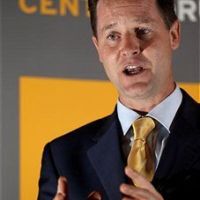
On Monday, I wrote that the question of whether the Budget is fair or not will "pursue the coalition more doggedly than any other". Yesterday, we saw just how dogged that pursuit will be. But there's no need for the coalition to panic as Mark Hoban did on the Today Programme yesterday. Instead, with policies from welfare reform to low taxes for low-income earners, they have built a firm redoubt from which to stage a counterattack. They can put the chase to their opponents. It is encouraging to see Nick Clegg do just that with an effective article in the FT today. He was bluntly dismissive of the IFS report yesterday, calling the organisation's work "partial".

Five lessons for the coalition from today

From our UK edition

The coalition has had a bad day today. It has been knocked all over the park following the IFS report that labeled the Budget regressive. Now, I’m sure the coalition will say that if it had to pick a day to take a hammering, one towards the end of August would be what they would have chosen. But I think there are five lessons that the coalition needs to learn from today if it is to navigate successfully through the political shoals of the next few months. 1). It needs a stronger narrative about what it is doing. Mark Hoban was woeful on the Today programme this morning. He had no come back to Justin Webb’s lines. The coalition needs to say that it is giving everyone a chance to get on, making working pay and restoring fiscal sanity. 2).

The Staggers backs Ed Miliband

From our UK edition

The New Statesman has backed Ed Miliband in the battle of the brothers. Press endorsements don’t count for what they used to, but the country’s leading left-wing magazine remains significant in this context. Below is tomorrow’s New Statesman lead article; it rejects the charge that Ed Miliband is ‘comfort zone Labour’ and portrays him as a thoughtful dissenter from New Labour’s orthodoxy. (On the counter, there are rumours that Jon Cruddas is to back David Miliband. Support from such an independent and left-minded source would be worth its weight in gold for David Miliband.) ‘The Labour leadership contest began in earnest with the New Statesman debate at Church House in Westminster on 9 June.

What do you need to know ahead of the Spending Review – Welfare

From our UK edition

This is the fourth of our posts with Reform looking ahead to the Spending Review. The first three posts were on health, education, and the first hundred days. What is the budget? The welfare budget must be at the heart of the debate on how to restore the public finances. The Government spends more on welfare than anything else. In 2009 the bill for social protection was around £199 billion. This has almost doubled in real terms over the last 20 years from £104 billion in 1989. Social protection now represents 32.5 percent of all government expenditure or 14.2 per cent of GDP. Some welfare spending varies with economic conditions, with increasing unemployment, for example, leading to greater expenditure on assistance to support people back into work.

A ‘regressive’ budget?

From our UK edition

The IFS has given the coalition’s opponents powder for their muskets, only it’s a little damp. The IFS’ analysis is drawn exclusively from straight tax and spend figures; it does not account for the future financial benefits brought by structural public service reform – so Gove’s and IDS’ reforms, both of which aim to alleviate poverty, have not been evaluated.  Matthew Sinclair explains why this means the IFS has exaggerated the severity of Osborne’s Budget: ‘Suppose you invented a policy, some kind of economic miracle, which doubled the incomes of the poorest ten per cent of families without the Government spending a pound.  That would reduce benefit spending.

Clegg needs to find some courage

From our UK edition

Nick Clegg is eviscerated by this morning's press. The Independent, The FT and The Guardian gleefully report that the influential IFS has decreed the Budget (supposedly a model of fairness according to Clegg) to be regressive, that there is discontent fomenting on the Lib Dem benches and that the latest polls place Lib Dem support at 12 percent. None of this is news. The IFS is reiterating what it argued on Budget day: Osborne’s measures will hit the poorest in 2014-15. That is still some way off and action can be taken to lessen their impact. Besides, the coalition should have delivered its promise to raise the income tax threshold to £10,000 by 20-14-25.

A New Labour landmine detonates

From our UK edition

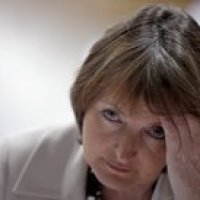
Has Mark Hoban just become the first victim of the New Labour landmines? He was asked on the Today Programme whether the Treasury had conducted a formal study assessing the impact of the cuts on ethnic minorities. Hoban was speechless - as well you might be. But the assessment, he was told, is required under Harriet Harman's Equalities Act. Has it been carried out? He avoided the question and was asked it again. And so it continued, a la Paxman v Howard. When Labour retreated, it sewed several landmines in the political territory it was about to cede. One of them was Harman's Equalities Act, which - as Pete blogged a while ago - mandates government "to consider how decisions might help to reduce inequalities associated with socio-economic disadvantage".

Today’s GCSE results prove that academies work

From our UK edition

Today's GCSE results demonstrate the tremendous success of City Academies, a hugely heartening trend given that this formula - which was so slowly rolled out under the Labour legislation which introduced them - can now be rapidly implemented under the new Academies Act. It's always been a con to look at the absolute results of Academies, as under Labour the only schools given such status were schools that were doing poorly. What matters is improvement. Let's take the three Academies groups and look at the ratio of  pupils winning five good GCSEs (i.e. A-C including English and Maths). In the The Harris Federation, which now runs nine schools, there was a 10 point increase. In the ARK academies, a 13 point increase. In the ULT Academies, an 8 point increase.

Lead by example: take paternity leave

From our UK edition

The birth of the Cameron’s baby daughter is, obviously, wonderful news for the Cameron family. All the political chatter around it is, frankly, irrelevant compared to the happiness that they must be feeling.   But I do hope that David Cameron does take paternity leave. The Tories have talked a lot about making Britain the ‘most family friendly country in Europe’ and the PM taking paternity leave would be a good ‘nudge’ to employers and prospective fathers alike. One other timing issue worth noting is whether Cameron now goes to the UN summit in New York on the millennium development goals.

Congratulations to Samantha and David Cameron

From our UK edition

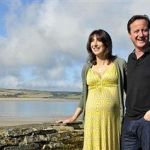
Coffee House congratulations to Samantha and David Cameron on the birth of their baby daughter. Here's the Downing Street statement: "The Prime Minister and Mrs Cameron are delighted to announce the birth of their fourth child, a baby girl. Both the baby – who was born weighing 6lbs 1oz – and Mrs Cameron are doing very well. The PM and Mrs Cameron would like to thank the doctors and nurses at the hospital for their help and kindness." No name, as yet – any guesses?

Stage 2 in the penal revolution

From our UK edition

The government’s position is that prison does not work. It aims to reduce prison numbers and now Ken Clarke has announced that further savings will be made to the criminal justice budget. The Times reports (£) that Clarke will continue Labour’s policy of closing courts; 103 magistrates courts and 54 county courts will shut up shop. The Tories campaigned against court-closures at the fag-end of the last government; and there is whispered concern around Whitehall and Westminster that the concrete apparatus of justice is already over-stretched. But, savings must be made. Clarke's closures will save a paltry £15.3 million from the annual £1.1bn budget; the bulk of cuts will come from reducing the number of contested trials.

IDS versus Osborne: there can only be one winner

From our UK edition

The Quiet Man is an odd moniker for Iain Duncan Smith. There was nothing quiet about his opposition to the Maastricht Treaty and he turned up the volume when he told the Tories to ‘unite or die’. Matthew d’Ancona observes that IDS is a noisy maverick again. IDS has threatened to resign if his welfare reforms are obstructed. Principles are one thing and tactics another. As d’Ancona notes: ‘Such talk is fine if a minister means he will quit if he himself fails. But in IDS's case it has sounded more like a threat: if the leaders of the coalition do not give him what he wants, he will resign and bring the temple walls crashing down around him.

The double dip predictions

From our UK edition

Hark, there seems to be a lot of noise about a double dip recession at the moment – added to, yesterday, by Dr Martin Weale of the Bank of England. So I thought I'd collect some of the more recent, more prominent warnings and predictions for posterity's sake. Do let me know (either in the comments or on phoskin @ spectator.co.uk) if there are any that are worth adding: Sir Alan Budd, 16 August Sir Alan was asked on BBC Radio 4's Today programme whether he believed Britain would avoid slipping back into negative growth. "I'm not confident of it," he said. "Our fan charts show that it is a possibility, just as much stronger growth is a possibility. It's not the most likely outcome.

A very British diarist

From our UK edition

The extracts from Chris Mullin’s diaries that ran in the Mail on Sunday this weekend suggest that the second volume will be as good as the first. It contains things that you just couldn’t make up. Tom Watson, for example, told Mullin that he was pushed into rebellion by the knowledge that Cherie Blair had had the Prime Minster’s section of the nuclear bunker redecorated.   But, perhaps, the most telling  story is what happened when Gordon Brown went to the Chinese embassy to sign the book of condolence for victims of the earthquake there: “While Gordon and his party were inside, word reached them that David Cameron was waiting outside.

How the coalition can develop its case for fairness

From our UK edition

The coverage in today's FT is a reminder that one question will pursue the coalition more doggedly than any other: are the cuts fair and "progressive"? This isn't an issue that Osborne & Co should duck, and not just because they've set it as a measure of their own success. There is, to my mind, a moral and economic necessity for measures that benefit the least well-off – and, what's more, this is terrain which the coalition should feel quite comfortable traversing. Benefit reform, schools reform, lifting low-income earners out of tax: these policies provide a solid foundation for an argument about fairness. If the coalition wants to develop that argument persuasively, then it should remember four points: 1) The graphs don't show the whole picture.

Will there be money for free schools?

From our UK edition

Some eyecatching numbers in today's FT about how many free schools we can expect, and when. According to Department of Education officials, there will be about 12 of the new schools in 2011, another 50 in 2012, and around 100 in 2013. The paper dwells on how this falls short of the Tories' pre-election rhetoric. And it's true: the original idea was for around 3,000 new schools across nine years. So, 162 schools across three years hardly looks like fluid progress towards that goal. This needn't be a bad thing, of course. As so often, quality not quantity will determine the lasting success of this reform.