Uk politics

Andy Burnham’s faltering campaign

From our UK edition

Andy Burnham’s leadership campaign is going the way of all flesh. According to Left Foot Forward’s model, Burnham is set to come fourth behind Ed Balls. A You Gov poll predicted a similarly poor showing for Burnham. I’m surprised by this. Burnham is presentable against a field of gawky rivals. Also, after a faltering start, he has tuned a clear anti-establishment message, crafted to politicise the north south divide and New Labour's soulless metropolitanism. He reiterates it for today’s Independent, arguing that the party has been run for too long in ‘an elitist, London-centric and controlling way’ and that New Labour was ‘born of a distrust of its members.

An important couple of months for Nick Clegg

From our UK edition

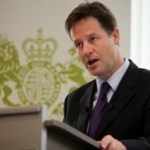
A week ago, I wrote that Nick Clegg had an important couple of weeks ahead of him. Now, the next couple of months are looking even more significant for the Lib Dem leader. An article in today's Independent captures the tone of what faces him: in the aftermath of the Charles Kennedy defection talk, Lib Dems have been shocked into demanding more from their leader. As the paper puts it, senior Lib Dems are calling for "more policy 'wins' ... to demonstrate to doubters in his party that he was delivering on Liberal Decocrat priorities."  Clegg probably hasn't faced such sustained internal pressure since he defeated Chris Huhne to the leadership in 2007. What strikes me, though, is how shortsighted much of that pressure is.

Clegg to be sidelined from AV campaign

From our UK edition

The Sunday Times (£) has news that Nick Clegg will not front his party’s ‘Yes to AV’ campaign next May. This makes sense. The deluge of abuse he received in Bristol yesterday was another indication that many have fallen out love with Clegg. The Lib Dem leadership fear that if Clegg heads the campaign it will descend into a referendum on Clegg and his decision to form a coalition with the Tories. That will probably transpire in any event, especially if Labour opposes the introduction of AV, which it looks set to do. It makes sense to protect the embattled Lib Dem leader from as much collateral damage as possible. Presumably that will extend to Lib Dem cabinet ministers, which suggests that Simon Hughes is likely to play a significant role.

Ed Balls’ contract with the Labour Party

From our UK edition

Ed Balls has produced a contract with the Labour party. Three things strike me about it. First, he emphasizes broader consultation and promises a greater role for activists and local representatives. These political impulses are championed by the coalition – an indication that Cameron and Clegg’s partnership is beginning to change Britain party political landscape. Second, Balls is a proud friend of the trade unions and wants to restore the link between Labour and the unions, perhaps to redress Labour’s chronic financial position. Third, like Ed Miliband, he has adopted Harriet Harman’s goal of having women as 50 percent of the shadow cabinet.

Seconds out…IDS versus Osborne

From our UK edition

Infamously, George Canning and Viscount Castlereagh fought a duel over a policy disagreement; Iain Duncan Smith and George Osborne will follow suit at this rate. I had thought they’d resolved their differences over the upfront costs of IDS’ welfare reform; but the Mail on Sunday reports otherwise, glorying in the glares, savage bon mots and expletives. This is the conundrum: if IDS doesn’t find £10bn in savings, he will not get the £3bn needed to enact his reforms to make work pay.

Preparing the ground for conference

From our UK edition

Nick Clegg has been taking advantage of his week in charge to do a series of high profile events. But at nearly every one — his speech in London, his town-halls in Newcastle and Bristol — he has encountered Lib Dems wanting to express their anger about the coalition and its policies. As I say in the Mail on Sunday, the worry for the Lib Dem leadership has to be that this is a preview of what they could face at conference. This danger has been compounded by the fact that Clegg will leave it early to attend the UN summit in New York, Cameron will be staying at home as he and Samantha’s baby is due then.

Clegg’s no Dave

From our UK edition

Nick Clegg faced a stormy Q&A session this afternoon and he isn’t in David Cameron’s league as a performer. He struggled through tough questions on VAT, DfID, a transaction tax, AV and the appointment of Philip Green. His answers were garbled, though he did stick to the government’s script. There was, however, one particularly damaging exchange. Clegg was heckled by a man who thought the coalition ‘lacked a mandate for its rather brutal social policies’, and added that Clegg should get out of the coalition before it was ‘too late.’ Clegg’s response was limply pugilistic. ‘You’ve obviously got an axe to grind.

Clegg’s alternative view on the alternative vote

From our UK edition

Nick Clegg’s fortnight in the sun continues with a big interview in today’s Telegraph. What struck me most were not his comments on a graduate tax (which David has blogged about) but those on AV. If the AV referendum is lost, then Clegg will have a very difficult time keeping his party united and in the coalition. But if Clegg makes clear how much AV means to his party, then the chances of it being defeated increases as Labour voters and those dissatisfied with the coalition see it as a chance to bring it down. (Remember we can expect most Tory voters to back first past the post, making the support of Labour voters crucial to the passage of AV).

Clegg and the dissenters

From our UK edition

Nick Clegg understands his party’s misgivings, and he has devoted an interview with the Telegraph to calming his troops with some of the old religion. He will continue to fight for an alternative nuclear deterrent to Trident and he hints that tuition fees will be abolished. He says of the proposed graduate tax or student contribution: “It’s one we think is acceptable. The perception of [tuition fees] is that it imposes a wall of debt as you walk through the entry gates of university. This has a chilling effect on applications. It sends a signal which seems to be discouraging.

In praise of British ingenuity

From our UK edition

Two spitfires have just flown over our offices at The Spectator, to commemorate the Battle of Britain. The aircraft are deservedly iconic, but it's a bit of shame that over the years they've eclipsed the de Havilland Mosquito in the public memory. They were developed too late for the Battle itself, but were incredible aircraft when they were deployed. And, crucially, privately-developed. In 1937, the British had only 46 bombers where the Germans had about 800 – and the speed at which the RAF developed was extraordinary. The battle of Britain exposed the weaknesses in the Luftwaffe – and Nazi procurement policy. Hitler relied on a vast, unwieldy bureaucracy to produce a heavy bomber and it failed him.

Clegg binds himself closer to the coalition (for now)

From our UK edition

The quotes emerging, in advance, from Nick Clegg's Westminster Hour interview are a mix of the unsurprising and the intriguing. To the first category belongs his claim that "parties in government tend to get a dip in their popularity" – I mean, he's hardly going to say that the Lib Dems' decline in the polls is a disaster, is he? But this, for instance, belongs firmly in the second category: "If we weren't in a coalition now I don't think people would take any notice of the Liberal Democrats ....  If we were in a coalition with Labour, arguably our identity crisis would be even worse." In other words, the Lib Dems are better off in coalition – and they could well be better off in coalition with the Tories.

Brittan and the state of politics

From our UK edition

The reaction to Leon Brittan’s appointment tells us three important things about the current political situation. First, the Tory backbenches are becoming increasingly grumpy at jobs going to people other than them. A large number of Tory MPs who had expected ministerial posts missed out because of coalition. Cameron’s failure to write to many of these people thanking them for their service in opposition has made some of them rather bitter. But this resentment has grown in recent weeks as jobs have gone to various other people. The former Tory MP Paul Goodman says what many of his former colleagues are thinking when he writes, ‘There are more than 300 Conservative MPs. Isn't one of them up to the job of being Trade Minister?

Remembering the few

From our UK edition

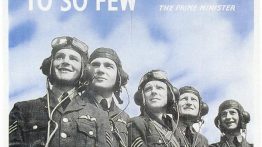
Today is the 70th anniversary of Winston Churchill's 'Few' speech. Here's how the Spectator reviewed it at the time: Mr Churchill looks ahead, The Spectator, 23 August 1940 Mr Churchill surpassed even his own masterpieces of lucid and spirited exposition in his speech on Tuesday, in which he surveyed the first year of the war and the last exciting days of victory in the air and looked fearlessly into the future. During the previous fortnight, and especially during the previous week, the nation had become aware of the fact that the intensified air attack was part of that onslaught on Britain whose approach was trumpeted in Germany.

Did business interests

From our UK edition

Today’s most intriguing political story is that David Rowland will not become Tory Treasurer after all. The press release from the Tories says that this is because of the ‘expansion of his global business interests.’  Others, though, are begging to differ. ConservativeHome’s piece on the matter is headlined ‘The Daily Mail sinks the Tory Treasurer’, the paper has run a succession of interesting pieces on various aspects of Mr Rowlan’s life.     For all we know, Mr Rowland’s expanding global business interests may well be why he is stepping down.

The return of traditional subjects

From our UK edition

Today’s A-level results once again see the pass rate continuing to rise, in this instance for the 28th year in a row, with 97.6% of entries gaining an E or above, up from 97.5% in 2009. While not wishing to detract from the efforts of students and teachers, unfortunately such a rise has become all too expected, to the point where there would almost have to be a public inquiry if it were not to happen. Nor should the introduction of the A* at A-Level warrant particular attention, except perhaps to say that it serves as a symbol of how far we have allowed grade inflation to go.     Crucially, however, this year’s A-Level cohort have distinguished themselves in one particular regard.

Party time | 19 August 2010

From our UK edition

Utterly incredible. Over at ConHome, Alex Deane has highlighted something that is just utterly incredible – Team David Miliband's guide to hosting a "house meeting" in his honour. You really have to read the 6-page pdf to take in the full, fastidious horror of it all. But this tip for, erm, "building accountability" into the guest-list deserves pulling out: "Remind your guests the day before – try and build accountability into the relationship. If someone confirms then they should be there and you need to let people know you are disappointed if they don’t turn up… even if it’s just your mates!" What fun. UPDATE: By way of a hat-tip, this was first spotted by Jess Freeman over at the Total Politics blog.

Ed Miliband’s backhanded offer to the Lib Dems

From our UK edition

As Channel 4 reminds us, there have been two major trends in recent opinion polls. First, the precipitous decline in the Lib Dem vote share. And, second, a solidification of the Labour position, such that some polls even have them as the biggest party in a hung parliament. Predictably, this has stirred the omnipresent Simon Hughes, and some other folk around Westminster, into talking about a LibLab coalition. Which is why Ed Miliband's comments in the New Statesman today are so eyecatching. He tells Jason Cowley and Mehdi Hasan that he couldn't go into the coalition with the Lib Dems if they were led by Nick Clegg. He's got problems with "what [Clegg] is supporting," you understand. This is a new approach from one of the Labour leadership candidates.

The Tories tone down their rhetoric on A-levels

From our UK edition

The latest A-level results have been released and – surprise, surprise – success rates have risen. The proportion of papers marked at grade E or above increased to 97.6 percent from 97.5 percent last year. And 27 percent achieved an A or the new A* grade, with 8 percent at A* overall. So, naturally, and rightly, the usual arguments about "dumbing down" are out in force. The Tories used to love getting stuck into this debate, accusing the New Labour government of eroding exam standards. But it's noteworthy that, now they're in power, their rhetoric on the matter has become considerably less provocative.

This Parliament’s key dividing line?

From our UK edition

They may have faded from the front pages, but middle class benefits are still one of the most important stories in town. What we are witnessing here could be the birth of this Parliament's defining dividing line – a cuts vs investment for the new decade. In truth, the birthing process began before the election, with this Ed Miliband interview in the Guardian. In it, he made a distinction between a "residual welfare state that is just for the poor, which is the Tory position," and a "more inclusive welfare state" that encompasses the middle classes. His point was that the former goes against "all the evidence of maintaining public support [for the welfare state]" and, ergo, the Tories have got this wrong.