Uk politics

A lesson from New Zealand

From our UK edition

This is the next of our posts with REFORM looking ahead to the Spending Review. Earlier posts were on health, education, the first hundred days, welfare, the Civil Service and international experiences (New Zealand, Canada, Ireland). Ruth Richardson, the former reforming Finance Minister of New Zealand, set the benchmark for the Spending Review in a lecture for Reform on Wednesday evening. The coalition Government has framed the Review in the right way – as a chance to reshape and redefine the role of government rather than just shave a few percentage points off the existing structure with all its structural flaws. Ruth Richardson explained what that should mean, addressing each of government’s roles as spender, tax collector, asset owner and law maker.

Labour get the inquiry they wanted

From our UK edition

To these eyes, this afternoon's phone hacking debate was a surprisingly sedate affair. Chris Bryant – proposing a motion to have an inquiry conducted by the Standards and Privileges committee into the News of the World's actions – seemed to go out his way to depoliticise the argument, and other Labour MPs followed his lead. And so there was relatively little mention of Andy Coulson, with the emphasis instead on the wrongs that might have been done to the House by the police and the media more generally. It was, then, little surprise that Bryant's motion was passed unanimously. There were some flashes of controversy and acid, though. Bryant himself went quite hard on the police, claiming that they had not fulfilled their "duty of care".

Robert Chote is the new head of the OBR

From our UK edition

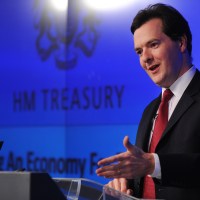
Now this should dispel any worries that the Office for Budget Responsibility is partisan in the government's favour. Robert Chote, director of the Institute for Fiscal Studies and scourge of Osborne's "regressive" Budget, has been appointed as the body's new chief. It is, in many repsects, the most sensible and obvious choice. Not only is Chote respected across the political divide, but the OBR is an attempt to institutionalise the kind of fiscal oversight that his IFS has provided for years. I can't imagine that the Treasury Select Committee will try to block this appointment. In case you missed it first time around, Fraser interviewed Chote for the magazine back in June.

The coalition’s shifting horizons

From our UK edition

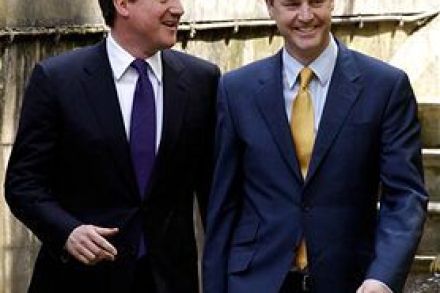
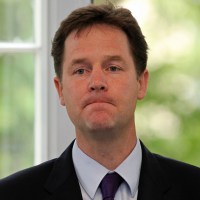
Nick Clegg’s speech today is meant to be one of a pair with David Cameron giving the other tomorrow. The speeches mark an attempt to set out an agenda for the government that goes beyond deficit reduction. The idea is that Clegg’s speech called ‘horizon shift’, which is all about making government policy more long term, goes hand in hand with Cameron’s speech tomorrow on ‘power shift’, the government’s plan to devolve power down. This twin-pronged approach came out of the political Cabinet at Chequers at the end of the last parliamentary term and a recognition that the coalition must be seen to be doing more than just reducing the deficit. In terms of political strategy, the next few weeks are crucial for the coalition.

Clegg downplays the cuts

From our UK edition

A noteworthy directional shift from Nick Clegg in his speech this morning. Instead of priming the us for "savage cuts," as he once did, the Deputy PM is now deemphasising the severity of what's to come: "Some of the hyperbole I have heard is just preposterous – this idea, that somehow, it is back to the 1930s. After the spending round, we are still going to be spending £700bn of public money – more than we are now." To be fair, the basic message hadn't changed: cuts are "unavoidable," Clegg says, as we struggle to contain the deficit. But this new motif demonstrates just how keen the Lib Dem leader is to reassure his party about the government's intentions – and repel Labour's sorties in the process.

A banking split

From our UK edition

Blame Bob Diamond. Until the "unacceptable face of banking" (© the utterly acceptable face of politics, Peter Mandelson) was appointed chief executive of Barclays, the issue of banking reform was trundling along noiselessly in the background. But now it has spilled, violently, back out into the open. Critics of Diamond say that his very presence makes the case for splitting the retail and investmet divisions of banks – you can't, they say, have someone who made their money via "casino banking" presiding over a high street banking chain. But the banks are warning that any such split would force them, and their tax dollars, abroad.   The government's official position is stasis.

The Royal Mail – a tough sell

From our UK edition

Some day soon – unless the coalition has already lost its bottle – a bill will be introduced to 'part-privatise' Royal Mail. It has to be done. But it will be a tough sell, for four reasons. First, the market for the Royal Mail's product is shrinking. It's a big fish, but its pool is getting smaller. It carries 75 million letters a day, but that's down by 10 million just in the last five years. And 87 percent is mail sent by businesses. Apart from Christmas cards, the rest of us now correspond by email. Last year's pre-tax loss was £262m: the reality is that the business is insolvent.   Second, the Royal Mail is decrepit.

In or out?

From our UK edition

You've got to hand it to Dan Hannan – he knows how to make a splash. His latest initiative is a cross-party campaign for an "in or out" referendum on Britain's EU membership. You can find details in his article for the Telegraph today or, indeed, on the campaign's actual website. But the basic argument runs thus: with the AV vote next year, referendums are now hardwired into the political mainstream – so why not give us a vote on one of the biggest questions of national sovereignty that we face today? And if you agree with him on that, you can sign up here. Hannan is, of course, making a serious point. Europe is almost certainly one of those areas where the Westminster consensus is divorced from public opinion – and a reckoning could well be overdue.

David Cameron’s father has died

From our UK edition

Sad news today, Ian Cameron has died. The Prime Minister was with his father at the end, having flown out to France with his brother and sister from City airport this morning. His father’s cheerfulness and determination in the face of his disability has long been cited by friends of Cameron as one of the key influences on his character.   In a sign of how quickly the Cameron family has experienced the joy of new life and the sadness of the end of a life, Ian Cameron had not met his latest granddaughter when he died.   Here is the Downing Street statement: "It is with deep regret we can confirm that Ian Cameron died earlier this afternoon.

Straw fails to improve

From our UK edition

Jack Straw did not improve on his previous PMQs performance today. He used up all six questions on Coulson and they were all too long-winded. Clegg got through it without too many problems, regularly using the operational independence of the police as a shield, as the Home Secretary did on Monday. The deputy PM also had the moment of the session when he informed the house that the first person to call Mr Coulson after he had resigned was Gordon Brown who had wished him well for the future. But at the very end of session, Labour got what they needed to keep this Coulson story going for yet another day. The Speaker has ruled that phone hacking is covered by privilege and so Chris Bryant is entitled to a debate on it tomorrow morning.

PMQs live blog | 8 September 2010

From our UK edition

Stay tuned for live coverage of Clegg vs Straw from 1200. 1201: And here we go. Clegg begins by passing on his best wishes to David Cameron and his family. Condolences for the fallen in Afghanistan follow - "we will never forget their sacrifices." 1204: Mark Pritchard begins with a dubiously plant-like question. "300 policemen have been laid off in West Mercia," he observes - is the fiscal mess left by the last government to blame? It tees Clegg up to tear into Labour's legacy. A combative start. 1206: Jack Straw steps up to the dispatch box. He begins with condolences for our troops, and then adds some warm regards for Cameron and his family.

Clegg versus Straw – the re-match

From our UK edition

David Cameron’s father has suffered a stroke on holiday in France and so the PM is, understandably, travelling out there to be with him. This means that Nick Clegg will be standing in for him at PMQs. At the risk of sounding Jo Mooreish, this shift in PMQs personnel has political implications. Labour was always planning to use today to try and associate Cameron personally with Coulson and the whole voicemail interception story. That, obviously, can’t happen now. But Labour could ask Nick Clegg a series of awkward questions on this, has the deputy prime minister sought personal assurances from the director of communications about what he knew of phone hacking at the News of the World while he was editor and the like.

Ed Miliband makes a very obvious pass at Vince

From our UK edition

Not exactly on the ball are they? It took nearly six hours for a Labour leadership contender to try to resuscitate Vince Cable's graduate tax, which lapsed into seizure following reports that Lord Browne will recommend a tuition fee hike instead. Ed Miliband, in Mephistophelean mood, has appealed to Vince Cable, offering to replace tuition fees with a graduate tax. ‘You’re welcome to each other,’ will be the retort of most Tories. But Miliband’s pass is significant. The coalition agreement promised to wait for the Browne Review. But the agreement is no longer sacrosanct.

Labour’s fighting instincts flourishing in opposition

From our UK edition

Keith Vaz’s sleight of hand to get Yates of the Yard before his committee today and to confirm that his officers will soon be talking to Andy Coulson is yet another reminder that Labour today has a lot more fight in it than the Tories did in 1997. Yates’ comments don’t come as a surprise; the government was making clear yesterday that Coulson was happy to talk to the cops. But they have pushed the story back up the news agenda — the 24 hour news channels are covering it live — just when it finally appeared to be dying down: mission accomplished for Vaz and Labour.

Stephen Green’s double-dip warnings

From our UK edition

The Big Tent just got a little bit bigger with the appointment of Stephen Green as trade minister. As most of the papers point out, landing the HSBC boss is something of a coup for the coalition. David Cameron was struggling to fill the role, but he's ended up with someone who is widely credited with steering his bank through the worst of the financial storm. Even HSBC's purchase of a dodgy sub-prime company in 2003 has done little to tarnish Green's reputation. Now that he's in government, though, it's worth pointing out that he is yet another minister who has warned of a double-dip recession. Here's how the FT wrote up a speech of his in July: "'We are three years into a crisis that is far from over,' he said.

The Vice Chancellors scupper Vince

From our UK edition

Vince Cable won’t be slipping on his dancing shoes at this year’s Lib Dem conference. A draft of the Browne review into university funding is out today and apparently it does not mention a graduate contribution, Cable’s Lib-Dem friendly answer to tuition fees. The Times has caught wind of this rumour (£), which is also doing the rounds among higher education think-tanks and consultants. This is unsurprising. Neither David Willetts the universities minister, nor his predecessor Lord Mandelson, ever mentioned a graduate contribution until Cable went on manoeuvres because Lord Browne was not seriously considering such a measure.

Johnson caught in the crossfire

From our UK edition

The shrapnel from the phone-hacking scandal is scorching more flesh by the day. This morning, it's not Andy Coulson nor the Metropolitan who are under question – but Alan Johnson and the Home Office. According to a leaked memo obatined by the Guardian, the department considered launching an independent inquiry into the Met's investigation last year, but abandoned the idea after a Home Office official stressed that Scotland Yard would "deeply resent" any such action. The police, continues the official, would have taken it as a sign that "we do not have full confidence" in them. And so it went no further. Johnson was, of course, in charge at the Home Office at the time. So this memo places some of his comments this week into a fresh context.