Uk politics

Clegg versus Straw – the re-match

From our UK edition

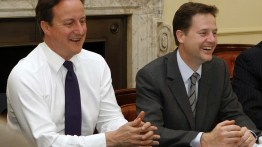
David Cameron’s father has suffered a stroke on holiday in France and so the PM is, understandably, travelling out there to be with him. This means that Nick Clegg will be standing in for him at PMQs. At the risk of sounding Jo Mooreish, this shift in PMQs personnel has political implications. Labour was always planning to use today to try and associate Cameron personally with Coulson and the whole voicemail interception story. That, obviously, can’t happen now. But Labour could ask Nick Clegg a series of awkward questions on this, has the deputy prime minister sought personal assurances from the director of communications about what he knew of phone hacking at the News of the World while he was editor and the like.

Ed Miliband makes a very obvious pass at Vince

From our UK edition

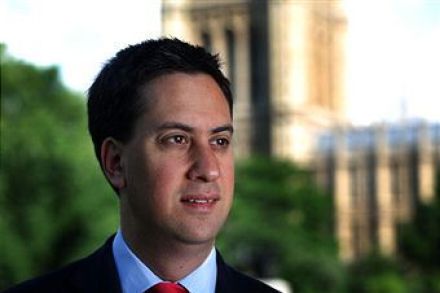
Not exactly on the ball are they? It took nearly six hours for a Labour leadership contender to try to resuscitate Vince Cable's graduate tax, which lapsed into seizure following reports that Lord Browne will recommend a tuition fee hike instead. Ed Miliband, in Mephistophelean mood, has appealed to Vince Cable, offering to replace tuition fees with a graduate tax. ‘You’re welcome to each other,’ will be the retort of most Tories. But Miliband’s pass is significant. The coalition agreement promised to wait for the Browne Review. But the agreement is no longer sacrosanct.

Labour’s fighting instincts flourishing in opposition

From our UK edition

Keith Vaz’s sleight of hand to get Yates of the Yard before his committee today and to confirm that his officers will soon be talking to Andy Coulson is yet another reminder that Labour today has a lot more fight in it than the Tories did in 1997. Yates’ comments don’t come as a surprise; the government was making clear yesterday that Coulson was happy to talk to the cops. But they have pushed the story back up the news agenda — the 24 hour news channels are covering it live — just when it finally appeared to be dying down: mission accomplished for Vaz and Labour.

Stephen Green’s double-dip warnings

From our UK edition

The Big Tent just got a little bit bigger with the appointment of Stephen Green as trade minister. As most of the papers point out, landing the HSBC boss is something of a coup for the coalition. David Cameron was struggling to fill the role, but he's ended up with someone who is widely credited with steering his bank through the worst of the financial storm. Even HSBC's purchase of a dodgy sub-prime company in 2003 has done little to tarnish Green's reputation. Now that he's in government, though, it's worth pointing out that he is yet another minister who has warned of a double-dip recession. Here's how the FT wrote up a speech of his in July: "'We are three years into a crisis that is far from over,' he said.

The Vice Chancellors scupper Vince

From our UK edition

Vince Cable won’t be slipping on his dancing shoes at this year’s Lib Dem conference. A draft of the Browne review into university funding is out today and apparently it does not mention a graduate contribution, Cable’s Lib-Dem friendly answer to tuition fees. The Times has caught wind of this rumour (£), which is also doing the rounds among higher education think-tanks and consultants. This is unsurprising. Neither David Willetts the universities minister, nor his predecessor Lord Mandelson, ever mentioned a graduate contribution until Cable went on manoeuvres because Lord Browne was not seriously considering such a measure.

Johnson caught in the crossfire

From our UK edition

The shrapnel from the phone-hacking scandal is scorching more flesh by the day. This morning, it's not Andy Coulson nor the Metropolitan who are under question – but Alan Johnson and the Home Office. According to a leaked memo obatined by the Guardian, the department considered launching an independent inquiry into the Met's investigation last year, but abandoned the idea after a Home Office official stressed that Scotland Yard would "deeply resent" any such action. The police, continues the official, would have taken it as a sign that "we do not have full confidence" in them. And so it went no further. Johnson was, of course, in charge at the Home Office at the time. So this memo places some of his comments this week into a fresh context.

A bill that deserves trimming

From our UK edition

The electoral reform bill has passed comfortably, by 328 votes to 269. Now comes the hard bit: this bill is going to be deservedly lacerated in committee. The bill drew opprobrium from all sides of the house throughout this afternoon’s long debate, notably from both wings of the Tory party. First, the government has coupled boundary reform to the alternative vote referendum. Peter Hain, Labour’s most articulate attack dog, unleashed his thesaurus and referred to the bill as a ‘smoke-screen for colossal gerrymandering’. He was speaking for his ardently hypocritical and opportunistic party. The government’s motives were not so cynical; it coupled the bill’s two aims to aid swift progress through the commons.

Against the Political and Constitutional Reform Bill

From our UK edition

MPs are back today from their long summer recess, and the Political and Constitutional Reform Bill is right at the top of the agenda. This is likely to dominate politics for the immediate future, since it might have profound effects on how politics in this country operates.   The Bill combines two different reforms in one package – the referendum on changing the electoral system to the Alternative Vote (AV) and reducing and equalising constituencies. These two issues address what Nick Clegg has called the “deep unfairness” in the electoral system. This unfairness is exemplified by the last two elections: Labour won a majority of 66 with a vote share of 35.3 percent and a lead of just 3 percent in 2005; in 2010 the Conservatives gained more votes (36.

May’s straight-bat technique

From our UK edition

Theresa May channeled Chris Tavaré today, every question on this phone tapping scandal was met with a solid defensive answer. She was helped by the number of Labour MPs who overreached — one compared it to Watergate while Dennis Skinner, who is nowhere near the Commons performer he once was, produced an ill-judged demand that Cameron come to the Commons and sack Coulson. Those MPs who were most effective were the ones who kept their cool. The personal testimony of Chris Bryant was particularly powerful.   Perhaps, the most noteworthy element of the proceedings was how a particularly glum looking Ming Campbell and Simon Hughes kept whispering to each other with concerned expressions on their faces. Neither man appeared to be happy with May’s answers.

Blair pulls out of book launch

From our UK edition

It is profoundly depressing that Tony Blair has had to pull out of his London book signing. Whatever you think of Blair, he is a man who led his party to three general elections victories and is the second longest serving Prime Minister of the post-war era. There is something very wrong if he feels he has to cancel an appearance at a book shop because of the threat of disruption from protesters whose intentions do not appear to be entirely peaceful. One other thing that should be noted is that the polling suggests that Blair is nowhere near as unpopular in this country as much of the coverage of his book suggests. A YouGov poll, timed to coincide with the book’s launch, found that a plurality, albeit narrow, of voters believe Blair was a good Prime Minister.

Coulson loosens the noose

From our UK edition

The New York Times has produced what last year’s Guardian phone-hacking campaign lacked: direct testimony against Andy Coulson. Sean Hoare and an unnamed former News of the Screws editor allege that the practice was widespread and that Coulson encouraged it. These new revelations have rightly forced the Met to re-consider the case. At present, the political furore surrounds the Met’s incompetence not just the allegations against Coulson. Bill Keller, executive editor of the NYT, has claimed categorically that the ‘police already have evidence that they have chosen not to pursue’.

Rebels ‘owe’ David Cameron their support

From our UK edition

I bumped into a Tory MP earlier who one might have expected to be rebelling tonight. But he told me he was, reluctantly voting for the AV bill, because “I owe him [David Cameron] this.” His logic was that Cameron had come to the parliamentary party and told them he was going to offer the Lib Dems this so the party was honour-bound to vote it through. This argument has resonance with Tory MPs. The only thing that limits its appeal is a feeling that Cameron might not have been entirely straight with them about why he had to offer the Lib Dems AV. I expect tonight’s rebellion to be relatively small, 10 to 12 according to those on the backbenches who should know. But the real drama will start in the committee stage when all sorts of amendments are put down.

Tonight’s the night

From our UK edition

There's no rest for the wicked. Conservative whips have spent a frantic summer urging Tory opponents of electoral reform to retreat from their opposition. According to Paul Goodman, the whips have been blunt: the government could collapse if its reform bill is defeated tonight. Their scaremongering seems to have had the desired effect. The Financial Times reports: ‘Members of that group told the FT they were likely to advocate not opposing the government now, but supporting amendments at a later stage on the timing and threshold of the referendum in future debates.’ The Mail carries a similar report, with David Davis anointing himself rebel-in-chief and stating that he hopes to ‘get the bill modified to take on board certain things’.

What you need to know ahead of the Spending Review: the Irish experience

From our UK edition

This is the latest of our posts with Reform looking ahead to the Spending Review. The first six posts were on health, education, the coalition’s first hundred days, welfare, the Civil Service, and the New Zealand and Canadian experiences. Ireland As Colm McCarthy, Chair of Irish Special Group on Public Service Numbers and Expenditure, noted at a recent Reform conference the macroeconomic downturn in Ireland has been more severe than in almost any other European country: -- The budget deficit, excluding the Exchequer cost of the banking collapse, went from near zero in 2007 to 11.5 per cent of GDP in the current year, despite fiscal cutbacks which began in July 2008.

David Miliband has the best of it as the Labour leadership candidates debate

From our UK edition

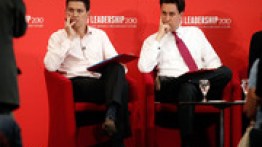
David Miliband’s performance in Sky News’ Labour leadership hustings will have calmed the nerved of his supporters. In the run-off between him and his brother, David came out on top. His answers were generally sharper and he managed to parry away Ed’s criticisms on tuition fees and foreign policy. (In a pointed remark, Ed said that the Labour government’s foreign policy had been based on ‘old ideas’.) Indeed, Ed Miliband only seemed to get going in his closing statement which was pitch-perfect David’s best moment came when the contenders were asked to pick between Blair and Brown. Ed Balls opted for Brown, Diane Abbott said that Brown ‘was the better man’ and then it was the elder Miliband’s turn.

Cameron and Clegg’s message to Tory AV rebels

From our UK edition

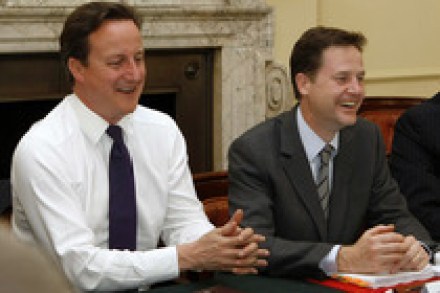
So, Cameron and Clegg end the summer break much as they started it: with a public statement on the aims and successes of the coalition government. Their article in today's Sunday Telegraph hops across all the usual touchstones – reform, deficit reduction, people power, and all that – but it lands with an unusually combative splash. In anticipation of tomorrow night's bellwether vote on the AV referendum and redrafted constituency boundaries, the two party leaders write: "This is an important moment for political renewal. We have different views on the future of our voting system. But we both recognise that there are genuine concerns about the current system. And we emphatically agree that the decision is not, in any case, for government alone...

Gove to introduce baccalaureate for 16 year-olds

From our UK edition

Fixing the education system in Britain is absolutely crucial to promoting social mobility, the principal domestic social policy aim of the coalition. So Michael Gove’s announcement on the Andrew Marr show this morning that the government plans to introduce an English baccalaureate is to be welcomed. The baccalaureate programme will end at 16, still allowing specialisation at A-Level—one of the things that allows undergraduate education in this country to be far more intellectually rigorous than in the States, and will require pupils to do English, maths, science, a foreign or ancient language and a humanity. This should help stop the drift to softer subjects at GCSE and place pressure on all schools to enter all their pupils in all these subjects.

“Ed does not need to hold the broccoli”

From our UK edition

A Thick of It style interlude from Ann Treneman's interview (£) with Ed Miliband today: "There is also a visit to something called a 'communiversity' where he is confronted with what, for a Miliband, is a scary sight: a bowl of fruit. 'Us Milibands are funny about funny shaped fruit,' he notes, plucking out an apple and avoiding the yellow peril that gave his brother the nickname Milibanana after he was pictured holding one and looking, well, a bit bananas. Later, on a trip to a community farm I feel on the brink of a major news scoop when someone tries to make Ed hold a broccoli. 'Ed does not need to hold the broccoli,' says his press handler as the green blob was extended.