Uk politics

The tensions undermining a pact

From our UK edition

The announcement, yesterday, of Nick Boles' proposal for a Lib-Con electoral pact conveniently coincided with the opening of an election court hearing into a particularly unpleasant battle between former Labour minister Phil Woolas and his Lib Dem opponent, Councillor Elwyn Watkins. The most serious allegations against Mr Woolas, who won the seat with a 103 vote majority at the last general election, are that he deliberately lied in accusing Mr Watkins of being “in league with extremist Muslims ... and prepared to condone death threats against Mr Woolas,” and that in election pamphlets he falsely accused Mr Watkins of receiving funding from abroad.
The Pope might be coming but the Milibands are still Topic A at Westminster

From our UK edition

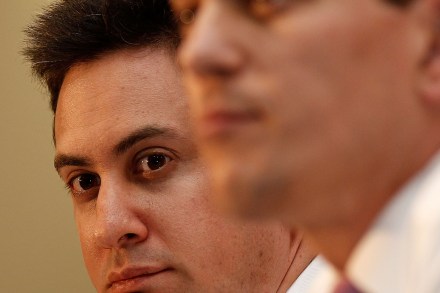
Parliament is busy preparing to receive the Pope, the red carpet has been put down in Westminster Hall and the Commons authorities have announced that they are closing all the bars down from 2pm on Friday. But it is earthly matters that are still preoccupying people here. As you walk through the gothic arches, you see little clumps of people gathering together trying to work out which Miliband will be the next leader of the Labour party. At the moment, the race really does seem too close to call. But it is just worth reflecting for a second how crucial the new leader’s first few weeks will be. 3 days after the result is announced, the leader will need to give the leader’s speech at conference.

A Tory-Liberal pact is possible if the coalition lasts the distance

From our UK edition

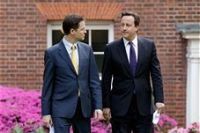
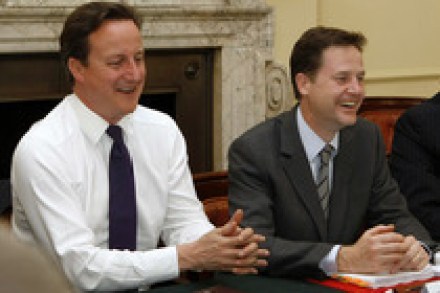
The outrider has returned to stables. Nick Boles MP, a one-time Cameroon confidante tipped for promotion, formally introduced the possibility of a Tory-Lib Dem electoral pact, it made a few cursory headlines and then David Cameron and Nick Clegg promptly denied any such intention. It had the appearance of the classic three-card trick. A formal alliance or non-aggression pact is highly unlikely unless the coalition survives to 2015. The government will collapse before then if enough Liberal Democrats believe its record is indefensible. However, if it doesn’t then the parties must defend their joint record and in doing so will offer a collaborative future. The alternative is absurd.

Cameron readies his forces

From our UK edition

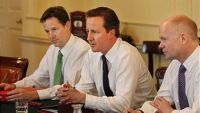
Carry on cutting – and carry on making the case for cuts. That's the message that David Cameron drilled into his ministers during a political session of Cabinet this afternoon. Paul Waugh has a typically precise account of what was said, and the Press Association has a decent round-up, but the key observation is just how forceful Cameron was in making his point. The government, he said, should take on the "vested interests" arguing against cuts – and the Budget was the right action taken at the right time. The PM, you sense, is limbering up for a fight. As Ben Brogan suggests over at the Telegraph, Cameron is right to hold the line. This is not a time for wavering at the chopping block, even if the public have their qualms about the bloodshed to come.

At last…

From our UK edition

…a minister has repudiated the Brownite axiom that spending is the sole indicator for healthy public services. Nick Herbert has said, unequivocally, that ‘cuts and good services are not mutually exclusive.’ Herbert, minister of state at the Home of Office, continued: ‘I don't think we can go on playing this numbers game and say that we can automatically assume that every additional police officer recruited is bound to help deal with crime because I think what matters is what's being done with those forces.’ Then he elaborated, mentioning the Independent Inspectorate of Constabulary’s opinion that the police can find £1bn in efficiency savings by cutting administrative duties.

Reforming Britain’s antiquated industrial relations laws

From our UK edition

The TUC Conference rumbles on with some rather blood-curdling statements about the future of industrial relations in Britain.  The RMT leader Bob Crow called for a campaign of civil disobedience and spoke of ‘confronting... the enemy’.  The PCS’ Mark Serwotka has spoken of a ‘campaign of resistance the likes of which we will not have seen in this country for decades.’  Perhaps for good measure, the TUC also took the opportunity to attack our recent report on modernising industrial relations. The trade unions are arguing vociferously against not only the very clear necessity for reductions in public expenditure, but also any change in industrial relations procedures which are largely obsolete for the modern workplace.

Finessing the coalition’s EU referendum lock

From our UK edition

The Coalition Government’s proposal for a 'referendum lock' on future transfers of powers to the EU has already been branded “worthless” by some Tory backbenchers . It’s easy to share their frustration at the Coalition’s lack of interest in EU reform so far. After all, the Government has chosen to opt in to the European Investigation Order; signed up for new EU financial supervisors; and chosen not to challenge the UK’s participation in the eurozone bailout (making British taxpayers potentially liable for up to £8 billion in loans to eurozone governments). However, the referendum lock is still significant. New crises, situations and politicians’ egos will always drive the need for another treaty and further integration.

A worrying – but not disastrous – poll for the government

From our UK edition

This morning's Times/Populus poll (£) will have supporters of the coalition grimacing into their cornflakes. The headline finding is bad enough, if rather familiar, with Labour closing the gap between themselves and the Tories to only two points. But what follows is worse. According to the poll, around three-quarters of voters reject the government's deficit reduction strategy – preferring, instead, what are loosely the approaches advocated by Labour and the unions. And, what's more, economic pessmism is arrowing upwards. The number of respondents who think "the country as a whole will fare badly," has risen by 13 percentage points since June. The number who think "me and my family will do badly" has gone up by 6 points.

Are the Labour leadership polls telling the whole story?

From our UK edition

This weekend’s YouGov poll showing Ed Miliband ahead in the Labour leadership contest is the talk of Westminster today. One David Miliband backer told me that he thought it was flawed as it assumed that MPs' second preferences would split evenly between the two brothers when David had the advantage. I was told that nearly all Andy Burnham’s parliamentary backers would put David second, that most of Balls’ would do the same and that Ed Miliband could only rely on Diane Abbott’s parliamentary backers' second preferences. But Ed Miliband’s supporters dispute this. They believe that they are making progress everywhere.

The coalition’s inept EU referendum lock

From our UK edition

At least this government is honest. ‘There will be,’ Europe Minister David Lidington says, ‘no referendum on the transfer of competence or power from the UK to the EU during this Parliament’. The government will ensure that there are no more EU power transfer treaties; but, as Douglas Carswell, Tim Montgomerie, and Bill Cash all note, the Lisbon Treaty is self-ratifying. The EU has already picked the coalition’s lock and garnered new powers for itself – notably the extension of the EU arrest warrant. The EU could be an economic superblock with the muscle to influence the globe strategically and culturally. But its current political operation is unnecessary and deplorably un-democratic.

Harman tries to bind Labour and the unions even closer

From our UK edition

Progressive coalition. Those two words haven't been tied together too frequently since Gordon Brown scrambled for survival in the aftermath of the election. But Harriet Harman invoked them in her speech to the TUC today, and she wasn't talking about a union between Labour and the Lib Dems: "We are witnessing an emerging political movement amongst progressives in Britain – beginning to see that the Tory/Lib Dem government has no mandate. They are seeing the difference between what they thought they voted for and what they ended up with. The Labour movement is their vehicle for progressive change.

The coalition faces its most important battle of the next five years

From our UK edition

Strolling through central Birmingham yesterday, I came across one of those brewery advertisements from the early part of the last century. "Unspoilt by progress," it boasted – a slogan that popped into my head when I heard the unions' various interventions this morning. As Iain Dale suggests, there is something very 1970s about what Crow, Barber, Serwotka & Co. are saying today. The coalition will need to meet much of the unions' belligerence with some fire of its own. David outlined some ways it can do that earlier. But, to my mind, there is one charge that demands a particularly ferocious counterattack.

Who is behind Nick Boles’ proposed electoral pact?

From our UK edition

Nick Boles proposed electoral pact (£) between the coalition partners would have a clear benefit for the Conservatives, it would make a deal between Labour and the Liberal Democrats after the next election impossible. That is quite a prize for the Conservatives. It would mean that David Cameron would continue as PM as long as the two parties between them held a majority of seats in the Commons. It is less clear what the Liberal Democrats would gain from it. Yes, it would help more of their MPs survive, but it would tie their hands ahead of another hung parliament and massively reduce their ability to claim that they are a distinct political party rather than just an adjunct to the Conservatives.

What it is to be British

From our UK edition

What is it about the British and flag waving? I ask after watching last night's superlative BBC Proms, a brilliant end to the best season for years. On HD and wired to the hifi, it was all the better. As the end approached, my Czech mother-in-law asked: if this is Britain's flagship musical event, why are there so many foreign flags? It's hard to explain. Britain has a mutating relationship with flags and nationality. Twenty years ago, the Union flag was used in England matches, then devolution came and the St George's cross made an emphatic comeback. I'm sure I saw a Cornish flag last night, and at least one Saltire, so part of it is regionalisation.

Benefit reform – one theatre in Cameron’s war

From our UK edition

The Observer has received letters revealing that George Osborne plans to deliver net savings of ‘at least £2.5bn’ from the Employment Support Allowance by limiting the amount of time people can spend claiming it. Here is Osborne’s letter to IDS, Cameron and Clegg: ‘Given the pressure on overall public spending in the coming period, we will need to continue developing further options to reform the benefits as part of the spending review process in order to deliver further savings, greater simplicity and stronger work incentives.

The government should return the unions’ fire

From our UK edition

The TUC is mustering in Manchester and its leaders are in bellicose mood. Brendan Barber has called for a general strike; Bob Crow, brimming with the satisfaction of having wrecked London’s transport earlier in the week, has called for his members to ‘stand and fight’ the government’s cuts. These statements have a ‘Me and my executive’ air to them, so ludicrous as to be beyond parody. But the message is rousing and clear. Not so the government’s – as Fraser argues today in his News of the World column. The government is caught in an intellectual cul-de-sac. Its sole refrain is that these cuts are Labour’s cuts and they are necessary. At the same time, the government defines the cuts debate in Labour’s terms.

Field caught between reality and fantasy

From our UK edition

Frank Field's been thinking. He will make his report on poverty next week and he hints at its contents in an extensive interview with the Times (£). He is convinced that there is more to social mobility than money and he has some brilliantly simple ideas to alleviate poverty. He advocates creating four or five terms in the school year to shorten the long summer holiday, which he argues disadvantages the poor. 'They have less help at home so they lose out even more in long holidays. They drop behind, they are not being read to or tutored or talked to in the same way as many middle-class children. They have often fallen behind by the beginning of the next school year.The school year is also out of kilter with mums working.

Beating the vested interests

From our UK edition

This is the next of our posts with Reform looking ahead to the Spending Review. Earlier posts were on health, education, the first hundred days, welfare, the Civil Service, international experiences (New Zealand, Canada, Ireland), Hon Ruth Richardson’s recent speech and how to sell the case for cuts.  On Thursday, I took part in a spending review debate in West Bromwich, part of a series the BBC held across England (my colleague Patrick Nolan wrote about his experiences in London and the East here) to discover the public’s views on what should be cut or saved in their local area.