Uk politics

Clegg: there is no future for the Lib Dems on the left

From our UK edition

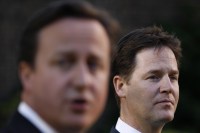
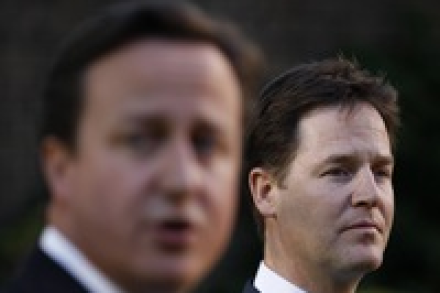
Nick Clegg has opened the political season with a very singular statement: ‘There is no future for us as left-wing rivals to Labour. Clegg urges his internal critics to be patient: the future could be yellow if the coalition is maintained. It’s a gamble. Immediately, Clegg has alienated those who abandoned Labour for the Lib Dems and his explicit disavowal of ‘left-wing’ politics will have the social democratic wing of his party reaching for their hat and coats. But, Clegg has planted his colours on politics’ crowded centre ground, recasting his party’s identity as an economically liberal and socially liberal centrist movement.
The Pope: moderation is Britain’s national instinct

From our UK edition

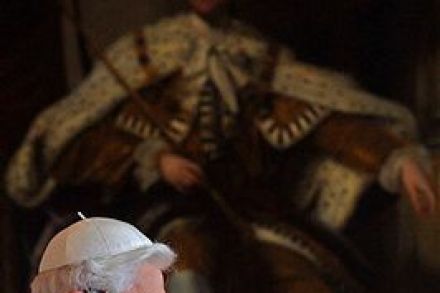
Another good speech from Pope Benedict XVI, grand in historical sweep and intellectual clarity. His softly spoken, yet heavily-accented, English demands some mental concentration. And it was funny watching some of the tired looking politicians squinting as they tried to figure out what on earth the Pontiff was saying.   But if his voice was tricky to hear, his message was reasonably clear. He was effusive in his praise for this country’s parliamentary history, for common law, and for British democracy. At the same time, he did not shrink from suggesting that modern Britain is at risk of detaching itself from the Christian philosophical tradition that underpins everything that he believes is good about our free society.

Balls, McBride and off-the-record briefings

From our UK edition

John Rentoul has already pulled the best passage from this preview of a forthcoming radio series on Gordon Brown. But I reckon that the testimony of Spencer Livermore, the former strategy chief in No.10, deserves a spot in the Westminster scrapbook: "Mr Livermore, who was Downing Street's director of political strategy, regrets not warning about the downside of scrapping the election when Team Brown got cold feet as polling in marginal seats suggested only a slim Labour majority. 'I don't think it's possible. Does anyone?' the Prime Minister told his inner circle at the crucial meeting. The mood was 'very, very sombre', according to Mr Livermore.

From the archives: John Paul II’s visit to Britain

From our UK edition

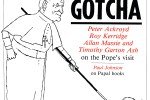
No need to explain why we've disinterred this piece by Peter Ackroyd, on the last papal visit to Britain, from the Spectator archives. And, to the left, the cover image by Garland from that week's issue. As news emerges that five people have been arrested in connection with a terror plot against Benedict XVI, a reminder that papal visits are always replete with global-political significance: The Pope and his princeling, by Peter Ackroyd, The Spectator, 5 June 1982 The pilgrims arrived in Canterbury, carrying their fold-up chairs in plastic Sainsbury bags; strange rumours on the train from London: 'You can't get into town without a permit. They say they've stopped all the cars for three miles … They've taken the door off the cathedral'.

Andrew Mitchell: the answer to global terrorism

From our UK edition

Al Shabaab and al Qeada are brothers in arms – Somalia is a hothouse for terror. Jonathan Evans, director general of MI5, has openly expressed his view that it is ‘just a matter of time’ until Somalia and the Yemen export terrorism to Britain’s streets. That striking statement contains one oversight: they do already. Umar Farouk Abdulmutallab, the Christmas Day bomber, was trained in the Yemen and two of the 7/7 bombers were Somali. How to eradicate this threat? The legacies of Iraq and financial retrenchment have made armed intervention an absolute last resort. Counter-terrorism is essential, but well targeted aid is the easiest remedy for chaos. In a speech yesterday, Andrew Mitchell described why aid should be directed to benighted regions.

Cable: interim immigration cap is “very damaging to the UK economy”

From our UK edition

After stumbling in his crusade for a graduate contribution, Vince Cable seemed to go a bit quiet. But this morning he's roared back into the newspapers with another attack on coalition policy. The target of his anger is, once again, the immigration cap – but he's being far less equivocal about it this time around. The way in which the cap is being implemented this year, he tells the FT, is "very damaging to the UK economy." To force the point home, he says he has a  "file full" of companies who are suffering because of it. And, for good measure, the word "damaging" gets deployed once or twice more.

Finding a narrative of hope

From our UK edition

In these grim dark days of austerity and cuts, the coalition urgently needs to find a compelling political narrative of hope and optimism. David Cameron's Big Society rhetoric occasionally threatens to contain some philosophical depth, but suffers from the same problem as most new fangled analyses of the world. Namely, it is so fluffy that it becomes bewildering.   To the government's credit, they have managed to prepare the public for the upcoming belt tightening. This achievement is all the more remarkable given the woeful refusal of either coalition party to admit the scale of the fiscal problem facing Britain during the general election campaign.   But softening up public opinion for wide ranging cuts is only a short term tactic, however necessary.

On the Pope’s visit

From our UK edition

The Pope, as I'm sure you know, has touched down in Britain. Here, for CoffeeHousers, is the editorial on his visit from this week's new-look issue of the magazine: Benedict brings hope The arrival of Pope Benedict XVI in Britain has provoked protests that, in the intesity of their anger, far exceed those that greet the state visits of blood-drenched dictators. That is because the Pope is seen to represent — in ascending order of secular distaste — religion, Christianity, the Roman Catholic Church and the conservative wing of Catholicism. Fair enough: Benedict does represent all of these things. He opposes atheism, regarding it as a desperately sad alienation of man from his creator.

Andrew Mitchell recasts DfiD’s role

From our UK edition

Andrew Mitchell’s speech today at the Royal College of Defence Studies confirms me in my view that Mitchell is one of the most impressive members of the current government. Mitchell, a former soldier, is moving the Department for International Development away from being the government wing of Oxfam and into a department that plays its part in delivering Britain’s foreign policy objectives. The main theme of his speech today was that DfID and the Ministry of Defence have to work more closely together in post-conflict environments. For instance, Mitchell has cut aid to middle income countries to redirect it to Afghanistan, where it can play a role in trying to help secure the gains made by the military operation there.

Deferring deterrent

From our UK edition

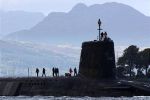
We’ve been here before: Hacker’s ‘Grand Design’, a scheme to save money by cancelling Trident. The BBC reports that the coalition plots a similar ruse – the renewal of Trident is understood to have been deferred until after the next election. This is the best of bad a situation. Britain has an independent nuclear deterrent, albeit nearing obsolescence. Trident’s renewal Is a point of contention for the coalition – with the Tories for and the Lib Dems against. Better to delay than squabble.

Clegg gets forceful over welfare

From our UK edition

Enter Nick Clegg with another self-assured article for a national newspaper. A few weeks ago, it was his defence of the coalition's Budget for the FT that caught the eye. Today, it's his case for welfare reform in the Times (£). These may be arguments, about dependency and disincentives, that you've heard before – but here they're packaged in a particularly clear and persuasive way. Just what's needed as the welfare wars, between Labour and the coalition, spill back into newsprint.   Writing about the article, the Times frames it as "Nick Clegg [putting] himself on a collision course with his party" – and you can see why they might think that.

How the unions oppose the achievement of more for less

From our UK edition

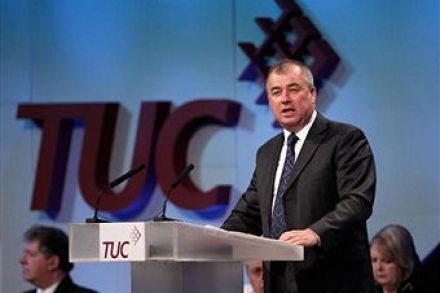
The TUC’s attack on a leading public sector reformer, reported today, was designed to embarrass him and discredit the idea of reforming the public sector.  In fact, it has shown that they will oppose any change to the public sector workforce, even if it results in a better service for the public.   According to reports (here and here), TUC staff yesterday handed out copies of the transcript to Reform’s conference on public sector productivity.  They highlighted a quote from the presentation by Tony McGuirk, the chief fire officer of the Merseyside Fire and Rescue Service (FRS), that, “we’ve got some bone idle people in the public sector”.  Tony McGuirk apologised for the tone of his remarks this morning.

Citizen Castro rains on Comrade Hattie’s last parade

From our UK edition

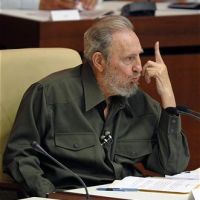
There was praise for Fidel Castro – of all people – at PMQs today. That the tribute came from a Tory MP must make this a unique event in the annals of parliament. Castro’s recent admission that Cuba’s state monopolies might profit from a little nibbling around the edges gave Priti Patel, (Con, Witham), a bright idea. She asked the prime minister if the Marxist cigar-enthusiast might visit the TUC Conference to share his economic vision with the brothers. The PM, who seemed calm, fresh and genially bullish today, caught the joke and ran with it. He offered his own tribute to the semi-retired dictator. ‘Even Comrade Castro is on the same planet as the rest of us. Now we just need to get Labour and the unions across as well.

Another difference of opinion on welfare?

From our UK edition

For the briefest of moments, the welfare war seemed to have quietened down. But, this morning, a new front may have flared open. Answering questions from the work and pensions committee, Iain Duncan Smith has struck out against the figures for benefit cuts that emerged at the weekend. The Guardian's Haroon Siddique reports: "During questioning by the work and pensions committee, Duncan Smith was at pains to play down newspaper reports that he and Osborne were at loggerheads with each other. But when asked by committee chair Anne Begg about a variety of figures that had been 'bandied about' including the £11bn savings set out in the June budget and the £4bn, he responded: 'As with regards to figures like 4bn, I simply do not recognise that figure at all.

Harman’s last hurrah

From our UK edition

Today is Harriet Harman’s last PMQs as acting Labour leader. I suspect that Harman, who has performed far better than people expected she would, might well go on the story in The Times this morning about how the coalition is cutting a review into how rape cases are handled to save money. Immediately after the coalition was formed, Harman had considerable success at PMQs pressing David Cameron on the coalition agreement’s commitment to granting anonymity to rape suspects, something that had made it into the coalition agreement by mistake. If Harman went with the shelving of the rape review today, she would again put Cameron on the back foot. This cut also plays into Labour’s alarmist rhetoric about how the cuts are dangerous and will put people at risk.

A Whitehall cabal has Fox by the short and curlies

From our UK edition

The Defence Select Committee delivers a familiar litany this morning. The Strategic Defence Review (a structural reform of Britain’s defence establishment) is being driven by savings not threat, consultation has been insufficient and cuts will be implemented at terrifying speed. The committee’s report concludes that the review will be to the detriment of Britain’s defence capabilities. Liam Fox’s summer battle with Downing Street has been overshadowed by IDS’ belligerence. In truth Fox has already lost. The National Security Council, the Treasury and the Cabinet Office have put him in a strait-jacket and hijacked his review.

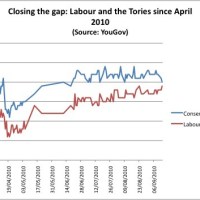
YouGov has Labour and the Tories at their closest since October 2007

From our UK edition

Factor in the usual caveats about polling so soon after a change of government, but the latest Sun/YouGov poll is still pretty eyecatching. It has the Tories on 40 percent, Labour on 39 and the Lib Dems on 12 – the smallest gap between the two main parties since the election-that-never-was in October 2007. Here's a graph of the the two parties' positions since the beginnning of the general election campaign: The Pollmaster General, Anthony Wells, suggests that Labour will overtake the Tories any day now.