Uk politics

Reforming incapacity benefit will not be easy – but it is crucial

From our UK edition

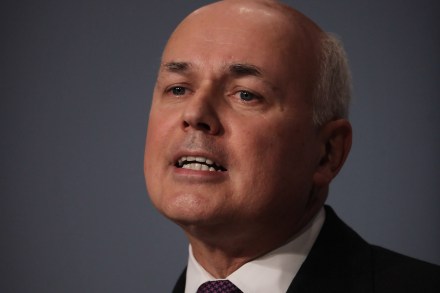
'500,000 to lose sick pay as welfare reforms bite'. Those words boom from the front-page of the Times this morning – and they're based on an article by Iain Duncan Smith (£) in which he admits that some 23 percent of the country's 2.1 million Incapacity Benefit claimants could be found fit for work. This, it is said, should save the Exchequer some £4 billion. The numbers are striking enough, but the policy behind them shouldn't be surprising at all. Even the last Labour government intended to reverse a political deceit that they had nurtured, but which was birthed during the Thatcher years: the artificial swelling of the sickness rolls. And the coalition has long planned to put rocket boosters under that process.
Vince Cable’s discomfort is shared by the coalition

From our UK edition

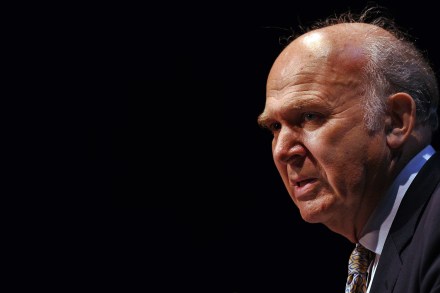
The trouble with holding a ministerial debate in public is that, when it comes to the crunch, it's obvious who the winners and losers are. So it is with Vince Cable and higher education funding. A couple of months ago, the business secretary tap-danced onto the stage with a (problematic) plan for a new graduate tax. Now, it seems clear that the Browne Review will reject his advice (£) in favour of increasing tuition fees. And so Cable has had to send out an excruciating email explaining why a graduate tax was never really a good idea in the first place. After the flip comes the flop, so to speak. But this isn't just about Cable's embarrassment.

Rochdale, revisited

From our UK edition

Putting Ed Balls into Home Affairs is like trapping a bee in a jar: he’ll come out furious, and anxious to sting. In his new brief, he has immigration. And he’ll know Cameron’s vulnerabilities. The greatest threat facing the coalition doesn’t come from Ed Miliband. It comes from a deep dysfunction in Britain’s economy: that when it grows, we just suck in more workers from overseas. Balls knows this, and the resentment it causes in affected communities – which is why he was talking tough on immigration during the leadership contest. He knows where the economic bodies are buried: he dug the graves. He also knows that unless Cameron manages to make work pay, he’ll end up with what is – for UK workers – a jobless recovery.

The consequences of the child benefit row

From our UK edition

"You only get cut through when there’s a row," one Tory observed to me on Friday as we discussed the anger that had followed George Osborne’s announcement on child benefit. So in one way, the Tories are not unhappy with the fact that this story is still rumbling on. It is imprinting on the public mind that the Tories have hit the well-off. This is in advance of a spending review that is bound to hit hardest those people and regions that are most dependent on the state. Following the media coverage of the child benefit row, it will be much harder for Labour to make the charge that the cuts are socially divisive stick. It really does appear that "we are all in this together."   But there are two things that do worry the Tories about the row.

Abbott caps Miliband’s defensive reshuffle

From our UK edition

Those months of campaigning have finally paid off for Dianne Abbott. She has been made a Shadow Health Minister – which resembles a proper job. She was against the Blair-Milburn reforms in the NHS, regarding them as too pro-market – so let’s see if she keeps this position in opposition, thereby throwing more soil on the grave of New Labour. One can imagine the fear running down Andrew Lansley’s spine at this new team: John Healey and Abbott. It’s just baffling. In the bars at conference last week, I met many Tories who are increasingly worried at the pace and preparedness of Lansley’s proposed NHS reforms. But instead of marking him with some forensic, vicious attack dog (or his wife), Miliband chooses someone, well, rather less than forensic.

Spectator Exclusive: Britain’s welfare ghettos

From our UK edition

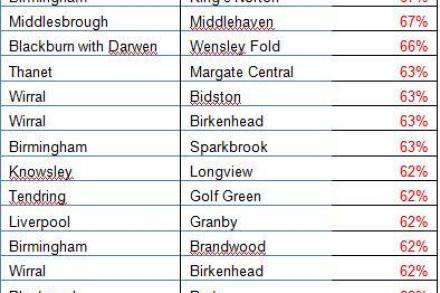
Today we are releasing a brand new picture of the nation’s welfare ghettos. Our research gives a disheartening insight into the extent of dependency in England and Wales. The top line: things are getting worse. This is much more detailed and useful information that the statistics often bandied about by politicians. It is well known, for example, that nearly 2 million people have been claiming out-of-work benefits for more than five years. But what does that look like?

Who speaks for Scotland?

From our UK edition

Ten years ago, when I was doing my tour of duty as a reporter in the Scottish Parliament, I had a talk with an SNP figure, who shall remain nameless, about their grand plan. Scotland was to be a nation, and that means its politicians perform in certain ways. They wanted to look like statesman, with a state. Their opportunity lay in crisis. “So when there is a disaster overseas, we will have Scottish aid leaving a Scottish airport,” he said. “When a Scot dies overseas, we have the Scottish First Minister sending condolences.” He didn’t say that, when a Libyian murderer wants to be released, the SNP can use this to thumb their nose at Wicked America and posture on the world stage.

Lansley tries to reassure the doubters

From our UK edition

Andrew Lansley has been on the defensive today, calmly reassuring the political nation that GPs are content with his NHS commissioning reforms. A majority of GPs are not at all happy, according to a Com Res BBC poll. 57 percent are unwilling ‘personally to take on the extra responsibility of planning and buying healthcare’ for their local communities. There are a number of reasons for their wariness, but lack of skill and training is the predominant one. Lansley says that GPs favour the reforms in principle – measures that turn GPs into suzerains, able to improve outcomes by designing patient care to local and individual needs and also to take responsibility so that failures can be swiftly reversed.

Huhne and the universal benefit conundrum

From our UK edition

Chris Huhne has given an interview to the Telegraph. According to the front page report, the Energy Secretary has nothing to say about nuclear power, new wind farms or energy security; but rather a lot to say about economic and social policies that are strictly beyond his purview. Jeremy Hunt’s belief that child benefit should be limited across the board is dismissed because there are ‘limits to how much we can achieve through changes in the tax and benefits system’ – this week’s Spectator argues otherwise. Huhne also registers his profound cynicism for the marriage tax break – no surprises there and he has a point that austerity should not pass over matrimony.

Breaking: Alan Johnson is shadow chancellor…

From our UK edition

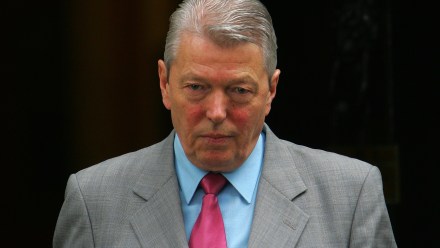
...and Yvette Cooper is shadow foreign secretary. Ed Balls gets shadow home. So, looks as though Ed Miliband has bypassed the family psychodrama with an appointment that few expected, or even thought of, until this morning. Johnson was 16/1 with Ladbrokes for the shadow chancellorship going into today. UPDATE: Paul Waugh has the full list. Here it is: Leader of the Opposition --- Rt. Hon.

How should Miliband respond to the child benefit reform?

From our UK edition

Daniel Finkelstein and Philip Collins’ email exchanges are always enlightening. This week, they discussed child benefit. Both think it has altered the markings on the playing field of politics. Ed Miliband is yet to respond: how should he? ‘From: Daniel Finkelstein To: Philip Collins If you were Ed Miliband, where would you go now on child benefit? First option: total opposition to the Government’s plan. You get to hoover up discontent but you don’t look much like a governing force, do you? And it seems hypocritical. Plus, you said you were going to support the Government on many cuts. If not this, then what? Second: you go with it. You look big, you look grown up, but lots won’t like it.

A cul-de-sac of Gordon Brown’s making

From our UK edition

Earlier in the week, Liam Fox gaily described the Prime Minister as his ‘closest ally’ – a statement which aroused a little cynicism. But it seems that Fox was not exaggerating. According to the FT, Cameron now backs the navy’s grand blue-water strategy. Cameron’s about turn is striking: the last time the National Security Council convened he supported David Richards (he still does to an extent, pledging that army troop numbers will not be cut). The strategic arguments have not changed, which suggests that the politics has. Fox’s letter was one thing, the Clyde shipyards another.

Cameron sells the Big Society to the public sector

From our UK edition

David Cameron clearly wants us to waltz into the weekend with the Big Society on our minds – so he's written an article on the idea for the Sun. It rattles through all the usual words and phrases, such as "responsibility" and "people power", but it strikes me how he applies them just as much to the public sector as to the general public. This is something that he did in his conference speech, describing the "Big Society spirit" of a group of nurses: "It's the spirit that I saw in a group of NHS maternity nurses in my own constituency, increasingly frustrated by the way they were managed and handled, who wanted to set up a co-op to use their own expertise, their ideas, their contacts to provide a better serice for the mums in their area.

Osborne has a laid a trap

From our UK edition

One of the most intriguing questions about the decision to take child benefit away from households with a higher rate taxpayer in them is whether it marks the beginning of the end for universal benefits. The quotes today from Michael Fallon, the Tory vice-chairman, certainly suggest that it does. Fallon ridicules Ed Miliband with the line: “He wants to tax the poor to give benefits to the better off.” Now, if you accept that the poor are currently being taxed to provide child benefits for the rich (a slight exaggeration given that higher rate taxpayers contribute far more than they take out in services) then this argument applies with equal force to all other universal benefits.

Hutton points the way forward on pensions

From our UK edition

John Hutton's interim report on public sector pensions today will go down as one of the most important moments in the public service reform story.  John Hutton doesn't just set out the principles for putting public services on a sustainable footing, although he does do that (by explaining the inadequate levels of contributions into these schemes).  More importantly, he confronts head-on the problem that public sector pensions pose for the opening up of public services to competition. One of the key reasons that many companies have waited on the sidelines of the public sector for years is the disparity between public and private pensions.

The battle for the low-paid working class

From our UK edition

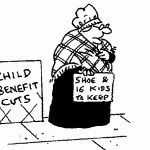
  Should families on welfare limit the number of babies they have? Jeremy Hunt suggested so last night - kicking off a debate fuelled by our disclosure in today’s Spectator about just how many out-of-work claimants have 6, 7 and 8+ children. The moral argument is pretty clear. Before a worker wants to expand his family, he usually thinks about whether he can afford it. It’s far from uncommon to hear people say that they’d like, for example, three kids - but this brings with it a certain financial requirement (size of house, car, etc) which is prohibitive (and far bigger than can be offset by child benefit). Yet the reverse financial incentives exist for parents on benefits. The more children they have, the more the state gives you.