Uk politics

The Postie’s twinkle

From our UK edition

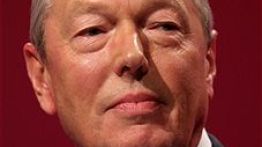
The Postman's eyes twinkled as he met George Osborne across the dispatch box for the first time this afternoon. With the air of an apologist who isn't remotely contrite, Alan Johnson told the House of his 'vast experience in this job' and gave the impression he was having a blast. This jolly masque hid an insubstantial performance. Johnson latched on to Chris Huhne's vow that he would not be 'lashed to the mast' of needless spending cuts - Johnson wondered if the deficit might not be eradicated within one parliament. Osborne said that it would. Then Johnson repeated the substance of his attacks of the weekend.

Winning over the squeezed middle

From our UK edition

Politically, one of the key questions about Lord Browne’s suggestion that tuition fees should be raised is how the tribunes of the middle classes react. Will a rise in fees be seen as another burden on those who work hard, play by the rules and are already bearing more than their fair share of the costs of the state? If the argument is to be won, the coalition will have to show that students will now get more out of their university experience. There’ll have to be an emphasis on how these changes will make universities improve the quality of the teaching that they offer. It’ll be worth watching to see if the question of who can increase the interest rate flares up over the next few weeks.

Cable and Clegg scrambling to repel errant MPs

From our UK edition

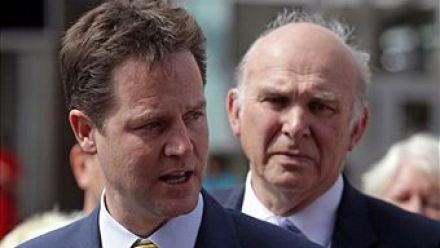
The Lib Dems have met the Browne report with a mixture of cordiality and outright antipathy. According to the Guardian, Greg Mulholland is the ring-leader of a band who will vote against a fee rise come what may. Lib Dem ministers are describing the Browne report as ‘unpalatable’ in its current form but recognise that fees must rise and are ‘keeping their powder dry’. The stumbling block is Browne’s recommendation that interest free loans be scrapped. This stark move was to be offset by raising the threshold and tapering interest rates to protect the disadvantaged. There are also concerns that the affluent will be able to pay off their debt quickly, whilst everyone else is lumbered with debts for 30 years.

An unlikely alliance against Murdoch

From our UK edition

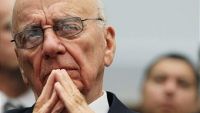
The Guardian, the Daily Telegraph, the Daily Mail, the Daily Mirror, Channel Four, British Telecom and the BBC have united in common cause: stop Rupert Murdoch. This has to be The Digger’s greatest achievement: not since Waterloo has more motley a coalition been scrambled to resist a ravening tyrant. The signatories have written a letter to Vince Cable, who is to adjudge if Murdoch’s proposed full ownership of BSkyB will endanger media plurality. In reality, this hostile alliance is about more than plurality; it is a battle for the control of the news in a digital future.

The scale of IDS’ and Gove’s challenge

From our UK edition

Yesterday was a day of weighty reports. At 700 pages, the Equality and Human Rights Commission’s ‘How Fair is Britain?’ won the thoroughness stakes. Aside from the usual findings that a disproportionate number of young black men are imprisoned and that the white working class is outperformed at school by Indian and Chinese migrants, it made some telling discoveries. The report found that a staggering 50 percent of Muslim men and nearly 75 percent of Muslim women are unemployed in certain regions. No clues as to where, though the reasons as to why should now be familiar: the figures correspond with the Centre for Policy Studies’ view that Britain has the highest rate of household worklessness in Europe.

A sustainable and permanent solution

From our UK edition

‘A sustainable and permanent solution’, that was Lord Browne’s refrain this morning. Browne has aimed to fill the £1bn university funding black hole with a system that doesn’t prejudice the disadvantaged or force universities to privatise. Browne recommends that the tuition fee cap goes, but insists the Treasury should collect a levy from universities that charge above £6,000: fees set at £9,000 will cede 50 percent of £1,000 above £6,000, which will rise to 75 percent for fees of £12,000. This tapered levy is designed to discourage institutions from charging US-style of £20,000.

Green refuses to name names

From our UK edition

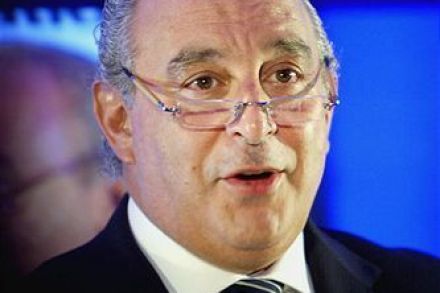
In the government’s grid for the week, Sir Philip Green’s report into how to make the public sector more efficient was meant to be the top story today. For an obvious — and tragic — reason it is not. Politically, the report was meant to help the government make its case that the cuts can be done without throwing Britain back into some Hobbesian state of nature. Indeed, Sir Philip suggests to Robert Peston that a very large chunk of the £83 billion cuts that are needed can be made through savings on the government’s £191bn  property and procurement costs. But as Pete notes, identifying government waste is far easier than actually dealing with it.

The AV rebels change tack

From our UK edition

A little snippet from today's Times (£) that is worth noting down: "Tory rebels will this week lift their threat to the date of next year's proposed referendum on voting changes – because they believe May 5 offers the best chance of stopping the alternative vote (AV) system. That date coincides with the council elections in Scotland, Wales and most of England, and was thought likely to boost the 'yes' vote for replacing first-past-the-post general elections. Nick Clegg insists that the Lib Dems will not budge on the date. But a tactical rethink will see many AV sceptics wave it through when the Bill comes to the floor of the Commons this week.

What a coincidence…

From our UK edition

Ed Howker's weekend post about life in Rochdale – and The Spectator's study of welfare ghettos – has made the news today. There's a powerful spread in The Sun, with full and due attribution to the source. But the Daily Mail also ran the figures, incorrectly attributing them to the DWP. (We expressed DWP dole figures as a share of ONS population estimates. The resulting ratio only we produced.) We at The Spectator have no doubt that the Daily Mail reporter did actually visit Rochdale. It's just that her material looks as if it could have been copied from Ed's Coffee House post. Here are some coincidental overlaps: Coffee House source: "Everyone wants 'the sickness' [incapacity benefit]. Then you've really made it. You don't have to turn up for work or sign on.

David Cameron: Linda Norgrove may have been killed by US rescue team

From our UK edition

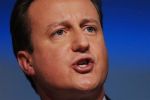
David Cameron arrived at his press conference forty-five minutes late, and was visibly shaken when he took to the microphone. A few sentences in, it was clear why. "Linda [Norgrove, the British aid worker who recently died in Afghanistan] may not have died at the hands of her captors as originally believed," Cameron said, "[she] could have died as a result of a grenade detonated by the task force during the assault." The PM explained that he had been told this by General Petraeus this morning, and that Ms Norgrove's parents have since been informed. Cameron emphasised that he had backed the rescue operation, and believed that it was the right thing to do. "The best chance of saving Linda's life was to go ahead," he said.

Making the case for further tuition fees

From our UK edition

Ever the opportunist, Ed Miliband recognised that university funding could be the coalition’s first test of resolve. Opposing a tuition fee hike has given him the chance to serenade disgruntled Liberal Democrats and to discard New Labour’s sheen (which so incensed Alan Johnson, the minister who introduced the fee in such difficult circumstances). Miliband is determined to mould the Labour party in his image. Speaking on the Politics Show yesterday (16:20 in), he said that the party, Johnson included, will strive to deliver a graduate tax. After a summer’s procrastination, the government has run out of time. The substance of Lord Browne’s recommendations is in the public domain and it has caused disquiet on government benches.

Reforming incapacity benefit will not be easy – but it is crucial

From our UK edition

'500,000 to lose sick pay as welfare reforms bite'. Those words boom from the front-page of the Times this morning – and they're based on an article by Iain Duncan Smith (£) in which he admits that some 23 percent of the country's 2.1 million Incapacity Benefit claimants could be found fit for work. This, it is said, should save the Exchequer some £4 billion. The numbers are striking enough, but the policy behind them shouldn't be surprising at all. Even the last Labour government intended to reverse a political deceit that they had nurtured, but which was birthed during the Thatcher years: the artificial swelling of the sickness rolls. And the coalition has long planned to put rocket boosters under that process.

Vince Cable’s discomfort is shared by the coalition

From our UK edition

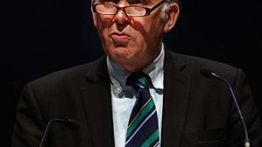
The trouble with holding a ministerial debate in public is that, when it comes to the crunch, it's obvious who the winners and losers are. So it is with Vince Cable and higher education funding. A couple of months ago, the business secretary tap-danced onto the stage with a (problematic) plan for a new graduate tax. Now, it seems clear that the Browne Review will reject his advice (£) in favour of increasing tuition fees. And so Cable has had to send out an excruciating email explaining why a graduate tax was never really a good idea in the first place. After the flip comes the flop, so to speak. But this isn't just about Cable's embarrassment.

Rochdale, revisited

From our UK edition

Putting Ed Balls into Home Affairs is like trapping a bee in a jar: he’ll come out furious, and anxious to sting. In his new brief, he has immigration. And he’ll know Cameron’s vulnerabilities. The greatest threat facing the coalition doesn’t come from Ed Miliband. It comes from a deep dysfunction in Britain’s economy: that when it grows, we just suck in more workers from overseas. Balls knows this, and the resentment it causes in affected communities – which is why he was talking tough on immigration during the leadership contest. He knows where the economic bodies are buried: he dug the graves. He also knows that unless Cameron manages to make work pay, he’ll end up with what is – for UK workers – a jobless recovery.

The consequences of the child benefit row

From our UK edition

"You only get cut through when there’s a row," one Tory observed to me on Friday as we discussed the anger that had followed George Osborne’s announcement on child benefit. So in one way, the Tories are not unhappy with the fact that this story is still rumbling on. It is imprinting on the public mind that the Tories have hit the well-off. This is in advance of a spending review that is bound to hit hardest those people and regions that are most dependent on the state. Following the media coverage of the child benefit row, it will be much harder for Labour to make the charge that the cuts are socially divisive stick. It really does appear that "we are all in this together."   But there are two things that do worry the Tories about the row.

Abbott caps Miliband’s defensive reshuffle

From our UK edition

Those months of campaigning have finally paid off for Dianne Abbott. She has been made a Shadow Health Minister – which resembles a proper job. She was against the Blair-Milburn reforms in the NHS, regarding them as too pro-market – so let’s see if she keeps this position in opposition, thereby throwing more soil on the grave of New Labour. One can imagine the fear running down Andrew Lansley’s spine at this new team: John Healey and Abbott. It’s just baffling. In the bars at conference last week, I met many Tories who are increasingly worried at the pace and preparedness of Lansley’s proposed NHS reforms. But instead of marking him with some forensic, vicious attack dog (or his wife), Miliband chooses someone, well, rather less than forensic.

Spectator Exclusive: Britain’s welfare ghettos

From our UK edition

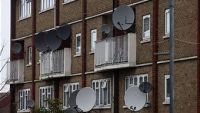
Today we are releasing a brand new picture of the nation’s welfare ghettos. Our research gives a disheartening insight into the extent of dependency in England and Wales. The top line: things are getting worse. This is much more detailed and useful information that the statistics often bandied about by politicians. It is well known, for example, that nearly 2 million people have been claiming out-of-work benefits for more than five years. But what does that look like?