Uk politics

Cameron resuscitates the Big Society

From our UK edition

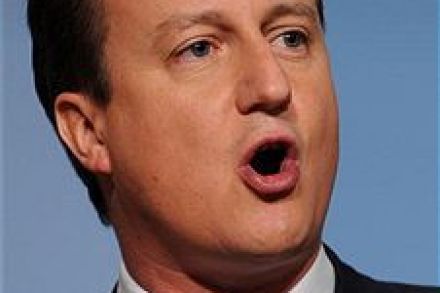
This was the perhaps the lowest-octane speech David Cameron has ever given to the Tory conference. He didn't need to give the speech of his life, for once - so he didn't. He dutifully ran through all the various points of government policies, but there were too many of what Art Laffer calls MEGO figures (my eyes glaze over). It's odd, because Cameron can speak so well when he needs to. Compared to the speeches we heard yesterday - from Gove and IDS - it was oddly uninspiring. He spoke about his government's "beating, radical heart" with no real enthusiasm - as if he received the speech only recently, and didn’t rehearse too much. It was too long, was repetitious in places.

Cameron’s peculiar speech

From our UK edition

Ok, so that was a peculiar kind of speech from David Cameron – neither wholly successful, nor wholly unsuccessful. In terms of its general tone, it was much as we expected: a dose of bitter realism about the public finances, lacquered over with heavy optimism about what the country can be. But its content was more surprising, brave even. For this was the moment when the Big Society returned with a vengeance. In truth, we haven't heard much in recent months about the idea that framed the Tories' election campaign. Coalition seemed to have displaced it from the Cameroonian lexicon, if not their thinking. But it made an early appearance in one of the most unconventional sections of Cameron's speech.

David Cameron speech live blog

From our UK edition

1537, PH: And Cameron ends on that note, calling on the public to get involved in fixing society: "So come on: let's pull together. Let's come together. Let's work, together, in the national interest." Standing ovation. More reaction on Coffee House shortly. 1537, PH: This is good, liberal-conservative stuff from Cameron. He says that the government recognises that it is there to push power to the people. "I know the British people: they are not passengers, they are drivers." 1535, PH: Strong line: "Mine is not just a vision of a more powerful country, it is of more powerful people." 1536, PH: The Big Society returns, with a lenghty section on volunteering and social action. Cameron calls this a "call to arms".

The government’s strategy has kept the child benefit story running

From our UK edition

We have heard much since the coalition was formed about how Cabinet government has been restored. The child benefit flap reveals how limited this restoration is. There was no Cabinet approval of the decision and, as Andrew Grice confirms this morning, Iain Duncan-Smith was unaware of the change until the morning of the announcement. The other thing that strikes me, as someone who supports the idea and thinks it is potentially good politics, is the very odd approach to spinning this story.

A hard-headed case of <em>déjà vu</em>

From our UK edition

It was as if we’d been transported back a week – here was William Hague talking about ‘hard-headed foreign policy’, the very phrase that David Miliband had used before he swanned-off into the wilderness in a floral shirt. The details of the two speeches had much in common – an emphasis on free trade, a promise to garner new strategic and economic partnerships in South America and the Near East, balance in the Israeli and Palestinian dispute, global solutions to climate change and a promise to export human rights. Hague differed in not mentioning liberal interventionism and laying historical and partisan claim to free trade, arguing that the European Commission’s protectionist bent was ‘backward-looking and doomed to fail’.

Fox to the rescue

From our UK edition

The best form of defence is attack. Liam Fox distracted conference from the various rows that have afflcited it by castigating Labour’s abysmal record on defence. He was helped enormously by the terrorist outrage in Sanaa, the Yemen – a cowardly atrocity that reinforces his observation that ‘the country's finances are wrecked and the world is more dangerous than at any other time in recent memory.’ He recited the refrain that cuts are regrettable but necessary, before adding that, thanks to Labour, Britain has to fight on with less.

Cameron stumbles onto the stage

From our UK edition

Who'd have guessed that David Cameron would go into his conference speech on the backfoot? This was supposed to be a moment tinged, if anything, with jubilation: the first Tory PM for thirteen years addressing a party that seems to have fallen in love with him. But instead we've got the child benefit row, and with it apologies, rebuttals and hasty repositioning. It is to Cameron's credit that he can breath the two words that evade other, more culpable politicians: "I'm sorry". But on the eve of his big speech? Far from ideal. This exercise in damage limitation may have slightly eased Cameron's situation today – but it has put him in a more difficult long-term position.

Scottish Tories won’t oppose AV

From our UK edition

Annabel Goldie, leader of the Scottish Conservatives, made an odd admission at a fringe event last night. Asked how she would campaign against AV next May, she disclosed that there wouldn’t be a concerted campaign because ‘people have already made-up their minds’. I’m told that David Mundell, Parliamentary Under-Secretary of State for Scotland, sat in impassive agreement while the audience raised its collective eyebrow. Conservatism hasn’t scaled Hadrian’s Wall for twenty years. Representation is thin because residual loathing for Thatcher and Major runs deep. Loud partisanship against AV may incite the hostile populace to vote for it out of spite. Discretion looks the better part of valour.

IDS sets out his vision for combating poverty

From our UK edition

There was a quiet momentousness about Iain Duncan Smith's speech in Birmingham today – even before he started speaking. When IDS resigned the Tory leadership in 2003, he could barely have imagined that he would one day address his party as a leading member of the government. Even a few weeks ago, he couldn't have been sure that the coalition would implement the policy agenda that he developed during his time at the Centre for Social Justice. Yet here IDS was, receiving a standing ovation for his efforts. What a difference seven years make. And then to the speech itself. Much of it reverberated to the same reforming drumbeat that we've heard throughout this Tory conference.

Boris well ahead in the first Mayoral poll

From our UK edition

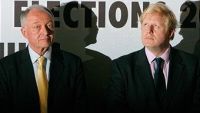
The first Boris vs Ken poll of the season carries an obvious health warning: there are other candidates to come, not to mention another one-and-half years of the current mayoral term. Yet Tories might still be pleased that their man is 9 points ahead of his predecessor and main rival at this stage. And that's even with Labour beating out the Tories, in the same poll, when it comes to London's general election voting intentions. Andrew Gilligan puts two and two together to create a striking parallel: Boris is more popular than the Tory party in London, whereas Ken is less popular than Labour. Stir in the fact that Livingstone is polling lower than he did in the 2008 election, and his enforced spell on the sidelines has clearly done little to bolster his reputation.

Cameron says “yes” to the Trident upgrade – but questions remain

From our UK edition

Courtesy of Ben Brogan, one of the most noteworthy passages from David Cameron's appearance on Today this morning: 'Jim Naughtie: Is the Trident upgrade untouchable? David Cameron: We do need an independent nuclear deterrent… JN: Is that a yes? DC: Yes. Basically I was going to give you a longer and fuller answer but the short answer is yes… To me and the Coalition government, yes, Britain’s independent nuclear deterrent is being replaced.' It is certainly the most assertive that Cameron has been on the subject since the advent of the coalition, but a couple of questions remain that prevent it from being utterly unequivocal. First, what timeframe is the PM operating along?

This is not a 10p tax moment

From our UK edition

Last night, one minister came up to me nervously and asked, ‘is this our 10p tax moment?’ He was talking, obviously, about the decision to take child benefit away from households with a higher rate taxpayer in them.   My answer was no. The comparisons with Brown’s removal of the 10p tax rate miss a crucial point: Brown tried to hide what he was doing. In his final Budget statement to the Commons, the abolition of the 10p rate wasn’t even mentioned. Instead Brown boasted about a 2p reduction in the basic rate, to huge cheers from the Labour benches.   By contrast, the Tories have been upfront about the fact that there are losers from this change.

Cameron tries to defuse the child benefit row

From our UK edition

Whether you agree with the plan to restrict child benefit or not – and, broadly speaking, I do – there's little doubting that it has met with some fiery resistance in the papers today. The Telegraph leads the attack, calling it "a hastily conceived about-turn bundled out on breakfast TV". The Daily Mail highlights the "blatant anomaly," currently riling up the Mumsnet crowd, that a single earner family on £44,100 a year might lose the benefit, while a dual earning family on £87,000 can keep it. And the Independent does likewise. It should be said, though, that the Sun, the Times and the Financial Times are considerably more generous about Osborne's proposal. The FT even calls on the Chancellor to go further.

Clarke ups the ante

From our UK edition

Perceptions count and the coalition are perceived to be vulnerable on crime. Its policy of reducing the number of prisoners on short-term sentences has been caricatured as a reduction in sentencing per se, a liberal assault on the consensus that prison works. I don’t agree with that analysis (which overlooks that excessive sentences in disorganised and overcrowded prison can create habitual criminals, who cost society in perpetuity thereafter) but readily concede that it’s easy to traduce the government as soft on crime, and I was surprised that Ed Miliband didn’t do so last week – as were plenty of Tories. In fact, opposition comes from within the Tory party, even from the government.

Withdrawing child benefit at 16 would be the wrong call

From our UK edition

In the last few weeks, there has been much speculation that child benefit would be stopped when a child reaches 16. Today’s announcement suggests that this is not going to happen, although the Tories are refusing to rule it out. If there are to be changes to child benefit — and given the financial situation there need to be — then removing it from households with a higher rate taxpayer is a better move than stopping it at 16. Child benefit ending at 16 would send out a message that at 16 a child should start earning its way in the world. This would, for obvious reasons, have a negative impact on social mobility as it would likely lead to fewer children staying on at school post 16.

The beginning of the end of universal benefits

From our UK edition

The most important line in George Osborne’s speech was this one: “It’s very difficult to justify taxing people on low income to pay for the child benefit of those earning so much more than them.” Logically, this argument applies equally to all other universal benefits. Why should someone on £12,000 a year be paying tax to help cover the cost of Ken Clarke’s pension? Personally, I’m quite happy to see universal benefits go. The end of universal benefits would, though, change the nature of the welfare state. Quite rapidly, it would become a safety net not a contributory system. This is why Labour will oppose so vigorously taking child benefit away from those on the higher rate of tax.

Is there an alternative to cutting child benefit?

From our UK edition

Beware a mother scorned. George Osborne’s copping some stick on Mumsnet, social forum for the Latte-drinking classes, and with good reason. 'Hard-working families’, many of them far from rich, will feel abandoned by the party that ought to be theirs. IDS, Cameron and Osborne have taken a huge a political gamble, as James noted earlier, and they have also taken an enormous social risk. It is telling that the Centre for Social Justice, IDS’ think tank, are lukewarm about the proposal, describing it as ‘probably appropriate’ but calling for an alternative.  Skipping through the comments on Mumsnet and you can see why.

Boris vs the unions

From our UK edition

It was all so Osborne-a-go-go earlier that we didn't have chance to mention Boris's speech to the Tory conference. By way of rectifying that oversight, here's footage of the Mayor of London taking on the trade unionists who have organised a Tube strike today.