Uk politics

Welfare dominates Osborne’s speech

From our UK edition

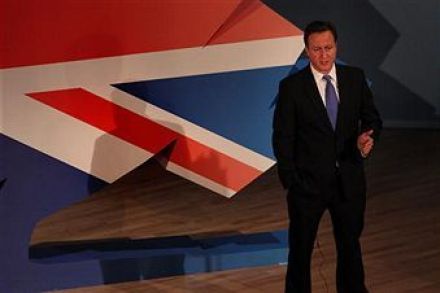
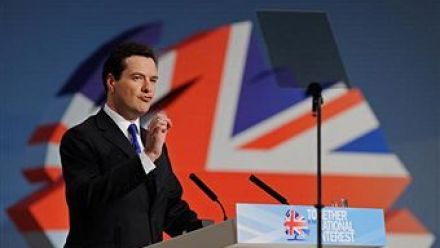
George Osborne delivered everything we expected, and then some. This was a confident and wide-ranging speech from a Chancellor who has suddenly discovered a central message: what's right about burning £120 million of taxpayers' cash in debt interest payments every day? Wouldn't it be better to get to grips with that waste as soon as possible? And that message percolated down through everything from his attack on Ed Miliband to his case for reforming our public services. "It's like a credit card," Osborne growled, "the longer you leave it, the worse it gets." But if that was the theme of Osborne's symphony, then the motif was certainly welfare.

Osborne’s benefit risk

From our UK edition

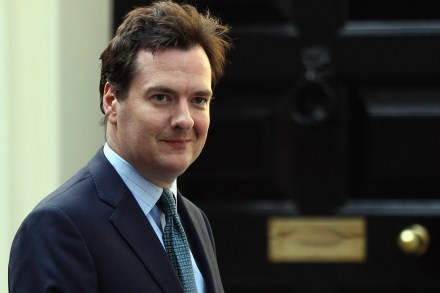
George Osborne’s announcement that child benefit will be taken away from any family with a higher rate taxpayer in it to help fund welfare reform shows how far Cameron and Osborne were prepared to go to keep Iain Duncan-Smith on board. During the campaign and in the Budget, Cameron and Osborne had strongly implied that child benefit would remain universal. The move carries it with considerable political risks. The measure takes effect from 2013, so before the country will have seen the benefits of welfare reform.

Osborne can go even further on middle-class benefits

From our UK edition

George Osborne had been expected to subject child benefits to tax. Instead he is to abolish them entirely for higher-rate taxpayers. I've spent this morning talking to friends, whose judgment I respect, who are furious about Cameron hitting the squeezed middle. I cannot agree, and here's why. We are not talking about the "squeezed middle" here – of the 30.5 million income tax payers in Britain, just 3 million pay the top rate of tax (figures here). They're the best-paid 10 percent – and I have never worked out why the tax of the average worker (who's on £22k) should be higher to afford the payment to those on twice as much money. Osborne reckons he will save £1 billion by this measure. If there are to be cuts, this strikes me as a fair cut.

Osborne takes to the stage, armed with cuts

From our UK edition

Rewind the tape to last year's Tory conference, and David Cameron was assuring us that, "It will be a steep climb. But the view from the summit will be worth it." Today, it falls to George Osborne to tell us more about both the arduousness off the ascent and the beauty of that view – although I expect that there will be a heavy empasis on the former. Already, the main passages are spilling into the papers and, as you'd expect, it's mostly cuts and debt. On that front, the main argument seems to be similar to that made by Nick Clegg in Liverpool: that the longer it takes us to pay down our debts, the more money we waste thanks to interest payments and the like. Or as Osborne will put it, "Delay now means pay more later. Everyone knows it's the most basic rule of debt.

OBR Watch

From our UK edition

When Sir Alan Budd was head of the Office for Budget Responsibility, there was an insistent argument in opposition circles that the independent body was biased in favour of the coalition. Much of this cented around the OBR's growth predictions. How on Earth, came the question, can growth hit 2.3 percent next year and 2.8 percent the year after? Isn't that a bit optimistic in view of all the warnings about a double dip? Won't the cuts stifle growth? And so on and so on. A few months ago, I produced a graph which showed that, when compared to a range of independent forecasts, the OBR's growth predictions weren't really optimistic at all.

The Coulson story returns (again)

From our UK edition

Call it a professional hunch, but I suspect the Tories won't be too pleased that this Guardian story has come out on the first day of their conference. It's about Andy Coulson – and, much like the revelations in the New York Times Magazine last month, features one of his former colleagues alleging that Coulson knew all about the telephonic subterfuge going on at the News of the World. That journalist tells Channel 4's Dispatches that: "Sometimes, they would say: 'We've got a recording' and Andy would say: 'OK, bring it into my office and play it to me' or 'Bring me, email me a transcript of it.'" It's evocative stuff, but – as before – I imagine it's also unprovable. In which case, the Tories will probably just ignore it.

Ken Clarke in the firing line

From our UK edition

There’s an intriguing pre-conference story in the Mail on Sunday today. The paper reports that: “Ken Clarke faces a whispering campaign by allies of David Cameron and George Osborne to move him from Justice Minister because of his ‘disastrous’ views on law and order, it was claimed last night. Conservative MPs say Mr Cameron and Mr Osborne are ‘ frustrated’ by Mr Clarke’s refusal to take a tougher line on key issues such as prison sentencing.” Clarke’s liberal views on criminal justice certainly are infuriating his colleagues. Allies of Theresa May have been heard to complain that "Ken is going to send the crime rate soaring and we’re going to get the blame.

How Osborne and IDS reached agreement

From our UK edition

I have found out a little more about the Universal Credit – and how the arguments over the summer were resolved. First, the backdrop. Money was always going to be a problem. This policy is about saving lives, not money. Right now, we pave the road to welfare dependency, creating a vacuum in the labour market that sucks in workers from overseas. Under Brown, the Treasury accepted this: cheap workers pay tax too, and as do companies who profit from them. Result: tax receipts up, but never fewer than 5 million on out-of-work benefits throught the boom years. The IDS plan was not sprung on Osborne. As I blogged a while ago, it was Osborne who suggested bringing him back – to implement this very policy.

Cameron sets the mood for Birmingham

From our UK edition

It's that time of year again: Conservative Party conference. And with it comes wall-to-wall David Cameron. Our PM has a couple of interviews in the newspapers today and, to accompany them, he slotted in an appearance on the Marr show earlier. In all three, he hops neatly across the all same lily pads – spending cuts, IDS's historic benefit reforms and the defence budget – making the points and arguments you might expect. Yet two snippets stand out, and are worth pasting into the scrapbook. First, Cameron's claim on Marr that, "We have got to ask, are there some areas of universal benefits that are no longer affordable?

What to do with Balls?

From our UK edition

Ed Balls is adept at opposition – making a case throughout the recent leadership hustings for immigration controls that he knows are unworkable in practice. Mike Smithson reports than a senior Lib Dem thinks Ed Balls would be an ideal opponent for Liam Fox, the man to exploit the coalition’s most obvious weakness. It’s a salivating prospect for the independent observer – confrontation between two skilled and principled communicators – and if anyone can damage a Conservative-led government on defence it is Balls. But there’s the rub. In their ideal worlds, Balls and Fox don’t differ on the broad principles of defence policy.

Labour’s historic mistake

From our UK edition

I’ve already mentioned George Osborne’s interview with the Telegraph, but it certainly merits another. As Ben Brogan says, Osborne is in a rich vein of ‘election that never was’ form. As befits the inveterate schemer, Osborne’s tactical grasp is impressive. He is quietly vociferous about Labour’s ‘historic mistake’ in electing Ed Miliband. Revealing senior Tories’ continued respect for the electoral tenets of Blairism, he says: "They have chosen to move off the historic centre ground of British politics. I've seen more pictures of Neil Kinnock on television in the past week than I've seen in 20 years. That's old politics.

Fox, Osborne and Cameron engaged in Whitehall’s oldest battle

From our UK edition

Tory on Tory is a brutal cock-fight when defence is concerned. After the leaking of Liam Fox’s now infamous letter and David Cameron’s measured retaliation, George Osborne has broken his silence. Making unspoken reference to the £38bn black hole in the MoD’s budget, Osborne tells this morning’s Telegraph that he was ‘not thrilled’ to learn of Fox’s ‘do we really want to cut defence this much letter’ and says that Labour left the MoD in ‘chaos’, signing Britain up to ‘expensive and pointless projects’. The press will run this as a conference Tory splits story.

IDS the victor?

From our UK edition

There are still conflicting reports, but Michael Crick and The Times intimate that a deal has been struck: IDS has beaten the recalcitrant Treasury over his £9bn universal benefit reform, with David Cameron’s express help. As Frank Field put it on Sky News, IDS’ plan is ‘good for the country, good for the taxpayer and good for those dependent on welfare.’ Field gave no clue as to the final outcome of this battle, but victory for IDS would be a crucial moment in public service reform. If Crick and the Times are right then this is obviously fantastic news ahead of the Tory conference, where I feel David Cameron should explain to the country beyond the hall what positives a Tory government offers besides sound accounting.

BBC Tory conference strike suspended

From our UK edition

The warnings from Auntie’s leading hacks have been heeded – the strike has been cancelled. There is no done deal and the government is still in the union’s crosshairs: the strike has been delayed to the 19th and 20th October, the day of the comprehensive spending review, pending further consultation. All this raises a few points. First, Ed Miliband scores by having urged the NUJ to drop its plans in favour of impartiality – very New Politics, now matter how opportunistic the initial impulse to further debase the moniker ‘Red Ed’. The BBC has, for the moment, denied its detractors a major publicity coup, not that I think that Jeremy Hunt and the Tories would be crass enough to claim that a strike was evidence of biased journalism.

Why Cameron’s conference speech is vital

From our UK edition

Forget Ed Miliband’s promise of ‘optimism’ - a mantra that became so repetitive it had me reaching for the Scotch and revolver. Philip Collins has delivered a far more cutting verdict on David Cameron’s obsession with austerity. He writes (£): ‘Conservatives such David Cameron are not philosophers. The question to ask of Mr Cameron is not: what does he believe? It is: what problems does he inherit? Mr Cameron really does just want to fix the roof. The reason he wants to fix the roof is because it’s broken. The value he brings to this task is the insight that it is better to be dry than wet. He’s simple like that.

Many Lib Dems want to be part of the New Generation

From our UK edition

Politics tends to ruin an evening in the pub. On Wednesday, I came across a friend who had been a card-carrying Lib Dem prior to the coalition's formation. He confessed that he'd been impressed by Ed Miliband's speech and had joined the Labour party. Several other Lib Dem supporters attending agreed that Ed Miliband is a more attractive option than David Cameron and Nick Clegg. Everyone else in this small band (mostly unaffiliated voters with the odd furtive Tory) believed that Labour has probably elected the wrong Miliband, but were antagonistic to Labour in any case.

From the archives – Tories go to conference in government

From our UK edition

Strange though it seems in hindsight, the Tory party was not uniformly enamoured with Mrs Thatcher in 1979. The Tories were in government, but doubts over her ability to confront a resurgent Labour party, her shaky presentational skills and the direction of her policy pervaded the 1979 conference. David Cameron goes to Birmingham this week pursued by reservation’s persistent hum, and he does not have winner’s rights to rely on. Ferdinand Mount recorded that Mrs T’s wooden speech did not allay concern or win gratitude; will Cameron fare any better? But do they really love her? Ferdinand Mount – 20th October 1979 Hmm. Or rather perhaps, to put it more accurately, mmh. I quote from the Prime Minister’s speech at Blackpool, passim.

Vince walks the line on Europe

From our UK edition

Vince Cable was on best behaviour at the European Parliament yesterday afternoon. The twinkle of opposition was back, and he assured his audience that they would not be receiving one of those dour Hibernian lectures of blesséd memory. He had come, he said, merely to explain the coalition’s government’s European business policy.     Europe is a point of contention within the coalition, but one that is exaggerated. The coalition agreement is quite detailed on European policy, particularly on competences. Naturally, economic policy is more fluid, but the government, essentially, seeks further growth in the single market and closer economic co-operation to counter competition from the developing world.