Uk politics

Gove raises the spectre of an electoral pact

From our UK edition

Michael Gove has reignited talk of a Tory Lib Dem pact by urging people in Hull to vote Lib Dem to keep Labour out at the local elections. Gove’s intervention was not planned but it does reveal how he thinks. Gove’s department is the most coalitionised. Not only is there a Lib Dem minister there in Sarah Teather, tellingly the only Lib Dem minister not to moan to the Telegraph’s undercover reporters about her colleagues. But there is also David Laws, who is acting as an unofficial adviser to Gove. Anthony Wells’ thorough analysis of an electoral pact suggests that it could do well in the seats where it matters.  Obviously, all this discussion of pacts could be overtaken by events if AV passes.
A soporific session

From our UK edition

Labour are on the up. They strolled Oldham. They’ve recruited great armies of Clegg’s defectors. And they’d win a majority if a general election were held tomorrow. There’s been a lot of excited talk in Westminster about Tom Baldwin, Labour’s new communications attack-dog, coming in with his fangs bared and sharpening up their tactics. Well, it ain’t working so far, if PMQs is anything to go by. Ed Miliband had his dentures in today. He was humourless, slow to react and sometimes inaudible. His questions didn’t resemble even the most basic PMQs battle-plan, namely, a pre-meditated onslaught culminating in a simple powerful message presented in a memorable one-liner.

Aussie rules | 19 January 2011

From our UK edition

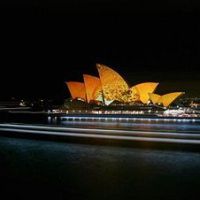
William Hague has been visiting Australia in the last couple of days, alongside half of the National Security Council. But you would not know it. Except for a few comments in the blogosphere, there has been little write-up of the visit in the newspapers. In many ways this encapsulates one of the government's key foreign policy dilemmas. Many of the world¹s problems require cooperation with the US, Europe and the BRICs ­ but especially the BRICs, who, for all their flaws and faults, are the fast-growing countries on the planet. If you want to force an end to Iran¹s illegal nuclear enrichment programme, then you need China. If you have any hope of stabilising Haiti, then you cannot do it without Brazil.

PMQs live blog | 19 January 2011

From our UK edition

VERDICT: No winners, and no real losers, from this week's PMQs. Miliband's questions were insistent and straightforward. Cameron's answers were forceful and, in themselves, fairly persuasive. A no-score draw, then, if you want to look at it like that. There were one or two worrying leitmotifs for the coalition, though. First, the PM's tendency towards grouchiness under fire; far less pronounced than it was last week, but still present. And then the continuing absence of any clear explanation of the NHS reforms, beyond "well, we had to change what was there previously." The PM has a point about cancer survival rates and the like, but he's not yet setting out how the coalition's policies will make a difference. 1230: And that's it. My quick verdict shortly.

There is a lot more to immigration than simply totting up the net migration figures

From our UK edition

The good news is that most people in Britain think that people in their local area mix pretty well  regardless of differences in race, religion and the rest of it. According to the latest Citizenship Survey from the Department for Communities and Local Government for April-September last year, about 85 percent of people think that their neighbourhood is cohesive, community-speak for the absence of overt ethnic and religious tension. But when it comes to attitudes to immigration a slightly different view emerges. About 78 percent of Brits would like to see immigration reduced; well over half, or 54 percent, want to see it reduced a lot. That's roughly the same level for the four years that this exercise in Cohesion Research has been underway.

Is it worth paying young people to stay on at school?

From our UK edition

Today's political news is brought to you by the letters E, M and A. Eeeema. While the political establishment debates the abolition of EMA – the Educational Maintenance Allowance – inside Parliament, campaigners will be protesting against it on the streets outside. The police, who are used to these things by now, have already set up the barricades. Behind all the fuss and froth, the argument is really this: is EMA good value? The coalition claim that paying 16-18 year-olds up to £30 a week to stay on at school is not only expensive, but also wasteful.

Miliband can’t credibly complain about both inflation and growth

From our UK edition

Today’s shocking inflation figures have sparked a fascinating debate. I laid out my take earlier, and I thought CoffeeHousers may appreciate a different perspective. Matthew Hancock MP is a member of the Public Accounts Committee, former economist at the Bank of England and former chief of staff to George Osborne. Fraser Nelson. Last week, growth. This week, inflation. Ed Miliband is complaining about both. But the trouble is: the two can’t be taken in isolation. For the main weapon against inflation is for the Bank of England to raise interest rates. Yet the main weapon to support growth is for the Bank of England to keep interest rates lower for longer. You can’t credibly complain about both.

Davis and Straw unite against prisoner voting rights

From our UK edition

David Davis and Jack Straw have joined forces to resist the enforcement of prisoner voting rights, an emotive issue bequeathed to the hapless coalition by the previous government. Beside the obvious moral question concerning prisoners’ rights, Davis hopes to open a second front in the struggle over sovereignty with the European Union. He told Politics Home: ‘There are two main issues here. First is whether or not it is moral or even decent to give the vote to rapists, violent offenders or sex offenders. The second is whether it is proper for the European court to overrule a Parliament.’ Unless Davis has confused his articles, his second point is invalid. This decision has nothing to do with the European Court or the European Union.

The inflation crisis deepens

From our UK edition

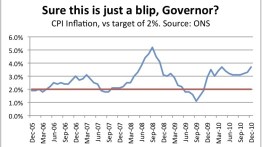
How big does inflation have to get before our politicians admit that it’s a problem? Once again, it has “surprised” on the upside - the CPI index stood at 3.7 percent for December, against a supposed target of 2.0 percent. And the RPI index, which the nation called “inflation” until Gordon Brown asked the media to use CPI instead, is running at 4.8 percent - almost twice its former target of 2.5 percent. That is the painfully high figure to which George Osborne has just added a juicy VAT increase, which is bound to take CPI above 4 percent. Inflation has been above target for three of the last four years - and still Mervyn King says it’s a blip. This is how he justifies the UK’s low interest rates (0.

MPs turn on PFI

From our UK edition

There is nothing like being wise after the event. The Public Accounts Committee has turned on the private finance initiative, saying there is ‘no clear evidence’ that PFI delivers more value for money and no evidence that taxpayers have shared the profits. The committee reported: 'There were instances where PFI may have been used where there was no evidence that it was the best procurement route. Local authorities and health trusts used PFI because there was no realistic alternative, not because it represented best value for money. The use of PFI and its alternatives should now be robustly evaluated. Looking back at PFI procurements, the government should also do more to find out where and why PFI works best and capture the lessons.

Let’s hope the paternity revolution stalls

From our UK edition

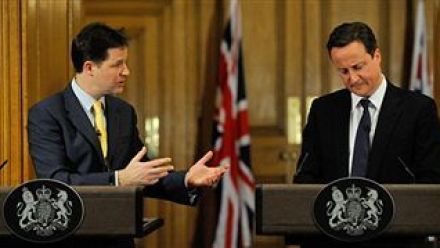
Nick Clegg’s announcement on the extension of paternity leave has been drowned by the cacophony surrounding NHS reform. The government is keen to describe itself as family friendly – with the exception of Vulgaria in Chitty Chitty Bang Bang, all government's do. Clegg hopes to bring flexibility to the workplace and relieve young mothers who would like to return to work. It’s an admirable aim, but there is only so far socially manipulative legislation can go before it becomes grossly counter-productive. David Frost, Director General of the British Chambers of Commerce, has made a strong case against further law. “Last week we saw changes to the default retirement age, in April we've got changes to the right to request flexible working.

Dorrell: I have reservations about the Health Reforms

From our UK edition

Stephen Dorrell, the former Health Secretary and current Chairman of the Health Select Committee, and Chuka Umanna appeared on the Daily Politics to debate Lansley’s latest reforms. Judging by this interview, Dorrell’s reservations seem to be of the constitutional rather than institutional variety. And Umanna avoided the question about whether these reforms have their genesis in the Blair/Milburn era, which suggests that Ed Miliband will denounce yet more of Blair’s record in the quest to detoxify his party’s brand.

Cameron’s rough ride on Today

From our UK edition

David Cameron’s interview on the Today Programme this morning was another reminder of what a hard year it is going to be for the government. The bulk of it was devoted to Cameron doing his best to defend and explain the government’s planned reforms to the NHS. Cameron, normally so assured in these interviews, seemed frustrated as John Humphrys kept pushing him on why he was doing it having condemned NHS reorganisations in the past.   Then, the interview moved on to bankers’ bonuses. As he did on Andrew Marr earlier in the month, Cameron implied that action was coming. But there were no specifics set out, and if action is coming it will contradict with the signals that the Treasury was sending out last week.

Too far, too fast?

From our UK edition

It is hubristic of David Cameron to talk of his ‘legacy’ at this stage in his premiership, not least because he invites criticism that the government’s public service reforms are going too far, too fast. The leaders of six health unions have reacted to the imminent publication of the Health and Social Care Bill with a concerned letter to the Times (£); they argue that price competition is divisive and that the reforms promote cost above quality. Dissent has spread far beyond the usual union suspects.

Labour may be doing alright, but Miliband is still dodgy on the public finances

From our UK edition

Ed Miliband's leadership may be young, but his trickery on the public finances is already well worn. We got it all in his interview with Andrew Marr earlier – and then some. There was the claim that Labour "paid down the debt" (that I dealt with here). There was the claim that Labour's spending was responsible (my response here). And there was a straight-up lie about Miliband's forecast for a double-dip. So far, so Brown. What caught my ear, though, was this exchange: Andrew Marr: I mean Tony Blair said in his memoir that by 2005, he was worried that the party was spending too much. And Alistair Darling said actually it was about 2007, he was worried that the party had been spending too much - before the crash happened.

Breaking the curious silence on upcoming tax changes

From our UK edition

This week, Nick Clegg added his name to the fast-growing list of politicians addressing the critical question of living standards. His phrase of choice was ‘alarm clock Britain’, in effect his version of Ed Miliband’s ‘squeezed middle’. It is, of course, a clunking label for what is a serious topic (hardly the first time a politician has achieved such a feat). But quibbles over terminology aside – and as Miliband’s article on Friday confirmed – these are the first serious shots in the political battle to frame the coalition’s crucial March Budget.

How it’s going right for Ed Miliband

From our UK edition

Ed Miliband has had three launches in three months – but, much as I hate to admit it, things are getting better for him. His party are now consistently ahead in the polls, so in my News of the World column today I look at what’s going right. Here are my main points: 1) Cameron’s embrace has, alas, proved toxic for the Lib Dems. I have been impressed by Nick Clegg since he entered government. I’d like to see him rewarded for the tough decisions he took, and in more ways than being named ‘politician of the year’ by the Threadneedle/Spectator awards. But it just isn’t happening. The ‘merger’ model of coalition that they have chosen (as opposed to the Holyrood model used in Scotland in 1999-07) has robbed them of their identity.

Purple Pritchard

From our UK edition

It’s a far cry from the egregious Tory right of Sayeeda Warsi’s imagination. Mark Pritchard, Secretary of the 1922 Committee, has looked at the result of the Oldham and Saddleworth by-election and has concluded that the Tories and Liberals may have to reach an arrangement for future by-elections. He said: "I think this has wider questions for other by-elections that will invariably come along over the next few years, and that is whether we have an open discussion now over whether we have some sort of close co-operation with the Liberal Democrats in Westminster by-elections...a quid pro quo type of arrangement.