Uk politics

The broken Lib Dem pledge that didn’t provoke riots

From our UK edition

Coalition politics sure does throw up some peculiar situations. Take today's vote on the EU Bill. As part of the horse-trading that's going on around it, Tory Eurosceptics have put forward a series of amendments to mould the Bill more to their liking. Of these, the most striking is Peter Bone's suggestion that Parliament should legislate for a referendum, not on this minor constitutional change or that, but on whether we should leave the EU altogether. So far, so unsurprising. But the curious part of all this is that the Lib Dems once offered an in-out referendum on Europe themselves. If you remember back to the row over Lisbon, Clegg's get-out clause was what he called "a referendum on Europe with substance".

The coalition decides to accept the flak over bonuses

From our UK edition

The truth, as they say, is out: it doesn't look as though the coalition will be doing much about bankers' bonuses after all. According to this morning's Times (£), it's a case of the Tories getting one over the Lib Dems – and particularly Vince Cable – by not pushing down with more taxes on the City. But that, I suspect, is only half the story. The other half is that the coalition never had much in their armoury, but harsh rhetoric, in the first place. If they want the banks to start lending to business again, then their most substantial hope has always been a trade-off over bonuses. Which – as Benedict Brogan suggests in an insightful post over at the Telegraph – is hardly an ideal situation for the coalition.

The crash from an Austrian perspective

From our UK edition

It’s not all politics at Westminster. There’s a pretty good think-tank scene too, with lectures on topics that you’re unlikely to read about in the newspapers. One took place today: the Adam Smith Institute hosted a lecture by Steven G. Horwitz, from St. Lawrence University, entitled “An Austrian perspective on the great recession of 2008-09”. As many CoffeeHousers will know, "Austrian" refers to von Mises, Hayek and the others whose analysis of bubbles and crises certainly seems to fit current events. My colleague Jonathan Jones was there, and took some notes – which I have moulded into a six-point briefing.  It’s not often we do a post based on a think-tank talk – we may do more, if CoffeeHousers find them useful.

Clegg sets his alarm clock

From our UK edition

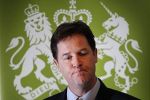
My prediction for this week: we're going to see a whole lot of defiant frontage from Nick Clegg. The last parliamentary session closed with him under attack over tuition fees; this one begins with the possibility of heavy defeat in Oldham East – and he's got to respond accordingly. Hence his interview on Today this morning, in which he dismissed the idea of a Lib Dem drubbing in May's local elections as "total nonsense," and stressed that the coalition is "setting in motion a number of very liberal reforms". There was also a warning over bonuses, along the usual lines, for state-owned banks. But the most intriguing news in Lib Dem Land is much more sedate than all that – revealed, as it was, in an unassuming paragraph at the bottom of a Sunday Times story (£) yesterday.

Johnson running out of his nine lives

From our UK edition

Ed Miliband's press conference today was a classic example of clever opposition politics. He and Alan Johnson said that Labour would continue the bonus tax on the banks for one more year. This policy has the twin advantage of maximising the coalition's discomfort over the whole issue of bankers' bonuses and expiring well before the next election. The rest of Miliband's press conference was devoted to an attempt to defend the record of the previous Labour government. Miliband kept making the valid point that in the years before the crash Cameron and Osborne weren't saying that Labour was spending too much but were instead committed to matching Labour's spending plans.

Will Balls and Cooper capitalise from Johnson’s mistakes?

From our UK edition

You've probably heard about Alan Johnson's latest slip-up yesterday. But it's still worth highlighting the response made by a Labour spokesman – as Dizzy has – because it's simply extraordinary. Here it is: "We have a Shadow Chancellor who lives in the real world. He knows the difference between a progresive and regressive tax. He knows what it takes to get on in the real world. That is more important than taking part in a Westminster quiz game." Extraordinary that Labour should already have to make excuses on behalf of Johnson. But even more extraordinary that they should be made in this manner.

Cameron sells the coalition’s economic policy

From our UK edition

David Cameron was on Marr this morning (with yours truly doing the warm-up paper review), talking about the "tough and difficult year" ahead. Others have been through the interview for its general content. What interested me was its economic content: not the most sexy subject in the world, I know, but, as Alan Johnson unwittingly demonstrated on Sky this morning, the Labour Party looks unable to scrutinise the government's economic policy. Anyway, here are ten observations:   1) "Because of the budget last year, we are lifting 800,000 people out of income tax, we're raising income tax thresholds. That will help all people who are basic rate taxpayers." Thanks to the Lib Dems. But it's a great claim, and I'm glad Cameron is making it.

The pollsters have Labour running away with it in Oldham East

From our UK edition

The same, but completely different. That's the electoral paradox that emerges from a couple of opinion polls on the Oldham East & Saddleworth by-election this morning. The same, because both the Lord Ashcroft survey for the Sunday Telegraph and the ICM survey for the Mail on Sunday produce the same result as in the general election: Labour first, the Lib Dems second and the Tories in third. Completely different, because this is no longer the achingly close contest that it was back in May. Both polls have Labour soaring 17 percentage points above the yellow bird of liberty. Of course, the polls aren't always right. Yet these latest will surely furrow some brows in Coalitionville.

Affable Cameron invites you into his home

From our UK edition

Perhaps I’m alone in this, but David Cameron interviews better in print than he does on screen. He’s almost too polished on television. His supreme confidence and tendency to guffaw at his scripted jokes can grate. But in print his assurance has an affable, human quality. The Daily Mail has interviewed him today. Most of the piece is a lifestyle feature – Dave at home attending to Florence’s evening feed as he watches Newsnight. It is vacuous fare, but it strikes a brilliant contrast with Ed Miliband’s rout at the hands of the nation’s housewives on the Jeremy Vine Show, where there were echoes of Gordon Brown’s excruciating unease with the world beyond Westminster.

Sex gangs and the triumph of ignorance

From our UK edition

As Rod Liddle notes, there's a hell of a media storm raging over sexual abuse committed by men of Pakistani origin. Certain of the media's more craven elements have capitulated to the politically correct mantra that it's wrong to judge at all; and certain of the media's more reactionary outlets are entertaining blanket condemnations of the entire Pakistani community. Jack Straw has it about right. He told Sky News: 'There is a specific problem about a very small minority of normally Pakistani heritage men who are targeting young, vulnerable white girls.

Hughes’ social engineering crusade

From our UK edition

No wonder some backbench Tory MPs are apoplectic: courtesy of David Cameron, Simon Hughes has been elevated from soapbox to pulpit. Hughes' first statement as the government's university access adviser is to suggest that universities should limit their intake of students from private schools. He told the Guardian: 'I think my message to the universities is: You have gained quite a lot in the settlement. Yes, you've lost lots of state money, but you've got another revenue stream that's going to protect you. You now have to deliver in turn. You cannot expect to go on as you are. It has failed miserably.'   Hughes' appointment was controversial, another instance of well qualified, determined and loyal Tories being denied preferment to placate Lib Dem egos.

Responding to CoffeeHousers on inflation

From our UK edition

Inflation is one of the most important topics around right how so I thought I’d respond to CoffeeHousers' comments in a post rather than the original thread. Nick and Gareth Sutcliffe say that inflation is due to global forces (and they're right insofar as metals, food, etc are all going up). But if the money supply is managed properly, this needn't push consumer prices too high – most other countries have stable inflation, as the first chart in my post shows: Britain is in Greek territory. My point: the British level of inflation is exceptional. Greenslime suggests price controls – a very bad idea. Even Marx saw this. The prices of things transmit valuable information about supply and demand: without it, economies are doomed.

China in a bullshop

From our UK edition

As if to illustrate Pete’s post about the rise of China and India, Chinese Vice Premier Li Keqiang has just finished a visit to Spain during which agreements worth 5.7 billion euros were signed. The Chinese delegation is said to have committed itself to buying six billion euros of Spanish debt, which helped calm markets and provided some relief for Spain’s recession-hit economy. Around the time that the Soviet Union collapsed, the Chinese used to say only they could save communism. Twenty years on, it seems only they can save capitalism. The Spanish are certainly in no doubt about the importance of their newfound Chinese friends. The left-leaning Spanish newspaper El País wrote that that Li was received in Madrid as "a new Mr.

Clegg strikes an uncertain balance

From our UK edition

By my count, it's the fourth speech that Nick Clegg has delivered specifically on the subject of deflating the state since last May. And like his last three, today's number was stuffed with words like "liberty" (23 times), "freedom" (19) and "power" (14). Much of the more specific content was familiar, too: like the confident asides about ID cards and a Freedom Bill. What we really wanted to hear, though, was what Clegg would say about control orders. And what he said was … well, not much. Like the PM earlier this week, the Deputy PM suggested that control orders are an imperfect mechanism – and that "they must be replaced".

From the archives: Protesting the price hikes

From our UK edition

The week began with grim projections about petrol prices, and has been coloured by the twin topics of tax and inflation since. So, a decent opportunity to look back on the fuel protests of 2000, in the latest shot from the Spectator archives. Here's a piece from the time, by Coffee House regular, and Spectator theatre critic, Lloyd Evans:   Do you want a smack in the mouth?, Lloyd Evans, The Spectator, 16 September 2000 As I write this, the gravest crisis in our island story is unfolding before my eyes. The great four-star emergency of September 2000. Where it will lead, no one can tell.

King’s ransom

From our UK edition

How much bigger does Britain's inflation have to become before Mervyn King realises it’s a problem? The VAT rise should have lifted prices by 2.1 percent – but shopkeepers over Britain have been applying far larger rises. Why? Because one of the most important factors in economics – expectation of inflation – is back. People are bracing themselves for another year of rising heat, transport and staff costs – so retailers hike up prices in anticipation, and a vicious spiral of inflation begins. The Retail Price Index was up 4.8 percent last November, and Consumer Price Index 3.3 percent. The price of this failure of monetary policy is paid by ordinary taxpayers, whose wages stand no chance of keeping up with the rise in prices.

David Aaronovitch and the social conservative consensus

From our UK edition

David Aaronovitch is one of the preeminent voices of the liberal-left in this country. He is no social conservative and has been dismissive of those who want a lower time-limit for abortion. But today he wrote something that reminded me of that famous Peggy Noonan column about the Columbine massacre and ‘the ocean in which our children swim.’ Aaronovitch writing about the Times’ investigation into sex gangs says: 'Sometimes I look at what the surrounding culture says to our kids and wonder whether we are mad.

Balls strikes at delicate Clegg

From our UK edition

Ed Balls has been biding his time on Control Orders, but now he has struck. Writing on his blog, he appealed for consensus on this ‘sensitive issue’. ‘I have told Theresa May that, wherever possible, I will support her over the counter-terrorism measures that must be taken in the national interest – and we will play our part in building a new consensus for the future… that’s what a responsible Opposition should do.’ Balls knows that May favours retaining Control Orders, so perhaps this is a subtle endorsement of her position against the Lib Dems. He continues, conceding that he does not possess the facts. (The Home Secretary, of course, does).