Uk politics

Outgoing head of the CBI slams the government on growth

From our UK edition

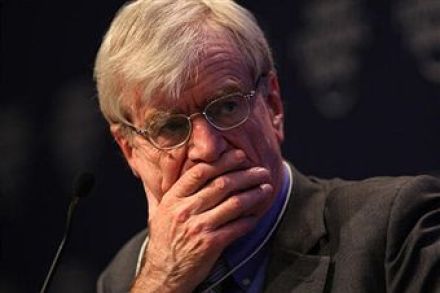
Richard Lambert has launched an uncompromising but constructive assault on the government’s growth strategy, or lack of it. He said: “The government is…talking about growth in an enthusiastic and thoughtful way… But it’s failed so far to articulate in big picture terms its vision of what the UK economy might become under its stewardship. “What I feel is that a number of their initiatives – I’m thinking of the immigration cap, I’m thinking about their move on the default retirement age, about the carbon reduction commitment - have actually made it harder for companies, or less likely for companies to employ people. And what we want, actually, is a sense of direction, a sense of ambition.

The government must continue to liberalise Europe’s market

From our UK edition

For a long time, the terms of Britain's Europe debate has been about the merits - or otherwise - of membership. This has occluded discussion about the need to promote a deregulated and economically liberal single market, for which the Conservatives have fought so successfully since Britain joined the then EEC in 1973.   Now Lord Brittan has shown the way. In a speech to Business for New Europe, he takes aim at the many illiberal practices that hamper economic development across Europe and hurt British business: “Portugal still has rules governing the minimum distance requirements between driving schools; and in Greece, directors of dancing schools need to live within a set distance of the school!

The coalition needs to address bonuses

From our UK edition

Much ado about bankers’ bonuses this afternoon. Tim Montgomerie reports that the proposed banking deal has run aground in Whitehall. The timing is inconvenient: Cameron and Clegg are due to fly to Davos to attend the World Economic Forum. The government hopes to allay public resentment by coercing banks into increasing their lending; which is also a crucial part of its nascent growth strategy. It adds to the impression that the government is failing to make progress in any other realm than cuts. For the time being, Tory spinners are content to distract attention by telling anyone that will listen about Ed Balls’ record on bank regulation and boundless enthusiasm for spending other people’s money.

Sexism is a red-herring; it’s family that matters

From our UK edition

I'm afraid that women have been faking it, having us men on. You see they understand the offside rule and always have done. How could they not? It’s so simple that even a brace of abject football pundits know that an actively involved player is offside when he is closer to the opponent's goal line than both the ball and the second-to-last defender, but only if he is in his opponent's half of the pitch. Messrs Keys and Gray may not be too sharp on interpretation – unlike the ‘young lady’ (£) they berated - but they’re smoking hot on the theory. So do me a favour love and drop the act. We’ve busted your ditzily saccharine ruse and now you must live Saturday’s trials and tribulations with me.

DD’s classy intervention

From our UK edition

David Davis’ interview on Jon Pienaar’s show this evening has revived the debate about whether or not it matters how posh the Cameron top table is. Andy Coulson was the most senior person there who understood what it is actually like to work your way up the ladder and with him gone that experience is missing. But what matters far more than the personalities involved is the policy outcomes. As I said in the Mail on Sunday, the most important thing for Cameron to do is to deliver for these voters. To cut their taxes and give them public services that offer them value for money.

The Irish government folds

From our UK edition

Yesterday, Brian Cowen resigned; today his government has imploded. The Green Party, which was bolstering Cowen’s ruling coalition (if such a phrase is applicable in this instance), have left the government. The Fianna Fail-led coalition is now two votes short of a majority, and therefore the finance bill may not pass in its current form. If that is so, Ireland may return to the precipice on which it found itself a couple of months ago, and its principal creditors and trading partners with it. But there is more to this than balance sheets. In his statement, the leader of the Greens said that the people had lost confidence in the political process. It’s hard to demur.

Sizing up the runners and riders to replace Coulson

From our UK edition

I suspect the identity of the Prime Minister's next director of communications is of far more interest to those who work in Westminster than those in the country at large. But the identity of Coulson's successor will reveal something about the balance of power in the coalition and at the Cameron court. I'm told that the Tories are in no rush to make the appointment, they'd rather take their time and try and find the right person. Despite what Nick Clegg said on Marr this morning, I'm informed that this will be very much a Tory-run selection process. Those in the know say that as with the Coulson appointment, George Osborne will play the crucial role.

Exposing the con man

From our UK edition

  To the chagrin of CoffeeHousers, I have long rated Ed Balls and his abilities. He has a degree of brilliance, albeit tragically deployed in the services of a destructive economic agenda. But as we welcome him back, it’s worth reminding ourselves that his abilities are of a specific type. He understands economics (even though he did PPE) but his speciality is in creative accounting. His only tactic is to spend, borrow and cover both up by cooking the books. He is a trickster, not an economist. More Arthur Daley than Arthur Laffer. In my News of the World column today (£) I say he is dangerous to Labour as well as the Tories, perhaps more so. But it’s worth recapping what we’re dealing with.

Hague hasn’t lost his mojo

From our UK edition

There has been no shortage of depressing news for the Tories lately. But, the other day, Benedict Brogan wrote a lengthy post about William Hague that must have made particularly unpleasant in-flight reading for the Foreign Secretary as he jetted around the South Pacific. It argued that: "In his absence – and even when he is back in Britain – Mr Hague is the subject of a whispering campaign among his colleagues, who say that the spark of ambition has died in his heart, and with it his effectiveness as the front man for the nation’s diplomatic effort. The Foreign Office has got its mojo back, just when Mr Hague has lost his.

Why Coulson’s departure matters

From our UK edition

Courtesy of the ConHome tag team of Paul Goodman and Tim Montgomerie, two articles that are worth adding to your Saturday reading list. Both capture why Andy Coulson's resignation matters, if not to the general swell of British politics, at least to internal operations in Coalitionville. The wider argument of Paul's article for the Guardian is captured by its headline: "Andy Couslon had a nose for the view of the aspirational voter." But it also homes in on the point that Coulson's departure tilts No.10 in favour of Steve Hilton – something that, rightly or wrongly, will bother the Tory right far more than it does Lib Dems of any persuasion. The obvious question is whether David Cameron will choose to correct than tilt, or maintain it.

And what about the Lib Dems?

From our UK edition

After the gales of recent weeks, the past few days must have been relatively blissful for the Lib Dems. No fake constituents with hidden dictaphones. No massive student protests. No especial focus on their opinion poll ratings. But, instead, a mephitic heap of problems, or at least embarrassments, for Labour and the Tories. Warsi, Johnson, Coulson, even EMAs – Clegg & Co. have been spared the worst of it. Which isn't to say that the Lib Dems will be unaffected by recent events. For instance, as Paul Goodman suggests, Andy Coulson's departure unsettles the delicate balance of the coalition – and that will always have ramifications, however minute, for the yellow half of it. Yet it's the rise of Balls that may prove more significant for the Lib Dems.

From the archives: The resignation of Alastair Campbell

From our UK edition

No need to explain why we're looking back on the resignation of Alastair Campbell for this week's entry from The Spectator archives. The piece itself is merciless stuff from the pen of Stephen Glover. Alastair Campbell's redtop values have contaminated our politics, Stephen Glover, The Spectator, 6 September 2003 When I learnt of Dr Kelly's suicide, my first thought was that he had been fatally drawn into Alastair Campbell's world. It is what many people felt. It was a reasonable assumption that Mr Campbell or his office or someone responsible to the Prime Minister's director of communications had deliberately put Dr Kelly's name in the public domain - with disastrous results.

How do you snare a spin doctor?

From our UK edition

So, who’s next after Andy Coulson? This question is oddly important, and will certainly influence the direction of his government. It shouldn’t, but you have to understand the way the Cameron operation works – and of how life looked before George Osborne persuaded Coulson to come on board (hoodie hugging, husky-riding, etc). Coulson was an advocate of fundamental conservative values (crime, tax cuts, Europe) and emphasised their mass appeal. Tim Montgomerie has a list of possibles for this job. But how to persuade them? Whoever does it can kiss goodbye to their life (and family) for the duration. No.10 is a pressure oven, and there’s a horribly large chance that you’ll turn out like Alastair Campbell.

Two days, two major resignations

From our UK edition

Of the two resignations of the past 24 hours, it is Alan Johnson’s that will change the contours of politics. The appointment of Ed Balls makes the dividing line on the economy far starker. But the Coulson resignation is still a highly significant moment. Those Tories who worked with Coulson are downcast today and will brook no discussion of what the whole episode says about Cameron’s judgment. But there’s little doubt that the PM has been harmed by this episode. Not in any limb-threatening way but harmed nevertheless. Cameron also needs a find to way to organise his operation to both ensure that there is someone at the table who understands the instincts and aspirations of C1 voters, can firefight stories and fulfill the strategic communication role.

The Coulson story won’t be buried – but will it matter?

From our UK edition

There's not much chance that the Andy Coulson story will be buried in tomorrow's newspapers. Blair's appearance at the Chilcot Inquiry will scatter a handful of earth across it, as will AJ's travails. But it's not as though people outside the Westminster bubble will fail to notice all this. Watching the 24 hour news channels now, it's all Coulson, Coulson, Coulson. In which case, this is bound to inflict some damage on the government in the short term. The public is not inclined towards liking, or trusting, spin doctors. And Andy Coulson leaving Downing Street through a fug of phone-hacking allegations will not do anything to change that. Questions will be asked about David Cameron's judgement in appointing Coulson in the first place.

Coulson resigns

From our UK edition

Andy Coulson has resigned today. David Cameron has issued a statement paying effusive tribute to his departing communications director. But there will be questions asked about his judgment in appointing Coulson after he had resigned from the editorship of the News of the World over the phone hacking scandal.

Déjà vu | 21 January 2011

From our UK edition

Tony Blair is beguiling the Chilcot Inquiry once again. He was majestic last time – quick witted, sincere and convinced. There was nothing in that benign hearing room to alter, as he might have put it, the ‘calculus of risk’. His ease was sufficient to crack subtle jokes at Gordon Brown’s expense, and most emerged from the hearing believing that Britain had actually been at war with Iran. He is already ploughing those same furrows, albeit with a barely audible note of impatience, irritated that these banal proceedings continue. Iran is the new Iraq, Blair says, and he publicly takes a ‘hard line’ against Tehran, just as his government, in its entirety, had done with Saddam Hussein.

How things are different now that Balls is shadow chancellor

From our UK edition

The timing could hardly have been more resonant. On the day that Tony Blair is paraded, once again, in front of the Iraq Inquiry, Team Brown is firmly back in charge of the Labour party. For, I'm sure you've noticed CoffeeHousers, three of the four great shadow offices of state are occupied by former members of the Brown coterie: Ed Miliband, Ed Balls and Yvette Cooper. The fourth belongs to someone who doesn't sit easily in either half of the TB-GB divide: Douglas Alexander. The question, of course, is what this means for Labour's economic policy. And the answer according to Miliband is "nothing much". The Labour leader has been keen to stress that his party's fiscal plans remain largely unchanged by Balls' ascension.