Uk politics

Fox: Iran could have a nuclear weapon by 2012

From our UK edition

As Cairo smoulders, it's easy to forget about one of the most combustible ingredients in the Middle Eastern cocktail – Iran. Yet the threat still exists, as Tony Blair and Liam Fox have been keen to remind us. James Kirkup reports that the Defence Secretary has warned a Commons committee that Iran could have a nuclear device as soon as next year. Fox isn't the first to make the 2012 claim. The director of the CIA did so last year. And a recent article by the former UN weapons inspector David Albright and Andrea Stricker – which I arrived at via Jeffrey Goldberg – explains just how Iran might pull it off, in spite of recent setbacks: "Technically, Iran could decide to build a nuclear weapon now using the Natanz enrichment plant.
Ten things you need to know about the NHS reforms

From our UK edition

At last we have it: a defence of the coalition's NHS reforms that is worthy of the name. It came courtesy of David Cameron, speaking on BBC Breakfast earlier, and you can watch it in the video above. Suffice to say, the Prime Minister dwelt on the endemic waste and excessive bureaucracy of the current system, yet he also found room to explain why choice matters, and why it won't leave patients stranded. But, even then, the performance wasn't perfect. Cameron may have thought he was being disarmingly honest by admitting that his brother-in-law's fellow hospital consultants have qualms about the proposals, but one suspects it has served only to arm his opponents. Downing Street spokesmen have since put out hurried explanations that the PM was trying to "humanise" the issue.

What are Osborne’s options?

From our UK edition

One of the most eyecatching political reports of the weekend was squirrelled away on page 16 (£) of the Sunday Times. It's worth clipping out for the scrapbook, even now. In it, Marie Woolf reveals some of the fiscal sweeteners that Osborne might sprinkle into the Budget. There are two particularly noteworthy passages: i) Raising the personal allowance. "The income tax threshold is already set to increase by £1,000 to £7,457 from April 1. However, Osborne is expected to raise it by about a further £500. Details of the additional concession are still being worked on, but it marks a victory for the Liberal Democrats, who have been arguing within government for tax cuts for the poor." ii) Holding off on 50p.

The coalition feels the squeeze

From our UK edition

The Institute for Fiscal Studies are out prowling the airwaves again, and they bring happy and unhappy tidings for the coalition. On the happier side, at least presentationally speaking, is their assessment that, "those being hit the very hardest [by tax and benefit changes] are those on [a] higher level of earnings" – just as Cameron and Clegg suggest. But far less marketable is the IFS's claim that 750,000 people will be pulled into the 40 per cent rate of tax as a result of the threshold being reduced from £37,400 to £35,001 this April.   To be fair to the government, they have at least been upfront about this tax change.

Ed Balls won’t answer the important questions

From our UK edition

So Ed Balls has made his decision. In articles and a TV interview today, he has decided that, instead of apologising for his part in bringing Britain to the state it's in today, he will deny what he did. It was the consensus that Britain had the biggest deficit in the G7 going into the crisis, because that's what the facts show. Contrary to Balls' assertions, Britain ran a structural deficit for the seven years running up to the crisis – the figures are right there in Labour's own Budget red books. And it's the consensus that Labour left the biggest deficit since the war, since it's a fact. Given Balls' role in creating these two disasters, he should try owning up, not covering up.

Has Maude shut the door in Boris’s face?

From our UK edition

Nigel Lawson and Francis Maude are both interviewed in the Telegraph today, and the results are very different in each case. For his part, Lawson is in bombastic form – waxing sceptical on everything from the coalition to the Big Society. Whereas Maude is predictably more reserved and accepting. It's the Maude interview, though, that contains the most politically significant revelation. Namely, this: "Boris Johnson, privately backed by several Cabinet ministers, is leading the charge for tougher union laws. But Maude, a key player in the Coalition’s dealings with the public sector, is reluctant. Tightening Thatcher’s labour laws is a 'last resort' he says.

Coffee House interview: Ursula Brennan

From our UK edition

Few government jobs are as demanding as that of Permanent Under-Secretary, or PUS, in the Ministry of Defence. With Liam Fox as your boss, General David Richards as your colleague, and an exhausted, overspent department to run, it is no surprise that when Bill Jeffrey retired many of the government's most senior officials – including, it is said, No 10's Jeremy Heywood – balked at the challenge. Forward stepped Ursula Brennan, who until then had held the ministry's No 2 job before a career in the Ministry of Justice, and what is now the Department for Work and Pensions.

Gove entrenches his reforms

From our UK edition

In another sign of how the pace of Gove’s reforms is quickening, the education secretary has told local authorities that all new schools should be free schools or academies. This is a big step towards changing the default nature of the system from state-funded and state-run to state-funded but independent.   Local authorities will not be able to open a bureaucrat-controlled school unless they can satisfy the Secretary of State that there is no free school or academy provider willing to step in.   Gove has always argued that once free schools and academies become a significant part of the system it’ll be no more politically possible to abolish them than it would be to take sold-off council houses back into public ownership.

Cameron’s gloomy brand of optimism

From our UK edition

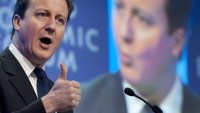
A weird, sprawling kind of speech from David Cameron in Davos this morning. It started off on an unusually, if expectedly, gloomy note: all talk of Europe's debt-induced decline in the face of competition from India, China and Brazil. And he emphasised, of course, that Britain would, and should, stick to its current trajectory of "tough" deficit reduction. But it's where it went from there that was more striking still. Cameron contrasted his position with that of "the pessimists". These people, he claimed, have a charter which includes propositions such as, "we in Europe are incapable of solving our debt and deficit problems," and, "we're attached to liberal values that are leaving us far behind the juggernaut of authoritarian capitalism".

Boris: George knows I’m right

From our UK edition

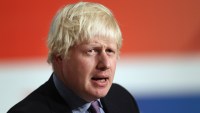
David Cameron and George Osborne must have hoped that their message from Davos today would be broadcast unimpeded. It is, after all, a blunt message, designed to smash through all the radio chatter: we must continue with deficit reduction, there is no alternative, etc. But, inconveniently for them, there are other voices saying what we must do – among them Boris Johnson. The Mayor of London's interview with the Telegraph is at once typical and quite intriguing. Typical, because he holds aloft the same standards as always. "I understand 50p tax politically," he says, "but there has got to be a sense of where we are going and where we want to be as a country.

Will Mubarak Fall?

From our UK edition

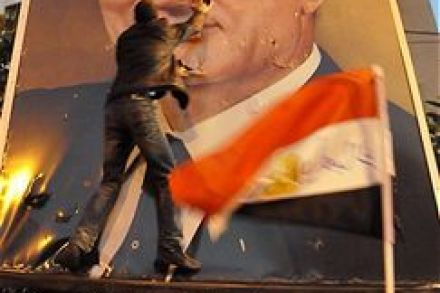
A week ago, that would have seemed a foolish question. But after thousands of Egyptians have taken to the streets for two consecutive days of protest, even Hosni Mubarak is beginning to look vulnerable. It has placed the West in a dilemma, in a way that Ben Ali's fall did not. For years, the fear has been that President Mubarak is the lesser of two evils. Though authoritarian, Mubarak's Egypt is a pro-Western state willing to live with Israel and combat Islamist terrorism. On the hand, the Muslim Brotherhood opposition, which shares an ideological wellspring with Al Qaeda, is a grave threat to Western security.

Nimrod: from a symbol of pride to one of decline

From our UK edition

There are contrasting images of Nimrod the Hunter: the mighty king of the Old Testament, and the less fearsome figure of Elmer Fudd. Through no fault of its own, the Nimrod spy plane, the most advanced and versatile aircraft of its type, seems destined to belong in the Fuddian category. Several senior officers have written to the Telegraph, urging the government to reconsider its decision to scrap the aircraft. They argue, not for the first time, that Britain’s defence capabilities are being pulverised by political calculations. (Con Coghlin adds his strategic concerns in the same paper.) The top brass have found an ally in Unite, some of whose members build and maintain the aircraft for a living.

Deregulation is the path to growth

From our UK edition

The government’s decision to increase the period which employees have to serve before they can bring a case of unfair dismissal from one to two years is welcome. But if it wants to encourage small and medium sized enterprises, the engine of the economy, to hire more people then they need to take the shears — not nail scissors — to regulation and employee protection laws. Camilla Cavendish has a cracking example of the absurdity of the current system in her column (£) today: 'A London neighbour of mine, Mr B, runs a small business that is doing well. Last year he took over an insolvent company where the staff were about to lose their jobs.

The dangers of CameronCare

From our UK edition

A consensus has formed in the commentariat that besides George Osborne's stewardship of the economy, Andrew Lansley's healthcare reforms could become the government's vote-loser. The political facts are as simple as the forms are complex. One, David Cameron ran a campaign based on a promise to protect the NHS. Many people thought that meant from cuts and culls alike. The Health Secretary's reforms look, whatever the truth may be, like they are going back on the PM's promise. Second, the reforms can only be successful if a range of stakeholders - voters, practitioners, analysts - have been brought along, and had a chance to debate the issues. What Michael Gove has done so brilliantly is to pick up a debate Tony Blair began.

Mandarined

From our UK edition

One of the greatest challenges for any minister - and, by extension, the government's programme - is to avoid being "mandarined". That is, smothered by officials in the manner of Yes Minister. But it can happen to even the most powerful and outwardly confident politicians. Here is how. Reputation Management. First, the politician is thrilled to find herself or himself in office and is keen not to rock the boat - lest the Prime Minister is told by the Cabinet Secretary that the minister is under-performing. Tony Blair is said to have toyed with the idea of having report cards for ministers. As a result, the minister opts to push officials - but not too hard. Knowledge Management.

The Big Society in 1997

From our UK edition

Titter ye might. The Big Society? In 1997? If the idea was of, erm, limited electoral worth in our last general election, then it was certainly of little use when Tony Blair hurtled into power all those years ago. Yet there is was, mostly speaking, in the "Civic Conservatism" espoused chiefly by David Willetts. Danny Finkelstein, writing for the pre-paywall incarnation of Comment Central, has already alluded to the intellectual debt that Steve Hilton et al owe to Willetts' thinking back in the 1990s. Fraser did likewise in an interview with Willetts from four-and-a-half years ago. I mention this now for two conjoined reasons.

The Lib Dems reject Ed Miliband’s overtures (again)

From our UK edition

What a joy it is to watch Ed Miliband contort and twist so that he can offer a hand of friendship to the Lib Dems. It has been a three-act show, so far. First, during the Labour leadership contest, he described the Lib Dems as a "disgrace to the traditions of liberalism," adding that, "I can see the death of the Liberal party to be honest". Then, he said that he would actually work with those dying Liberals, but only if they ditched Nick Clegg first. And then today, in an interview with the Independent, he suggests that Clegg might be able to stay on, after all. As turnarounds go, this one is predictable and sensible - but it's no less amusing for that. The Lib Dem response has once again come from Tim Farron; almost certainly for the same reasons as before.

This Ed’s no Goliath

From our UK edition

Ed Milliband took up his position at PMQs today flanked by Caroline Flint and Ed Balls. Between a rock and a hard face. His proximity to so many colleagues who wish him ill can hardly have helped his performance. He was like a stale doughnut. Layers of stodge surrounding a hole in the air.   His battle-plan wasn’t entirely useless. He wanted to tempt the prime minister into foolish speculation about the causes of last quarter’s poor growth figures. Cameron stood up and admitted that the numbers were pretty lousy whether the weather were blamed or not. And that whether-the-weather left Miliband completely stuffed.