Uk politics

Hague hasn’t lost his mojo

From our UK edition

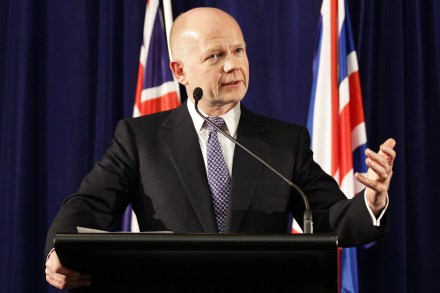
There has been no shortage of depressing news for the Tories lately. But, the other day, Benedict Brogan wrote a lengthy post about William Hague that must have made particularly unpleasant in-flight reading for the Foreign Secretary as he jetted around the South Pacific. It argued that: "In his absence – and even when he is back in Britain – Mr Hague is the subject of a whispering campaign among his colleagues, who say that the spark of ambition has died in his heart, and with it his effectiveness as the front man for the nation’s diplomatic effort. The Foreign Office has got its mojo back, just when Mr Hague has lost his.
Why Coulson’s departure matters

From our UK edition

Courtesy of the ConHome tag team of Paul Goodman and Tim Montgomerie, two articles that are worth adding to your Saturday reading list. Both capture why Andy Coulson's resignation matters, if not to the general swell of British politics, at least to internal operations in Coalitionville. The wider argument of Paul's article for the Guardian is captured by its headline: "Andy Couslon had a nose for the view of the aspirational voter." But it also homes in on the point that Coulson's departure tilts No.10 in favour of Steve Hilton – something that, rightly or wrongly, will bother the Tory right far more than it does Lib Dems of any persuasion. The obvious question is whether David Cameron will choose to correct than tilt, or maintain it.

And what about the Lib Dems?

From our UK edition

After the gales of recent weeks, the past few days must have been relatively blissful for the Lib Dems. No fake constituents with hidden dictaphones. No massive student protests. No especial focus on their opinion poll ratings. But, instead, a mephitic heap of problems, or at least embarrassments, for Labour and the Tories. Warsi, Johnson, Coulson, even EMAs – Clegg & Co. have been spared the worst of it. Which isn't to say that the Lib Dems will be unaffected by recent events. For instance, as Paul Goodman suggests, Andy Coulson's departure unsettles the delicate balance of the coalition – and that will always have ramifications, however minute, for the yellow half of it. Yet it's the rise of Balls that may prove more significant for the Lib Dems.

From the archives: The resignation of Alastair Campbell

From our UK edition

No need to explain why we're looking back on the resignation of Alastair Campbell for this week's entry from The Spectator archives. The piece itself is merciless stuff from the pen of Stephen Glover. Alastair Campbell's redtop values have contaminated our politics, Stephen Glover, The Spectator, 6 September 2003 When I learnt of Dr Kelly's suicide, my first thought was that he had been fatally drawn into Alastair Campbell's world. It is what many people felt. It was a reasonable assumption that Mr Campbell or his office or someone responsible to the Prime Minister's director of communications had deliberately put Dr Kelly's name in the public domain - with disastrous results.

How do you snare a spin doctor?

From our UK edition

So, who’s next after Andy Coulson? This question is oddly important, and will certainly influence the direction of his government. It shouldn’t, but you have to understand the way the Cameron operation works – and of how life looked before George Osborne persuaded Coulson to come on board (hoodie hugging, husky-riding, etc). Coulson was an advocate of fundamental conservative values (crime, tax cuts, Europe) and emphasised their mass appeal. Tim Montgomerie has a list of possibles for this job. But how to persuade them? Whoever does it can kiss goodbye to their life (and family) for the duration. No.10 is a pressure oven, and there’s a horribly large chance that you’ll turn out like Alastair Campbell.

Two days, two major resignations

From our UK edition

Of the two resignations of the past 24 hours, it is Alan Johnson’s that will change the contours of politics. The appointment of Ed Balls makes the dividing line on the economy far starker. But the Coulson resignation is still a highly significant moment. Those Tories who worked with Coulson are downcast today and will brook no discussion of what the whole episode says about Cameron’s judgment. But there’s little doubt that the PM has been harmed by this episode. Not in any limb-threatening way but harmed nevertheless. Cameron also needs a find to way to organise his operation to both ensure that there is someone at the table who understands the instincts and aspirations of C1 voters, can firefight stories and fulfill the strategic communication role.

The Coulson story won’t be buried – but will it matter?

From our UK edition

There's not much chance that the Andy Coulson story will be buried in tomorrow's newspapers. Blair's appearance at the Chilcot Inquiry will scatter a handful of earth across it, as will AJ's travails. But it's not as though people outside the Westminster bubble will fail to notice all this. Watching the 24 hour news channels now, it's all Coulson, Coulson, Coulson. In which case, this is bound to inflict some damage on the government in the short term. The public is not inclined towards liking, or trusting, spin doctors. And Andy Coulson leaving Downing Street through a fug of phone-hacking allegations will not do anything to change that. Questions will be asked about David Cameron's judgement in appointing Coulson in the first place.

Coulson resigns

From our UK edition

Andy Coulson has resigned today. David Cameron has issued a statement paying effusive tribute to his departing communications director. But there will be questions asked about his judgment in appointing Coulson after he had resigned from the editorship of the News of the World over the phone hacking scandal.

Déjà vu | 21 January 2011

From our UK edition

Tony Blair is beguiling the Chilcot Inquiry once again. He was majestic last time – quick witted, sincere and convinced. There was nothing in that benign hearing room to alter, as he might have put it, the ‘calculus of risk’. His ease was sufficient to crack subtle jokes at Gordon Brown’s expense, and most emerged from the hearing believing that Britain had actually been at war with Iran. He is already ploughing those same furrows, albeit with a barely audible note of impatience, irritated that these banal proceedings continue. Iran is the new Iraq, Blair says, and he publicly takes a ‘hard line’ against Tehran, just as his government, in its entirety, had done with Saddam Hussein.

How things are different now that Balls is shadow chancellor

From our UK edition

The timing could hardly have been more resonant. On the day that Tony Blair is paraded, once again, in front of the Iraq Inquiry, Team Brown is firmly back in charge of the Labour party. For, I'm sure you've noticed CoffeeHousers, three of the four great shadow offices of state are occupied by former members of the Brown coterie: Ed Miliband, Ed Balls and Yvette Cooper. The fourth belongs to someone who doesn't sit easily in either half of the TB-GB divide: Douglas Alexander. The question, of course, is what this means for Labour's economic policy. And the answer according to Miliband is "nothing much". The Labour leader has been keen to stress that his party's fiscal plans remain largely unchanged by Balls' ascension.

The Tories waste no time in getting stuck into Balls

From our UK edition

One thing worth noting before we discuss Balls’ appointment is that the reasons Johnson have resigned are personal. It is not about his competence or otherwise. The Tories are wasting no time in getting stuck into Ed Balls. One just said to me, ‘the man who created this economic mess is back. He designed the fiscal rules that failed, he designed the FSA that failed…’ Certainly, the Tory attempt to make Labour’s economic record the premier political issue has just become a lot easier. Balls will be a more aggressive opponent for Osborne. But I suspect that he will prefer facing Balls to Yvette Cooper.

Renaissance Balls

From our UK edition

Balls is back. The author of Gordon Brown's economic policies for 15 years. The man who bears more responsibility for anyone else - other than Brown - for the asset bubble and the consequent crash. But I suspect that, right now, Theresa May is doing cartwheels and George Osborne cursing. Balls, for all his many drawbacks, is the most ferocious attack dog there is. His brilliance (and I hate using that word) at using numbers as weapons far surprassed anything the Tories could manage in Opposition. His policies are reckless: to borrow, and to hell with the consequences. His modus operandi is to launch around-the-clock attacks. He has powerful media contacts, and uses them to full effect. He is the most able fighter in Labour's frontbench, as he proved in the leadership contest.

Balls replaces Alan Johnson

From our UK edition

Ed Miliband has just taken the biggest risk of his leadership in appointing Ed Balls as his shadow Chancellor. Balls’ is not a man who take orders and his view on the deficit is noticeably different from Ed Miliband’s. He is also the person most closely associated with Gordon Brown’s economic record. George Osborne will relish this fight. During the vacuum between Ed Miliband winning the leadership and the shadow Cabinet elections, Osborne prepared for facing Balls. He told friends, ‘we’ve circled around each other long enough. It is time to get on with it now.

Johnson resigns as Shadow Chancellor

From our UK edition

James Kirkup is reporting a rumour that Alan Johnson is to resign. More to follow. UPDATE: He has resigned. Sky News is reporting that Johnson has gone for personal reasons. That may be so - and because of the timing (the government was having the day from hell until ten to five this evening) I suspect that it is - but it will be a hard line to hold, given Johnson's fraught tenure and his very public disagreements with a leader he didn't back in the first place. A serious problem for Miliband, then, just as his fledgling leadership was beginning to pick up after Oldham.

A bad morning for the government<br />

From our UK edition

This morning has not been a good one for the government. There’s been an embarrassing admission that 28 days detention will simply lapse on Monday, the Conservative party chairman is delivering a speech that the vast majority of Conservatives think is muddle-headed at best, and the Prime Minister finds himself in a public debate with the mother of a quadriplegic child. 2011 was always going to be a hard year for the government but what should worry Downing Street is that two of these problems are self-inflicted. The whole counter-terrorism review should have been finished before 28 day detention expired. The fact that it has not been makes the government look like it can’t work to a deadline and is drifiting in a crucial area of policy.

Act 3 in the prisoner voting farce

From our UK edition

An ingenious man, John Hirst. First he achieved the considerable feat of committing manslaughter with an axe; and he has since proceeded to cause governments no end of trouble. The prisoner voting saga is nearing its end and a fug of ignominy is descending on the government. The BBC reports that the coalition is to dilute its policy of enfranchising prisoners serving less than four years. Now ministers will be seeking to enfranchise only those serving a year or less. This u-turn is the result of the alliance between Jack Straw and David Davis and the slew of assorted backbench dissent. Tim Montgomerie argues that this is yet another example of Downing Street’s inability to communicate with the parliamentary Tory party.

Remember this?

From our UK edition

“We will want to prevent EU judges gaining steadily greater control over our criminal justice system by negotiating an arrangement which would protect it. That will mean limiting the European Court of Justice’s jurisdiction over criminal law…” That was David Cameron a year ago when he presented the Tories’ EU policy ahead of the General Election. As we all know, much has changed since then. The pledge to ‘repatriate’ powers has been dropped, a victim of the Coalition deal. But despite this, MPs now have a huge opportunity to make good on pledges to regain control over EU justice laws, and even to repatriate powers should they want to – without having to change a single comma in the EU Treaties. How?

Where Warsi is right and wrong

From our UK edition

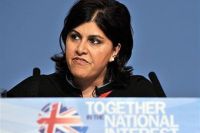
As ever, the headlines are more sensational than the speech, but marginally so in this case. Baroness Warsi has asserted that Islamophobia is rife and socially acceptable in Britain. It is a peculiarly crass statement for an ordinary politician to have made, but, then again, the gabbing Baroness is a very ordinary politician. Some of her speech is sensible, even unanswerable. She attacks the media and the arts for ‘the patronising, superficial way faith is discussed in certain quarters.’ Questioning faith is the natural and welcome adjunct of a free society, but specific criticism is morphing into general hostility.