Uk politics

Osborne bests the Man With A Past

From our UK edition

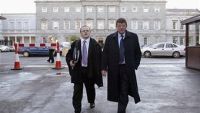
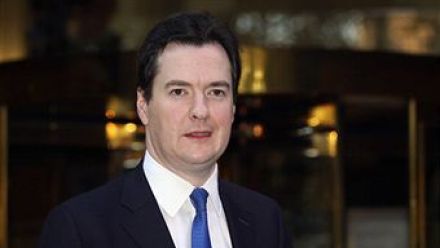
Balls is a bit like a vampire – he has bite, but he works best in the darkness. In the House of Commons, with those lights shining on him, his powers drain. George Osborne had the better of him in their brief exchanges at Treasury Questions. Balls led on the snow joke. But Osborne had pre-empted that earlier, when he first stood up. Balls teased him about going to Klosters in the winter, but these things only work in newspapers where you can run a picture of Osborne in ski gear. It leaves the House cold.   The key Osborne line was that Balls is “the man with a past” – and how. It was said with just the right touch of menace. And he had a fairly decent gag: that Eds Miliband and Balls both “know what's it's like to be people's second choice.

Irish to block EU integration

From our UK edition

In continental lore, it is Britain that is often seen as the greatest impediment to EU integration. The government's EU Bill initially caused horror in the rest of Europe. Would Britain have to vote for each treaty change, even those needed to enlarge the Union? Before the text of the bill became clear, every self-respecting eurocrat spat the name 'Britain' over their lait russe. Even now, they are not best pleased. But in future it may not be Britain, but Ireland that will block any further EU integration. For Ireland is turning a lot more eurosceptic. The role of the euro in Ireland's decline remains a subject of debate. In eurosceptic circles, there is wilful ignorance of the role played by Ireland's politicians. Much better, it seems, to blame the euro alone.

Doubts remain over al-Megrahi

From our UK edition

The morning after the day before, it seems that some of the murk around Abdelbaset al-Megrahi's release has lifted. In particular, one thing is explicit that wasn't before: that the policy of the Brown government was to "do all it could" to facilitate the convicted Lockerbie bomber's transfer to Libya. We might have surmised the same from David Miliband's statements at the time. But now, at least, we know for sure. Naturally, this is tricky news for Labour, and especially for the Ghosts of 2008 whose names are splashed across the papers today: Brown himself, Jack Straw, Des Browne, etc. And yet Gus O'Donnell's report has also absolved them of the worst sin of all: lobbying the Scottish government to release al-Megrahi.

Osborne quells some dissent with his latest ruse

From our UK edition

This morning’s newspapers would have made grim reading for the government. The Department for Transport has been forced to reverse its helicopter privatisation plan, there are doubts that the baccalaureate will suit Michael Gove’s education reforms and diverse packs of hounds have converged on the Big Society fox – and this is a cruel bloodsport.  But, the master tactician has struck again. George Osborne’s sudden decision to raise an extra £800m through this year's banking levy has relieved some pressure from the government. This is a minor operation by the standards of Osborne’s previous political coups, but it diverts attention and illustrates that the government is making some progress in the arduous slog against the banks.

King’s credibility is faltering

From our UK edition

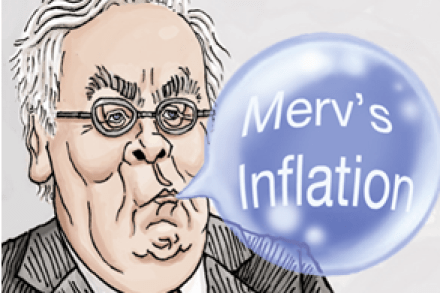
We at The Spectator have not had much company in criticising Mervyn King for the failure of his monetary policy. The Bank of England governor has a status like the Speaker used to: someone whose position must command respect, otherwise the system collapses. And yet there are Octopuses with a better track record in inflation forecasting. People have been repeating that the Bank’s independence is a great success for so long that it has become a truism. Why? We’ve just had a huge crash, the result of a credit bubble - fuelled by dangerously low lending rates. And the recipe for restoration? Even cheaper debt, with resurgent inflation. The British economic commentators agree with King that inflation is not a problem; 0.

What’s Labour’s alternative to the Big Society?

From our UK edition

After a difficult few weeks for the Big Society, culminating in Liverpool’s nakedly political ‘withdrawal’ from the vanguard projects, Peter Oborne has already drafted an obituary for the Conservative's policy agenda.   As Oborne says, the Big Society goes to the heart of this government’s reason for existence, and its (real or perceived) failure would damage the Conservatives. But it's notable Labour has yet to come up with an alternative to the Big Society, or even a substantive critique of the idea. The problem for Miliband is that the Big Society agenda captures the centre ground of social policy – neither pro nor anti-state – and risks sidelining his party.

Wasting away | 7 February 2011

From our UK edition

The Independent has a remarkable story today which shows just how public money gets wasted. The paper reports that the Department for Energy and Climate Change has employed a firm of headhunters to find it a new chief economist. Tom Peck writes that the headhunters then approached Vicky Pryce about the job. Ms Pryce had until recently worked at the Department for Business, Innovation and Skills but had quit when her then husband Chris Huhne became a Cabinet minister to avoid any appearance of impropriety. What is so revealing about this story is that it suggests that before calling Ms Pryce, the headhunters had seemingly not done the preparatory work to find out why she had left the civil service only a few months ago.

Why the government is right to look beyond ASBOs

From our UK edition

We shouldn't have believed the hype. For all of Tony Blair's earnest focus on Anti-Social Behaviour Orders, this flagship policy was barely in effect at all. By the latest figures, only 18,670 ASBOs were issued between April 1999 and the start of 2010. According to this Policy Exchange report – the best on the subject that I've come across – that accounts for around 0.009 per cent of all incidences of anti-social behaviour. So let's not pretend that the coalition is upending the criminal justice system by shifting away from ASBOs today. Neither, on the evidence at hand, is it doing away with an effective policy. Here's a graph that I've put together from the latest Home Office statistics.

A good team with good policies

From our UK edition

When the Tories were in opposition, non-aligned friends used to complain to me that the party's front bench was unimpressive. Labour politicians had walked the political stage for more than a decade; many were household names, while the Tories were unknown. But eight months in and Labour's top team is a largely unknown entity, with even its few ex-Ministers looking decidedly smaller without their briefcases, officials and government-issued cars. The Tory front bench, meanwhile, is the one looking serious and worthy of power. There is William Hague, a brilliant parliamentarian and that even rarer beast: a well-liked politician. Though currently suffering from a little newspaper criticism, he is seen as a heavy-weight by his counterparts and is galvanising the long-neglected FCO.

Put a sock in her

From our UK edition

For once, I am in total agreement with Nigel Farage: the best way for Sally Bercow to help her husband is to take a vow of silence. Her recent Cleopatra act diverted attention from the persistent indignity of parliament’s relationship with IPSA, but it has done little to raise the diminutive Speaker’s diminutive reputation.   Flushed with embarrassment, Mrs Bercow spent most of Friday afternoon insisting that the Evening Standard had distorted her. She went into yummy mummy mode, confiding to Twitter that she was baking cakes for her son’s lunch box – nice rather than naughty.

The laddie is for turning

From our UK edition

In opposition, one of David Cameron’s strengths was the speed at which he dumped bad ideas. But, now, he is starting to acquire a habit for U-Turns – especially those called for by minor celebs. We’ve seen Scottish school milk, NHS Direct, BookStart, school sport – and soon, I suspect, forests, World Service cuts and (the biggie) NHS reform. A depressing pattern is emerging: anyone with a decent two-day campaign and a splattering of celebrities can probably force a concession out of the government. I make this case in my News of the World column (£) today. Here is a summary of my main argument. 1. Cameron seems to be pioneering the Celeb-induced U-Turn.

How much do we spend on the military?

From our UK edition

As shocks go, Politician Uses the Correct Statistic is not particularly electric stuff. But I was struck nonetheless by Cameron's claim in his speech earlier that, "we still have the fourth largest military budget in the world." You see, Gordon Brown used to exaggerate this figure by various sneaky methods – and so, by his account, we'd be second in the military spending league table, rather than around fifth. Whereas Cameron had it spot on. Here's what the latest top ten looks like, going off the best measurement that the Stockholm International Peace Research Institute knows (see their explanation here): On the face of it, this would appear to be a strong point against the claim that we underspend on defence. But it doesn't close the case.

A disheartening story

From our UK edition

A sad juxtaposition between David Cameron's defence of liberal values and the Times's interview (£) with Paul Maynard, the Tory MP for Blackpool North & Cleveleys. Maynard – who has cerebral palsy – describes his experiences in what ought to be a bastion of British decency: "Mr Maynard knew that people could be unkind, perhaps unconsciously. Nevertheless his worst experience in Parliament came as a shock. A few months later he stood up in the chamber to defend the Government’s decision to cut the Child Trust Fund. Mr Maynard admits that it was a controversial issue but still could not believe what happened. Each time that he lifted his head, his eyes were drawn to MPs across from him.

Cameron signs up to muscular liberalism

From our UK edition

"State multiculturalism has failed." Angela Merkel put voice to that sentiment last October. Now it David Cameron's turn to do the same. In a speech in Munich today, the Prime Minister has taken a rhetorical torch to Islamic extremism. "Frankly," he says, "we need a lot less of the passive tolerance of recent years and much more active, muscular liberalism." It is, at the very least, a significant political moment. What Cameron is doing here – as explained by Charles Moore and Paul Goodman – is publicly signing up to a philosophy of the world. It is a philosophy that rejects the idea that extremism should simply be contained. Instead, it says that extremism must be fought – and that means engaging in a battle of ideas.

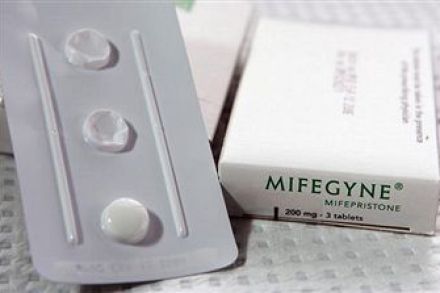
Abortion may be bad for a woman’s mental health. Discuss

From our UK edition

Last November, Margaret Forrester, a mental health worker for the Central North West London Mental Health Trust in Camden was suspended for giving a colleague a charity booklet called “Forsaken – Women From Taunton Talk About Abortion” to a colleague -  they’d been discussing the information they offered to patients. It had the stories of five women who had experienced what the author describes as ‘post-abortion syndrome’, including depression, relationship issues, suicidal feelings and fertility problems. So, the downside of abortion, then. To begin with – no problem. Her colleague didn’t seem offended. But a few days later her manager told her she was being sent home on ‘special leave with full pay’.

Clegg stands up for deficit reduction

From our UK edition

Cleggologists will mark down the Deputy PM's speech today as a typical effort. There was basically nothing in it that was new – but Clegg still put it across with more punch, and more persuasively, than most of his colleagues could manage. All of the slogans and pre-announced policies added up to something that sounded, fleetingly, like a plan for growth. Although we'll still have to wait for Vince Cable's review to see the outlines of that plan shaded in. Clegg's main point was straightforward enough: that the government has to, and will, go beyond deficit reduction to stoke the embers of the British economy. He then ranged across everything from the national infrastructure to – a theme of this week – endowing the British workforce with skills.

General Hague, attack

From our UK edition

William Hague must be feeling that the incoming rounds are coming closer and closer. The Spectator, The Daily Telegraph and now The Times (£) have each allowed their pages to be used as Forward Operating Bases from which to launch attacks against the coalition's foreign policy. Even in the coalition's own ranks, dissatisfied foot-soldiers (and a even a few senior officers) think that General Hague has lost his appetite for the fight. Tories talk about a man whose defeat in 2001left a permanent wound, and how the Christopher Myers fiasco left another gash. The government's equivocal response to events in Egypt has provoked fresh criticism, while the army of eurosceptics, once Hague's Praetorian Guard, no longer trust their commander.

Levelling higher education’s playing field

From our UK edition

Last summer I was showing some 17 year olds around the House of Commons. They were bright and engaged and all wanted to go to university. But as they told me what they were doing for A-Levels my heart sank. They were all doing subjects that were going to put them at a massive disadvantage in applying to a top-rank university. The most worrying thing was that they were completely unaware of this. So it is welcome news that the Russell Group, made up of the 20 best universities in the country, has now published a guide advising students on which A-Level subjects are held in the highest regard by universities. This is the kind of information that schools that regularly send children to top universities pass on almost automatically to their pupils.