Uk politics

Councils are still living it up

From our UK edition

Councils are in the dog house again, following the publication of a report claiming that £7bn is wasted through ineffective land and building use. Chairman of the report, Matthew Hancock MP, and Vice-Chairman of the Local Government Association Richard Kemp debated the issue on Today and they revealed why the revolution in local government has stalled. Kemp made the most substantial point: recalcitrance and rivalry in Whitehall impairs reform of the localities. For instance, councils cannot unite libraries, Job Centre Plus and the One Stop shops into one building because the DWP has not yet begun its reform of Job Centre Plus.

As the oldest parliament yawned, the oldest civilisation erupted

From our UK edition

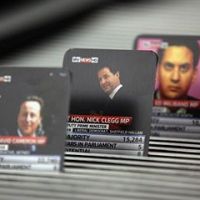
One yawn every minute. That’s how PMQs felt today. Foreign affairs dominated the session as Ed Miliband and the Prime Minister exchanged lofty words about the Cairo demonstrations and the spread of democracy around the world. Doubtless they felt they struck a suitably elevated tone but to the viewers they came across as a pair of prep school smart-alecs trying to sound like great statesmen disposing of liberated peoples after the fall of empires. Egypt and Afghanistan were both treated to a torrent of high-minded vacuities. David Cameron found the demonstrations ‘incredibly moving.’ Ed Miliband was impressed by the sight of ‘hundreds of thousands of people facing overwhelming odds to ask for their democratic rights.

Ten things you need to know about the IFS Green Budget

From our UK edition

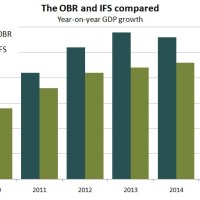
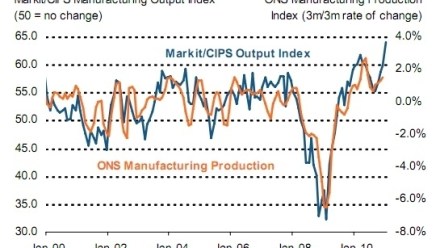
An exciting day for policy freaks and numbers geeks: the Institute for Fiscal Studies has released its latest Green Budget, an annual survey of the state of the public finances. But if you can't face wading through the complete 329-page document, here's our quick ten-point summary of its main conclusions: 1) IFS forecasts "slightly lower" growth than the OBR. As this comparison shows: 2) But they're more optimistic about borrowing. According to the IFS, borrowing won't be as high as the government expects. The differences between their forecasts and the OBR's are only minimal, but they're there all the same: 3) The tax and spend forecast.

Consensus reigns over PMQs

From our UK edition

A very different PMQs this week: six questions on foreign affairs and almost total consensus between Cameron and Miliband. Miliband’s office had given No 10 advance warning of the topics they wanted to raise and the two agreed on pretty much everything. Miliband argued that ‘the best route to stability is through democracy.’ Cameron agreed but stressed that democracy means more than just elections. You get the picture. At the risk of disagreeing with Pete, I must say that the exchanges were a reminder of just how dull PMQs would be if it was not confrontational.

PMQs live blog | 2 February 2011

From our UK edition

VERDICT: What a refreshing change that was. After several weeks of Punch 'n' Judy rivalry, the two party leaders finally put down their batons and stumbled upon a new way to do it. Much of the credit must go to Ed Miliband, for asking pacific questions about Egypt and Afghanistan in the first place. But credit, also, to Cameron, for answering them in a straightforward and statesmanlike manner. The rest of the House, for its part, was stunned into silence by this peculiar scene. Some of the blood rushed back into proceedings with the backbench questions, and as Cameron directed attacks at Ed Balls, but this must still go down as the most decourous PMQs in recent memory. Less spice, more meat – not a bad trade-off in this case.  1231: And that's it.

IFS say Labour’s policy would mean higher interest rates

From our UK edition

From the start of the financial crisis, the Conservatives have argued that when a country¹s finances are in a mess, the best way to manage demand is through monetary activism and fiscal responsibility. Going into this crisis, Britain¹s finances were indeed in a mess. We had the biggest structural deficit among major developed economies (according to the IMF, OECD, oh, and Alistair Darling). To claim there was no structural deficit is to oppose the truth. The principles of monetary activism and fiscal responsibility underpin the approach to the recovery too. By dealing with the fiscal mess, we can keep interest rates lower for longer, and avoid the sorts of financial meltdown seen in Ireland and elsewhere.

When will mass protest come to Libya?

From our UK edition

As several seemingly permanent Middle Eastern autocracies tremble, Colonel Gadaffi’s Libya rolls on. So far, there have been reports of minor protests in the localities about housing shortages, nothing more. With unemployment standing at 30 percent, the Libyan people are just as impoverished as those in neighbouring Tunisia and Egypt. Gadaffi’s dictatorship is scarcely benevolent, and, as for liberalisation, Libya remains one of the few completely dry countries on Earth. The secret of Gadaffi’s success then would appear to be expressing aggressive anti-American sentiment, whilst suppressing Islamism and democratic opposition at home. And all the while he entices rich Western powers (Britain) with the allure of Libya’s virginal natural resources.

All across the political spectrum

From our UK edition

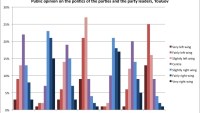
Yesterday's polls may seem like yesterday's news – but it's actually worth returning to YouGov's effort from, erm, yesterday. It contained some distinctive questions, and results, all set around the left-right spectrum. How left wing is the Labour party? How right wing is David Cameron? That sort of thing. Of course, as Anthony Wells has already pointed out, the old labels of "left" and "right" are of decreasing relevance nowadays. But they do still tell us something about popular perceptions of the parties and their leaders.

Osborne’s tax headache

From our UK edition

No doubt about it, George Osborne is being pulled in two directions ahead of the Budget. There are those, such as the Lib Dems, who would have him reduce taxes for the least well-off. There are those, such as Boris, who would have him reduce taxes for higher earners. As I suggested yesterday, this debate pivots around two particular measures: raising the personal allowance and cutting the 50p rate. Rachel Sylvester develops the story in a typically insightful column (£) for the Times today. It quotes an "ally of the Chancellor" to the effect that Osborne is minded more to raise the personal allowance than to cut 50p. "Not many Tories want to reverse the 50p top rate," says her source, "We are big fans of raising the threshold and would see that as the priority.

A picture paints a thousand words

From our UK edition

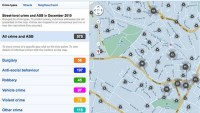
Crime maps have formally reached England and Wales. The Home Office has unveiled www.police.uk and citizens can examine incidences and trends of crime in their local area. Naturally, the website is broken at the moment. Nick Herbert, the Policing Minister, told the Today programme that the site crashed under the weight of 4 million users in an hour. The government hopes that this interest will be sustained, inaugurating a revolution in transparency and accountability. People power will trump the unelected authorities of the past. Crime maps merely record the facts of crime, but extensive trials suggested that they improve peoples’ knowledge of their neighbourhood and encourage locals to influence police strategy in troubled areas.

Wheeling and dealing over the AV bill

From our UK edition

If the AV referendum is to take place on the 5th of May, the legislation paving the way for it needs to have passed by the 16th of February. But this bill is currently being held up in the Lords where Labour peers are objecting to the ‘Tory part’ of the bill which reduces the number of MPs and equalises constituency sizes. The coalition does not have a majority in the Lords, so all the talk of simply ramming the bill through was always slightly unrealistic. But the coalition’s concession that there can be public inquiries into the boundary review has created an expectation that Labour might now drop its opposition. The cross benches, the swing group in the Lords, have been impressed by this concession.

Ten things you need to know about the NHS reforms

From our UK edition

At last we have it: a defence of the coalition's NHS reforms that is worthy of the name. It came courtesy of David Cameron, speaking on BBC Breakfast earlier, and you can watch it in the video above. Suffice to say, the Prime Minister dwelt on the endemic waste and excessive bureaucracy of the current system, yet he also found room to explain why choice matters, and why it won't leave patients stranded. But, even then, the performance wasn't perfect. Cameron may have thought he was being disarmingly honest by admitting that his brother-in-law's fellow hospital consultants have qualms about the proposals, but one suspects it has served only to arm his opponents. Downing Street spokesmen have since put out hurried explanations that the PM was trying to "humanise" the issue.

What are Osborne’s options?

From our UK edition

One of the most eyecatching political reports of the weekend was squirrelled away on page 16 (£) of the Sunday Times. It's worth clipping out for the scrapbook, even now. In it, Marie Woolf reveals some of the fiscal sweeteners that Osborne might sprinkle into the Budget. There are two particularly noteworthy passages: i) Raising the personal allowance. "The income tax threshold is already set to increase by £1,000 to £7,457 from April 1. However, Osborne is expected to raise it by about a further £500. Details of the additional concession are still being worked on, but it marks a victory for the Liberal Democrats, who have been arguing within government for tax cuts for the poor." ii) Holding off on 50p.

The coalition feels the squeeze

From our UK edition

The Institute for Fiscal Studies are out prowling the airwaves again, and they bring happy and unhappy tidings for the coalition. On the happier side, at least presentationally speaking, is their assessment that, "those being hit the very hardest [by tax and benefit changes] are those on [a] higher level of earnings" – just as Cameron and Clegg suggest. But far less marketable is the IFS's claim that 750,000 people will be pulled into the 40 per cent rate of tax as a result of the threshold being reduced from £37,400 to £35,001 this April.   To be fair to the government, they have at least been upfront about this tax change.

Ed Balls won’t answer the important questions

From our UK edition

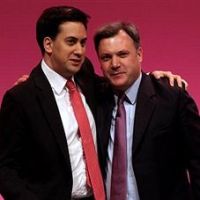
So Ed Balls has made his decision. In articles and a TV interview today, he has decided that, instead of apologising for his part in bringing Britain to the state it's in today, he will deny what he did. It was the consensus that Britain had the biggest deficit in the G7 going into the crisis, because that's what the facts show. Contrary to Balls' assertions, Britain ran a structural deficit for the seven years running up to the crisis – the figures are right there in Labour's own Budget red books. And it's the consensus that Labour left the biggest deficit since the war, since it's a fact. Given Balls' role in creating these two disasters, he should try owning up, not covering up.

Has Maude shut the door in Boris’s face?

From our UK edition

Nigel Lawson and Francis Maude are both interviewed in the Telegraph today, and the results are very different in each case. For his part, Lawson is in bombastic form – waxing sceptical on everything from the coalition to the Big Society. Whereas Maude is predictably more reserved and accepting. It's the Maude interview, though, that contains the most politically significant revelation. Namely, this: "Boris Johnson, privately backed by several Cabinet ministers, is leading the charge for tougher union laws. But Maude, a key player in the Coalition’s dealings with the public sector, is reluctant. Tightening Thatcher’s labour laws is a 'last resort' he says.

Coffee House interview: Ursula Brennan

From our UK edition

Few government jobs are as demanding as that of Permanent Under-Secretary, or PUS, in the Ministry of Defence. With Liam Fox as your boss, General David Richards as your colleague, and an exhausted, overspent department to run, it is no surprise that when Bill Jeffrey retired many of the government's most senior officials – including, it is said, No 10's Jeremy Heywood – balked at the challenge. Forward stepped Ursula Brennan, who until then had held the ministry's No 2 job before a career in the Ministry of Justice, and what is now the Department for Work and Pensions.