Uk politics

Time to bury the hatchet?

From our UK edition

Who says irony is dead? The Four Barrow Hunt and the Countryside Alliance are holding a fundraising auction in April. The lots are largely predictable: a subscription to the Telegraph, a French holiday home and a cured fox pelt. More surprising is the signed copy of Tony Blair’s A Journey, with its comparatively brief account of the 700 hours of parliamentary time he devoted to banning fox hunting. What, you may ask, would the good folk of the Four Barrow want with that memoir? Time to bury the hatchet? Perhaps. But, equally, Blackadder’s assessment of the magazine ‘King and Country’ is recalled: 'Ah, yes, without question my favourite magazine; soft, strong and thoroughly absorbent.

Osborne’s grand merger?

From our UK edition

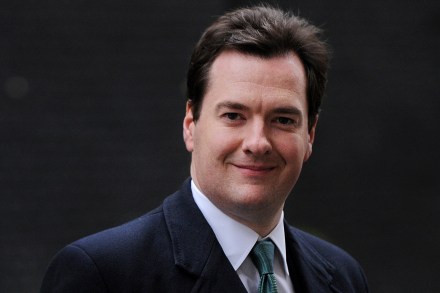
George Osborne's Budget — his plan to deliver us from “rescue to recovery," apparently — is less than a week away, and the wildfire of speculation is taking hold. Perhaps the most intriguing titbit in today's papers is one that also appeared in the Express last Saturday: that Osborne is considering merging income tax and national insurance. This is a measure that the Office for Tax Simplification recommended in a report last week, suggesting that it would ease the administrative burden on small businesses. Yet that simply echoes a viewpoint that stretches back decades.

The grade inflation scam

From our UK edition

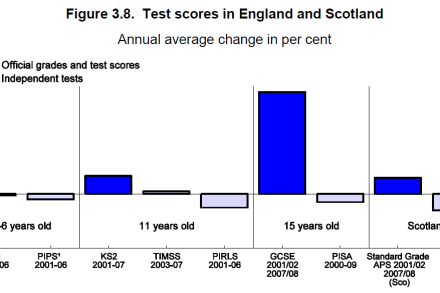
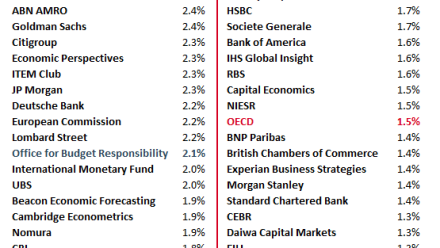
Today’s OECD Economic Survey of the UK (download the complete pdf here ) contains some devastating passages about our education system. As it's 148 pages in size, we thought CoffeeHousers might appreciate some highlights. Here's your starter for ten: “Despite sharply rising school spending per pupil during the last ten years, improvements in schooling outcomes have been limited in the United Kingdom.” This is rather a staggering indictment of Tony Blair's "education, education, education" policy. But what about the ever improving exam results that we hear about each summer?

An alternative PMQs

From our UK edition

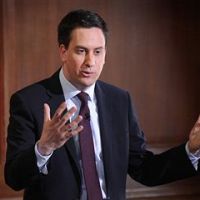
With Libya in metaphorical meltdown and with Japan close to the real thing, it was remarkable how little foreign affairs impinged on PMQs today. Ed Miliband led on the NHS and facetiously asked if Cameron planned any amendments to his health bill following the LibDem spring conference. Cameron replied by accusing Labour of wasting £250m on phantom operations. Would he apologise for this scandalous blunder? Miliband, unsurprisingly, declined even to acknowledge the invitation. The session developed on these familiar, solipsistic lines. Keen to harry the PM on bureaucracy Miliband stumbled on a Cameron quote decrying ‘pointless topdown re-organisations’ of the NHS. He pulled it up by the roots, shook off the mud and flourished it in Cameron’s face.

Rattled Cameron battles through PMQs

From our UK edition

A testy PMQs today with Miliband trying to pin Cameron down on the specific question of whether the NHS is now subject to EU competition law, and Cameron responding by dubbing Miliband ‘son of roadblock'. The exchange revealed that although Cameron is not a details man, something that will cause him problems in time, he still has enough presence in the chamber to withstand tricky moments. But I suspect that Labour will be happy if Miliband’s parting shot of ‘you can’t trust the Tories on the NHS’ makes it into the news bulletins this evening.

PMQs live blog | 16 March 2011

From our UK edition

VERDICT: A more evenly-matched PMQs that we have been used to, with both leaders parrying and thrusting to some effect. Miliband's chosen topic — the NHS — was a surprise, particularly given today's unemployment figures and the persistent flurry of bad news from abroad. Yet it did open up a clear divide between him and Cameron. On one side, the Labour leader claiming that the the coalition is taking undue risks with a beloved health system. On the other, the PM painting Miliband as Brown Mark II, a roadblock to reform and change. Neither side really won, or lost, the argument today, but you can expect them to return to it in future.

More woe for the FCO

From our UK edition

The Japanese tsunami is exposing the shortcomings of the Foreign Office. Embarrassingly, a team of British rescuers has been thwarted because the British embassay in Tokyo failed to process the right paperwork - so they are now flying back home. The words of Willie McMartin, head of the Grangemouth-based outfit, speak best for themselves: 'The team has had excellent help from the Japanese embassy in London and the authorities in Tokyo but it broke down when they couldn't get the relevant paperwork from the British embassy in Tokyo. This was the 32nd world disaster we have been to and we've only had problems twice before with host governments in China and Afghanistan.

Labour divided on electoral reform

From our UK edition

John Healey has become the most senior shadow cabinet minister to declare that he will be voting no to AV. In a pugnacious article for the Independent, the Shadow Health Secretary describes the proposed system as a ‘perverse’ leg-up to extremists and one that will make Nick Clegg a permanent kingmaker. He added that he had not been ‘persuaded that AV is an upgrade to the voting system’. This is a small but important intervention. Until now, Labour’s contribution to the no campaign had been a procession of ghosts from former regimes: messrs Reid, Blunkett and Prescott being the most prominent of these heavyweight has-beens.

Cameron’s ill-advised spat with Sir Humphrey

From our UK edition

David Cameron’s assertion in his spring conference speech that his officials are “enemies of enterprise” has aggravated the Sir Humphreys of this world. Paul Waugh, Ben Brogan and James Kirkup all have excellent spin-offs from Sue Cameron’s account of the smouldering atmosphere at a recent meeting of permanent secretaries. And Iain Martin puts it succinctly on Twitter: ‘Duff politics attacking civil service, down the ages a lazy excuse for ministers not mastering their depts.’ Beyond Iain’s point about inept ministers, this incident also seems typical of Number 10’s frequently faulty communications strategy, which so exasperates departmental special advisors.

A 6 point guide to Hutton’s proposals

From our UK edition

The future of the public sector has become a tale of two Huttons. Last week, John Hutton disclosed his pension plans and today Will Hutton’s submitted his final recommendations on pay. He makes six substantial points. 1). He has resisted calls to link senior public sector pay with the Prime Minister's. He told broadcasters this morning: “I think the Prime Minister's is a completely arbitrary salary. He took a pay cut in the first place and there's no shortage of people coming forward to be Prime Minister. There's no problem of recruiting and retaining a Prime Minister. If you're trying to hire someone to do child protection services in Haringey...

Another hurdle for Lansley’s health reforms

From our UK edition

And so it came to pass. After sniping at Andrew Lansley's health reforms from the day they were announced — at one point describing them as a “slash and burn approach” — the British Medical Association has today voted to call on the Health Secretary to withdraw his Bill entirely. The speech that the BMA Council Chairman, Hamish Meldrum delivered this morning captures the tenor of their opposition: “…what we have is an often contradictory set of proposals, driven by ideology rather than evidence, enshrined in ill-thought-through legislation and implemented in a rush during a major economic downturn.” So what to make of it all?

The pace of the schools revolution

From our UK edition

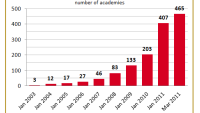
What a difference a year makes. When Michael Gove spoke at a Spectator conference on schools reform twelve months ago, his policy ideas were just that: ideas, to be deployed should the Tories reach government. Today, at a follow-up conference, they are being put into practice in the fiery crucible of state — and doing quite well, at that. As tweeted by Andrew Neil, Gove has announced that the number of academies — existing state schools that have seized on the independence being offered to them — now stands at 465. That's some way up on the 203 academies there were last year. And it's even a significant rise on the 407 in January of this year. The rate of growth is really quite astonishing.

A model council

From our UK edition

Councils from Liverpool to Bromley have cut voluntary sector funding; but Reading Borough Council is defying the trend. It will increase its voluntary sector funding by more than £200,000 in 2011-12. This will be achieved by transferring £956,000 in loose grants to strict revenue contracts, which deliver greater value for money. This is part of a wider administrative rationalisation that raised an extra £181,000 for local groups, which will now apply for cash on a clearly specified basis to ensure that frugality survives the current efficiency drive. An efficiency drive was certainly needed.

Are two Eds better than one?

From our UK edition

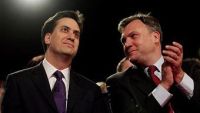
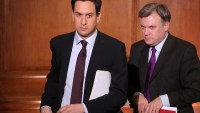
This was the question raised by today’s joint Balls Miliband press conference. The two Eds are very different in both body language and temperament. Balls is the far more pugilistic politician, always looking to dispute the premises of a question and happy to use aggressive language. While Miliband is far more of a conciliator, looking to find consensus and using only gentle humour. They even stand at the lectern in different ways: Balls hunched over his, leaning into the fight. Miliband hanging back from his, and taking a gentle step towards it when answering a question. The danger for Miliband is that Balls appears to be the alpha male, the one taking the fight to Labour’s enemies.

Balls and Miliband fail the credibility test

From our UK edition

Eds Miliband and Balls gathered the press corps together this morning to broadcast a straightforward message: oh yes, we do have an alternative. And the shape of that alternative? A repeat of the one-off tax on bankers' bonuses that, Balls claimed, raised £3.5 billion last year. The money would be used for an entire buffet of economic delights, from the creation of new houses to the funding of job schemes for the young. The upshot, apparently, would be 110,000 new jobs. Nice work, as they say — if you can get it. But there are a couple of problems with all that, the first of which Labour has pre-empted. It is that last year's bonus tax may not have raised as much as £3.5 billion, after all.

Another call for an in/out referendum

From our UK edition

In or out? — that is the question that a new cross-party campaign would have put to the British people. And so they're launching their "People's Pledge" today. The idea is that voters would promise to support only those parliamentary candidates who back a referendum on our membership of the EU. The signatures will then be enumerated, presented on a website, and — it is hoped — shock Westminster into delivering the referendum itself. At the very least, it might persuade some candidates to face up to, and meet, the tide of public opinion on Europe. It seems we've been here, or somewhere like it, before now. Daniel Hannan, for instance, launched a campaign last year to collect signatures for an EU referendum.

Clegg’s cure for the tuition fee trauma

From our UK edition

The Liberal Democrats are still traumatised by what happened over tuition fees. Nearly every fringe meeting contained a long discussion of the issue and how the party could have handled it better. Clegg’s plan to heal the wound is to show that the new system will go hand in hand with a broadening of access to the best universities. The deputy prime minister seems to be straining for a fight on this issue. In his speech, he laid into those at Oxbridge ‘who shrug their shoulders and say: That’s just the way things are’ about how dominated these institutions are by the children of the well-off. He demanded, ‘fair access now.’ But the problem is that access can only be as fair as the schools system allows.